News related to
Capital

Record Turnout Signals City’s Rise as Asia’s Trading Card Hub Event Backed by Virtual Asset Venture MemeStrategy, Entertainment Platform 9GAG HONG KONG SAR – Media OutReach Newswire – 25 November 2025 – In a city long synonymous with skyscrapers and stock tickers, an unlikely subculture is staking its claim: trading cards. The just-concluded Grade10 Festival, drawing a record 23,000 attendees to Hong Kong’s bustling convention hall in […]

Arabian Post Staff -Dubai Saudi Arabian Oil Company has entered preliminary talks to sell stakes in key export and storage terminals and possibly parts of its real-estate portfolio, aiming to raise over US$10 billion in what may become its most substantial disposals to date. The oil giant has invited banks to pitch feasibility studies and is weighing financing options that include equity raises or structures resembling the […]

TAIPEI, TAIWAN – Media OutReach Newswire – 24 November 2025 – Established by the Resource Circulation Administration of the Ministry of Environment in 2024, Circular Inorganic Resource Community Unions Taiwan (CIRCU-Taiwan) has, after a full year of refinement and integration, identified three key areas of focus that will be formally introduced to the public this year. CIRCU-Taiwan brings together arterial industries such as cement, steel, construction materials, […]

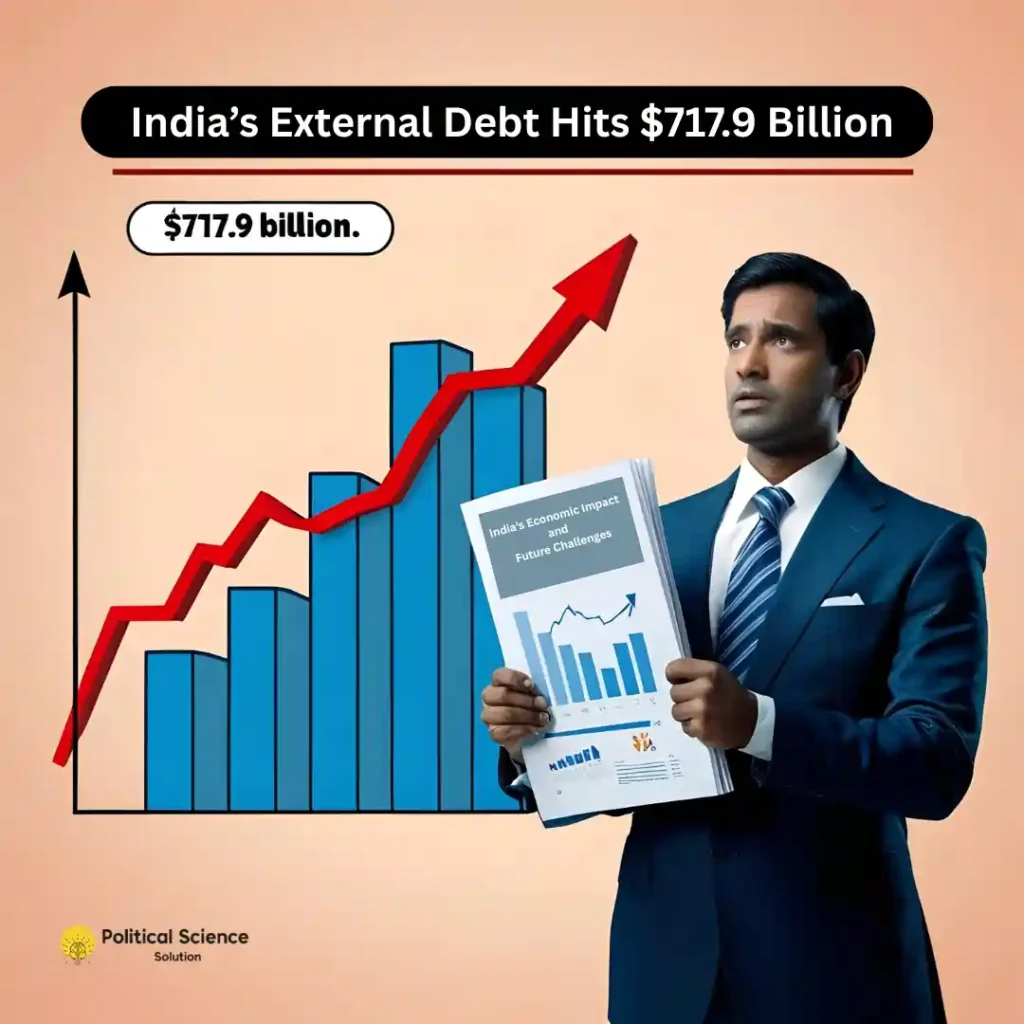
By Nantoo Banerjee The government may disagree but India’s persistent trade deficit is ruining the country’s economy despite its impressive growth. Last month, import-happy India’s trade deficit reached a record high level of US$41 billion as exports witnessed the sharpest monthly decline over a year. Unfortunately, a big surge in gold imports during October by […]

The article Behind India’s Rising Foreign Debt Is Growing Trade Deficit appeared first on Latest India news, analysis and reports on Newspack by India Press Agency).

Greenlogue/AP Riyadh – Tanmiah Food Company, one of Saudi Arabia’s largest vertically integrated poultry and food producers, has signed three strategic memoranda of understanding and launched what it calls the region’s first geothermal-cooled poultry facility, marking a significant move in its sustainability and decarbonisation drive. The agreements were unveiled during the inaugural Saudi Agri‑Food Tech Alliance Forum at the headquarters of the Ministry of Environment, Water and […]

The world’s largest cryptocurrency, Bitcoin, fell swiftly this week as a sustained sell-off put the token on track for its steepest monthly decline since 2022. It slipped as much as 7.6 per cent to around $80,553 before trimming losses, while the broader crypto market cap fell below $3 trillion for the first time since April.

Forced liquidations, institutional outflows and thin liquidity emerged as key drivers of the slide. Analysts at Ergonia pointed to a convergence of derivative blow-outs and structural selling via exchange-traded products as factors creating a “particularly vulnerable state” where even stabilisation efforts face immediate supply pressure. Futures liquidations exceeded $1 billion, and data highlight more than 30 per cent in market cap erasure since early October.

While Bitcoin climbed to an all-time high near $126,000 in early October, the recent downturn amounts to roughly a 25 per cent retreat within the month. Bloomberg data confirm this represents the largest monthly fall since June 2022. The correction has triggered a reevaluation of year-end positioning, with derivatives markets assigning around a 50 per cent chance that Bitcoin finishes the year under $90,000 — marking a significant sentiment shift in a matter of weeks.

One root cause of the near-term pressure lies in the unwind of leveraged positions. Many traders who piled into futures and perpetual contracts saw funding rates turn against them, triggering cascaded liquidations. Binance chief executive Richard Teng described the move as a “healthy consolidation” for the industry, albeit one that comes amid rising risk aversion and tighter macro conditions. The wave of deleveraging has spilled into alt-coins and broader risk assets, emphasising how crypto still mirrors the wider market’s orientation toward volatility and liquidity stress.

Institutional-product flows add another level of challenge. The launch of spot Bitcoin ETFs earlier this year raised expectations of large capital inflows, but the current environment has seen outflows, particularly from funds that repositioned, hedged or redeemed positions. This structural selling has combined with retail and leveraged exits to deepen the draw-down.

Despite the short-term strain, some analysts suggest the correction may clear the way for a healthier structure going forward. Liquidity indicators normally near major crypto rallies are showing signs of restocking, and some models view the current phase as a reset rather than the end of the cycle. However, sceptics caution that macro risks — including higher rates, regulatory headwinds and geopolitical stress — continue to hang over the sector and may dampen the timing or pace of any recovery.

Among market participants, sentiment has shifted markedly. Portfolio manager Nigel Green of deVere Group noted that heavy borrowing in speculative positions meant “any reversal triggers liquidations that accelerate the move”. Others highlight that although corrections of 20–30 per cent have occurred in past Bitcoin bull markets, the current confluence of leverage, product flows and liquidity outflows is unique, suggesting this phase may represent more than a standard dip.

With December positioning now in focus, the coming days will be closely watched. The monthly close looms large — if Bitcoin avoids a full 25 per cent drop it could blunt the signal of stress; if it does not the message to markets could be more definitive. The broader crypto ecosystem will also look for signs of capitulation or stabilisation — levels of derivative stress, fund flows and institutional signals will inform whether this is a tactical pull-back or the early stages of a deeper consolidation.

As one of the first major asset-classes to undergo structural institutional adoption, Bitcoin’s current draw-down serves as a test of how the market absorbs large-scale flows and macro shocks. The unfolding developments will have implications well beyond the crypto world, casting light on how digital assets behave within the larger financial system.

Bitcoin climbed to just below $88,000, with fresh momentum in the market fuelling optimism among traders and analysts. The broad crypto ecosystem responded in kind, bringing the total market capitalisation close to the $3 trillion mark — a figure emblematic of expanding institutional interest and regulatory shifts. A growing number of market participants now expect the flagship crypto-asset to press higher, although analysts caution that volatility remains elevated and support levels are becoming increasingly critical.

The asset’s ascent has been driven by multiple factors. Anticipation of potential interest-rate easing by the Federal Reserve, combined with favourable regulatory developments in the US, has bolstered investor confidence. Support from institutional flows appears meaningful: large asset-managers and first-time institutional entrants are moving into crypto-related products. Some technical analysts highlight that the jump above $86,000 marks a breakout from prior resistance, reinforcing bullish narratives.

Key support is identified in the $84,000–$86,000 zone. One analyst from block-chain data firm Glassnode warns that a slip below $88,000 could set up a descent back toward that lower band, which would challenge bullish momentum. The same company points out that trading volumes are lighter than during major rallies of the past, suggesting caution until stronger confirmation arrives.

Looking ahead, technical-chart readings suggest a potential push toward $90,000-plus levels, possibly reaching into the $92,000–$100,000 range if momentum holds and major resistance is overcome. Several analysts highlight the $92,000-$93,000 region as a key hurdle, with failure to clear it likely to trigger a thinned advance. Others remain more cautious, pointing to broader macro and regulatory risks.

From a structural standpoint, one scenario treats the move as part of a wave-four corrective bounce, implying that a wave-five surge could follow. Under that model the next leg upward might push toward $100,000+. On the flip side, critics note that weekend trading volumes typically shrink, making such breakouts less reliable and opening the possibility of false moves.

Altcoins are broadly echoing the trend. Ethereum and major tokens have posted gains, though their trajectories remain more muted compared with Bitcoin’s. The dominance of Bitcoin in the crypto-market cap has widened slightly, underlining that many investors remain focused on the primary asset while altcoin sentiment remains cautious.

Regulatory dynamics are playing a significant role. The US Congress and regulators have advanced legislation and guidance that facilitate crypto-asset integration into mainstream financial systems, including retirement-account access and clearer tax/data rules. Such changes are interpreted by institutional investors as de-risking signals that could unlock further flows.

Advertisements

The Fund offers a flexible revenue-share token, unlocking AI infrastructure access from US$1,000 HONG KONG SAR – Media OutReach Newswire – 23 November 2025 – Pioneer Asset Management Limited (“Pioneer“), a subsidiary of Tykhe Capital Group Limited (“Tykhe Capital“), a leading Real-World Asset (RWA) and Security Token Offering (STO) innovator in the Asia-Pacific region and Skyvast Digital Sdn. Bhd. (“Skyvast“), today announced the launch of the world’s […]

Abu Dhabi’s infrastructure expansion enters an ambitious phase with the Abu Dhabi Projects and Infrastructure Centre announcing a capital-projects pipeline valued at US$54 billion over the next five years, and ambitions to double the size of this programme by 2040. Officials described the initiative as a broad invitation to overseas and regional contractors to engage in major new developments spanning housing and social infrastructure. During a road-show […]

The Abu Dhabi Securities Exchange has marked its 25th year, standing today as one of the world’s top 20 stock markets by market value. Founded in 2000 with just 12 listed companies, the exchange now hosts more than 200 securities, carries a market capitalisation in excess of AED 3 trillion and counts 1.2 million investors drawn from over 200 nationalities. This milestone comes as the ADX embarks […]

First Abu Dhabi Bank has mandated a group of global and regional banks to arrange investor calls on Wednesday, 19 November, signalling the preparation of a benchmark USD-denominated Additional Tier 1 capital issuance. The Abu Dhabi-based lender, rated Aa3 by Moody’s and AA- by both S&P and Fitch, is targeting a fixed-rate, resettable perpetual instrument with a non-call six-year structure, expected to be rated Baa3 by Moody’s, subject to market conditions.

FAB has appointed Abu Dhabi Commercial Bank, Barclays, Emirates NBD Capital, itself, HSBC and Standard Chartered Bank as joint lead managers and bookrunners for the issuance, reflecting a strong syndicate backing. According to institutional-market briefings, the period of investor calls is intended to gauge pricing, demand, and issuance size ahead of launch.

This move marks FAB’s first benchmark AT1 issuance in approximately five years and comes as the bank seeks to bolster its capital buffer amid evolving regulatory expectations. Market-specialist commentary notes that such securities serve a dual purpose: providing permanent capital that counts towards Tier 1 regulatory ratios while offering issuers the flexibility of a call option after a set period — in this case six years — to redeem, subject to certain conditions.

FAB’s prior issuance of a senior green bond earlier this month — a €850 million deal priced at mid-swaps plus 70 basis points after opening at plus 100 basis points — underlined its readiness to access capital markets. That deal illustrated investor appetite for the bank’s funding instruments and the bank’s willingness to tap diverse instruments and jurisdictions. The proposed AT1 issuance broadens FAB’s capital-raising toolkit further.

In assigning an expected rating of Baa3 by Moody’s for the proposed issue, the bank is effectively targeting the lowest investment-grade category from that agency for this level of instrument. Such ratings reflect the subordinated nature of AT1 securities; they rank lower than senior debt in the creditor hierarchy and often incorporate features such as coupon discretion and loss-absorption mechanisms — factors that carry higher credit risk for investors compared to senior bonds.

Emerging-markets commentators note that demand for Gulf-region AT1 securities has been relatively scant over the past year as investors have weighed macro-economic headwinds, rising interest-rate environments and regulatory adjustments. The Gulf region’s total primary issuance of bonds and sukuk for the first quarter of the year was reported at USD 51.5 billion, down from USD 55.5 billion in the same period a year prior; within this, financial-institution capital instruments formed a subset of activity. Nevertheless, select banks continue to tap issuance windows that align with investor sentiment.

For FAB, the timing appears strategic: the bank’s common equity Tier 1 ratio stands at 13.7 per cent — a figure comfortably above its internal threshold of 13.5 per cent but lower than the 14.3 per cent recorded a year earlier. This suggests room for issuing capital-absorption securities like AT1 to reinforce buffers without triggering market concern. Regulatory changes also loom: UAE banks are due to face a 50-basis-point increase in the counter-cyclical buffer next year, which will raise total capital requirements and heighten the capital-management imperative.

Investor calls scheduled on 19 November are expected to cover structuring options, timing of launch, target size and investor syndication. Initial market commentary anticipates that FAB may aim for a headline size in the region of USD 750 million — consistent with its last AT1 benchmark in 2020 — although precise sizing will hinge on demand and market dynamics.

The joint bookrunners assemble a strong global footprint: Barclays, HSBC and Standard Chartered provide global investor access while Emirates NBD Capital and Abu Dhabi Commercial Bank offer regional distribution strength. That reflects FAB’s dual aim of tapping both GCC-based and international institutional investors. Market observers believe that if oversubscription builds, pricing could tighten relative to initial guidance and the syndicate may consider increasing sizing accordingly.

US-based artificial intelligence firm Luma AI has secured a $900 million Series C funding round led by Saudi-backed HUMAIN, the AI venture owned by the kingdom’s sovereign wealth fund, the Public Investment Fund. Participation also came from AMD Ventures and existing investors including Andreessen Horowitz, Amplify Partners and Matrix Partners. The funding is part of a broader strategy to advance multimodal artificial general intelligence capable of generating, interpreting and interacting with the physical world.

Luma AI’s valuation following the round is estimated at over $4 billion, underscoring the intense competition among frontier AI firms. The company specialises in “world models” that integrate video, audio, image and language to drive applications in robotics, simulation, advertising, gaming and personalised education. CEO Amit Jain described the aim as training systems on “a quadrillion tokens” of multimedia data to move beyond current large-language-model architectures.

HUMAIN, having positioned itself as a global full-stack AI player, will use the funding partnership to anchor its compute infrastructure ambitions. The joint roadmap includes the rollout of what HUMAIN terms “Project Halo” — a super-cluster targeting up to 2 gigawatts of AI compute capacity in the kingdom. Luma AI will become a key customer of this infrastructure.

The funding and infrastructure build-out reflect a strategic shift in Saudi Arabia’s economic diversification efforts. Under the leadership of Mohammed bin Salman, the PIF is deepening commitments to AI and high-performance computing as pillars of its wider Vision 2030 agenda. Luma AI’s partnership becomes a vehicle for exportable AI capabilities and for strengthening the kingdom’s position in the global tech ecosystem.

From Luma AI’s perspective, the capital infusion and access to sovereign-scale compute represent a strategic lever to accelerate development of next-generation models. In entertainment and creative industries the company already claims traction: its Ray3 reasoning video model has been embedded within major platforms. The new funding will allow expansion into simulation, robotics and immersive media. Jain asserted that only by integrating systems and infrastructure at scale can models “understand and simulate the universe”.

For HUMAIN the deal accomplishes several objectives: securing a marquee US AI partner, anchoring compute commitments, and beginning commercial deployments of its planned AI infrastructure. The first phase of the accompanying joint venture with Cisco Systems and AMD will deliver a 100-megawatt data-centre cluster in Saudi Arabia, fully subscribed by Luma AI, with construction scheduled to begin in 2026 and renewable energy powering the facility.

The global implications are significant. With Asia, Europe, India, the Middle East and Africa identified as target markets-worth an estimated 4.5 billion people-the infrastructure build-out promises to reshape the geography of AI training and inference. HUMAIN’s model seeks to challenge the dominance of US- and China-based AI supply chains.

Challenges remain. Developing multimodal AGI is widely acknowledged as highly complex, with technical risks, high compute costs and uncertain commercial timelines. Critics highlight concerns about geopolitical dependencies in AI infrastructure and the ethical implications of deploying models trained on vast multimedia datasets. The Saudi-US dimension adds further scrutiny given strategic sensitivities around data, export controls and digital sovereignty.

HONG KONG SAR – Media OutReach Newswire – 19 November 2025 – The 2025 Hong Kong & Shenzhen Bi-City Biennale of Urbanism Architecture (UABBHK 2025) launched its curatorial direction under the theme TECHFORMANCE: Architecture as Performance in the Age of AI. Organised by The Hong Kong Institute of Architects Biennale Foundation, this year’s UABBHK is co-organised by The Hong Kong Institute of Architects, The Hong Kong Institute […]

Shares of Alphabet Inc., the parent company of Google, surged to record territory on Wednesday as investors responded to strong underlying business momentum and easing regulatory concerns. The company’s Class A share climbed above $300 for the first time in intraday trading, a notable milestone for the tech heavyweight. The push upward was driven in part by a standout quarter in which Alphabet reported revenues exceeding $100 […]

The developer behind the world-famous skyscraper in Dubai has acquired a 12th-century fortress in the rolling hills of Umbria and laid out a vision for one of Europe’s most opulent destination resorts. Mohamed Alabbar, founder of Emaar Properties, confirmed the purchase of Castello di Antognolla for around US $55 million and disclosed plans to invest as much as US $145 million further, bringing the total commitment to […]

Abu Dhabi-based aerospace engineering firm Sanad Aerotech has reported a substantial increase in its order backlog and rapid expansion into new engine platforms as airlines face global supply-chain constraints in engine manufacturing. The company disclosed that its backlog rose by 5 billion UAE dirhams to more than 38 billion dirhams as of end-June, driven by heightened demand from carriers struggling to secure engine availability. Sanad, backed by […]

Abu Dhabi based investment firm Lunate has escalated its global ambitions after deploying roughly US$13.5 billion and signalling plans to raise even larger funds for 2026 launches. Founded in 2023 and backed by the emirate’s investment ecosystem, Lunate raised about US$17 billion in 2024 for its flagship funds and has invested around 80 per cent of that amount, according to individuals familiar with its operations. The firm […]

Global alternative asset manager KKR & Co. has inaugurated a new office within the Abu Dhabi Global Market financial district, marking a significant expansion of its Middle East footprint. The office will be led by Julian Barratt‑Due, Managing Director and Head of Middle East Investing at KKR, with David Petraeus serving as Chairman of KKR Middle East, reinforcing the firm’s commitment to the region.

KKR’s decision underscores its confidence in Abu Dhabi as a gateway for global capital targeting the Gulf region. With assets under management totalling around US$720 billion, the firm already operates hubs in Dubai’s DIFC and Riyadh and views ADGM as a strategic next step.

The Abu Dhabi office aims to enhance KKR’s capacity to serve institutional clients and invest in a range of sectors including infrastructure, technology, and alternative assets across the Gulf. The move aligns with the firm’s broader strategy of partnering for long-duration assets in the region, as evidenced by its acquisition of a minority stake in ADNOC Gas Pipeline Assets LLC and investment commitments in the data centre platform Gulf Data Hub.

Abu Dhabi’s appeal lies in its stable economic foundations, regulatory clarity via ADGM’s common-law framework, and its ambition to become a major global financial centre. ADGM emphasised that KKR’s arrival reflects the city’s expanding role in the global investment ecosystem.

From KKR’s perspective, the firm has stated that the new presence will enable closer collaboration with regional partners and enhance responsiveness to market opportunities. The leadership structure signals that KKR is aiming for a long-term, on-the-ground commitment rather than a passive regional representation.

This move comes amid a broader industry trend of asset managers shifting focus toward the Gulf region. Firms such as PGIM have previously opened offices in ADGM, responding to abundant regional capital, favourable tax regimes, and dynamic infrastructure programmes.

Investors highlight that the Gulf markets are undergoing structural transformation, driven by diversification away from hydrocarbon dependence, growth of digital economies and infrastructure modernisation. KKR’s investments in energy and data-centre platforms illustrate how global managers are aligning with those shifts.

For Abu Dhabi, the addition of a major player like KKR bolsters its ambition to attract global financial services and alternative-capital players. ADGM’s track record of rising company registrations and assets under management suggests the jurisdiction is gaining momentum.

However, experts caution that competition is intensifying: neighbouring hubs such as Dubai and Riyadh are also targeting global managers, meaning KKR and similar firms will need to demonstrate differentiated value-propositions to win deal flow and client mandates. Some analysts note that while large sovereign wealth funds in the region remain dominant allocators, attracting third-party capital remains a challenge.

Operationally, establishing a local hub brings costs, regulatory obligations and talent-acquisition hurdles. While KKR cites its established regional presence and leadership under Petraeus and Barratt-Due as advantages, execution will be scrutinised by investors seeking measurable regional capital deployment and returns.

In the context of broader global asset-management dynamics, the Gulf real-assets market offers long-term, low-yield, inflation-hedged opportunities—an appealing counterbalance to the high-rate, equity-valued portfolios that dominate Europe and North America. KKR appears to be positioning itself to capture that shift, reinforcing its global expansion strategy.


In the 35th edition of Cushman & Wakefield’s Main Streets Across The World report, Hong Kong’s Tsim Sha Tsui maintains its global ranking position as the world’s 4th most expensive retail street; whilst the area continued to top the APAC ranking as region’s the most expensive retail destination Rents on New Bond Street ($2,231 per square foot per year) have leapfrogged Milan’s Via Montenapoleone and New York’s […]

Nairobi-based electric mobility firm Roam Electric Ltd has begun talks to monetise carbon-offset credits generated by its motorcycles while launching a global crowdfunding campaign to raise working capital. Each machine sold by Roam is designed to offset around three tonnes of CO₂ annually; with about 4,000 units currently in circulation, the company estimates roughly 12,000 tonnes of emissions reduction per year—equivalent to the output of some 2,600 […]

Beijing has initiated sweeping agricultural trade measures targeting the United States, Canada and the European Union as a means to counter duties imposed on Chinese electric vehicles. The move centres on sectors worth billions of dollars in export value and signals a new front in the global tariff standoff as Chinese factories ramp up global auto-sales ambitions.

According to official announcements and industry trackers, China imposed tariffs and import restrictions on major agricultural products including soybeans, pork, canola and cognac after Western governments raised tariffs on Chinese EV imports—some reaching 100 per cent in the US, and up to 35 per cent in the EU. Those duties stemmed from concerns about subsidised manufacturing, imports displacing domestic output and national-security implications tied to EV supply-chains.

One Chinese commercial diplomat told Canadian media that Ottawa’s export restraints on Chinese EVs directly triggered Beijing’s agriculture penalties. Canadian farmers in canola and pulses markets have already seen orders plummet and export corridors shut or taxed heavily. European spirits producers also face duties: cognac exports to China, valued at around $1.7 billion annually, have dropped by about 35 per cent since the levy took effect.

Analysts say the strategy is calculated. While China’s domestic market remains protected from full import competition, its international agriculture import volumes give Beijing leverage. An academic at Peking University noted that “a slight adjustment in China’s import preferences can ripple through farming regions and rural constituencies that carry significant political weight”. By focusing on sectors with concentrated politically-sensitive producers, China increases the pressure on Western governments to reconsider EV levies.

On the Western side, officials are signalling that they are unlikely to surrender their EV-tariff stance. A senior analyst at a Brussels-based think-tank said that the European Commission had “clearly shown that it was not willing to back down from the EV case”, citing China’s rapid auto-industry progress and state-support programmes. With climate targets and supply-chain security on the table, Western capitals view EV tariffs as integral to domestic industry viability.

Yet the backlash in agriculture could be deeper and more enduring than the EV duties themselves. A supply-chain expert explained that new contracts, logistics investments and alternative-buyer relationships developed in response to Chinese import suspensions may lock in shifts for years to come. In concrete terms, U. S. soybean farmers—who sold $12.6 billion worth to China in 2024—have seen export volumes fall to zero for key new-crop shipments, while Canadian producers of rapeseed and pea oil are facing a near-complete market closure under 100 per cent tariffs.

Observers point out that agriculture is an especially potent tool in trade diplomacy because it touches multiple layers of the economy: from regional employment to global commodity markets and corporate finances. By wielding farm-product bans or tariffs, Beijing can inflict political damage in sending countries while avoiding direct escalation of high-tech sectors where Western governments might respond more aggressively.

For Western farm sectors the choices are stark. Some firms are exploring alternative markets in Latin America, Africa or South-East Asia, while others are pressing their governments for compensation or trade-negotiation efforts. Meanwhile, Western trade officials are increasingly emphasising diversification of supply-chains away from China, which may dampen China’s leverage over time.

Kenya’s banking sector is under pressure as impaired loan ratios hover at elevated levels even though pre-tax profits and capital buffers point to resilience, according to a recent assessment by ratings agency Fitch Ratings. The sector’s net impaired loans to equity stood at around 23 per cent in the first half of this year, reflecting persistent debt servicing challenges. Fitch estimates that the sector-wide ratio of impaired […]

A substantial shift in sentiment around Alphabet Inc. has taken shape following the firm’s elevation to ‘Buy’ from ‘Hold’ by Loop Capital, with the brokerage raising its price target to $320 from $260. The upgrade underscores a decisive move by Wall Street away from doubts about Alphabet’s core search business toward bullish conviction in its AI-driven future. Loop Capital’s managing director, Rob Sanderson, observed that earlier concerns […]

Matein Khalid The bloodbath in Bitcoin is symbolic of the risk aversion spasm that has now hit risk assets as varied as Japan’s Nikkei Dow, Nasdaq’s Mag-7, gold and even the EM carry trade. The AI infrastructure trade that was the high octane fuel for the most frenzied bubble in Silicon Valley history has lost its luster (price momentum is the mandate of heaven on Wall Street), […]

VISHNU RAJA
RYO YAMADA
HITORI GOTOH
IKUYO KITA