News related to
Capital

By Dr Arun Mitra Unending armed conflicts are unfolding across various regions of the world. As a result the global security is perhaps facing a degree of uncertainty not witnessed since the Second World War. Crisis-ridden capitalist institutions may outwardly appear powerful and dominant, yet their inability to resolve the pressing problems of the people […]

Central bankers rarely admit defeat. But Jerome Powell’s latest remarks left little doubt: the Federal Reserve now sees the labour market faltering before inflation is fully tamed. This shift in focus – from bringing down prices to protecting jobs – marks a profound change in the policy backdrop. For investors, it is a wake-up call. For two years, the dominant story was inflation. Central banks tightened aggressively […]

Entrepreneurship is a challenge, especially when it comes to your own project: a small restaurant, a boutique, or an online store. For many women, starting a business feels like a personal trial, a test of resilience. But in reality, any business is a game, an opportunity to grow, create something of your own, and bring ideas to life. And yes, every business faces crises. But this is […]

Beautyworld Middle East will run from 27 to 29 October 2025 at the Dubai World Trade Centre, drawing an extensive global delegation of beauty professionals to explore innovations across the full spectrum of the industry. Organised by Messe Frankfurt Middle East, the event has become the region’s preeminent platform for unveiling trends, forging partnerships, and showcasing global brands and breakthrough technologies. Projected attendance data highlights the scale […]

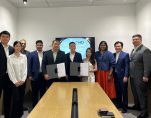
Collaboration combines Mirai Bridge Capital’s financing expertise with NCI’s trade credit insurance to deliver secure, growth-driven solutions for businesses across Asia. KUALA LUMPUR, MALAYSIA – Media OutReach Newswire – 4 September 2025 – Mirai Bridge Capital Sdn Bhd (“MBC”), a fast-growing private equity management company, has signed a Collaboration Agreement with NCI Malaysia Sdn Bhd (“NCI”) to expand into trade credit facilities for businesses in Malaysia and […]

ADNOC Logistics and Services plc has secured strong institutional backing through a $317 million placement of approximately 222 million shares—equivalent to about 3 percent of its issued capital—with demand reaching seven times the offering, ranking among the region’s most heavily oversubscribed secondary share sales. The transaction lifts ADNOC L&S’s free float from 19 percent to 22 percent, significantly enhancing trading liquidity and widening its appeal to institutional […]

Abu Dhabi’s Hub71 has just onboarded its most AI‑centric cohort yet, inviting 26 startups that have collectively raised more than USD 223 million—marking the highest funding milestone in the initiative’s history, a testament to growing investor confidence and Abu Dhabi’s elevated position in the global AI landscape. The majority of this intake—over eighty per cent—are AI‑driven ventures focused on tackling high‑impact challenges across HealthTech, FinTech, and ClimateTech. Their arrival not […]

Advertisements

A $2.62 billion, 10‑year credit facility has been secured by Khazna Data Centres, underwritten by a consortium led by Abu Dhabi Commercial Bank and First Abu Dhabi Bank, providing a substantial boost to the company’s strategy for regional and global expansion. The funds are earmarked to accelerate build‑out of high‑capacity data hubs across the Middle East and North Africa, with a clear focus on supporting high‑demand, AI‑intensive infrastructure. […]

EU antitrust authorities have pressed pause on the investigation into Abu Dhabi National Oil Company’s €14.7 billion takeover of Germany’s Covestro, granting the European Commission extra time to collect detailed information on the transaction. Authorities have set a decision deadline of 2 December 2025. The deal, agreed last October, stands as ADNOC’s largest-ever acquisition and one of the most significant foreign takeovers within the European Union by a […]

A pivotal online gathering on Sunday will determine whether the Organisation of the Petroleum Exporting Countries and its allies proceed with further oil production increases or hold current levels. The group has already rolled back its earlier cuts by 2.5 million barrels per day, equivalent to around 2.4 per cent of global demand, and is now assessing whether to unwind the next 1.65 million bpd tranche ahead of schedule.

Markets responded to the impending meeting with cautious anticipation. Brent crude fell modestly, trading near $67 a barrel, while U. S. West Texas Intermediate hovered around $63–$64. Analysts, including those at ANZ, flagged that any additional supply could deepen the surplus during a typically weak demand season. The softening outlook has already rippled through equity markets: major oil producers and service firms such as APA, Occidental, Halliburton and Schlumberger saw their shares slip between 3 and 5 per cent.

Since April, OPEC+ has pursued an aggressive unwind of output curbs. Initial increases began with modest tranches but have since accelerated: April saw the first rise, followed by consistent monthly boosts—from 411,000 bpd in May, June and July to 548,000 bpd for August and 547,000 bpd for September. These decisions reflect strategic moves to regain market share amidst growing competition, especially from U. S. shale producers, and external pressures, including public calls from the U. S. administration to increase global supply.

Despite these ramped-up supplies, prices have retained considerable strength—hovering around the $70 mark—bolstered by low inventory levels and geopolitical constraints, particularly sanctions on Russia and Iran. Analysts at the Commonwealth Bank of Australia observe that OPEC+ now appears comfortable with Brent trading in the $60–$65 range, a level that could pressure U. S. shale operations by narrowing profit margins.

Meanwhile, data from the American Petroleum Institute indicated an unexpected rise of 622,000 barrels in U. S. crude stocks, counter to forecasts, adding another layer of downward pressure on prices. The situation reflects a delicate balance: rising supply meets lukewarm demand, particularly as global economic growth shows signs of softening in key regions like China, India and Brazil.

Executive voices within OPEC+ remain tight-lipped. No official statements were forthcoming from Riyadh or other capitals prior to the weekend meeting. Analysts remain split: some believe the group will maintain its current stance through October, exercising caution amid market saturation concerns. Others argue that continued increases are part of a calculated strategy to defend or expand market share well into next year.

Anthropic has secured a monumental US $13 billion Series F funding round, propelling its post-money valuation to approximately US $183 billion and firmly establishing itself as one of the highest valued private startups globally. The round was spearheaded by Iconiq Capital, Fidelity Management & Research, and Lightspeed Venture Partners, with the Qatar Investment Authority joining as a “significant” investor alongside an impressive roster of global financial institutions and sovereign wealth funds.

Anthropic’s valuing nearly tripled since March, climbing from US $61.5 billion, when it completed a US $3.5 billion Series E raise earlier in 2025. This leap reflects the surging investor appetite for generative AI developers, despite growing debates over tech spending sustainability.

Anthropic’s growth trajectory is underpinned by its financial performance. The company’s run-rate revenue soared from roughly US $1 billion at the start of 2025 to over US $5 billion by August. The enterprise customer base now tops 300,000, with so-called “large accounts” expanding nearly seven-fold in just one year.

The rise of Claude Code, Anthropic’s developer-centric AI tool launched fully in May 2025, has been especially impactful. It currently generates over US $500 million in run-rate revenue, and usage has surged more than ten-fold within three months.

Anthropic’s research credentials and product roadmap also underpin its valuation. In August, the company rolled out Opus 4.1, an upgrade tailored to agentic tasks, coding, and reasoning. Its rapid expansion, focus on AI safety, and growing international footprint were cited by investors as further proof of its potential.

The participation of the Qatar Investment Authority marks a notable chapter in Gulf sovereign wealth funds’ deepening role in AI financing. While Anthropic did not disclose the precise QIA investment amount, it was highlighted as a “significant” backer in the funding syndicate. QIA’s April 2025 holdings were estimated at around US $557 billion, underscoring the strategic weight that such sovereign investments carry in global tech markets.

This infusion of capital will enable Anthropic to scale its enterprise operations, intensify its AI safety research, and accelerate international growth of its Claude platform. Amazon, already a stakeholder, may deploy the funding to expand its cloud infrastructure support for Anthropic, particularly through AWS Project Rainier. Analysts note this could meaningfully boost Anthropic’s spending on cloud services, with projections suggesting an uptick to as much as US $5 billion by 2026.

Amid this whirlwind of funding and growth, some experts caution about the long-term sustainability of such capital-intensive AI ventures. Infrastructure demands for large language model development can rival those of tech giants like Google, Microsoft, or Meta.

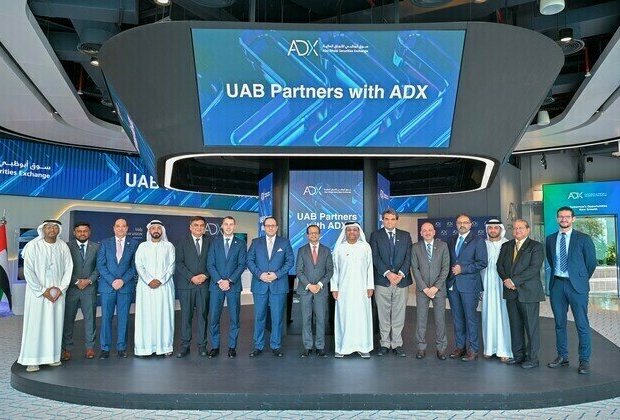
United Arab Bank has formed a strategic alliance with Abu Dhabi Securities Exchange to enable its customers to subscribe for upcoming IPOs through the bank’s digital channels or ADX’s eIPO Investor Portal. This arrangement aims to simplify the process of accessing capital markets, offering a secure and intuitive experience to investors.

At a ceremony held at ADX’s headquarters in Abu Dhabi, the agreement was formalised in the presence of Abdulla Salem Alnuaimi, Group Chief Executive Officer of ADX, and Shirish Bhide, Chief Executive Officer of UAB, alongside senior officials from both organisations.

This collaboration is designed to strengthen UAB’s wealth management proposition by embedding investment opportunities within its digital ecosystem. Customers will now be able to access IPO applications directly via UAB’s mobile application, replacing previously cumbersome procedures with streamlined, guided pathways that enhance transparency and usability.

According to Shirish Bhide, this partnership reflects the bank’s dedication to innovation and long-term value creation. By integrating investment services within UAB’s digital channels, customers gain more inclusive access to the UAE’s capital markets. Abdulla Salnuaimi added that this initiative reaffirms ADX’s aim to enhance the investor experience by collaborating with leading financial institutions and advancing digital solutions.

The move aligns with UAB’s broader digital transformation strategy, as demonstrated by prior efforts such as launching RegPRISM, an AI-powered regulatory intelligence platform developed with Smarbl to improve compliance and operational efficiency.

Further underpinning UAB’s financial robustness is its first-quarter 2025 performance. The bank reported a 49 per cent year-on-year increase in net profit—rising to AED 102 million—driven by growth in assets, loans, Islamic financing, and investments. Capital adequacy remains solid, with a CET1 ratio of 12.6 per cent and a total capital adequacy ratio of 17.1 per cent. Non-performing loans saw improvement from 4.8 per cent to 3.4 per cent, with coverage at 118 per cent.

These financial strengths were in part bolstered by a rights issue completed earlier, which raised around AED 1.03 billion and strengthened UAB’s capital position.

ADX, for its part, continues to pursue innovation in financial market infrastructure. In July, it collaborated with First Abu Dhabi Bank and HSBC to launch the Middle East’s first DLT-based digital bond, reinforcing its frontier role in tokenised finance.

Through this latest agreement, UAB and ADX are promoting a more integrated, accessible investment landscape—blending digital banking and capital markets participation in a manner that could redefine customer expectations and market engagement.

Saudi Aramco is poised to issue U. S.‑dollar denominated sukuk within September in a bid to fortify its financial position amid subdued oil prices. The company aims to raise between $3 billion and $4 billion through Shariah‑compliant bonds, according to insiders familiar with the matter.

Aramco’s timing underscores a strategic response to heightened volatility in oil markets. The company’s dividend payouts remain intact—$21.1 billion in Q2 and still on track for an $85.4 billion annual total—demonstrating a commitment to returns despite pressure on profit margins. The sukuk issuance follows a $5 billion conventional bond sale in May, as indicated by Aramco’s sukuk prospectus filing with the London Stock Exchange on 30 May. That filing allows up to one year for issuance, signalling flexibility in debt deployment.

Despite the fall in crude prices, Aramco’s gearing remains among the lowest in the global oil industry—a point highlighted during the company’s August earnings call. That financial cushion gives it room to tap capital markets when conditions are favourable.

The sukuk issuance aligns with broader Kingdom‑level bond activity. Saudi Arabia has raised $5.5 billion through a dual‑tranche sukuk offering, comprising a $2.25 billion five‑year tranche and a $3.25 billion ten‑year tranche—sold at spreads of 65 bps and 75 bps over U. S. Treasuries respectively, substantially tighter than initial guidance. Investor demand exceeded $17 billion.

Aramco’s anticipated issuance would tap into the same deep liquidity pool, appealing to Islamic finance and ESG‑oriented investors while preserving fiscal discipline. This approach mirrors the Kingdom’s strategy to diversify its funding base and reduce reliance on hydrocarbons. The proceeds are likely to support refinancing, cost‑management efforts, and strategic asset redeployment.

In parallel, measures such as an $11 billion lease‑and‑leaseback deal for Jafurah gas processing assets with a BlackRock‑led consortium, reflect efforts to raise liquidity without reducing shareholder returns. CFO Ziad Al‑Murshed emphasised the aim to “redirect capital away from low‑return assets to core operations” during the earnings briefing.

This financial planning arrives at a time when Aramco continues to face earnings pressure—second‑quarter profit fell by 22 per cent—but the dividend pledge remains firm, maintaining investor confidence.

China’s solar industry, particularly its polysilicon segment, is experiencing a defining shift. Six leading solar makers reported a combined loss of Rmb20.2 billion during the first half of 2025, prompting regulatory intervention to stem overcapacity and destructive price competition.

In early September, GCL Technology Holdings confirmed that investors can anticipate clarity soon on a plan to restructure the polysilicon industry—potentially this year. Chief Financial Officer Yang Wenzhong indicated that GCL may invest its own capital into the effort but is proceeding with caution amid financial uncertainty.

The core of this restructuring lies in a proposed RMB50 billion pooling of funds by top producers like GCL and Tongwei. The aim is to acquire and retire roughly one-third of existing production capacity, targeting approximately one million metric tonnes of lower-quality output. This supply reduction could help raise prices and restore downstream solar panel maker profitability.

Government authorities are reinforcing this market realignment through direct meetings with industry representatives. In August, China’s Industry Ministry held its second session in two months, urging the sector to eliminate outdated manufacturing capacity and curb “low-price disorderly competition” as part of a broader effort to reverse deflationary trends.

The policy response reflects concern over global glut: in 2024, China produced 588 GW of solar capacity while global demand stood at 451 GW, leaving utilisation at just 54%. Analysts estimate that up to 20–30% or more of solar manufacturing capacity must exit the market to reestablish profitability.

This state-guided consolidation faces substantial obstacles. Local governments that have boosted regional development through subsidies, tax breaks and favourable land deals for solar manufacturers may resist decommissioning facilities tied to local GDP and employment. Even if a cartel is formed, analysts warn that members might sneak back into production once prices rebound.

While the outlook remains complex, sentiment among investors appears cautiously optimistic. Markets showed tentative improvement after reports of progress in industry coordination and price gains surfaced. Trina’s commentary on earnings, describing polysilicon as “the first step of anti-involution,” hints at broader hopes for a turnaround.

Global attention is intensifying. Successful restructuring could reinforce China’s dominance—already controlling around 90% of global solar cell capacity—while disrupting cheap exports that have pressured international markets. But a failed effort could compound challenges in other overcapacity-prone sectors such as electric vehicles or shipbuilding.

Longi, another solar powerhouse, is also adapting. Its founder, Li Zhenguo, has relinquished daily management to focus on R&D, including back‑contact cell and green hydrogen technology. The shift comes amid sustained losses and an 80% decline in its share price since 2021, as analysts predict that overcapacity will persist through 2028.

China’s solar supply chain—from polysilicon to panels—is at an industrial crossroads. The restructuring effort is perhaps the boldest policy move yet to recalibrate supply with demand. But its success hinges on overcoming entrenched regional interests, ensuring disciplined industry behaviour, and catalysing sustainable demand growth.


A federal court’s latest decision in the U. S. v. Google antitrust case means Mozilla can maintain its critical financial arrangement with Google. Judge Amit Mehta has allowed Google to continue making payments to browser makers—among them Mozilla—ensuring that Firefox’s principal revenue stream remains intact. Judge Mehta’s remedy ruling clarifies that while Google must cease exclusive contracts, it may still engage in non‑exclusive deals to position its […]

Cairo will host Ai Everything Middle East & Africa from 10 to 12 February 2026, establishing itself as the region’s premier destination for artificial intelligence innovation and collaboration. Supported by Egypt’s National Artificial Intelligence Strategy and ranking among the top 10 countries globally in AI and machine learning—unique among African nations—Egypt is leveraging this event to consolidate its ambition as a regional AI powerhouse. Organised under the GITEX […]

A wave of profit‑taking sent the Nigerian equities market lower, with the NGX All‑Share Index falling by around 0.7 per cent to approximately 138,737 points on Tuesday—equivalent to a loss of nearly 0.67 per cent in market capitalisation, which dropped to about ₦87.8 trillion. The sell‑off was driven largely by pressure on heavyweight stocks such as Lafarge Africa and Transnational Corporation, while market breadth skewed negative, with far more declines than gains. […]

Turkey’s sovereign wealth fund is pressing ahead with a planned sale of dollar‑denominated bonds on Wednesday after weighing a delay during a sharp stock‑market sell‑off triggered by a court decision affecting the main opposition party’s leadership. The Turkiye Wealth Fund is poised to issue both five‑year and ten‑year notes, guided initially at yields of approximately 7.625 per cent and 8.375 per cent, respectively. The decision to proceed […]

Prince Alwaleed bin Talal is negotiating with the Public Investment Fund over a potential acquisition of approximately 75 per cent of Al Hilal Football Club, marking what may become a landmark transaction in the kingdom’s football privatisation agenda. The discussions remain preliminary; financial details and final ownership structure have yet to be finalised, and there is a possibility that negotiations might not reach completion. The Public Investment […]

Sobha Realty, the Dubai-based luxury developer rated Ba2 by Moody’s and BB by S&P, is advancing plans to issue its inaugural green, US dollar‑denominated, Regulation S benchmark sukuk under its established USD 1.5 billion trust issuance programme. The five‑year, fixed‑rate, senior unsecured sukuk offering carries a stable outlook from both agencies. The firm has shifted from tapping into conventional capital markets toward the growing sustainable finance segment. Preparing to launch […]

TransBnk has raised $25 million in its Series B funding round, led by Bessemer Venture Partners with support from Arkam Ventures, Fundamentum Partnership as well as existing backers 8i Ventures, Accion Venture Lab, and GMO Venture Partners. The Mumbai‑based transaction banking platform will channel the funds into geographic expansion across Southeast Asia and the Middle East, while strengthening its technology and product development teams. Vaibhav Tambe, co‑founder and chief executive, highlighted a sevenfold increase in the company’s valuation following […]

HONG KONG SAR – Media OutReach Newswire – 3 September 2025 – Luxshare Precision (002475.SZ) released its 2025 Interim Report at the end of last month. Under the complex and ever-changing global economic environment, the company still maintained a steady growth. The report shows that the company achieved growth in both revenue and profit in the first half of the year: operating income reached RMB 124.503 billion, […]

MrBeast is set to expand into telecommunications by launching a mobile phone service built using existing carrier networks, positioning himself as a mobile virtual network operator. According to investor materials seen by Business Insider, the YouTube star and his company plan to partner with carriers such as AT&T, T‑Mobile or Verizon, rather than constructing costly infrastructure. The business model mirrors that of Mint Mobile, where Ryan Reynolds […]

Only one-third of insurers in China provide mental health services, despite rising demand Fifty percent of insurers see personalisation as key to the success of health and wellbeing programs SINGAPORE – Media OutReach Newswire – 3 September 2025 – Aon plc (NYSE: AON), a leading global professional services firm, released insights from its inaugural 2025 Insurer Wellbeing Benchmarking Report offering a comprehensive analysis of the health and […]

VISHNU RAJA
RYO YAMADA
HITORI GOTOH
IKUYO KITA