News related to
Capital

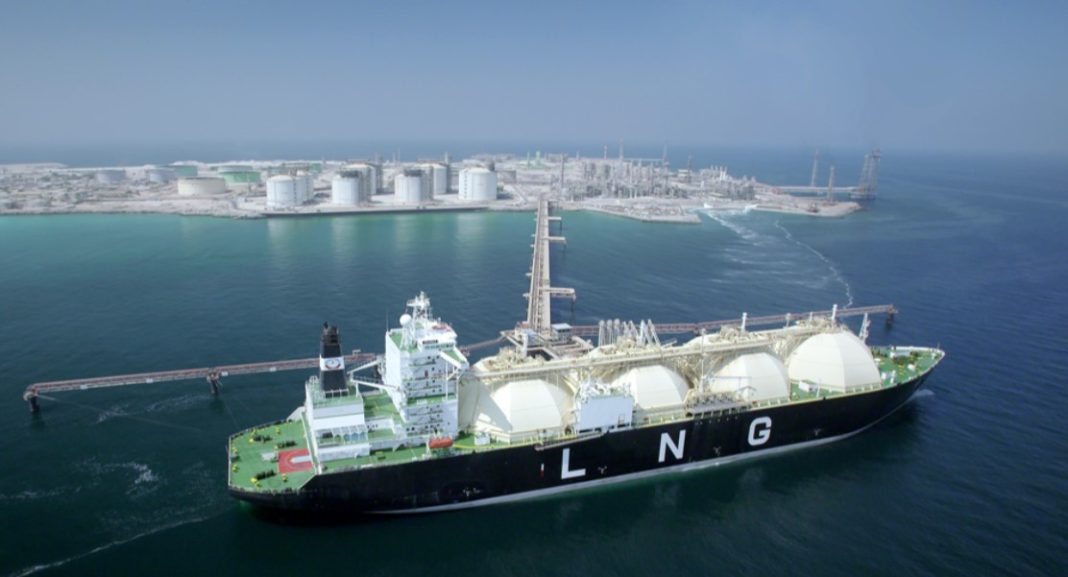
Abu Dhabi’s state energy company signed a 15-year sales and purchase agreement with a unit of British energy major for the delivery of up to 1 million tonnes per annum of liquefied natural gas. The contract represents the first long-term LNG sales deal between the company and Shell and marks the eighth offtake agreement secured for its new export facility.

The LNG will be supplied from the Ruwais LNG project in Al Ruwais Industrial City, Abu Dhabi, which is under development and is set to become the first LNG export plant in the Middle East and Africa region to operate on clean power. Shell holds a 10 per cent equity stake in the project. The agreement converts a previous heads of agreement into a definitive contract and accelerates the project’s commercial timeline.

By securing this deal, more than 8 mtpa of the facility’s planned 9.6 mtpa capacity has already been contracted across Asia and Europe, just 16 months after the project’s final investment decision in July 2024. The project comprises two liquefaction trains of 4.8 mtpa each and is designed to more than double the company’s existing LNG production capacity to around 15 mtpa.

The deal is timed to global gas-market conditions where demand is picking up and energy security is a key concern for buyers. By locking in long-term supply, the exporting company seeks to position itself as a “reliable global supplier of lower-carbon LNG”, while the buyer views the contract as a strategic commitment to expanding its LNG portfolio and securing long-term supplies.

For the seller, the rapid pace at which contract commitments have been won is significant. The chief executive of the gas-division described the achievement of contracting more than 80 per cent of the plant’s capacity within roughly a year of FID as “a new benchmark” for large-scale LNG projects globally, and noted that construction, contractor mobilisation and site works remain on track for commissioning by the end of 2028. The buyer emphasised its long-standing partnership of more than fifty years with the Abu Dhabi exporter and said the agreement supports its global LNG-expansion strategy.

Analysts note that the project’s clean-power design, advanced technology deployment, and rapid contracting distinguish it in the LNG market. That said, while the exporting company releases its ambition to expand its LNG portfolio, competitors in the region are also pursuing aggressive growth, raising competitive risk. Moreover, delivering commercial operations at a low-carbon intensity adds complexity and cost — achieving the projected timeline and performance will require careful execution.

On the demand side, the contract underscores how buyers are increasingly seeking longer-term and lower-emissions supply arrangements in the transition-era gas market. For the buyer, the deal adds to its diversified portfolio of LNG suppliers as it faces intensified competition for cargoes from traditionally dominant exporters. The seller’s ability to secure multiple offtake agreements rapidly helps de-risk the project and supports financing and construction momentum.

One key theme emerging is the alignment of LNG expansion with sustainability credentials. The Ruwais facility’s design to run on clean grid-powered operations, along with claims of being among the lowest-carbon intensity LNG plants globally, reflects a shift in gas-project metrics: projects are now evaluated not solely on cost and capacity but also on carbon footprint and technology sophistication. This trends suggests that access to lower-carbon LNG could become a differentiator among suppliers and a value driver for buyers.

However, achieving this low-carbon ambition may face challenges such as securing clean-power infrastructure, managing capital-cost escalation, and meeting stringent environmental and regulatory expectations across export markets. The broader LNG market is also subject to volatility in feed-gas supply, shipping capacity constraints, and fluctuating demand growth in key markets such as Asia and Europe.

HAI PHONG, VIETNAM – Media OuReach Newswire – 4 November 2025 – Indochina Kajima, the joint venture between Indochina Capital and Kajima Corporation, and ITOCHU Corporation held a ground-breaking ceremony for Core5 Vietnam’s second industrial project in Hải Phòng at Deep C 2 Hai Phong Industrial Zone. The project will deliver approximately 80,000sq.m of world-class ready-built factory space for lease, with a handover expected in Q1/2027. Photo […]

The XRP Ledger delivered a marked performance in the third quarter of 2025, with significant growth across transaction volume, wallet activity and real-world asset tokenisation. A latest report from Messari shows average daily transactions rose from 1.6 million to 1.8 million — an 8.9 per cent uptick. Meanwhile, the number of active sender addresses grew 15.4 per cent, climbing from 21,900 to 25,300, and new wallet addresses surged 46.3 per cent to 447,200. Overall address count reached 6.9 million, up 6.1 per cent.

Growing interest from institutional players is manifest in XRPL’s RWA market capitalisation, which moved from around $115.5 million to $364.2 million, representing a 215 per cent increase during the quarter. Such tokenisation efforts featured funds of tokenised U. S. Treasuries, tokenised short-term debt instruments and real-estate assets being issued via XRPL.

NFT-related activity on XRPL also accelerated. Average daily NFT transactions increased 51.1 per cent — from 50,400 to 76,100 — while NFT minting alone rose 70.8 per cent, climbing from 37,800 to 64,600. The report noted that for the fifth quarter running, the number of active receiver addresses exceeded active sender addresses — a pattern often associated with airdrop and distribution events, as many wallets receive assets from a smaller cohort of senders.

Analysts say this trajectory suggests XRPL is maturing into an ecosystem that is bridging traditional finance and tokenisation, beyond its earlier reputation as primarily a payments-focused ledger. The built-in decentralised exchange, token-issuance features and escrow mechanisms support a broad set of use-cases.

However, the evolving narrative carries risks. One reservation is the heightened concentration of receiver addresses which may indicate that a disproportionate volume of activity stems from token-drops rather than organic usage. The sharp rise in new addresses and sender addresses does not necessarily translate into consistent value transfers unless sustained engagement follows. The decline of average daily receiver addresses by 30.1 per cent in the quarter further underscores the skew towards distribution-type events.

From a market perspective, the native token XRP closed the quarter at $2.85 — up 27.2 per cent — with a circulating market capitalisation of $170.3 billion, outperforming combined gains of the top competitors. That said, macro-factors remain relevant: broader risk sentiment turned negative in October as central-bank rate policy tightened, and XRP slipped to around $2.50 amid heavier selling pressure.

Institutional engagement is underlined by reported allocations of digital-asset treasury exposure: companies such as Trident Digital Tech Holdings, Webus International and others are said to hold sizeable XRP-based exposures in their portfolios. Meanwhile, seven spot XRP ETF applications to the U. S. Securities and Exchange Commission are pending, with expectations mounting around possible approvals and increased institutional inflows.

While enthusiasm builds, critics caution that XRPL’s broader utility remains under scrutiny. Analysts such as Scott Melker have questioned whether XRP’s role in payments can compete against entrenched networks such as SWIFT and other cross-border settlement platforms. The ledger’s capability to sustain and scale tokenisation beyond initial bursts — and to convert new wallet creation into ongoing transaction activity — will be key to its next stage of evolution.

From a technical vantage, XRPL’s architecture offers advantages: fast settlement times, comparatively low fees and in-built token issuance capabilities. The ledger’s use of enforced compliance tools and identity frameworks adds appeal to enterprise and institutional actors exploring tokenised real-world assets. Early adoption signals from tokenised treasuries and short-term debt suggest some firms are viewing XRPL as a settlement infrastructure alternative.

Microsoft has announced a commitment to invest approximately $15.2 billion in the United Arab Emirates by the end of 2029, while securing U. S. export licences to ship advanced AI chips to the Gulf state. The investment is centred on building and expanding cloud infrastructure, artificial-intelligence data centres and talent development in partnership with local entities.

The majority of this sum will flow into the construction and operation of AI-enabled data-centre campuses, with Microsoft Vice-Chair and President Brad Smith describing the growth of those facilities as “by far” the largest element of the investment. The U. S. export licences permit shipment of tens of thousands of the latest-generation Nvidia GB300 Grace Blackwell GPUs to the UAE, enabling Microsoft to deploy higher-end compute capacity in its regional centres.

The investment timeline outlines that Microsoft had invested just over $7.3 billion between 2023 and the end of the present year and plans to spend more than $7.9 billion from 2026 to 2029. Of the latter, over $5.5 billion is earmarked for capital expenditure on data-centres and cloud systems, with the remainder directed at local operating expenses and workforce development. The export licence approvals follow a strategic arrangement between Washington and Abu Dhabi, reflecting shifting U. S. policy on high-end chip exports and technology partnerships with Gulf states.

By leveraging the licences, Microsoft gains the ability to scale AI infrastructure in the UAE under its own operation and in concert with regional firms. The firm emphasizes talent and ecosystem-building alongside infrastructure, noting its launch of a Global Engineering Development Centre in Abu Dhabi, and targeting wide-scale skilling of AI talent across the region. Local partner G42-based in Abu Dhabi plays a key role, with Microsoft having invested $1.5 billion for a minority stake and a board seat for Smith. G42’s board participation and Microsoft’s alignment reinforce the strategy of blending global tech capability with regional execution.

Beyond the financials, the deeper strategic purpose illuminates broader geopolitical dynamics. The U. S. decision to grant chip-export licences to the UAE signals a recalibration of export controls in favour of trusted partners, even as Washington manoeuvres to counter Chinese influence in the global AI supply-chain. The UAE’s ambition to become a global AI hub, and to host one of the world’s largest data-centre complexes in Abu Dhabi, aligns with Microsoft’s drive to diffuse AI at scale. The chip-export approvals are bound by stringent cyber-security and physical-security conditions; Smith emphasised that Microsoft became “the first company” under this administration to obtain such licences for the Gulf region.

Concerns remain, however. Some U. S. lawmakers have flagged that the UAE’s past technology ties with China raise questions about enforcement of export-control safeguards and potential technology diversion. The export licences carry conditional compliance obligations; any lapses may provoke regulatory scrutiny. For Microsoft and the UAE, execution risk spans multiple fronts: timely deployment of infrastructure, talent acquisition and retention, regulatory alignment, and ensuring that capital investment yields operational returns in a cloud and AI market set to intensify.

For the UAE, the benefits are manifold: access to cutting-edge AI hardware, alignment with global technology leaders, and bolstered credentials as a regional innovation hub. For Microsoft, the Gulf expansion offers a new growth frontier outside its traditional markets, delivering cloud-services scale and AI-model hosting in a region keen to adopt generative-AI applications at high per-capita levels. According to Microsoft’s own AI diffusion data, the UAE leads global per-capita use of generative AI, with 59.4 per cent of its population reported to be active users, ahead of second-placed Singapore at 58.6 per cent.

HCM CITY, VIETNAM – Media OutReach Newswire – 4 November 2025 – Ho Chi Minh City Development Joint Stock Commercial Bank (HDBank, stock code HDB) reported consolidated 9M2025 profit before tax of VND14.8 trillion (US$562.4 million), up 17% YoY. Customers conduct transactions at an HDBank branch in HCM City. Profitability indicators remained among the highest in the banking sector, with Return on Equity (ROE) at 25.2% and […]

The dominance of the Magnificent 7 now defines the shape of global markets. Apple, Microsoft, Alphabet, Amazon, Meta, Nvidia, and Tesla account for more than a third of the S&P 500’s total value, up from about 12% a decade ago. Their performance has lifted the index even as most of the remaining companies have moved sideways. The question for investors is whether these firms are overvalued or […]

Belgrade’s governing party has introduced legislation designed to fast-track the development of a luxury hotel complex linked to the son-in-law of former United States President Donald Trump, signalling the project is gaining momentum despite mounting controversy. The law would relax planning and heritage oversight on the site of the former Yugoslav Ministry of Defence buildings, allowing the U. S.-based investment firm Affinity Partners, headed by Jared Kushner, […]

Advertisements

Istanbul flagged-carrier Turkish Airlines has completed a five-year financing agreement worth 2.9 billion yuan with Bank of China, under the coordination of its Türkiye unit and Macau branch. The deal positions the airline to accelerate fleet expansion, enhance infrastructure at Istanbul Airport and diversify its funding strategy.

The financing aligns with Turkish Airlines’ strategic ambition to raise its fleet to more than 800 aircraft by 2033. The carrier currently operates some 512 aircraft, including 26 freighters, and serves 353 destinations across 131 countries, making it the airline with the broadest country-reach globally.

Chief Financial Officer and board member Murat Şeker described the transaction as a strengthening of the airline’s financial structure and noted it would contribute to deeper economic and cultural collaboration between Türkiye and China. The lender, Bank of China Türkiye, collaborated with its Macau branch to deliver this cross-regional funding solution.

Analysts view the move as a sign of increasing Chinese willingness to facilitate offshore financing in yuan for non-Chinese corporates. Xinhua reports that the loan will also support cargo-business growth and the construction of a new simulator training centre within Istanbul Airport’s ecosystem.

For Turkish Airlines, the financing serves as a milestone in its drive to broaden funding channels beyond traditional Western banking and leasing markets. It arrives after the airline announced major aircraft purchase agreements, including 150 of the Boeing 737 Max family and up to 75 Boeing 787 wide-bodied jets, although final engine supply details remain subject to negotiation.

The infrastructure element stands out: part of the funding is earmarked for new facilities at Istanbul Airport, underscoring Turkish Airlines’ ambition to solidify Istanbul as a global aviation hub. The airline notes that the deal supports “core development initiatives including fleet expansion, business growth, new facility investments and infrastructure projects”.

In a broader context, Türkiye’s aviation sector faces rising costs—fuel, labour and regulatory compliance among them—so locking in a yuan-denominated facility may serve as a hedging mechanism against currency volatility and reliance on US-dollar debt. For Chinese finance, this deal further reinforces the Belt and Road Initiative’s financial architecture and the internationalisation of the yuan.

Despite the positives, risks remain. While Turkish Airlines has grown rapidly—its fleet jumped from about 100 aircraft in 2006 to 500 by 2025—the aggressive expansion strategy faces pressure from global economic uncertainties, competition in the MEA region, and potential over-capacity. Analysts caution that long-term debt commitments must be matched by sustained profitability and disciplined cost control.

Aircraft-financing environments have grown more complex since the pandemic, with lessor appetite curtailed and interest rates trending higher. By turning to a Chinese state-bank facility, Turkish Airlines is signalling both innovation and urgency in addressing its funding needs—but the source and terms of this financing will remain closely watched by investors and market participants.

For Bank of China, the arrangement opens the door to further cross-border deals with regional air-carriers and strengthens the bank’s credentials in aviation market financing outside its traditional geography. Observers say it may trigger similar deals as airlines seek diversified sources of capital and navigate constrained global leasing markets.

A new stablecoin backed by the Argentine peso has been launched by the Latin American crypto exchange Ripio, signalling a significant step in the region’s digital finance landscape. The token, named wARS, is available on the Ethereum, Base and World Chain networks and is intended to provide users with 24/7 access to local-currency funds without relying on the US dollar or traditional bank systems.

Ripple effects are already evident across the fintech sector as Ripio seeks to leverage its more than 25 million users throughout Latin America to build cross-border payment rails denominated in local currencies. Ripio’s management says the introduction of wARS is part of a broader strategy to bring real-world assets such as fiat currencies and tokenised debt onto blockchain platforms. The move follows the company’s earlier launch of a tokenised sovereign bond in Argentina.

The economic context makes the launch especially noteworthy. Argentina’s inflation rate fell to around 31.8 % this year, down from close to 292 % in April 2024 under President Javier Milei’s government. The peso remains subject to strict controls and capital restrictions, creating demand for crypto alternatives and dollar-linked stablecoins. A peso-pegged token could serve as an on-chain alternative for Argentines seeking to transact in their local currency while bypassing conventional banking and remittance infrastructure.

Market analysts point to three immediate implications. First, wARS offers a familiar reference point for domestic users who know the peso, rather than US-dollar-backed tokens. Second, by operating on multiple blockchains, it allows integration with decentralised finance applications across ecosystems. Third, the design could appeal to freelancers, exporters and cross-border businesses connecting Argentina with Brazil, Chile and other Latin American economies that currently settle in US dollars or face fragile local-currency rails.

Still, several challenges lie ahead. Liquidity and market acceptance remain uncertain outside major cryptocurrencies, and the value of a peso-pegged token will likely be sensitive to broader macroeconomic policy changes and FX-control shifts. Regulatory clarity is another concern: while stablecoins tied to major currencies have faced scrutiny in major jurisdictions, less attention has been paid to local-currency tokens in emerging markets. One analyst cautions that “regulators worldwide have not fully caught up with stablecoins that reflect non-dollar fiat currencies, so scalability and risk need careful governance.”

By Nantoo Banerjee   The majority government-owned Life Insurance Corporation of India’s detailed rebuttal to The Washington Post report claiming that the government directed LIC to invest $3.9 billion in the Adani group seems to lack the punch. A comparison of the lately sprouted Adani Group with some of India’s age-old business conglomerates such as […]

The article Adani Group’s Striking Rise Since 2014 Sparks Global Speculation appeared first on Latest India news, analysis and reports on Newspack by India Press Agency).

HONG KONG SAR – Media OutReach Newswire – 31 October 2025 – The Hong Kong Science and Technology Parks Corporation (HKSTP) joins hands with the Consulate-General of Japan in Hong Kong, DEFTA Partners, and the Alliance Forum Foundation in Special Consultative Status with the United Nations ECOSOC to co-host today’s Japan-Hong Kong Innovation and Technology Forum. The event successfully concluded as it convened distinguished leaders from government, […]

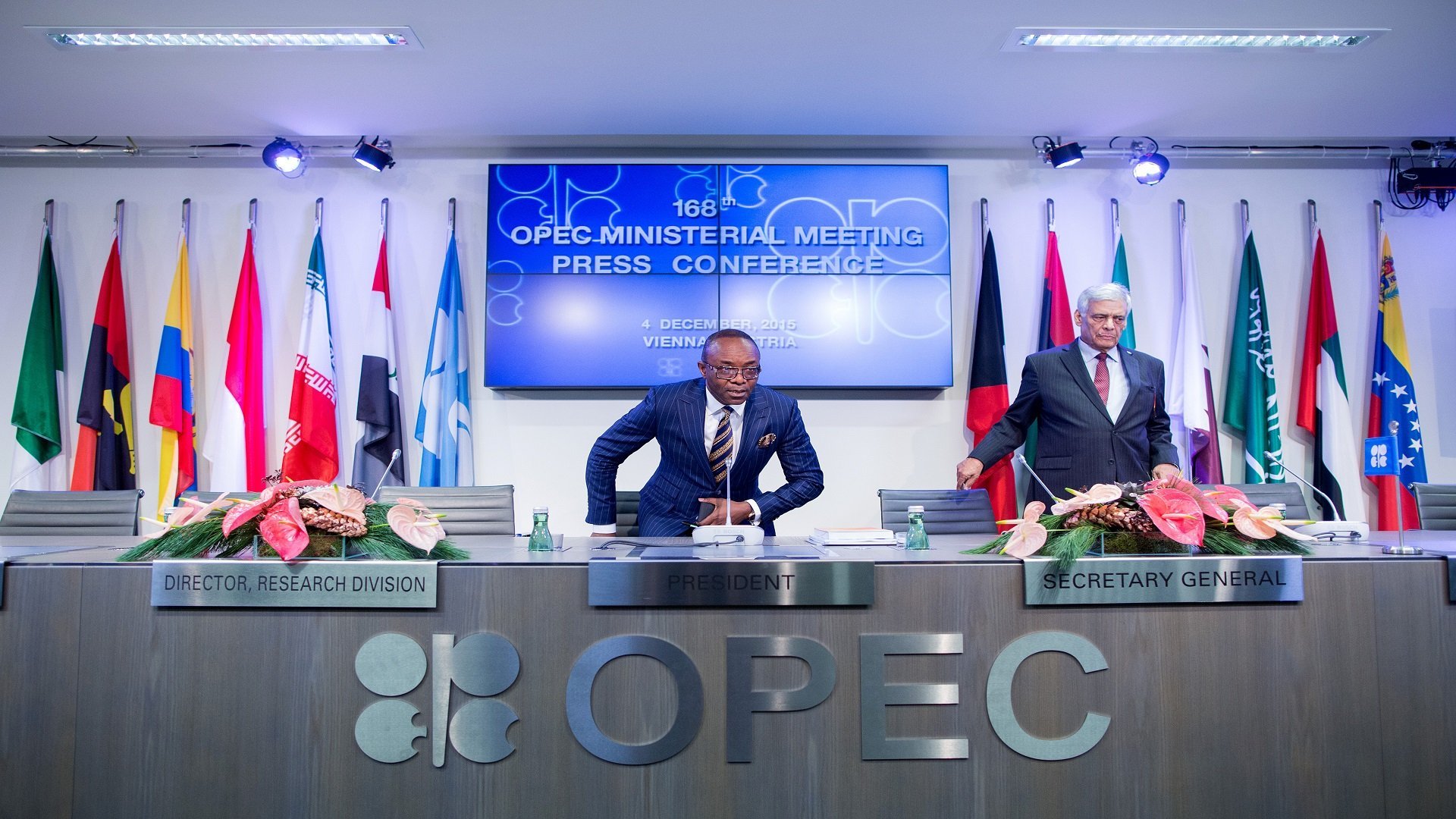
Producers grouped under OPEC+ are preparing to approve a modest rise in oil‐production targets for December, in an effort to balance market share ambitions against signals of oversupply and constrained output growth. Three delegates familiar with the discussions indicated the increase is expected to amount to roughly 137,000 barrels per day, mirroring the size of the hikes seen in both October and November.

The key players in the alliance include Saudi Arabia, Russia, the United Arab Emirates, Iraq, Kuwait, Oman, Kazakhstan and Algeria. The group’s online meeting scheduled for Sunday is expected to formalise the decision.

The incremental increase is part of a broader strategy underway since April, in which OPEC+ has raised output targets by more than 2.7 million barrels per day, amounting to about 2.5 per cent of global supply. However, the pace has been deliberately slowed from earlier months as signs emerge of an excess in global supply pools, including a forecasted surplus of over 3 million barrels per day in the current quarter.

Market analysts, including those at RBC and Rystad, anticipate the 137,000 bpd figure to represent the baseline scenario. Some delegates are also said to be weighing a pause on further hikes if supply conditions deteriorate.

Russia faces particular hurdles in supporting the quota rise, as Western sanctions limit the capacity of the Russian oil sector to boost output rapidly. That constraint is factoring into OPEC+ calculations as it debates whether to add more barrels to the market. Meanwhile, the UAE has been granted a higher production quota through to September 2026, enabling a phased increase of up to 300,000 bpd in its case.

Oil‐price behaviour reflects the tension between supply ambitions and demand concerns. Brent crude dropped to around US$60 a barrel in late October amid oversupply fears and sluggish demand from Asia, but has since climbed back toward the mid‐US$60s on the back of sanctions on Russia and trade optimism.

OPEC+’s cautious approach is informed by concerns about a supply‐demand mismatch next year. The International Energy Agency has flagged that world supplies could outstrip demand by over 3 million bpd in the current quarter, with an even larger gap potentially forming in 2026.

One industry commentator noted that unless there is clear evidence of a disruption to supply, the group is unlikely to commit to a large output hike. That view underscores the balancing act between protecting market share and avoiding a price collapse driven by oversupply.

Compliance remains another pressure point for the alliance. Some OPEC+ members have struggled to lift production to their quotas due to infrastructure, regulatory or investment constraints, diluting the impact of nominal target rises. This has helped temper the immediate effect of output increases even as quotas climb.

A further consideration is the shale oil sector in the United States, where producers are ready to capitalise on any loosening of supply discipline. OPEC+ therefore faces a strategic dilemma: raise output and risk reigniting competition, or hold back and cede ground to non-OPEC supply growth.

For December the decision appears modest, signalling a move to restore barrels cautiously rather than aggressively. The virtual meeting on Sunday will thus act as a critical test of the alliance’s ability to calibrate policy around shifting global demand patterns and geopolitical risk.

Major banks in Nigeria posted solid earnings in the quarter ending September 30 as elevated interest rates and assets repricing lifted income streams, though underlying risks linger. Leading the pack, United Bank for Africa Plc recorded a profit after tax of ₦537.53 billion, up 2.3 per cent from the same period last year. Gross earnings rose 3.0 per cent to ₦2.469 trillion while net interest income climbed […]

Bengaluru is set to become a linchpin in global chip manufacturing as the India Cellular and Electronics Association and the Global Semiconductor Alliance formally announced a strategic alliance aimed at deepening the country’s role in global semiconductor value chains. The agreement, unveiled at a joint press conference co-organised with the India Semiconductor Leadership Roundtable, marks a significant push to integrate local design, manufacturing and packaging capabilities with global technology networks.

ICEA chairman Pankaj Mohindroo described the industry as standing at “an inflection point” and said the partnership with the GSA represented “a strategic step towards positioning India as a vital node in global semiconductor value chains, where design, manufacturing and innovation converge.” Meanwhile, GSA chief executive Jodi Shelton noted the collaboration with ICEA and the India Semiconductor Mission reflected “a shared commitment to connect India’s dynamic innovation with the global semiconductor ecosystem.” Under the terms of the alliance, the two bodies will co-host the India Semiconductor Leadership Summit in 2026, providing a forum where global fabless firms, design innovators and equipment suppliers will engage with emerging Indian fab and OSAT capacity.

The partnership is underpinned by India’s policy drive under the ISM. The government has approved an outlay of ₹76,000 crore to build semiconductor and display manufacturing ecosystems, and around ten projects with investment commitments of nearly ₹1.6 lakh crore have already been sanctioned. The alliance signals a concerted push not only to attract foreign capital but also to nurture domestic design champions and bridge the gap between India’s expanding electronics ecosystem and global supply chains.

Industry analysts highlight India’s strengths: a growing engineering talent pool, improving infrastructure and a policy regime increasingly supportive of semiconductor manufacturing. ICEA points to electronics output in India having reached USD 150 billion, with exports expected to surpass USD 50 billion. The doubling of the Electronic Component Manufacturing Scheme budget underscores the emphasis on scaling manufacturing capacity.

Nevertheless, challenges remain. Global semiconductor value chains remain highly concentrated, especially in fabrication and advanced node manufacturing. To catch up, India will need to address constraints including high capital intensity, access to specialised equipment, materials, technology transfer regimes and workforce readiness for advanced manufacturing operations. There is also the task of aligning timelines: large-scale chip fabrication plants typically take multiple years to commission and ramp. The broader global context matters too — recent supply-chain disruptions, geostrategic tensions and export controls complicate efforts for any aspiring hub.

Despite these hurdles, the ICEA-GSA partnership reflects a strategic recognition that design capabilities, ecosystem linkages, and global connectivity will matter as much as fabrication. By positioning India as a design-to-manufacturing platform and emphasising cross-border collaboration, the alliance aims to raise the country’s profile in the semiconductor supply chain beyond simply being a site for assembly. Industry figures emphasise this direction: Dr Randhir Thakur, chair of ICEA’s Semiconductor Leadership Forum and managing director & chief executive of Tata Electronics, described the partnership as poised to bring “the global and Indian semiconductor ecosystems closer, delivering unique value to customers, design companies, manufacturers and suppliers.”

On the global front, the GSA brings nearly three decades of experience connecting semiconductor leaders worldwide; its network includes chip-design firms, fabs, equipment vendors and global platforms like Google, Amazon and Tesla. Shelton remarked that the aim is for India to become a site where global design houses can work, test and scale—and thereby feed into the broader manufacturing and packaging ecosystem. GSA’s commitment to including India in its annual global executive events underscores the intent to shine a spotlight on India’s semiconductor ambitions.

Tokyo-based digital forwarder Shippio has secured fresh capital to accelerate its transformation of international trade logistics, signalling a push to capture a major share of cargo flows into and out of Japan and beyond. The company, founded in 2016, has raised a total of approximately ¥3.24 billion in its Series C round, comprising ¥1.87 billion in equity and ¥1.37 billion in debt financing, bringing its lifetime funding to roughly ¥7 billion overall.

Key investors in this round include DNX Ventures as lead investor, along with Suzuyo, New Commerce Ventures and YMFG Capital in the equity portion, and a consortium of financial institutions—such as Shoko Chukin Bank, Japan Finance Corporation, Mizuho Bank, Mitsubishi UFJ Bank and Resona Bank—providing the debt portion. The funds will support Shippio’s goal of capturing a 30 per cent share of Japan’s total cargo volume through product development, customer expansion and mergers and acquisitions.

Japan, as an island economy heavily dependent on imports and exports, has seen a dramatic up-surge in e-commerce and cross-border trade: customs clearance permits have reportedly increased eight-fold between 2016 and 2024. Despite this, many logistics operations remain mired in analog workflows and manual documentation. Shippio aims to plug that gap by deploying a digital platform that offers shipment tracking, cost analysis, invoice management and customs processing. The founder and co-CEO, Takanori Sato, has remarked that the company is building a multi-sided network for importers/exporters and freight forwarders, with an eye on becoming the leading digital forwarder in Asia.

Shippio’s growth trajectory is evident: industry data indicates the company achieved approximately US$1.8 million in revenue in 2024, up from roughly US$590 000 in 2023, representing year-on-year growth of more than 200 per cent. Though earlier funding profiles remain opaque, publicly available records state Shippio underwent a Seed round of ¥190 million in December 2018 and has proceeded through Series A and Series B stages.

The logistics industry in Japan presents both a compelling opportunity and formidable challenge. On one hand, the market is highly fragmented, low margin, and hard-to-digitise—qualities that deter many investors. On the other, digital disruption in freight forwarding is overdue and ripe for those who can execute. In an interview with a logistics-industry podcast, Sato acknowledged the complexity of the space, noting that legacy practices have persisted for decades, and that the challenge lies not simply in building technology but in shifting enterprise behaviour and workflows.

Shippio now aims to expand its platform coverage beyond freight forwarding into wider supply-chain orchestration, including customs brokerage, trucking and warehousing. The company has already opened an office in Ho Chi Minh City to establish a Southeast Asia footprint, recognising that Vietnam and other manufacturing-heavy nations will be key origins for cargo flowing to Japan and other Asian markets. Its ambition to gain 30 per cent share implies a very steep climb: the total Japanese import-export market for logistics services is large, and incumbent players have entrenched relationships.

Industry analysts observe that Shippio’s dual-capital structure—equity plus debt—reflects a hybrid growth model where the company needs forward-looking product development as well as stable working-capital to service logistics networks. The inclusion of major banks suggests confidence in Shippio’s revenue model and risk profile. However, some caution that scaling in freight forwarding entails managing international customs regimes, myriad carriers, modal shifts and often low visibility in cost structures and margins. How well Shippio executes integration of its digital platform with real-world assets and operations will determine whether it can move beyond a niche player into a regional logistics heavyweight.

BYD Co. has reported another significant dip in its quarterly profit, a trend that highlights growing challenges for the Chinese electric vehicle manufacturer. The company’s financial struggles are attributed to increasing domestic competition and intensified scrutiny within the rapidly expanding electric vehicle market.

The latest figures reveal a sharp drop in profit, signalling a tough period for BYD as it grapples with shifting market dynamics. The EV giant, which has long been a leader in China’s electric car market, is now confronting a series of pressures that have raised questions about its ability to maintain its leading position in the industry.

BYD’s financial results for the latest quarter show a marked decline compared to previous years. While the company has seen significant sales growth, the rapid expansion of competitors and the tightening regulatory environment have severely impacted its profitability. Analysts point to these factors as the key contributors to the company’s poor performance, with increasing competition from both domestic and international manufacturers.

Several key rivals in the Chinese market have ramped up their EV production, offering more affordable models and aggressively targeting a broader consumer base. This surge in competition has intensified the pressure on BYD, forcing it to lower prices and increase marketing efforts to retain market share. However, such strategies have led to reduced margins, contributing to the company’s profitability issues.

Meanwhile, the regulatory landscape for EV manufacturers in China has become more stringent. The government has introduced new policies aimed at tightening emissions standards and ensuring greater transparency in the EV supply chain. These regulations, while necessary for the long-term sustainability of the sector, have added another layer of complexity for companies like BYD, which are already grappling with increasing competition.

Despite these challenges, BYD has maintained its status as one of China’s largest producers of electric vehicles. The company’s leadership has made efforts to pivot and adapt to changing conditions by focusing on new technology and improving vehicle quality. However, analysts suggest that its ability to sustain growth at its current pace may be compromised unless it can effectively manage both competition and regulatory pressures in the coming months.

The company’s performance also highlights a broader trend in the Chinese EV market, where competition is becoming fiercer as both established players and new entrants seek to capitalise on the booming demand for electric cars. International brands are also increasing their presence in the market, further intensifying the competitive pressure on domestic companies like BYD.

The global economic environment is adding to the uncertainty, as supply chain disruptions and fluctuating material costs affect car manufacturers worldwide. For BYD, the cost of raw materials, including lithium, a crucial component for batteries, has surged, further eroding its profitability.

BYD’s management is reportedly focusing on cutting operational costs, improving manufacturing efficiency, and exploring new international markets to counter the pressure it faces at home. The company has already made moves to expand its footprint in Europe, where demand for electric vehicles is steadily increasing. However, this shift to international markets will require significant investment in infrastructure and brand development, which may take time to yield results.

Dubai-listed Union Properties has unveiled a major new development in the Motor City master plan, the Mirdad project, which will be valued at 2 billion UAE dirhams. Spanning over 356,931 square feet, the project promises to be a landmark addition to the emirate’s real estate landscape, with construction set to be completed by the fourth quarter of 2028.

The Mirdad development will consist of four residential towers offering a total of 1,087 apartments. Aimed at catering to the growing demand for high-quality living spaces in Dubai, the project has been designed with a focus on both luxury and functionality. The strategic location within Motor City places it at the heart of a thriving district, already home to numerous businesses, entertainment venues, and residential communities.

Union Properties, one of Dubai’s prominent real estate developers, has ensured that the Mirdad project will stand out not just for its scale but for the range of amenities it offers. The development will feature over 26 indoor and outdoor facilities designed to enhance the quality of life for its residents. These amenities include wellness-oriented spaces such as a pocket Zen garden, dedicated yoga lawns, and spas, catering to those seeking tranquility and relaxation. Additionally, the development will have resort-style pools to provide a luxurious and leisurely lifestyle.

The project is also tailored for modern professionals, with coworking hubs integrated into the design. These hubs are intended to support the rising trend of remote and flexible work, offering residents dedicated spaces to work, collaborate, and innovate. The inclusion of multipurpose halls further supports the development’s versatility, making it suitable for both professional gatherings and community events.

Union Properties has made a concerted effort to address the growing demand for integrated lifestyle communities in Dubai. The Mirdad project aims to provide a balanced living experience, where residents can enjoy comfort, convenience, and wellness all in one place. The strategic mix of residential, recreational, and workspaces reflects the changing preferences of modern residents who seek a holistic living environment that supports both personal well-being and professional success.

Construction on the Mirdad project is already underway, with the developer keen to meet its 2028 deadline. The phased completion of the development will ensure that each aspect of the project is meticulously crafted, from the towers themselves to the expansive array of amenities. The development’s focus on sustainability and contemporary design further positions it as a significant addition to Dubai’s ever-expanding skyline.

Dubai’s property market has remained resilient in recent years, buoyed by an influx of international investment and a thriving tourism industry. Union Properties’ Mirdad project is set to capitalize on this momentum, offering both investors and residents an opportunity to be part of a rapidly developing area within the city. As more people seek to live, work, and play within the same community, projects like Mirdad represent the future of urban living in Dubai, where convenience and luxury are seamlessly integrated.

The DFA Design for Asia Awards 2025 has opened its submission window for entries, signalling a heightened push to elevate Asian-led design onto the global stage. Organised by the Hong Kong Design Centre in partnership with the Cultural and Creative Industries Development Agency of the Hong Kong Special Administrative Region, the awards target projects that demonstrate innovation, social impact and cross-border relevance. The entry period runs from 1 April to 7 July 2025, allowing participants to apply across six design disciplines and 30 diverse categories.

The competition spans Communication Design, Digital & Motion Design, Fashion & Accessory Design, Product & Industrial Design, Service & Experience Design, and Spatial Design. Eligibility is specified for projects launched in one or more Asian markets between 1 January 2023 and 31 May 2025, signalling a forward-looking emphasis on design influenced by the region’s evolving markets. A 50 per cent early-bird discount on the entry fee is offered for submissions by 30 April, roughly halving the cost to HKD 1,100 from the standard HKD 2,200 per entry.

The competition’s organising body emphasises that submitted projects should go beyond aesthetic appeal to reflect cultural values, social responsibility and human-centred innovation. The awards platform is positioned as a launchpad for designers and companies to gain international recognition, network globally and exhibit work in both online and physical showcases. The judging panel comprises design professionals from across the world, applying rigorous assessment criteria including creativity, usability, sustainability, aesthetic quality, and impact in Asia.

Key strategic shifts in this edition include an extended submission deadline and an expanded suite of benefits for winners, which include trophies, certificates, inclusion in an awards publication, eligibility for exhibitions and an online gallery, as well as invitations to high-profile events such as the Business of Design Week. This broadening of value-added rewards underscores the awards’ intent to deepen its role not merely as a recognition mechanism but as an accelerator of design careers and commercial opportunities.

Emerging design hubs across Asia stand to gain elevated visibility through this platform. Analysts observe that as demand grows for design solutions rooted in local culture yet globally scalable, events like these help bridge creativity with market viability. One jury member from a previous edition noted that a winning spatial design in Hong Kong “interprets what a library should be architecturally” and “brings the outdoor space indoor,” illustrating how design can engage both aesthetic and functional concerns.

Challenges persist for participants, particularly in meeting the criteria of “impact in Asia” while maintaining global relevance. Designers must navigate a competitive field: in the 2024 edition, 215 awardees were recognised across Grand, Gold, Silver, Bronze and Merit levels. The ability to demonstrate both commercial success and societal benefit is increasingly important, underscoring the awards’ focus on real-world outcomes rather than purely conceptual achievements.

Corporate and design-studio entrants will need to align submissions with multiple review dimensions: geographical market launch, human-centred innovation, sustainability credentials, and cultural resonance. A deeper trend is evident in how the awards reflect the evolving design ecosystem in Asia: beyond Hong Kong and major capitals, secondary cities and cross-border design collaborations are gaining traction. The judging criteria explicitly reward cross-market impact and innovation that resonates beyond local boundaries.

For the design industry, participation offers strategic advantages. Winning projects receive global exposure through awards publications and exhibitions, enabling both established studios and emerging talent to secure business leads and partnerships. The inclusion of the online showcase platform ensures that award-winning work reaches a wider audience beyond the physical event footprint. Observers suggest that for design firms seeking to expand internationally, a credential from this awards programme adds credibility in a crowded market.

Financially, the fee structure and early-bird promotion lower barriers to entry, but entrants must commit to a publication and promotion fee if selected as winners. This consideration means designers must evaluate the return on investment in terms of exposure and business potential. The awards’ transparency around deliverables and eligibility criteria signals a mature stage in its evolution since its launch in 2003.

Organisers have emphasised that the awards welcome designs with “deep Asian cultural roots” yet global aspirations, underscoring a dual objective of cultural preservation and market expansion. As the platform attracts entries from across the Asia-Pacific region, this edition could reveal emerging trends in spatial design, sustainable product systems, inclusive services and motion design. The overarching theme is that design is not simply aesthetic but a tool for transformation—economically, socially and culturally. Entrants are therefore expected to present work that balances form and function, local context and global relevance.

A memecoin tied to a golden statue of Changpeng Zhao, founder of Binance, erected near the U. S. Capitol, plunged roughly 99 per cent after he publicly disowned it. The token, dubbed “CZStatue”, surged by more than 27,000 per cent in a single day before crashing from around 17.5 cents to near zero. It recorded approximately $1.2 billion in trading volume during its brief high—raising red flags around market manipulation and the underlying token contract.

Zhao labelled the project a “quick-buck” scheme and urged his followers not to buy the token, writing: “While I want to appreciate the gesture, the fact that there is a meme coin associated with this means the creator probably just wanted to make a quick buck off an interaction from me. This is something I don’t appreciate. Don’t buy the meme.” Analysts say this public warning triggered a swift loss of confidence among retail investors.

Blockchain data reveals the token contract restricted selling only to the creator, effectively creating a honeypot scenario in which buyers were unable to exit their positions. More than 1,100 wallets remain stuck holding near-worthless tokens, prompting concerns of investor harm and potential regulatory scrutiny. One observer remarked that the episode bore the hallmarks of a “pump and dump” disguised as a fan-driven initiative.

The statue, reportedly a four-metre high golden representation of Zhao making his signature “ignore FUD” gesture, was commissioned by his fan community with plans to gift it to Zhao or auction it for his charity project. The token’s launch capitalised on the statue event, tying the hype to Zhao’s personal brand and the physical monument’s publicity. Zhao issued a social-media statement clarifying he had neither authorised the token nor requested the statue, and reaffirmed his disapproval of profit-driven uses of his likeness.

Cryptocurrency analysts warn that this incident spotlights broader vulnerabilities in the memecoin ecosystem: a blend of social-media hype, celebrity association and unregulated token mechanics. One metrics firm noted that more than 80 per cent of new memecoins in 2025 displayed non-standard contract features that favour insiders and restrict liquidity for retail investors. Regulators in several jurisdictions are stepping up monitoring of such tokens, given concerns around investor protection and potential financial losses.

An international distinction celebrating the company’s culture of human excellence and innovation PARIS, FRANCE – Media OutReach Newswire – 30 October 2025 – HepTa Advisory-Labs has earned the Best Place to Work 2024 certification, joining the exclusive community of organizations recognized for the exceptional quality of their workplace environment and their commitment to employee well-being. This distinction, awarded following a rigorous evaluation conducted among employees and the […]

The African Development Bank has approved a US$75 million financing package for Nyanza Light Metals Pty Ltd of South Africa to construct an 80 000-tonne-per-year titanium dioxide pigment production facility at the Richards Bay Industrial Development Zone. The plant will process locally and regionally sourced ilmenite ore into high-value pigment used in paints, coatings, cosmetics, food processing and medical applications. The financing deal includes US$50 million drawn […]

Matein Khalid Critical minerals have become a national security priority for GCC states as China has weaponised its dominance over supply chains, refining capacity and magnet production. These materials, including lithium, nickel, cobalt, tin, tungsten, vanadium and germanium, are essential for defence systems such as Lockheed’s F-35 stealth fighters, Raytheon’s hypersonic missiles and General Dynamics’ Virginia-class submarines, as well as civilian applications in advanced semiconductors, electric vehicles, […]

Most central banks in the Gulf Cooperation Council moved swiftly to lower key interest rates after the Federal Reserve trimmed its policy rate by 25 basis points, reinforcing the strong alignment between Gulf monetary policy and that of the United States. The decision saw the Central Bank of the UAE reduce its overnight deposit facility base rate to 3.90 per cent from 4.15 per cent, while the Saudi Central Bank trimmed its repo rate to 4.50 per cent and reverse-repo rate to 4.00 per cent.

This round of cuts marks the second such move by the Federal Reserve this year and comes amid a backdrop of moderating inflation globally and a focus on supporting non-oil growth across the region. Two Fed policymakers dissented in the decision, and Chair Jerome Powell cautioned that a December rate cut was not assured.

The Gulf region’s strong inclination to follow U. S. monetary policy stems from the fact that five of the six GCC currencies, including the Saudi riyal, UAE dirham and Qatari riyal, are pegged to the U. S. dollar. Only the Kuwaiti dinar is linked to a pegged basket of currencies of which the dollar is the dominant component, giving Kuwait greater policy flexibility.

Beyond the peg dynamics, the rate cuts serve a broader strategic goal: to reduce borrowing costs and stimulate investment in sectors aligned with the region’s diversification agenda, such as real-estate, manufacturing and tourism. According to analysis by CFI, inflation in the Gulf is projected to hover around 1.9 per cent in 2025, with GDP growth estimated at 4.0 per cent on average, meaning there is space to ease monetary policy without immediate inflation risk.

While the broad pattern across the region is one of alignment with Washington, there are subtle distinctions. Kuwait opted to hold its rates unchanged, signalling that local conditions rather than external alignment would guide its stance. Analysts say that Kuwait’s stronger inflation headwinds and different economic profile justify such a deviation.

Market watchers note that the rate cuts may deliver stimulus to credit growth, though some risks remain. Lower interest rates could dampen returns on traditional savings vehicles and simultaneously sharpen competition among banks. For governments and businesses in Gulf economies, cheaper financing may bolster infrastructure projects and non-oil activities. A weaker US dollar, another by-product of U. S. policy easing, could lend further support to oil prices—helping export-based economies—but it also carries the risk of higher import costs.

In the UAE, the central bank’s move to 3.90 per cent marks the lowest policy rate since 2022. This step is expected to make loans and mortgages more affordable, offering a boost to the non-oil sector and domestic demand. In Saudi Arabia, the rate adjustment is directly aligned with the broader reform agenda under its Vision 2030, which hinges on greater private-sector participation and attraction of foreign investment requiring cheaper capital.

Some central bankers caution that while rate cuts provide stimulus, they cannot fully offset structural headwinds such as global energy demand shifts, supply chain disruptions and geopolitical uncertainty. The Federal Reserve’s cautious tone — emphasising that further cuts are not guaranteed — adds an extra layer of uncertainty for regional banks that shadow U. S. policy.

In this context, Gulf monetary authorities appear to be striking a careful balance between maintaining currency stability, supporting growth and safeguarding financial stability. As their economies strive to scale non-hydrocarbon sectors, the timing and scale of rate cuts are being calibrated not only to external headwinds but also to domestic structural priorities.

LISHUI, CHINA – Media OutReach Newswire – 29 October 2025 – At the 78th World Health Assembly in Geneva earlier this year, a rural healthcare project from eastern China drew global attention. The mountain county of Jingning She Autonomous County in Zhejiang’s Lishui City introduced its “Smart Mobile Hospital + AI” model — an innovation that shows how digital transformation can bring quality medical services to remote […]

VISHNU RAJA
RYO YAMADA
HITORI GOTOH
IKUYO KITA