News related to
Exchanges

Nasdaq has issued a formal letter of reprimand to TON Strategy, citing a breach of listing rules after the company raised equity and used nearly half its privately raised funds to acquire a large holding in Toncoin without obtaining required shareholder approval. According to the regulatory filing, the company’s issuance of new common stock and warrants during a private investment in public equity transaction in August exceeded the 20 per cent threshold of outstanding shares that triggers an approval requirement.

The issuer, formerly known as Verb Technology and re-branded earlier this year to become a listed vehicle focused on digital asset treasury strategy, announced a $558 million PIPE closed on 7 August. The company disclosed that approximately 48.78 per cent of those proceeds were used to purchase Toncoin.

Nasdaq’s notice pointed out the omission of shareholder approval, which is required when share issuances exceed thresholds designed to protect existing investors and maintain transparency. The exchange concluded that while the misstep was a violation, it did not appear to reflect intentional avoidance of rules and therefore did not recommend delisting the company’s securities.

Toncoin’s market price reacted sharply, declining more than 5 per cent to around $2.165 following the notice, and trading volumes surged, which analysts interpreted as heightened investor concern about governance risks in crypto-linked public-company structures.

In a briefing, TON Strategy CEO Veronika Kapustina had warned that the nascent model of publicly traded cryptocurrency treasury firms could be showing “early indications of a bubble”, pointing to rising valuation and risk of complacency in transparency.

The leadership change within TON Strategy also drew attention: on the closing date of the PIPE, the firm appointed Manuel Stotz, former president of the TON Foundation, as Executive Chairman. The combination of leadership transition, major token purchase, and share issuance without vote has raised questions around alignment of interests and governance framework.

Market observers say the incident underscores a broader trend where public companies are adapting treasury models that hold large cryptocurrency positions, creating novel intersections of asset-class risk, corporate finance and regulatory oversight. Each of these linkages raises fresh scrutiny as traditional exchanges apply inspection regimes developed for conventional equity markets. One analyst commented that “crypto treasury firms now face the same listing rigour as any industrial company, but with far less precedent to guide them”.

For TON Strategy and its shareholders, immediate focus will be on how the company responds within the 45-day window typically afforded by Nasdaq to submit a corrective plan. The notice does not affect the company’s listing status so long as it meets other requirements, but revisions may include retroactive shareholder approval or altered future financing protocols.

Dubai telecom operator du has launched a new cloud-mining subscription service named “Cloud Miner” offering residents in the UAE access to cryptocurrency mining without the need to purchase or operate hardware. The offering was introduced at a launch event held at the Burj Khalifa and will be managed under du’s B2B sub-brand du Tech. Customers will be able to lease 250 terahashes per second of mining capacity […]

Seoul and Beijing accelerated bilateral engagement on Saturday when their leaders met on the sidelines of the Asia-Pacific Economic Cooperation summit in Gyeongju. President Lee Jae Myung of South Korea and President Xi Jinping of China signed a new five-year currency swap worth about 70 trillion won between their central banks, and agreed six memorandums of understanding covering economic cooperation, agriculture and services trade. This financial pact mirrors one that expired last month and signals a stronger push by both Seoul and Beijing for deeper economic synchronisation.

At the same time, the two administrations flagged potential restoration of cultural exchange channels that were effectively shut down more than a decade ago. China’s informal ban on South Korean entertainment—spanning K-pop, television dramas and film—was imposed following Seoul’s deployment of a U. S. missile defences system, which Beijing viewed as a strategic threat. At the summit, Lee and Xi agreed on the need to expand cultural cooperation, though Lee’s office cautioned that the dialogue reflected “courtesy comments” rather than final decisions.

Analysts describe the summit as a signal of warming relations after years of tactical distancing around security issues. Lee pressed for China’s constructive involvement in facilitating dialogue with North Korea, emphasising that high-level exchanges between Pyongyang and Beijing had ramped up. Xi reaffirmed China’s policy of strategic consistency and pledged deeper communication with Seoul. In parallel, the Korean and Chinese law-enforcement authorities signed an MOU to combat transnational voice-phishing and online scam crimes. Other MOUs addressed cooperation in the silver industry, innovative start-ups and agricultural exports from South Korea to China, reinforcing the emphasis on citizen-facing and practical cooperation.

Still, important caveats remain. While the swap agreement and MOUs represent tangible results, they come against a backdrop of prominent domestic dissent in South Korea. Thousands of protesters rallied in Seoul ahead of the summit, chanting anti-China slogans and highlighting a rising climate of nationalist sentiment. The South Korean government has acknowledged that such unrest risks undermining its diplomatic efforts and international standing. On the cultural front, though the possibility of lifting the ban on Korean content in China was raised, officials stressed that legal and procedural constraints remain in place and the matter is “premature” to reinterpret as a full reopening.

Commercially, the new swap line aims to bolster market stability for both nations amid global economic uncertainty and an intensifying U. S.–China rivalry. For cultural industries in South Korea—home to major firms such as Hybe, SM Entertainment and CJ ENM—the prospect of access to China’s vast audience is tantalising but still uncertain. For Beijing, deeper cultural ties with Seoul could ease past tensions and bolster the role of cultural-and-creative industries in economic growth, as alluded to in the summit’s wider Asia-Pacific framework which emphasises the importance of such sectors alongside digital transformation and artificial intelligence.

Seventeen years after the publication of the nine-page document titled “Bitcoin: A Peer-to-Peer Electronic Cash System,” authored under the pseudonym Satoshi Nakamoto on 31 October 2008, the digital asset known as Bitcoin has evolved from an experimental peer-to-peer payment proposal into a multi-trillion-dollar fixture of global finance.

At its launch, the paper proposed a decentralised network free of financial-institution intermediaries, aiming to avoid double-spending through a proof-of-work mechanism. Over the years the network has grown into a dominant cryptocurrency, and observers say that Bitcoin’s role in financial markets has shifted markedly. A study examining institutional adoption found that Bitcoin’s correlation with major equity indices — once low — rose to as high as 0.87 in 2024, signalling growing integration with mainstream markets.

Institutional interest forms a central pillar of this transformation. Following the approval of spot Bitcoin exchange-traded funds in the United States in January 2024, which drew in more than $50 billion in inflows, traditional asset managers such as BlackRock and Fidelity Investments gained routes for mainstream investors to access Bitcoin. Some corporations have adopted Bitcoin as part of corporate treasury strategy: around 80 companies now hold approximately 3.4 per cent of total Bitcoin supply.

Despite this ascent, some early proponents of Bitcoin’s original vision — that of a decentralised digital cash usable for everyday transactions — argue that the current model leans more toward its status as “digital gold” than as peer-to-peer money. Payment-system advances like the Lightning Network seek to restore that vision, enabling faster and cheaper transactions on-chain. Meanwhile, critics highlight that energy consumption and regulatory uncertainty continue to pose risks to Bitcoin’s wider adoption.

Regulatory momentum also remains uneven. While the United States moves closer to clearer rules through legislation such as the proposed Clarity Act — which analysts estimate has an 80 per cent chance of passing by early 2026 — global approaches vary significantly. Some jurisdictions have embraced crypto frameworks, while others maintain prohibitive stances. The potential for banks and custodial institutions to operate more directly with digital assets is gaining attention.

Technologically, Bitcoin remains foundational. The original protocol, unchanged at its core since its launch, still underpins a thriving ecosystem of wallets, exchanges and blockchain analytics. That continuity has contributed to its brand as the ‘first mover’ in the cryptocurrency space. At the same time, ecosystem participants are attending to scalability challenges, security risks tied to quantum computing and ecosystem fragmentation through forks.

On the macro-economic front, Bitcoin is increasingly viewed as a hedge or alternative asset, though its extreme price volatility continues to limit its suitability for everyday payments for most users. A survey found 63 per cent of Americans did not feel confident investing in or using cryptoassets, and among adults aged 50 or over that figure rose to 71 per cent. At the same time, the asset’s market cap has situationally breached the $2 trillion mark, reflecting its material scale within finance.

The evolution of Bitcoin also reflects a broader shift in financial architecture: decentralised networks and tokenised assets are increasingly challenging traditional models of money, payment and settlement. Analysts argue that the next phase of Bitcoin’s maturation will hinge on regulatory clarity, technological scalability and an enhanced role in everyday commerce, rather than only institutional accumulation.

The blockchain platform admittedly known as Qtum has rolled out a new desktop artificial-intelligence agent called “Ally”, aiming to shift the landscape of AI productivity from cloud-only assistants to desktop-native, multi-model orchestration. The launch positions Qtum as a player in both blockchain and artificial-intelligence domains as users increasingly demand local control, privacy and advanced automation beyond chat-based tools. Ally can run on both Windows and macOS platforms […]

CHENGDU, CHINA – Media OutReach Newswire – 29 October 2025 – From October 24 to 27, Chengdu, China, hosted the “Invitation from the Hometown of Pandas–Chengdu Panda Week” series of events in Frankfurt, Germany; Vienna, Austria; Paris, France; and Brussels, Belgium. The events included overseas promotion of the giant panda IP, panda-themed vehicle parades, art exhibitions, and more. “Hometown of Pandas: Dreams and Life” Themed Art Exhibition […]

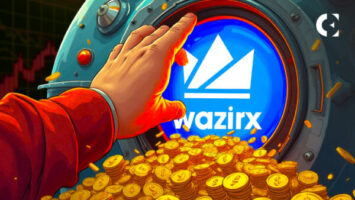
The cryptocurrency exchange WazirX will resume trading from 24 October, offering zero-trading-fees for a 30-day window as it restarts operations in phases through 27 October, according to the company’s announcement. The move follows regulatory and judicial approval of its restructuring scheme, signalling a fresh push to restore market presence and user confidence.

The phased rollout is structured across four days beginning 24 October, with around 25 per cent of listed tokens becoming tradeable each day until full functionality is reached by 27 October. The USDT markets will be enabled first, followed by INR trading pairs as part of the gradual reactivation. Trading will commence on each live token at 10:00 a. m. IST, with order-matching set to begin at 5:00 p. m. IST. The company emphasises that the fee-free period will be assessed for extension depending on user engagement and stability of the restart.

The zero-fee offer is designed to attract traders back to the platform and rebuild liquidity, at a time when trust in crypto exchanges remains fragile. WazirX management states that this incentive, coupled with a careful phased launch, is intended to “restore liquidity safely, confirm technical stability, and ensure a gradual and reliable return to normal trading across all market pairs.”

The relaunch arrives after the Singapore High Court sanctioned the restructuring scheme of WazirX’s parent entity, clearing a major regulatory hurdle. The process involved creditor-votes and considerable restructuring oversight, reflecting the seriousness of the platform’s operational freeze. The court approval is expected to pave the way for potentially unlocking user funds that had remained frozen since the suspension.

The exchange’s suspension followed a major cybersecurity incident in July 2024, when approximately US$230 million was reportedly lost in one of the country’s largest crypto-hacks. The outage left the platform offline for over a year and a half, creating uncertainty for users and creditors. The company signals that its collaboration with a third-party custody provider is intended to strengthen asset security, responding to one of the principal criticisms that emerged from the hack.

Analysts say the relaunch is significant for India’s broader crypto ecosystem, which has witnessed growing regulatory scrutiny and pressure for tighter security and transparency standards. The move by WazirX could act as a bellwether for other exchanges, in terms of operational restoration and user-trust rebuilding efforts. However, the stakes remain high: many users still await clarity on withdrawals, disputing the timeline and adequacy of asset recovery efforts.

While the trading disruption is over, questions persist about how quickly WazirX can rebuild liquidity across its markets, re-list tokens that were delisted or migrated during the shutdown, and reassure the user-base that past vulnerabilities have been addressed. Some tokens have already been delisted or swapped in line with the exchange’s due-diligence review, further complicating the relaunch.

Advertisements

HANOI, VIETNAM – Media OutReach Newswire – 27 October 2025 – Professor Sir Richard Henry Friend, Chair of the VinFuture Prize Council, shared that what began as a bold idea five years ago has grown into a symbol of confidence in the power of science to serve humanity. For him, being part of VinFuture is not merely a mission, but a deeply inspiring journey—one that brings together […]

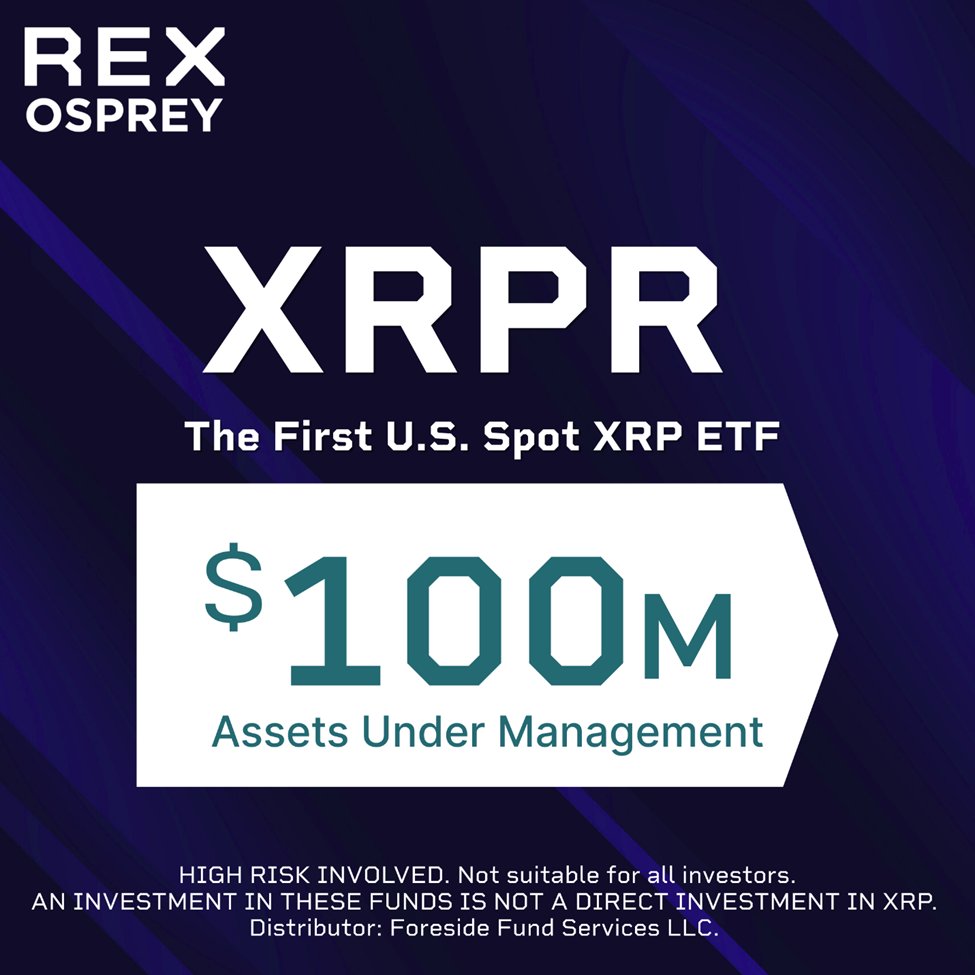
The REX-Osprey XRP ETF, the first U. S. exchange-traded fund offering direct exposure to XRP, has surpassed $100 million in assets under management within a month of its launch. Launched on September 18, the fund provides investors with a unique opportunity to gain direct exposure to XRP, the fourth-largest cryptocurrency by market capitalization, without the complexities of purchasing the digital asset itself.

According to REX Osprey, the firm behind the launch of the ETF, the rapid growth in AUM highlights the increasing interest in digital assets and their integration into mainstream investment products. The ETF, which trades on the Cboe BZX Exchange, allows investors to gain exposure to XRP through a traditional brokerage account, making it more accessible than purchasing the cryptocurrency directly on exchanges.

XRP has long been one of the most controversial and volatile cryptocurrencies, primarily due to its ongoing legal battle with the U. S. Securities and Exchange Commission. The SEC initially filed a lawsuit against Ripple Labs, the company behind XRP, alleging that the cryptocurrency is an unregistered security. However, recent developments in the case, including partial victories for Ripple, have given a boost to investor sentiment, contributing to XRP’s price increase and the subsequent success of the ETF.

Since its launch, the XRP ETF has attracted both institutional and retail investors seeking exposure to the cryptocurrency market in a more regulated, liquid form. The growth in AUM also underscores the growing demand for innovative financial products that allow mainstream investors to participate in the digital asset space without directly owning the underlying cryptocurrencies.

The popularity of cryptocurrency ETFs has been rising globally, and the launch of XRPR marks a significant milestone in the U. S. market, which has been cautious in approving crypto-based exchange-traded products. The approval of the XRP ETF comes at a time when other digital asset ETFs, such as those based on Bitcoin and Ethereum, have seen significant traction. The success of these products has raised expectations for further expansion of the cryptocurrency ETF market, especially as regulatory clarity surrounding digital assets continues to improve.

The launch of the REX-Osprey XRP ETF also reflects broader trends in the financial markets, with traditional financial institutions increasingly integrating cryptocurrencies into their offerings. Institutional investors, who have historically been wary of the volatility and regulatory uncertainty surrounding digital assets, are now more open to exploring the potential of blockchain technology and digital currencies as part of a diversified investment portfolio.

XRP, which has faced significant volatility over the years, has experienced a surge in value following key legal victories in its ongoing battle with the SEC. Ripple’s partial legal wins have boosted investor confidence, and many view the outcome of the case as a critical factor in the future of XRP’s market position. The cryptocurrency’s price has seen a sharp upward movement in response to the more positive outlook surrounding the lawsuit.

The success of the XRP ETF reflects growing confidence in XRP as an investment vehicle, despite the regulatory uncertainties that continue to surround it. While there are still ongoing legal challenges, the launch of this ETF signals a shift in how the cryptocurrency market is viewed by investors and regulators alike. The ability to trade XRP through an exchange-traded fund allows for more streamlined access to the asset, eliminating some of the complexities involved in handling digital currencies directly.

Inaugural “Hong Kong Student Ambassador Programme for Chinese Medicine and Health Care” Graduation Ceremony Students Showcase Their Learning Outcomes HONG KONG SAR – Media OutReach Newswire – 26 October 2025 – Beijing Tong Ren Tang Chinese Medicine Company Limited (“Beijing Tong Ren Tang”) (3613.HK) yesterday hosted the 10th anniversary retrospective exhibition of its “Tong Ren Tang Stroke Prevention Campaign” community health activity at its Tai Po Production […]

Gulf states are emerging as influential players in digital assets, with governments across the region intensifying efforts to regulate cryptocurrencies, tokenisation and Web3 innovations. A growing number of jurisdictions are introducing licensing frameworks for virtual asset service providers, stablecoin regimes and asset-tokenisation structures, signalling a shift in strategy from reactive oversight to proactive design.

The Central Bank of the United Arab Emirates has introduced a Payment Token Services Regulation that obliges issuers, distributors and custodians of payment tokens to maintain full reserve backing, undergo mandatory licensing and meet robust anti-money-laundering and cybersecurity standards, thereby positioning the UAE as a regulatory pioneer in the region. Across the region, countries such as Bahrain and Saudi Arabia have developed layered digital-asset frameworks, with Bahrain’s central bank among the earliest movers and Saudi launching fintech sandboxes and pilot token-asset schemes under its Vision 2030 plan.

Market data underline these developments. Analysis shows that between July 2023 and June 2024 the Middle East and North Africa region handled some US$338.7 billion in on-chain crypto value, accounting for approximately 7.5 per cent of global transaction volume. Institutional flows dominate: about 93 per cent of value transferred in the region came in amounts of US$10,000 or more.

Several regional platforms have obtained new licences under this regulatory push. The region’s first licensed crypto-asset service provider, Rain Financial Inc., has expanded its services under licence from both Bahrain’s regulator and Abu Dhabi’s ADGM-FSRA. In Bahrain, over 50 firms including nearly half focused on digital-assets are in discussions to establish operations under the Central Bank’s regime.

The tokenisation of real-world assets is gaining traction, with banks and global institutions exploring issuance of token-backed bonds, real estate and commodity-linked tokens. According to consultancy research, tokenisation could add as much as US$230 billion annually to MENA-region GDP. Major international exchanges and asset-managers are establishing footholds: for instance, the global exchange Binance uses the UAE as its regional base and has obtained a licence under Dubai’s Virtual Assets Regulatory Authority.

Despite this momentum, the region faces challenges. Implementation remains uneven: regulatory capacity across jurisdictions varies, local consumer-protection rules are still emerging and cybersecurity vulnerabilities in wallet providers and exchanges pose material risk. Energy-use and environmental impacts of crypto-mining have also drawn regulatory scrutiny: in one Gulf city, electricity consumption fell by over fifty per cent after enforcement of mining curbs.

Taxation and corporate-governance issues are also under development. In Saudi Arabia individuals currently pay no capital-gains tax on crypto, though businesses may face up to 15 per cent tax with corporate income taxed at 20 per cent plus a 2.5 per cent zakat levy. Given the youth-skewed demographics of Gulf markets and high smartphone penetration, regulators see digital-assets as both a diversification lever and a conduit to broader fintech innovation.

For global crypto and Web3 players the Gulf region offers a combination of clear regulation, large capital pools and government-driven ambition. However firms must navigate rigorous licensing conditions, reserve-backing rules, AML frameworks and evolving governance standards. The regulatory focus on stability and consumer protection underscores that the region expects digital-asset innovation to be embedded in mainstream finance rather than existing outside it.

Mumbai-based crypto exchange WazirX has enabled both Indian-rupee and cryptocurrency deposits as it moves toward resuming full trading and withdrawal services, signalling a critical recovery phase after its high-profile $230-million hack. The platform will initiate trading on 24 October 2025, launching with zero trading fees across all pairs for at least 30 days, and is rolling out withdrawals gradually.

WazirX’s comeback is anchored on a restructuring plan approved by the Singapore High Court for its parent company Zanmai Labs Private Limited, which had been navigating creditor claims and asset recovery since the breach. The company has partnered with US-based custodian BitGo to manage digital-asset wallets and bolster security with insured, institutional-grade custody solutions.

Operating under a phased restart, WazirX will first enable crypto-to-crypto markets and the USDT/INR pair from 24 October, with other INR pairs added later. Deposits are active now; withdrawals will follow in stages. Users who opted in to the restructuring will receive so-called “Recovery Tokens” within ten business days, representing claims on illiquid or frozen assets.

This relaunch occurs after the July 2024 hack — attributed to the Lazarus Group by multiple governments — in which WazirX exposed vulnerabilities that resulted in loss of approximately $234 million in digital assets and triggered a suspension of trading, withdrawals and deposits. The setback had eroded trust among India’s crypto retail community and drawn regulatory scrutiny.

WazirX co-founder and CEO Nischal Shetty acknowledged the challenge of restoring confidence, stating on social media: “Our focus is only YOU — we are committed to a secure and transparent restart.” Still, some users have raised concerns over discrepancies in post-rebalancing balances, alleging that their credited holdings were lower than earlier display values. WazirX has pledged to release a detailed audit and reconcile any shortfalls.

Industry analysts view WazirX’s relaunch as a litmus test for Indian crypto exchanges, which have faced security, regulatory and trust-deficit issues. While the zero-fee offer may stimulate trading volume and liquidity, questions remain over how effectively WazirX can demonstrate enhanced operational resilience and compliance oversight. Further complicating matters is India’s evolving regulatory landscape: a proposed crypto-assets bill is under discussion, and exchange-licensing frameworks remain undefined.

For traders, the phased rollout presents both opportunity and risk. Market-makers caution that liquidity may be thin in the initial days, potentially creating wider spreads or slippage. WazirX’s blog announcement advises users to monitor token availability, confirm order execution conditions and treat first-day price action with caution. With a delisting of some tokens and swaps or mergers during the downtime, certainty over token status is also being tested.

The implied volatility of Bitcoin has remained unusually elevated even as the equity-market gauge of fear, the S&P 500 Volatility Index, has receded to its usual levels. Data show Bitcoin’s 30-day implied volatility hovering above 50 % after the October 10 market shake-up, while the VIX slipped back below 20 %. This divergence signals a significant recalibration of risk within crypto markets.

Analysts point to a cluster of structural pressures within the crypto ecosystem that are now being priced in: chief among them are auto-deleveraging mechanisms on exchanges, thinning liquidity depth, and offshore funding stress. According to Wintermute co-founder Yoann Turpin, “Bitcoin volatility was subdued earlier… It has now become clear that new risks … such as ADL were underestimated and are now being fully priced in.” In practice, when an exchange triggers ADL it forces closure of profitable offsetting positions when an insurance fund is depleted—this introduces an additional risk vector not present in the mainstream equity markets. The residual impact of a major liquidation event on October 10–11, estimated at over billion, has sharpened market caution.

Liquidity concerns are compounded by the behaviour of market-makers during the crash. According to a recent study, market makers withdrew roughly million from key order-books within hours of the triggering event, creating a vacuum in bid-ask depth and amplifying price moves. Participants say that while the VIX drop reflects a return of calm to equity markets after the shock, Bitcoin’s elevated IV suggests the market is in a higher-volatility regime rather than merely bouncing back. Liquidity in offshore markets, which heavily influences Bitcoin trading, appears particularly tight: for example, the Hong Kong Interbank Offered Rate has returned to pre-May levels even as the U. S. dollar index has risen, signalling funding stress that tends to feed into crypto volatility.

Another factor cited is the rapid growth of exchange-traded funds and over-the-counter desks absorbing Bitcoin supply, creating a supply-shock risk for derivatives and making hedging more expensive. A report warned of a potential “liquidity crisis” within six months for Bitcoin ETF structures unless infrastructure adapts. Meanwhile, the macro backdrop of easing interest-rates and previously abundant liquidity has given way to tighter conditions, which amplify volatility across leveraged assets.

Institutional interest in hedging Bitcoin risk has surged. Following the liquidation that knocked Bitcoin from about to roughly, investors rushed into options contracts that bet on further price drops—put-buying spiked as a hedge against renewed turbulence. Such demand for protection keeps implied volatility elevated even if spot prices settle. At the same time, the VIX’s retreat suggests equity investors believe the shock has passed; crypto markets apparently disagree.

The divergence is significant because implied volatility represents the market’s expectation of future price swings. A 50 % annualised IV for Bitcoin implies expected one-month moves of roughly; by contrast, a 20 % IV for the S&P 500 implies one-month moves of around. Such a gap underscores the unique risk environment in which crypto operates—where leverage, thin liquidity and exchange-specific infrastructure risk matter significantly. Academic research supports this: a recent study found Bitcoin’s risk-premia vary across volatility regimes, and that downside risk is significantly more priced in than with equities.

Market makers and trading desks are adapting. Some are widening spreads, reducing inventory and limiting exposure during volatile episodes—actions that in effect undermine liquidity further and contribute to the “sticky” implied volatility. One trader said that “no one slept” during the weekend of October 10–11, as the cascade of liquidations forced hedge funds and desks to scramble for cover amid evaporating depth.

CHANGSHA, HUNAN – Media OutReach Newswire – 22 October 2025 – On the morning of October 13, a ceremony for the transfer and incorporation of the Zidanku Chu Silk Manuscripts (Volumes Ⅱ and Ⅲ), namely The Five Elements Decree and The Offence and Defense Divination, into the collection of Hunan Museum was grandly held. Present at the ceremony were guests from both China and the United States, […]

HONG KONG SAR – Media OutReach Newswire – 20 October 2025 – The second annual Global Youth Powerhouse Summit 2025, organized by the Hong Kong Youth Professional Global Advocacy, officially took place today. The Summit has convened over 200 young professionals, government leaders, and corporate executives from Southeast Asia, the Middle East, and the Greater Bay Area, with over 5000 global participants from over 30 countries joining […]

Tokyo’s financial regulator is advancing a proposal that would permit domestic banks to directly invest in cryptocurrencies such as Bitcoin and operate crypto exchanges, marking a significant shift from earlier restrictions. The Financial Services Agency is set to present its plans to the Financial System Council—an advisory body to the prime minister—later this month.

Under the existing regime promulgated in 2020, Japanese banks have been effectively barred from acquiring and holding digital assets for investment purposes, owing to concerns about volatility and financial-stability risk. The new regulatory blueprint would align crypto asset holdings by banks with traditional financial instruments such as stocks and government bonds, while introducing capital and risk-management requirements tailored to the asset class.

According to data cited by the FSA, Japan’s crypto account holdings have climbed past 12 million as of February 2025—a roughly 3.5-fold increase over five years. The surge in retail interest is growing pressure on regulators to provide greater clarity and institutional-grade infrastructure. Amid this backdrop, the proposed reforms aim to usher in a more integrated digital-asset ecosystem under the purview of regulated financial institutions.

The FSA’s initiative encompasses three key pillars: Firstly, banks would be authorised to purchase and hold unbacked crypto assets for trading or investment, subject to strict internal controls and exposure limits.  Secondly, bank groups may register as licensed “cryptocurrency exchange operators,” effectively allowing them to offer trading and custody services in-house rather than relying solely on third-party platforms.  Thirdly, the FSA plans to shift oversight of digital assets from the current Payment Services Act regime into the Financial Instruments and Exchange Act framework, thereby affording crypto the same legal mould as securities.

Banking groups in Japan are already responding. Three of the country’s largest financial institutions—Mitsubishi UFJ Financial Group, Sumitomo Mitsui Financial Group and Mizuho Financial Group—have announced a joint plan to issue a yen-pegged stablecoin for corporate settlements, signalling a broader shift into digital assets.

Supporters of the reforms argue that allowing regulated banks to engage with crypto assets will bolster investor protections, improve custody and transactional infrastructure, and widen market access. “This reform will treat cryptocurrencies similar to other investible asset classes under bank supervision,” noted one industry analyst. However, sceptics caution that the volatility of cryptocurrencies remains elevated and that exposure must be managed carefully to prevent end-user or systemic risk.

Regulatory design will therefore place a heavy emphasis on limiting banks’ direct holdings of digital assets relative to their capital base, imposing heightened disclosure and governance mandates. One working-group paper recommends that banks maintain separate risk-allocations and stress-testing frameworks for crypto, akin to those used for foreign-exchange or commodity trading desks.

The tax and legal context are also evolving. Japan is preparing to introduce a flat 20 % capital-gains tax on crypto assets as part of its 2025 reforms, and certain tokens are slated to be reclassified as securities under the FIEA. These measures are designed to reduce uncertainty for institutional participants and global investors seeking regulated exposure to digital assets.

Market participants appear cautiously optimistic. Some regional banks are exploring pilot custody services for institutional clients, while fintech firms anticipate greater collaboration with mainstream banks as eligibility expands. On the flip side, legacy concerns persist: past hacks and exchange failures have left regulators and consumers wary of governance failures and inadequate transparency.

By K Raveendran     When Google announced that Visakhapatnam would be home to its $15 billion project to build the company’s first artificial intelligence hub in India, the news landed like a thunderclap across the southern states. For Andhra Pradesh, it was nothing short of a jackpot — a once-in-a-generation opportunity to rewrite the […]

The article Google’s AI Hub: Visakhapatnam’s Jackpot, South India’s Heartburn appeared first on Latest India news, analysis and reports on Newspack by India Press Agency).

Bitcoin’s price dropped below $105,000 early Friday in London trading, recovering marginally later but signalling mounting pressure in crypto markets. Bloomberg data showed a fall of as much as 3 percent before a modest bounce. The slide comes after a week of heightened volatility that has dragged digital-asset valuations lower.

The crypto sector has shed billions. Total market capitalisation fell to its lowest point since July, as institutional and leveraged positions faced heavy liquidations. Ethereum, the second-largest token, also fell sharply, trading under $3,800.

One key driver has been intensifying stress in U. S. regional banks. Shares of Zions Bancorp plunged after it disclosed a $50 million loan impairment, while Western Alliance is embroiled in fraud allegations tied to borrowers. Those troubles have sparked a “flight to safety” across risk assets, nudging investors away from speculative trades.

The collapse in derivatives markets was steep: over $1 billion in long and short positions were wiped out in rolling liquidations, especially on exchanges with aggressive leverage mechanics. The drop below the 200-day moving average—around $107,500—has undermined a long-term support zone, fuelling further anxiety among traders.

At the same time, trading volume surged. Weekly volume for Bitcoin hit its highest level since March, suggesting heavy participation even amid panic. Some analysts see that as a sign of re-accumulation by institutional players, though it remains unclear whether those inflows will stabilise prices.

Technical watchers are eyeing potential floor zones near $100,000, while others suggest $88,000 could act as an “open target” if selling accelerates. Meanwhile, on-chain data reveals that wallets holding between 100 and 1,000 BTC—sometimes called “shark wallets”—are accumulating aggressively, marking the fastest rate of inflow since 2013. Those trends echo previous panic phases, which often preceded longer rallies.

Some observers caution that Bitcoin’s repeated failure to behave as a “safe harbour” during market stress undermines one of its selling points. Still, others argue that the fundamentals remain intact—citing diminishing supply on exchanges, renewed institutional interest, and the durability of blockchain infrastructure.

Volatility is unlikely to subside soon. The week ahead includes major U. S. economic data releases and potential policy statements from central banks that could sway risk sentiment. In parallel, geopolitical frictions—particularly over trade and supply chains—may further rattle markets already in flux.

Over $250 million has been wiped out from leveraged positions across major cryptocurrency markets within the last 60 minutes, according to real-time tracker alerts. The bulk of the liquidations hit long bets, triggering a sharp lash of volatility that rattled traders across exchanges.

Data from multiple crypto-analytics feeds show that Bitcoin and Ethereum bore the brunt of the forced closures, with long positions cascading under mounting downward pressure. The alerts indicate that around $200 million of that total was liquidated in just the preceding 15 minutes. Margin calls and automatic stop-loss triggers have sharply pared back open interest.

Market participants point to a combination of lower-than-expected macro signals and heightened global risk aversion as catalysts for the sudden liquidation wave. Macro equity markets have seen risk assets fall under pressure over the past sessions, prompting a spillover into speculative crypto positions. The added strain from derivatives exposure amplified the move.

Crypto exchange data show that Binance, Bybit and OKX recorded the highest volumes of liquidations, especially in their perpetual futures markets. On Binance alone, over $80 million in long positions may have been forcibly closed, according to traders cross-checking the on-chain and order-book flows. Ethereum perpetuals also registered substantial losses, particularly in mid- and high-leverage tiers.

Analysts observing funding rates and open interest across exchanges have flagged an abrupt deleveraging. The funding rates for many altcoins flipped negative, signalling that the short side was gaining dominance as leverage unwound. Open interest across high-risk tokens dropped by 15 – 20 % in many cases, suppressing liquidity and heightening slippage.

Several algorithmic trading desks and quant funds experienced knock-on effects. As large liquidations pulled prices lower, stop orders cascaded, exacerbating the decline in thin markets. Some trading firms reported losses due to slippage and forced exits—even though positions were hedged—with automated strategies failing to escape the downdraft in time.

A few larger holders, often designated as ‘whales’, appear to have opportunistically repositioned. Some have placed bids closer to now-discounted levels in anticipation of a bounce; others reduced exposure altogether. On-chain indicators suggest increased inflows to stablecoin pools and accumulation in non-spot holdings, hinting at a cautious redeployment rather than wholesale exit.

Institutional interest remains muted amid the turmoil. According to contacts in digital-asset fund management, most institutions were already operating with limited leverage and hedges in place. Few entered new positions during the seizure of volatility, and many paused trades to watch whether support levels would hold.

By Girish Linganna The prisoner-hostage exchange between Israel and Hamas has been completed successfully, and many are calling it a major victory for peace. Twenty Israeli hostages returned home in exchange for about 2,000 Palestinian prisoners, aid started flowing back into Gaza, and guns fell silent after months of devastating conflict. But anyone familiar with […]

The article A House Built On Sand: The Fault Lines In Trump’s 20 Point Gaza Peace Plan appeared first on Latest India news, analysis and reports on Newspack by India Press Agency).

CJ Hetherington, CEO of Limitless Labs, has accused Binance of demanding 8 per cent of his project’s token supply and a multimillion-dollar deposit as conditions for listing. Binance, in a forceful rebuttal, called the allegations false and defamatory, and hinted at legal recourse.

Hetherington shared purported internal communications that outlined Binance’s demands: 1 % of the token supply for a day-one airdrop, 3 % for subsequent airdrops over six months, 1 % reserved for marketing, and another 3 % allocated to the BNB HODLer programme. He claimed Binance also asked for a $250,000 security deposit and required around $2 million in BNB as collateral. In total, he argued, these terms effectively extracted 8 % of total tokens in exchange for a listing.

Binance responded swiftly via its official X handle, stating it “does not profit” from token listings and that the content of Hetherington’s posts is “false and defamatory.” The exchange emphasised that it does not charge listing fees and that any required security deposits are typically refundable within one to two years. Binance also denied allegations of token dumping by its executives, calling them “entirely untrue and unsubstantiated.”

The exchange further asserted that Hetherington’s disclosures breached confidentiality, undermining trust and transparency in industry processes. It reserved the right to pursue legal action for what it characterised as unauthorised disclosures.

The dispute has drawn responses from industry observers. Mike Dudas, founder of 6MV, stated on X that he has seen Binance listing proposals with nearly identical terms in the past month and was able to talk about them because he did not sign a nondisclosure agreement. He implied the arrangement described by Hetherington reflects a recurring model.

Crypto analyst Howard Peng, by contrast, criticised Hetherington for publicising the discussions and labelled the move immature. Peng urged projects dissatisfied with listing proposals to walk away and suggested exploring alternative exchanges.

Binance founder Changpeng “CZ” Zhao also weighed in, arguing that successful projects should attract listings without paying “fees.” He wrote that if a project must “beg an exchange to list,” it indicates weak demand and could invite scrutiny from within the community.

The exchange’s defence comes amid broader regulatory scrutiny of centralised exchanges and their listing practices. Some market participants argue that hidden costs and opaque listing criteria undermine fairness and can stifle innovation, especially for emerging projects. Others maintain that exchanges are entitled to protective mechanisms—such as collateral or token commitments—to mitigate risk and ensure project stability.

Multiple posts flooding social media demand accountability—users call for a regulator-led probe, the CEO’s arrest, and deep scrutiny of Binance’s internal systems. The outcry follows recent chaos around synthetic tokens USDe, BNSOL, and wBETH, which lost their pegs on Binance amid massive liquidations. Compensation is flowing, but the narrative now centers on whether the crash was a desperate scramble or a deeply orchestrated exploit.

When Binance announced it would pay $283 million to users affected by depegging and associated liquidations, it framed the move as a goodwill gesture to restore stability. The payout applies to users whose positions used USDe, BNSOL, or wBETH as collateral between 21:36 UTC and 22:16 UTC on October 10. The exchange said compensation covers the difference between liquidation price and market price at 00:00 UTC on October 11, plus fees. It also promised to improve its risk-control systems and change how its indices weigh collateral assets..

These remedial steps, however, have not assuaged skeptics. Analysts at Uphold argued the event was no accident: they see the crash as a coordinated exploit of a vulnerability in Binance’s unified margin system, in which USDe, BNSOL, and wBETH were accepted as collateral. Because the exchange valued collateral based on internal order-book data instead of aggregated external prices, they say the system could be manipulated from within the venue itself. That, they believe, allowed an attacker to locally crash prices and trigger a cascade of liquidations.

One widely cited theory points to timing. Binance announced on October 6 it would update its pricing mechanisms to rely more on external oracles, with the changes scheduled for October 14. The incident happened on October 10—right in the middle of that eight-day window. In effect, critics argue, the exchange had acknowledged the flaw but had not yet implemented the fix, leaving a vulnerability no one should have touched. On-chain data shows USDe dropped to as low as $0.65 on Binance while remaining near parity across other markets, and wBETH and BNSOL showed similar divergence. The fact that only these three tokens—and only on Binance—were massively disrupted raises the specter that this was a targeted strike, not a systemic weak spot.

The theory gains further support from social media researchers. A thread by a user called “ElonTrades” describes how roughly $60–90 million of USDe was dumped on Binance to manipulate its order book, triggering forced liquidations in unified-account positions. That thread also links to outsized short positions opened elsewhere in anticipation of a broad market drop. Combined, the strategy would allow the attacker to profit while setting off mayhem across crypto markets.

Binance has rejected claims of an external exploit. In its public statement, the company argues that extreme market volatility predated the depegs, and that local platform issues amplified rather than initiated the crash. It also suggests some of the price distortions stemmed from interface display glitches—tokens with very small values were rendered as zero on users’ screens—while others reflect execution of long-dormant limit orders. The company contends liquidation volume occurring on its platform was only a fraction of broader market activity.

Even some industry voices have pushed back against blanket condemnation of Binance. One analyst told reporters that attributing the crash entirely to internal failure is premature, and that extreme leverage and macro market turmoil may have interacted with, not originated from, the exchange’s anomalies.

Yet the optics are harsh and the damage is real. The crypto community remains intensely uneasy. Many traders point to how precisely the exploit—or crash—focused on three collateral tokens, how it preceded a planned patch, and how quickly the stains were cleaned up by compensation. To many, the $283 million seems less like accountability than a strategic PR move to calm markets and buy time.

BNB, the exchange’s native token, soared after the compensation announcement, reaching a high near $1,370. That rally suggests some market participants interpreted the payout as a signal that Binance could backstop risks if needed. But it has not quelled deeper anxieties: users are now demanding full transparency about trades, collateral decisions, and the CEO’s role in risk oversight.

Amanda, a margin trader who lost funds in the incident, told crypto forums: “This wasn’t a market tantrum. The order flow was too precise, too surgical. It felt like someone pulled the plug on us.” Other users posted examples of margin calls executed within fractions of seconds after the depeg, with little time or warning to react.

The sequence of events presents too many coincidences: a pricing flaw known and scheduled for repair, large collateral-related token dumps executed mid-window, massive liquidations cascading in an insular system, and a rapid compensation move. Taken together, the evidence aligns with a narrative of design-level risk exploited rather than location-level chaos.

If the worst scenario proves true—that Binance’s unified margin design was manipulable from inside its own infrastructure—the implications ripple far beyond a single crash. Centralized exchanges, hailed for their convenience and liquidity, might now be exposed as fragile ecosystems. Traders could demand stricter oversight, regulators more frequent audits, and entire collateral frameworks could be reassessed.

South Korea’s Financial Intelligence Unit has authorised a change in GOPAX’s executive leadership, clearing the way for Binance’s acquisition of 67 per cent of the local exchange and formally restoring its presence in the country. The decision comes after over two years of regulatory review and internal scrutiny.

The executive registration approval by the FIU establishes Binance as the controlling shareholder of GOPAX, resolving a key hurdle that had delayed the deal since its initiation in early 2023. By acquiescing to the change, South Korean authorities have allowed Binance’s re-entry into one of Asia’s most active cryptocurrency ecosystems.

When Binance first acquired the majority stake in GOPAX in February 2023, it sought to stabilise the exchange following a liquidity crisis tied to frozen customer deposits connected to the GoFi yield product. That crisis was traced to exposure to Genesis Global Capital, whose own collapse triggered withdrawals being halted. Binance undertook a capital injection to support GOPAX’s recovery while awaiting formal regulatory sign-off on executive changes.

The FIU’s prior hesitancy centred on concerns that Binance’s international compliance record could clash with South Korea’s anti-money laundering oversight. Legal pressure from U. S. authorities, including enforcement actions and substantial fines, had raised red flags among domestic regulators. But the FIU’s acceptance now signals that uncertainties over Binance’s compliance credentials have been sufficiently addressed.

Under South Korean law, exchanges must report changes in executive or representative roles to the FIU, which effectively acts as a gatekeeper in approving foreign capital in the local crypto sector. No separate screening mechanism exists for major shareholders, making the executive registration process a de facto test of suitability. Delays in this case were reportedly driven by repeated demands for supplemental documentation by regulators.

GOPAX is one of only five exchanges in South Korea authorised to conduct cash-crypto transactions under strict regulatory norms. With Binance now in control, GOPAX could compete more aggressively against dominant local players such as Upbit and Bithumb. Yet entrenched banking relationships and compliance frameworks will still pose barriers to market share gains.

The approval reflects a shift in Korea’s regulatory posture toward greater openness—especially for exchanges that have resolved international legal disputes. Binance’s own settlements regarding AML and market conduct issues appear to have alleviated domestic regulatory apprehension. The acceptance also underscores the FIU’s judgment that Binance’s structural changes and compliance assurances now align with South Korea’s regulatory expectations.

“Give Time, Share Hope” campaign transforms dormant watches into tangible support for Geylang East Home for the Aged SINGAPORE – Media OutReach Newswire – 15 October 2025 – As Singapore’s population rapidly ages, with nearly 1 in 4 citizens expected to be 65 and above by 2030 according to the Ministry of Health, aged care facilities face mounting pressure with limited resources. In response, independent luxury watch […]

VISHNU RAJA
RYO YAMADA
HITORI GOTOH
IKUYO KITA