Blockstream has refused to pay a ransom for nearly 600 bitcoin still controlled by the actors behind the $320 million exploit of its Liquid Network, saying it will pursue recovery through law enforcement, exchanges and forensic specialists if the funds are not returned. The Bitcoin infrastructure company said on September 11 that it had engaged with those responsible in an effort to recover user assets but would […]
Arabian Post Staff -Dubai Yemen’s Houthis claimed on Wednesday that they had shot down a Saudi F-15 fighter jet over Marib governorate, an assertion that would mark a significant escalation in the renewed fighting between the group and Saudi Arabia if independently confirmed. Houthi military spokesman Yahya Saree said the aircraft was hit while conducting operations over Marib and was brought down by what he described as […]
Circle has opened its Arc blockchain to the public, bringing a purpose-built network for institutional finance, stablecoin payments and tokenised assets into live production. The New York-based digital finance company said Arc’s public mainnet went live on Wednesday with more than 100 applications and more than 100 institutional and ecosystem builders spanning banks, asset managers, payment networks, exchanges, custodians, decentralised finance protocols, wallets and artificial intelligence platforms. […]
India summoned Pakistan’s top diplomat in New Delhi on Wednesday after naval vessels from the two countries collided in international waters of the northern Arabian Sea, escalating friction more than a year after their last military confrontation.
The Ministry of External Affairs said Pakistan’s Charge d’Affaires was called in and a strong protest lodged over what it described as “unacceptable and unprofessional conduct” by Pakistani naval units. The ministry said the conduct led to a collision with a unit of the Indian Navy and urged Pakistan’s authorities to ensure that military units exercise due care and observe existing bilateral agreements.
The collision occurred on Tuesday while a frontline warship from India was conducting what officials described as a routine surveillance mission. Officials from India said a Pakistan Navy vessel approached at high speed before the vessels collided. No major damage was reported, and there was no immediate public statement from Pakistan’s government or military responding to New Delhi’s account.
India also instructed its top diplomat in Islamabad to lodge a similar protest with Pakistan’s Foreign Ministry. The exchange elevated what could otherwise have remained a maritime safety incident into a formal diplomatic dispute between two nuclear-armed neighbours whose military contacts are governed by a series of confidence-building arrangements.
New Delhi said the episode breached a 1991 bilateral agreement covering military exercises, manoeuvres and troop movements. Under that agreement, naval ships and submarines of the two countries are required to remain at least three nautical miles apart in international waters to reduce the risk of accidents. India’s foreign ministry said the Charge d’Affaires had been asked to convey the need for all military units to respect those provisions and prevent a recurrence.
Pakistan had not, as of Wednesday afternoon, issued its own description of the encounter, leaving key operational details — including the precise movements of the vessels before impact — based on India’s official account. No ship names, casualty reports or detailed damage assessments were released publicly by either side.
The incident is the clearest publicly acknowledged military encounter between the neighbours since four days of hostilities in May 2025. That fighting followed an April 22 attack on tourists in Pahalgam, in Jammu and Kashmir, that killed 26 people. India blamed Pakistan for supporting cross-border terrorism, an allegation Islamabad rejected, and the crisis developed into missile, drone and artillery exchanges before both sides announced an understanding to halt the fighting.
Relations have remained strained since then despite the cessation of large-scale hostilities. Diplomatic ties had already been downgraded in 2019 amid disagreements over Kashmir, and neither country currently posts an ambassador in the other’s capital, with missions headed by Charges d’Affaires.
The latest protest focused narrowly on maritime conduct rather than broader political disputes. India’s statement did not announce retaliatory military measures or new diplomatic restrictions, and it called instead for compliance with the bilateral framework designed to prevent accidents between armed forces operating near one another.
The northern Arabian Sea is routinely used by both navies for patrols, exercises and surveillance. The 1991 agreement was intended to create practical safeguards at times of tension, alongside notification procedures for certain military activities. Its distance requirement gives commanders a defined separation standard when vessels or submarines from the two countries encounter each other beyond territorial waters.
The military relationship remains sensitive because both countries maintain forces across the Line of Control in Kashmir and continue to accuse each other of hostile activity. Their 2025 confrontation demonstrated how quickly a security incident can widen across domains, although neither government indicated on Wednesday that the naval collision had triggered wider force movements or changes in military posture.
Tuesday’s collision did not produce the kind of damage that would normally force a ship out of service, according to India’s account. The absence of reported casualties limited the immediate operational consequences, but the diplomatic summons ensured the episode received attention at the highest working level between the two foreign ministries.
Hong Kong has placed a global gold trading hub at the centre of its first five-year economic plan, using the market as an entry point to expand commodity trading and broaden international use of the renminbi.
The 2026-2030 plan, released on Wednesday, calls for an integrated gold ecosystem covering storage, trading, clearing, refining and related financial services, while encouraging more renminbi-denominated commodity products. The government said it would strengthen links with mainland exchanges and attract international investors as it develops the city’s role as a global offshore renminbi centre.
It describes gold as an asset and envisages a one-stop storage, trading and clearing centre.
The strategy gives formal five-year backing to a gold-market expansion already under way. Hong Kong began trial operations of a central clearing and settlement system for gold in July and plans to launch the system formally in the first quarter of 2027. The administration is also seeking to expand storage capacity, improve refining capability and support more gold dealers and financial institutions in establishing operations in the city.
The plan says Hong Kong will explore renminbi-denominated gold and commodity markets and deepen co-operation with the Shanghai Gold Exchange and Shanghai Futures Exchange. It also aims to increase the range of products priced in the Chinese currency and encourage the use of renminbi for pricing and settlement in spot commodity transactions.
Chief Executive John Lee’s administration has framed the programme as part of a broader effort to strengthen Hong Kong’s position as an international financial centre while aligning more closely with China’s national development priorities. The five-year plan also seeks to enlarge the city’s offshore renminbi business, improve liquidity support and expand the range of renminbi bonds and other financial products.
Hong Kong remains the world’s largest offshore renminbi market. The government said offshore renminbi lending reached a record 935 billion yuan in 2025, while renminbi bond issuance reached 1 trillion yuan for a second consecutive year. The new plan proposes a dedicated offshore renminbi liquidity provision mechanism and wider use of the currency in trade, investment, financing and government expenditure.
Gold is intended to provide the first platform for a wider commodities push. The government said Hong Kong would use its status as an approved delivery point in the London Metal Exchange’s global warehousing network to develop trading, risk-management and financing services across additional commodities.
Since Hong Kong joined the LME warehousing network in 2025, approved storage space has exceeded 60,000 square metres and metal inventories have risen above 20,000 tonnes, according to the government. Authorities plan to facilitate more LME-approved warehouses in the Northern Metropolis and introduce a half-rate tax concession for physical commodity trading to attract additional market participants.
The Hong Kong Exchanges and Clearing group also plans to announce details this year for new renminbi-denominated, physically settled gold futures contracts. The government said the contracts are intended to strengthen the currency’s role in precious-metal pricing and provide another channel for international investors to gain renminbi exposure.
Other measures include possible tax concessions for qualifying gold and commodity activities, additional insurance capacity for gold storage and trading, and support for an industry-led trade association. Officials are also examining tokenised warehouse-receipt financing and blockchain-based systems that would allow commodity inventories to be used more flexibly as collateral.
The administration has set a target of lifting Hong Kong’s gold storage capacity to more than 2,000 tonnes within three years. It is also encouraging internationally qualified refiners to establish or expand local operations, with government agencies assisting interested companies in identifying sites and navigating regulatory requirements.
Closer integration with mainland markets is another element of the strategy. The plan calls for wider market access between Hong Kong and mainland gold markets and further collaboration with the Qianhai Mercantile Exchange, including development of renminbi-settled commodity futures, options and spot products.
Arabian Post Staff -Dubai Fasset will become the first platform worldwide to list DDSC, the UAE dirham-backed stablecoin, under a new collaboration that will also allow users to swap the token with major dollar-backed stablecoins including USDC and USDT. The arrangement expands DDSC’s distribution beyond its initial institutional use and follows regulatory approvals that opened the way for the token to appear on selected platforms overseen by […]
The US Senate failed to advance the Digital Asset Market Clarity Act on Tuesday, halting the cryptocurrency industry’s strongest attempt to secure a comprehensive federal market structure framework and pushing the regulatory burden back towards existing agencies. The cloture motion on the measure, H. R. 3633, was rejected 49-50, according to the Senate’s official roll call. Sixty votes were required to end debate on the motion to […]
OpenAI is using hundreds of outside contractors to examine real ChatGPT conversations and rate the system’s replies, with some reviewers earning more than $50 an hour, according to leaked internal materials that have sharpened scrutiny of the company’s privacy practices. The work is described in instruction guides, Slack messages and reviewer materials under an internal initiative known as Project Lily. Contractors are shown user prompts and, in […]
HONG KONG SAR – Media OutReach Newswire – 15 September 2026 – The Hong Kong University of Science and Technology (HKUST) welcomed H.E.Mr. Abdulla Nigmatovich ARIPOV,Prime Minister of the Republic of Uzbekistan, for an official campus visit on September 10, 2026, making HKUST the sole university included in his Hong Kong itinerary. The high-level visit underscored the growing partnership between Uzbekistan and HKUST, with a particular focus on advancing collaboration in higher education, research, innovation, and talent development.
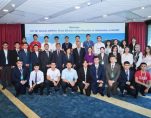
H.E. Mr. Abdulla Nigmatovich ARIPOV, Prime Minister of the Republic of Uzbekistan (seventh right, middle row); Dr. CHOI Yuk-Lin, Secretary for Education of the HKSAR Government (seventh left, middle row); Prof. Harry SHUM, Council Chairman of HKUST (sixth left, middle row); and Prof. Nancy IP, President of HKUST (sixth right, middle row), pose for a photo with students from Uzbekistan during the Prime Minister’s official visit to HKUST.
The Uzbek delegation of 24 members was warmly received by Dr. CHOI Yuk-Lin, Secretary for Education of the HKSAR Government; Prof. Harry SHUM, Council Chairman of HKUST; Prof. Nancy IP, President of HKUST, and senior university leaders.
In a high-level meeting with the University’s leadership, Prime Minister Aripov engaged in in-depth discussions on higher education development, artificial intelligence (AI), technological innovation, talent cultivation, research commercialization, and opportunities for closer collaboration between Uzbekistan and HKUST. The exchange also explored pathways for strengthening academic partnerships, expanding student and faculty mobility, and supporting Uzbekistan’s ambitions in developing a knowledge-based economy and emerging technology sectors.
Prime Minister Aripov said, “We are deeply impressed by HKUST’s achievements and its ability to translate cutting-edge research and innovation into practical industrial applications. With over 7,000 Uzbek students pursuing higher education across China, we see tremendous potential to strengthen our academic ties with Hong Kong and prioritize HKUST as a key destination for our students. As both Uzbekistan and HKUST mark their 35th anniversaries, establishing this partnership presents a symbolic and meaningful opportunity to expand educational excellence and global reach together.”
Prof. Shum said, “We are deeply honored to welcome Prime Minister Aripov and the distinguished Uzbek delegation to HKUST during the Belt and Road Summit. As a young, globally minded university celebrating our 35th anniversary, HKUST serves as a vital super-connector—bringing together diverse talent from over 80 nationalities. Building on our foundation with the El-Yurt Umidi Foundation, this visit marks a pivotal step in deepening ties between Hong Kong and Central Asia, opening up new horizons for collaborative growth and youth development along the Belt and Road.”
President Ip added, “We were delighted to engage in a highly productive and forward-looking dialogue with Prime Minister Aripov and his delegation. Uzbekistan’s strategic priorities in AI, robotics, fintech, and cybersecurity align closely with HKUST’s research strengths and advanced facilities. AI and medical science, in particular, offer promising areas for collaboration and could serve as important starting points for future joint initiatives. Beyond educational exchanges, we see tremendous opportunities to deepen cooperation in research, innovation, talent development, and knowledge transfer. We look forward to visiting Uzbekistan and working closely with our partners to co-create impactful solutions, nurture future-ready talent, and contribute to sustainable economic and technological development.”
HKUST also signed a Memorandum of Understanding (MOU) with the Ministry of Higher Education, Science and Innovation of the Republic of Uzbekistan. The agreement establishes a framework for educational collaboration and promotes excellence and innovation in teaching, learning, and research. Witnessed by Prime Minister Aripov, Dr. Choi, and Prof. Shum, the MOU was signed by President Ip and Mr. Salomov Uktam RAHIMOVICH, Deputy Minister of Higher Education, Science and Innovation of the Republic of Uzbekistan.
The Prime Minister and his delegation toured the HKUST Von Neumann Institute, where they learned about the University’s world-leading research and innovation capabilities in AI. The delegation was introduced to HKUST’s latest advancements in next-generation multimodal AI systems, robotic intelligence technologies, AI-driven 3D understanding and generation, and large-scale healthcare models, as well as their potential applications in addressing societal and industrial challenges. During the visit, the delegation met with 31 Uzbek students studying in Hong Kong, including 14 undergraduates currently enrolled at HKUST, to learn about their academic experiences and life in the city.
The issuer is solely responsible for the content of this announcement.
About The Hong Kong University of Science and Technology
The Hong Kong University of Science and Technology (HKUST) (https://hkust.edu.hk/) is a world-class university renowned for its innovative education, research excellence, and impactful knowledge transfer. Adopting a holistic and interdisciplinary approach to education, HKUST was ranked 33rd globally and 6th in Asia in the QS World University Rankings 2027 and QS Asia University Rankings 2026, respectively. It was also ranked 20th worldwide in the Times Higher Education Sustainability Impact Ratings 2026, placing first among universities in Hong Kong and the Chinese Mainland for the third consecutive year. Eleven HKUST subjects were ranked among the world’s top 50 in the QS World University Rankings by Subject 2026. In addition, HKUST’s Computer Science discipline, which encompasses areas such as artificial intelligence and machine learning, was ranked No. 1 in Hong Kong for the tenth consecutive year in the Times Higher Education World University Rankings by Subject 2026. Its graduates are highly competitive, consistently ranking among the world’s top 30 most sought-after employees. In research and entrepreneurship, more than 80% of HKUST’s research was rated “world-leading” or “internationally excellent” in the University Grants Committee’s Research Assessment Exercise 2020. As of July 2026, HKUST members had founded more than 2,000 active start-ups, including 11 unicorns and 22 successful exits through initial public offerings (IPOs) or mergers and acquisitions (M&A).
Eight major US banking trade groups have urged Senate leaders to tighten the CLARITY Act’s restrictions on stablecoin rewards, warning that a new regulatory “circuit breaker” would take effect only after damaging deposit outflows had already occurred. The warning came in a joint letter sent on Monday to Senate Majority Leader John Thune and Democratic Leader Chuck Schumer ahead of a procedural vote scheduled for Tuesday, September […]
By R Suryamurthy The 2026 New Delhi Declaration arrives at a revealing moment for BRICS: two decades after the grouping emerged as a shorthand for the rising economic weight of the Global South, it is no longer merely demanding a larger seat at the table of global governance, but is beginning to construct the institutional […]
Ether remained confined to a narrow trading range after more than 116,000 tokens were withdrawn from cryptocurrency exchanges over 48 hours, a shift that reduced immediately available supply while traders watched whether the market could break through resistance around $2,500. The withdrawals, valued at roughly $300 million at prevailing prices, were highlighted by crypto analyst Ali Martinez. Exchange outflows can indicate that holders are moving assets into […]
Chinese President Xi Jinping and Prime Minister Narendra Modi agreed to strengthen economic, transport and people-to-people links while preserving peace along their disputed frontier, using Xi’s first visit to India in seven years to push forward a cautious repair of bilateral relations.
The two leaders met on Saturday on the sidelines of the BRICS summit in New Delhi and welcomed what the Prime Minister’s Office described as steady progress in ties since their meeting in Tianjin in August 2025. They agreed that relations should be approached from a strategic and long-term perspective and that differences should not be allowed to become disputes.
Modi said peace and tranquillity in border areas remained an essential basis for further development of the relationship. He called for both sides to observe existing agreements and understandings on frontier issues and said engagement should be guided by “mutual respect, mutual sensitivity and mutual interest”.
Both leaders committed themselves to seeking a fair, reasonable and mutually acceptable settlement of the boundary question, while expanding cooperation in areas where their interests converge. They also backed stronger cultural exchanges, business links and mobility, alongside efforts to resolve economic frictions.
Trade featured prominently in the discussions. The two sides agreed on the need to address concerns over the structural trade imbalance, supply-chain issues and access to each other’s markets. Bilateral trade reached a record $155.6 billion in 2025, while India’s imports from China were about $132 billion, leaving a large deficit that New Delhi has repeatedly sought to narrow.
The meeting marked Xi’s first trip to India since 2019, when he travelled to Tamil Nadu for an informal summit with Modi. Relations deteriorated sharply after the 2020 military confrontation in eastern Ladakh, including the Galwan Valley clash that killed 20 soldiers from India and four from China.
A disengagement agreement reached in October 2024 helped end key points of the military standoff and opened the way for higher-level political contacts. Modi and Xi then held a substantive bilateral meeting during the BRICS summit in Kazan that month, followed by another meeting in Tianjin in August 2025.
Diplomatic and military mechanisms have since been revived. At the 25th round of Special Representatives’ talks in Beijing on August 25, National Security Adviser Ajit Doval and China’s Wang Yi agreed on eight measures covering border management, military communication, boundary negotiations, trade routes, pilgrimage arrangements and cooperation on trans-border rivers.
Among those steps were two additional channels for military hotlines in the eastern and middle sectors and two additional meeting points for senior commanders. The two sides also agreed to continue work towards a framework for settling the boundary dispute and to use existing diplomatic and military channels to deal promptly with incidents along the Line of Actual Control.
Practical links have also begun returning. Direct passenger flights have resumed, business visa processing has improved and the Kailash Mansarovar pilgrimage has restarted, while three traditional border trading points have reopened. Those measures have not removed the deeper trust deficit, but they have restored channels that were largely frozen after 2020. Officials on both sides have indicated that further easing will depend on predictable border management and progress on commercial concerns over the coming months.
Despite the thaw, major differences remain. Large troop deployments continue along sections of the Himalayan frontier, and the boundary itself has not been settled. Economic engagement is also constrained by investment screening, regulatory barriers, visa delays and security concerns affecting sectors considered sensitive by either government.
Xi’s visit nevertheless gave both governments an opportunity to demonstrate that political contacts are becoming more regular after years of strained relations. Beijing has repeatedly said the two countries should view each other as partners rather than rivals, while New Delhi has maintained that normal relations require durable peace at the border.
The Reserve Bank of India has turned down Tata Sons’ request to surrender its core investment company registration, leaving the group holding company subject to rules that require upper-layer non-banking financial companies to list on stock exchanges.
The decision was conveyed in a letter dated September 11 after the central bank considered Tata Sons’ March 28, 2024 application and subsequent correspondence, people familiar with the matter said. The RBI advised the company to take the steps needed to comply fully with requirements applying to upper-layer NBFCs.
Tata Sons had sought to give up its Certificate of Registration after reducing debt and arguing that it could operate as an unregistered core investment company. Approval would have removed the principal regulatory basis for a compulsory market listing and allowed the company to remain privately held.
The rejection closes that route. RBI rules require an NBFC classified in the upper layer to list within three years of identification and subject it to tighter standards covering capital, governance, disclosures and risk management. Tata Sons was first placed in the upper layer in September 2022, making its original listing deadline September 2025.
The company remained unlisted while its deregistration request was under examination. When the RBI published its upper-layer list for 2024-25 in January 2025, it retained Tata Sons as a core investment company but said the inclusion was without prejudice to the outcome of the pending application.
The central bank subsequently revised its scale-based framework. Under the current approach, very large NBFCs face enhanced supervision, with an asset threshold of ₹1 trillion among the key criteria. Tata Sons’ standalone assets were about ₹1.75 trillion at the end of March 2025, placing it comfortably above that level. More recent accounts cited in corporate filings and regulatory discussions put the asset base above ₹2 trillion.
The company had repaid more than ₹200 billion of borrowings before seeking deregistration, a step intended to eliminate reliance on public funds, but the regulatory framework also considers circumstances in which access to funding may arise through group entities.
RBI Governor Sanjay Malhotra said in August that entities meeting the applicable criteria continued to fall within their respective regulatory layers. At that stage, Tata Sons’ application to surrender its core investment company registration had not been decided.
The latest communication therefore resolves the central regulatory question that had kept the company’s listing status uncertain. It does not, by itself, set out the structure, timing or size of any share sale, and Tata Sons has not publicly announced an IPO plan following the RBI decision.
A listing would have significant consequences for the ownership of Tata Sons, which sits at the centre of a group spanning technology, automobiles, steel, consumer businesses, airlines and financial services. Tata Trusts collectively hold roughly two-thirds of the company, giving the philanthropic trusts decisive influence over the holding company.
The Shapoorji Pallonji Group is the largest minority shareholder, with an interest of about 18 per cent. A market listing has long been important to the shareholder because it could create a transparent route for monetising part of that holding, while sections of Tata’s controlling shareholder base have favoured keeping Tata Sons private.
The regulatory decision arrives as Tata Sons is also dealing with leadership uncertainty. Chairman N Chandrasekaran has said he will not seek another term when his current tenure ends in February 2027, adding another major governance issue for the board and shareholders to address.
Tata Sons controls or holds substantial stakes in several listed companies, including Tata Consultancy Services, Tata Motors and Tata Steel, while also overseeing unlisted businesses. Its position as the group’s principal holding company means any listing would require extensive work on disclosures, capital structure, shareholder arrangements and regulatory compliance.
Blockstream has rejected a demand to surrender part of the bitcoin still held after the $320 million Liquid Network exploit, saying it will not pay a ransom and will pursue lawful recovery of the remaining funds. The company said on September 11 that taking assets without authorisation and withholding their return constituted theft rather than responsible security disclosure. It warned that, unless the outstanding bitcoin was returned, […]
Anthropic says its safety systems blocked a scientist’s request for Claude to help write a grant application for research that could have made the chikungunya virus more transmissible and better able to evade immunity, prompting a wider investigation into potentially dangerous biological work linked to military and state-backed institutions. The artificial intelligence company disclosed the case in a September threat-intelligence report describing five instances in which researchers […]
Thailand has placed 17 strategic industrial projects worth 121 billion baht on an accelerated approval track while introducing added tax incentives intended to encourage technology-focused companies to list on domestic capital markets.
The Board of Investment approved the measures at a meeting chaired by Deputy Prime Minister and Finance Minister Ekniti Nitithanprapas, expanding the Thailand FastPass mechanism and launching a BOI-to-IPO programme with the Securities and Exchange Commission and the Stock Exchange of Thailand.
The 17 projects, submitted by 15 companies, are expected to create more than 14,000 jobs. Electronics and electrical manufacturers account for 10 projects worth 83.92 billion baht, close to 70 per cent of the latest batch, according to the BOI.
Two processed-food projects represent investment of 24.34 billion baht, two pet nutrition projects total 8.80 billion baht, and three precision machinery and automotive component projects amount to 4.36 billion baht.
The additions take the FastPass portfolio to 42 strategic projects across three rounds, with planned investment exceeding 344 billion baht and projected employment of more than 27,000 people. The scheme uses service-level agreements across state agencies to shorten licensing timelines, address approval bottlenecks and move projects more quickly from investment applications to construction and operation.
The first two FastPass rounds covered 25 projects from 23 companies worth more than 223 billion baht and were expected to generate over 13,000 jobs. All 25 have received investment-promotion approval, 19 have been issued investment certificates and 11 have completed all required permits within the prescribed service-level deadlines. Actual investment by projects in the programme has exceeded 21 billion baht.
Alongside the approval drive, the BOI said it was shifting the way it evaluates investment promotion, placing greater weight on realised investment, domestic value added, links with small and medium-sized suppliers, high-skilled employment, research and development, technology transfer and capital-market participation.
The policy overhaul also narrows support for activities that contribute limited local value, with the BOI saying incentives will increasingly favour advanced manufacturing, technology transfer and deeper integration of domestic vendors. New operational indicators will measure how many approved projects become investments and how quickly agencies process approvals.
Narit said the policy seeks to lift investment to 30 per cent of gross domestic product, support annual economic growth above 3 per cent and improve Thailand’s competitiveness ranking. Those objectives are government targets rather than assured outcomes and will depend on investment execution, productivity gains and economic conditions.
BOI secretary-general Narit Therdsteerasukdi said the agency was moving towards measuring the quality and domestic value generated by investment rather than focusing mainly on application volumes. He said the government wanted targeted measures in strategic sectors to support higher investment and productivity.
The BOI-to-IPO programme is designed to help promoted companies, particularly businesses in sectors classified as part of the New Economy, raise capital through Thailand’s exchanges and expand their operations. The SEC has shortened its IPO approval process, while the stock exchange is easing certain market-capitalisation and operating-track-record requirements for qualifying New Economy companies.
A special listing pathway is also being provided for companies promoted by the BOI or the Eastern Economic Corridor, linking investment incentives with access to equity financing.
Promoted companies that list on the Stock Exchange of Thailand, the Market for Alternative Investment or the LiVEx board can qualify for additional tax relief. SET-certified New Economy companies may receive up to three additional years of corporate income-tax exemption, or a 50 per cent reduction for five years.
Other promoted companies that list can receive up to two additional tax-free years, or a 50 per cent reduction in corporate income tax for three years, subject to the programme’s conditions.
Narit said the policy was intended to allow companies that had established successful operations in Thailand to finance new plants and production lines, invest in research and technology, and expand overseas while retaining Thailand as a business base.
Iran is allowing exporters and importers greater use of cryptocurrencies, including Tether’s USDT and Bitcoin, for cross-border settlements as tighter US sanctions intensify pressure on trade and foreign-currency flows. The policy shift gives businesses more flexibility to repatriate export earnings outside the central bank’s official foreign-exchange platform and use those proceeds directly to pay for imports. Crypto transactions have become one route for moving value across borders […]
Stablecoin liquidity is returning to Binance after months of withdrawals, offering a tentative sign of stronger buying capacity as Bitcoin remains above $75,000. CryptoQuant data show Binance recorded more than $1 billion in net stablecoin inflows during August, reversing part of the persistent drain from cryptocurrency exchanges that had characterised much of 2026. Bitcoin was trading around $77,300 on Saturday, September 12, after moving between roughly $76,000 […]
Anthropic has accused Moonshot AI of secretly sending customer requests meant for its Kimi chatbot to Anthropic’s Claude models, alleging that the Beijing-based company concealed the practice from users and presented Claude-generated answers as its own. The US artificial intelligence developer said on Thursday that it identified one ten-day period in which Moonshot routed almost 300,000 requests through a network of 5,380 fraudulent accounts, with much of […]
Nasdaq has invested $100 million in Payward, the parent company of cryptocurrency exchange Kraken, extending a relationship that already spans tokenised equities and digital-market infrastructure. The investment places one of the world’s largest exchange operators directly on Payward’s shareholder register and adds a financial dimension to a strategic partnership announced earlier this year. Payward operates Kraken alongside businesses including NinjaTrader, Breakout, xStocks and CF Benchmarks, using a […]
Malone Lam, a 22-year-old Singapore citizen and former Miami resident, has pleaded guilty in Washington to leading an international cybercrime enterprise that stole and laundered cryptocurrency worth more than $245 million.
Lam admitted one count of participating in a racketeering conspiracy before US District Judge Colleen Kollar-Kotelly on Tuesday, September 8. Prosecutors said he organised a network that targeted cryptocurrency holders through social engineering scams, online intrusions and, on some occasions, break-ins at victims’ homes.
The US Attorney’s Office for the District of Columbia said the criminal enterprise operated from at least October 2023 until May 2025 and included participants based in California, Connecticut, New York, Florida and overseas. Lam, who also used several online aliases, identified targets and coordinated roles among members of the group.
One of the organisation’s largest thefts occurred in August 2024, when Lam and associates obtained more than 4,100 bitcoin from a victim in Washington. Court records say conspirators impersonated representatives of trusted companies, including Google and cryptocurrency exchange Gemini, and persuaded the victim to provide access information and authentication codes.
Those details allowed the group to gain control of the victim’s cryptocurrency holdings and transfer the bitcoin. Prosecutors have placed the value of that theft at more than $245 million for the purposes of the case, while earlier court filings valued the same 4,100 bitcoin at about $263 million at the time of the alleged transaction.
The broader racketeering case involves 18 defendants, with Lam becoming the 11th to plead guilty. Prosecutors described him as an organiser who played several roles in the enterprise and directed associates involved in obtaining credentials, moving stolen assets and laundering cryptocurrency through exchanges and other channels.
The plea marks a step in the prosecution of a network that authorities say grew out of contacts made through online gaming communities. Investigators allege members specialised in different parts of the operation, including identifying wealthy holders, impersonating corporate security staff, gaining account access and converting stolen cryptocurrency into cash or goods.
Federal authorities have pursued the case under the Racketeer Influenced and Corrupt Organizations Act, a statute more commonly associated with organised criminal enterprises. The charge allows prosecutors to treat coordinated fraud, laundering and related acts as part of one conspiracy rather than as isolated offences.
Court documents also describe occasional home invasions or break-ins used to obtain information from cryptocurrency holders. The Justice Department said the group combined those physical intrusions with deceptive calls and other social engineering methods designed to gain passwords, seed phrases, security codes and related information needed to access digital wallets.
The stolen proceeds financed extensive spending by members of the group. Authorities said the conspiracy paid for private jets, rental properties in Miami, Los Angeles and the Hamptons, luxury clothing, handbags, watches, private security and a fleet of exotic cars. Some vehicles were valued at as much as $3.8 million.
Nightclub spending was another major outlet for the proceeds. Court records cited services costing as much as $500,000 per evening, while Lam was linked to a $569,000 bill during one night at a Los Angeles club. Luxury watches purchased by members of the group were valued from about $100,000 to more than $500,000.
Lam was arrested in Miami after the August 2024 bitcoin theft. The guilty plea followed months of negotiations over whether he would accept an agreement or proceed to trial. Several alleged co-conspirators had indicated they were prepared to testify if the case went before a jury.
At the plea hearing, Lam acknowledged the prosecution’s account and entered his guilty plea to the RICO conspiracy charge. The offence carries a maximum prison term of 20 years, although the sentence will be determined later under federal law and sentencing guidelines.
Judge Kollar-Kotelly scheduled a status hearing for December 8, when the court is expected to address the next steps towards sentencing. Lam and other participants have also been ordered to repay more than $245 million in stolen funds to victims.
Arabian Post Staff -Dubai Dubai Municipality has signed a cooperation agreement with Singapore’s BCA International after a high-level visit focused on modern building methods, green construction, digital technologies and regulatory practices that could support Dubai’s expanding built environment. The delegation, led by Director-General Marwan Ahmed bin Ghalita, concluded the official visit after meetings with government bodies, construction specialists and technology companies, alongside site inspections examining how Singapore […]
Arabian Post Staff -Dubai The United Arab Emirates has strongly condemned Iran’s missile attack on Jordan, declaring it a flagrant violation of the kingdom’s sovereignty and a threat to its security and stability. The UAE Ministry of Foreign Affairs said on Wednesday that Abu Dhabi stood in full solidarity with the Hashemite Kingdom of Jordan and supported all measures taken to safeguard its security and stability. The […]




 https://hkust.edu.hk/





