Just in:
Microsoft apologises as Outlook services recover after outage // OpenAI unveils ChatGPT Wallet for agent-led purchases // Messi affair SIT finds all-round violations // Crescent Enterprises venture arm funds Oyster Therapeutics development // US resumes flights after nationwide air traffic shutdown // Microsoft restores services gradually but gives no recovery deadline // Lego restores BrickLink marketplace after security investigation // Woman found dead as bank moves to repossess home // From Dubai to the EU: how UAE-based crypto firms can expand under MiCA // Rooftop solar planning gaps behind power shortages // UAE crews sustain coastal oil removal as beaches reopen // Nvidia appoints Colette Kress interim chief after Huang departure // Microsoft outage leaves Outlook and Teams users disconnected // Electoral register gains 2.17 lakh voters // L’OCCITANE Celebrates 50 Years Of Provençal Craftsmanship With Holiday 2026 Collection // TORRAS Launches Two New iPhone Duo Cases from Its Popular Ostand Series, Addressing Foldable Phone Users’ Concerns About Difficult Stand Positioning and Scratches // US authorities dismantle North Korean cryptocurrency deception infrastructure // China Reconciled To U.S. Curbs On Chips Exports, Woos South Korea For Supply // Yicura BioMed Advances Dual Capital and Industrial Strategy: Completes First Closing of Series B Financing Led by Gobi Partners // EBANX and Eneba strengthen partnership in Latin America with 138% YoY growth in payment volume //

News related to
Exchanges

Abu Dhabi has finalised a major agreement to enforce greater transparency in crypto-asset taxation by signing the Multilateral Competent Authority Agreement under the Crypto-Asset Reporting Framework. The deal mandates automatic exchange of tax-related data on crypto transactions across jurisdictions, aligning the UAE with rising global norms on financial disclosure. The Ministry of Finance confirmed that CARF will start operating in the UAE in 2027, with the first […]

Abu Dhabi has formally joined the international regime for automatic exchange of tax information in the crypto-asset sector, with the Ministry of Finance signing the Multilateral Competent Authority Agreement under the Crypto-Asset Reporting Framework. Implementation of CARF in the UAE is set to begin in 2027, and the first exchanges of information under the framework are planned for 2028. The agreement lays out standards for sharing tax-related […]

U. S. regulators have approved Grayscale’s Digital Large Cap Fund conversion into an exchange-traded fund that will hold multiple cryptocurrencies in a single product. The fund will allocate more than 70% to Bitcoin and about 17% to Ether, with the remainder distributed among XRP, Solana, and Cardano.

The Securities and Exchange Commission adopted new generic listing standards for commodity-based spot crypto ETFs, allowing exchanges such as NYSE Arca, Nasdaq, and Cboe BZX to list qualifying funds without bespoke approval filings. These rules cut the maximum approval time from several months to as little as 75 days.

Grayscale Investments will be the first asset manager to launch a multi-crypto ETF under this framework. The GLDC product offers regulated exposure through traditional securities structures, permitting investors to access these broad crypto assets in a single fund rather than holding individual tokens. GLDC had existed before as an investment product but lacked ETF status until this regulatory shift.

Industry analysts consider this a pivotal moment for the broader digital asset market, extending beyond the earlier wave of Bitcoin-only or Ether-only products. The decision formalises recognition by regulators that crypto portfolios comprising major altcoins may be viable under oversight and regulatory expectations. It also reflects growing institutional demand for diversified exposure as volatility remains high among lesser-known tokens.

Some market participants caution that, despite its multi-asset nature, the heavy weighting toward Bitcoin and Ether means the fund’s performance may still be strongly driven by those two assets. Questions remain about how XRP, Solana, and Cardano portions will perform in different market environments, and how liquidity, custody, and valuation will be managed for the less dominant tokens.

NANNING, CHINA – Media OutReach Newswire – 19 September 2025 – On September 17, the 22nd China-ASEAN Expo and China-ASEAN Business and Investment Summit opened in Nanning, Guangxi. The theme of this year’s expo and summit is “Digital Intelligence and Innovation empower Development – Leveraging ASEAN-China FTA 3.0 new opportunities for an even closer ASEAN-China community with a shared future,” attended by Chinese and foreign leaders, government […]

OpenAI has announced a suite of new protections that will tailor the ChatGPT experience depending on whether the system estimates a user is under 18, including stricter content filters, parental controls, and new distress-alerts. The company will use an automatic age-prediction model to infer whether someone is a teenager based on usage patterns, with the safer, under-18 mode activated by default if there is any doubt. Users […]

Shiba Inu is drawing increased attention after the project’s team outlined how a prospective spot SHIB exchange-traded fund could enhance demand for its Layer-2 blockchain, Shibarium, and its gas/governance token, BONE.

Speculation about a SHIB ETF has intensified as SHIB retains a multi-billion dollar market cap, maintains listings on major global exchanges, and commands one of the stronger retail investor communities in crypto. The Shib Inu ecosystem team emphasised that while no asset manager or regulator has yet submitted an approved SHIB ETF, the token’s scaling infrastructure and utility features parallel those that aided Bitcoin and Ethereum. Analysts suggest these attributes may not only raise SHIB’s institutional legitimacy but also funnel value into Shibarium and BONE.

Shibarium, launched in August 2023, serves as Shiba Inu’s native Layer-2 network. Its design aims for fast, low-cost transactions while pushing gas fees to be paid in BONE. Any amplification of SHIB demand could indirectly drive more activity on Shibarium, reinforcing BONE’s utility. In commentary, the SHIB team has framed this as a rising inflection point: greater visibility for SHIB might translate into growing network usage, with BONE benefiting from both transaction volume and staking demand.

Events in the Shibarium ecosystem heighten the urgency. A flash-loan exploit allowed an attacker to purchase about 4.6 million BONE tokens, gain validator voting power, then execute a malicious state change to siphon assets from the Shibarium bridge. The team paused staking operations, moved certain funds to a secure multi-signature hardware wallet, froze the compromised BONE, and launched investigations with security firms. While the exploit dented confidence temporarily, it also drew attention to the importance of infrastructure security in scaling projects.

Market response to these developments has been mixed but leaned positive in some respects. BONE surged by about 40 % at one point after the exploit was revealed, before correcting. SHIB also saw modest gains as traders reacted to the possibility of more institutional participation. Some analysts caution, however, that regulatory hurdles and timing remain uncertain. A SHIB ETF would likely require clear alignment with securities laws in multiple jurisdictions, plus concrete backing from major asset managers.

Institutional exposure is being eyed not just via a direct SHIB ETF but through alternate paths: DeFi-oriented funds, layer-2 infrastructure products, or token baskets that include SHIB and BONE. Shibarium’s base of wallets—numbering over 21 million during earlier phases—and its integration with Ethereum and DeFi protocols are being cited as evidence that usage is scaling.

Nasdaq has mandated that listed companies obtain shareholder approval before issuing new shares to acquire cryptocurrencies, and must disclose fuller justifications and risk assessments for large-scale crypto purchases.

The exchange’s enhanced oversight aims to guard investors, particularly retail traders, from underestimating the high volatility and speculative nature of cryptocurrencies. Companies must now explain why they are buying substantial amounts of crypto and articulate the associated financial, regulatory and market‐risk implications.

Under the new requirements, issued by Nasdaq earlier this month, firms proposing to issue equity to raise funds for crypto purchases must secure affirmative vote from their shareholders. Non‐compliance may result in trading suspension or delisting. Nasdaq is also tightening disclosure obligations: entities must show how much crypto they hold, the rationale for those holdings, and how they plan to manage the risks.

Architect Partners reports that over 120 US‐listed companies have announced plans to raise more than US$130-billion this year for cryptocurrency acquisitions, nearly 100 of which are listed on Nasdaq. Many of these firms have adopted “crypto-treasury” strategies—allocating a significant portion of their balance sheets to digital assets. Some high-profile companies have already attracted scrutiny for the size of their holdings and for the effects on shareholder dilution.

Nasdaq justifies the changes by citing investor protection. Wholesale accumulation of crypto assets can dramatically affect stock price volatility. There is concern that some retail investors may not fully grasp how crypto’s price swings, regulatory uncertainty or tax treatment risk hurting returns, or causing losses.

Critics worry the new rules could slow innovation or deter companies considering crypto exposure. Companies accustomed to quickly buying digital assets may face delays because shareholder voting cycles are time-consuming and costly. Some argue that imposing blanket rules could punish well-prepared firms that already maintain strong governance, transparency, and risk controls.

Regulators such as the US Securities and Exchange Commission and the Commodity Futures Trading Commission have been increasing pressure on exchanges and firms around crypto disclosures, anti‐fraud measure and governance. Nasdaq’s move aligns with broader regulatory momentum in financial markets toward more oversight of firms with substantial crypto exposure.

Advertisements

KUALA LUMPUR, MALAYSIA – Media OutReach Newswire – 16 September 2025 – AlphaMove, a Malaysian blockchain startup building a public, permissionless ecosystem for Real-World Asset (RWA) tokenization, has signed a Strategic Cooperation Framework Agreement with Guangxi Research Department, under the Nanning Provincial Government of China. The signing took place during the 3rd Forum on China-ASEAN Artificial Intelligence Cooperation, underscoring how Malaysia and China are working together to […]

Digital assets are no longer a Wild West – governments worldwide are setting clear rules. Any company that exchanges, trades, or safeguards crypto now needs a proper license. It’s not just about meeting AML and CTF laws: a license builds client trust and gives businesses the legal ground to grow. With it, firms can offer exchange, custody, and payments to global clients. But every country has its […]

HONG KONG SAR – Media OutReach Newswire – 10 September 2025 – On the occasion of the 100-day countdown to the island-wide independent customs operation of the Hainan Free Trade Port (Hainan FTZ), the Hainan FTZ Promotion Conference and Policy Interpretation Conference themed “Hainan-Hong Kong Cooperation for a Win-win Future” was organized at the Hong Kong Convention and Exhibition Center on September 9th. On September 9th, stakeholders […]

Bitcoin reclaimed the $112,000 level as markets remain focused on the week ahead, with investors balancing caution against emerging momentum across select digital assets. Solana and Dogecoin have seen notable uplift as traders reallocate positions amid mounting anticipation of U. S. macroeconomic releases and Federal Reserve developments.

Bitcoin traded in a tight range near $111,500 to $112,300 as market participants paused, waiting for fresh cues from upcoming Consumer Price Index, Producer Price Index and central bank announcements. This positioning reflects prudence amid heavier macroeconomic noise.

Solana climbed to around $218 to $220, marking a multi-month high as renewed interest drew capital from more established tokens. Meanwhile, Dogecoin extended a weekly gain to approximately $0.24, buoyed by optimism surrounding the imminent debut of the first U. S. memecoin exchange-traded fund.

SignalPlus head of insights Augustine Fan noted that crypto markets have been relatively flat recently, with Bitcoin underperforming both its major peers and traditional assets such as equities and spot gold. That underperformance accompanied weaker inflows into digital asset trusts and reduced activity on centralised exchanges.

Economists have also dialled back inflation and recession worries following revisions to U. S. labour data, prompting some rebound in market sentiment. Bitcoin, alongside European equities, saw support as experts downplayed fears of stagflation.

Prediction markets suggest that a rate cut from the Federal Reserve is increasingly likely, with sentiment split between a further cut or a hold in October. Gold reached record levels in anticipation of looser monetary policy, even as U. S. equity indices pushed higher.

Positioning remains defensive, but the rotation into altcoins signals willingness among traders to explore higher-beta opportunities. Reflecting this, the phrase Traders Push Bitcoin Above $112K captures the shifting dynamic in crypto allocations—but notably, attention remains fixed on upcoming U. S. data releases shaping the next phase of the market.

Liquidity has stayed modest. Reference points in the $110K–$112K zone appear increasingly important as support amid a backdrop of uncertainty.

The GCC Financial Markets Committee has unveiled the GCC Exchanges Unified Investor Relations Guideline 2025, aimed at elevating transparency and investor confidence across Gulf capital markets. Chaired by the Saudi Exchange, the framework aligns investor-relations practices with global norms while sharpening communication standards and disclosure protocols throughout the region. Member exchanges—including the Abu Dhabi Securities Exchange Group, Dubai Financial Market, Bahrain Bourse, Muscat Stock Exchange, Qatar Stock […]

PubMatic has taken legal action against Google, not merely to secure compensation but to affirm that bold vision for digital advertising’s open, idea-driven future depends on innovation and trust, not coercion. The company’s co-founder and chief executive, Rajeev Goel, emphasised that the industry’s direction should be determined by the strength of ideas and the trust earned—not by dominance or pressure, as articulated in its lawsuit filed on 8 September. This step comes in response to a US District Court decision earlier this year that found Google guilty of maintaining monopolistic control over ad exchanges and ad servers. PubMatic claims that Google’s “First Look” and “Last Look” mechanisms, along with unified pricing rules, have systematically disadvantaged competitors and undermined fair competition in the digital ad space.

The lawsuit seeks substantial damages—potentially amounting to billions of dollars—and aims to restore fairness and transparency across the advertising ecosystem. PubMatic assures that this legal pursuit will not disrupt its daily operations or affect its clients’ experience; instead, it is designed to establish a more equitable long-term operating environment. This strategic move aligns with PubMatic’s broader mission to champion an open internet, where publishers and advertisers can thrive on merit and innovation rather than power imbalances.

PubMatic’s broader response builds on its narrative that competition—not coercion—should shape industry evolution. Goel’s message is deliberate: bold vision for digital advertising’s open, idea-driven future must be realised through trust and ingenuity. The company underscores its investment in private cloud infrastructure across 12 data centres, processing billions of ad impressions daily, as a foundation for transparent, high-performance systems. It also highlights its growing suite of solutions—including OpenWrap, Identity Hub, and header-bidding technologies—aimed at supporting omnichannel monetisation across mobile, OTT, and connected TV environments, and enabling publishers to manage identity and addressability in a privacy-safe manner.

Goel contextualised the firm’s challenge and growth: despite doubling its market share—from 2 per cent to 4 per cent over five years—PubMatic has achieved this only in a market tilted by Google’s dominance. This underscores the urgency behind its legal strategy and its long-term vision: an ad tech ecosystem driven by ideas and innovation.

This development echoes broader industry shifts. The Department of Justice’s antitrust ruling earlier in 2025 laid legal groundwork, but did not provide avenues for redress to harmed parties. PubMatic’s lawsuit now fills this gap, seeking tangible accountability and a fairer competitive landscape. As digital advertising increasingly depends on AI-powered tools, independent supply-side platforms like PubMatic are positioning themselves to lead innovation—provided they can operate on a level playing field.

Alphabet Inc.’s Google faces a fresh lawsuit from advertising exchange PubMatic Inc., which claims the company illegally monopolised the ad-technology market and seeks billions in damages. The complaint, filed on 8 September 2025 in a federal court in the Eastern District of Virginia, builds upon a pivotal April ruling that found Google unlawfully controlled both ad servers and ad exchanges, harming competition. PubMatic asserts that Google’s dominance […]

As the morning light kisses the glazed curtain wall of the Burj Khalifa over the Persian Gulf, and the evening breeze of Doha whispers against the dome of the Museum of Islamic Art, a practice team named “Weihai Yangxing” from Weiyang College of Tsinghua University is measuring the lands of the Middle East with their footsteps and building bridges of cooperation through dialogue. From August 14 to 24, […]

eToro Group Ltd is poised to pursue bolder acquisitions after securing a substantial liquidity base, according to one of its co-founders. At the Ambrosetti Forum in Cernobbio, Italy, Ronen Assia, executive director and co-founder, confirmed that the firm “has cash and cash equivalents of around $1.2 billion at the end of the first half of the year, with a cash position of $988 million, with no debt.” He added: “We’re looking to do more ambitious stuff involving acquisitions,” emphasising that eToro aims to broaden both asset classes and its geographic footprint.

eToro’s deliberate pivot into more aggressive mergers and acquisitions comes on the heels of its listing on Nasdaq in May 2025, where it raised $620 million in its initial public offering. The company’s robust cash war-chest endows it with flexibility to explore new verticals and markets in a dynamic fintech landscape.

Beyond financial strength, eToro is deepening its product offering. The platform recently rolled out tokenisation and artificial intelligence tools targeted at retail investors, along with expanding its global reach. Meanwhile, preliminary selected business metrics for July and August reveal continued operational momentum: assets under administration rose to $19.7 billion, funded accounts approached 3.69 million—both reflecting high year-on-year growth—while crypto trading volumes surged by nearly 50 percent.

The company’s healthy balance sheet is grounded in a successful IPO and product innovation. In Q1 2025, eToro reported $736 million in cash, cash equivalents, and short-term investments, alongside growth in user accounts and assets under administration. The firm also expanded its trading products, launching options in the UK and futures in Europe, while diversifying geographic access to include exchanges in Abu Dhabi and Hong Kong.

This marks a clear signal that bold acquisitions are on eToro’s horizon—a phrase that captures the firm’s evolving strategic ambition and its capacity to act decisively in a competitive market.

The timing of this announcement is significant. Mergers and acquisitions within fintech and crypto sectors have become tools for scale, innovation, and regulatory navigation. With its substantial liquidity and no leverage, eToro may look to acquire firms offering complementary capabilities—whether in tokenisation, AI-driven trading, wealth management, or regional expansion.

Ronen Assia’s stance highlights both intent and preparedness. The expressed goal to take on “more ambitious” deals indicates a readiness to move beyond smaller bolt-ins, aiming instead for transformative moves that could reshape the firm’s product and regional scope. The emphasis on adding asset classes and locales suggests potential targets might include firms with niche offerings or solid footprints in under-penetrated markets.

At a time when many fintech companies are consolidating or recalibrating amid macroeconomic shifts and evolving regulation, eToro’s proactive posture sets it apart. With backing of a strong balance sheet and public market credibility, the platform is well placed to capitalise on strategic M&A opportunities as they arise.

HONG KONG SAR – Media OutReach Newswire – 5 September 2025 – The Hainan Free Trade Port Tourism and Culture (Hong Kong) Series Promotion Events will be held from September 7 to 11 at Hong Kong’s K11 Art Mall, marking a new chapter of tropical island tourism in China for visitors from Hong Kong and beyond. The Hainan Free Trade Port Tourism and Culture (Hong Kong) Series […]

Astana International Exchange and Abu Dhabi Securities Exchange have activated a direct connection between their central securities depositories, enhancing post-trade infrastructure and extending investor access across markets. The move, under the October 2021 memorandum of understanding that brought AIX into the Tabadul digital hub, expands on the existing Tabadul network and enables fully operational CSD-to-CSD communication.

The newly established arrangement builds on Tabadul’s digital trading network, which launched in mid-2023 when AIX formally joined and began enabling bilateral trading with ADX. Tabadul, introduced in 2022, operates on a mutual market access model, facilitating cross-exchange trading across member markets.

Under the framework established in October 2021, AIX had integrated into Tabadul, paving the way for today’s deeper integration via its direct CSD link with ADX.

Assel Mukhanova, chief executive of AIX, welcomed the formalisation, noting that this will bring tangible benefits to participants through more efficient trading corridors and deeper cross-border investment flows. Abdulla Salem Alnuaimi, group chief executive of ADX, emphasised that the direct CSD connection supports capital markets accessibility, post-trade connectivity, and opens new avenues for both global and regional investors.

This development underscores a strategic commitment from both exchanges to deepen connectivity, bolster liquidity, and accelerate regional capital market integration. By complementing the stronger ties forged through Tabadul, the new ADX–AIX direct CSD link strengthens market access for issuers and investors alike.

Pogocache, a new open‑source caching system built in C by Josh Baker—known for creating Tile38—has entered general availability, promising breakthrough performance and seamless integration across multiple protocols. According to benchmarks on AWS c8g.8xlarge hardware, Pogocache delivers around 3.14 million queries per second, leaving behind Memcache, Redis, Dragonfly, Valkey, and Garnet. This cache server distinguishes itself by supporting a range of existing communication standards—Memcache, Redis/Valkey, HTTP, and PostgreSQL wire […]

Kraken’s Chief Security Officer, Nick Percoco, has issued a warning to users about a sophisticated phishing campaign impersonating the platform. Attackers are dispatching emails that replicate Kraken’s branding—with near-identical logos, fonts and messaging—to pressure recipients into taking urgent action. The emails allege the need to accept “updated terms” within a two‑day window, a tactic intended to prompt hasty decisions. In nearly every instance, the sender urges recipients to download remote desktop software such as AnyDesk under the guise of offering support. Percoco emphasises that Kraken will never request installation of such tools from users.

Such phishing attempts exploit both visual authenticity and psychological manipulation—cultivating a sense of urgency to override caution. According to official guidance, Kraken will only use verified domains—including @kraken. com, @futures. kraken. com, @email2. kraken. com, @email. krak. app and other specific, approved addresses—to communicate with users. Any other source should be treated as suspicious.

This incident reflects a broader escalation in phishing tactics across the crypto sector. Industry data indicates that phishing attacks surged more than 200% in August, resulting in losses exceeding $66 million. One single breach accounted for $55 million in stolen funds. Abnormal AI, a cybersecurity firm, attributes the elevated threat level to more advanced techniques—emails originating from older, seemingly trustworthy domains, employment of social engineering, and polished language devoid of traditional red‑flag keywords. These newer attacks are designed to bypass legacy email filters and evade automated detection.

Users are urged to remain vigilant and adopt a security-first mindset. The most effective defence measures include verifying sender addresses, suspecting communications that evoke fear or demand immediate compliance, and avoiding email links entirely—especially those prompting software installation. Instead, users should always navigate directly to Kraken’s official URL (), ideally via a bookmarked link, and contact support through trusted channels if unsure.

Kraken’s approach is rooted not only in technological safeguards but also in cultivating user awareness. Percoco has previously underscored that phishing and social engineering are among the most common threats to both users and employees. Kraken’s layered filtering and a security-conscious culture help reduce risk, though no system is foolproof. Humans remain the critical last line of defence.

With trusts at stake, exchanges are under mounting pressure to enhance transparency and user education. Some platforms have introduced anti‑phishing codes or digital signatures to help users verify authenticity. While Kraken currently relies on verified domains and user education, the challenge continues to evolve as attackers adopt more deceptive techniques.

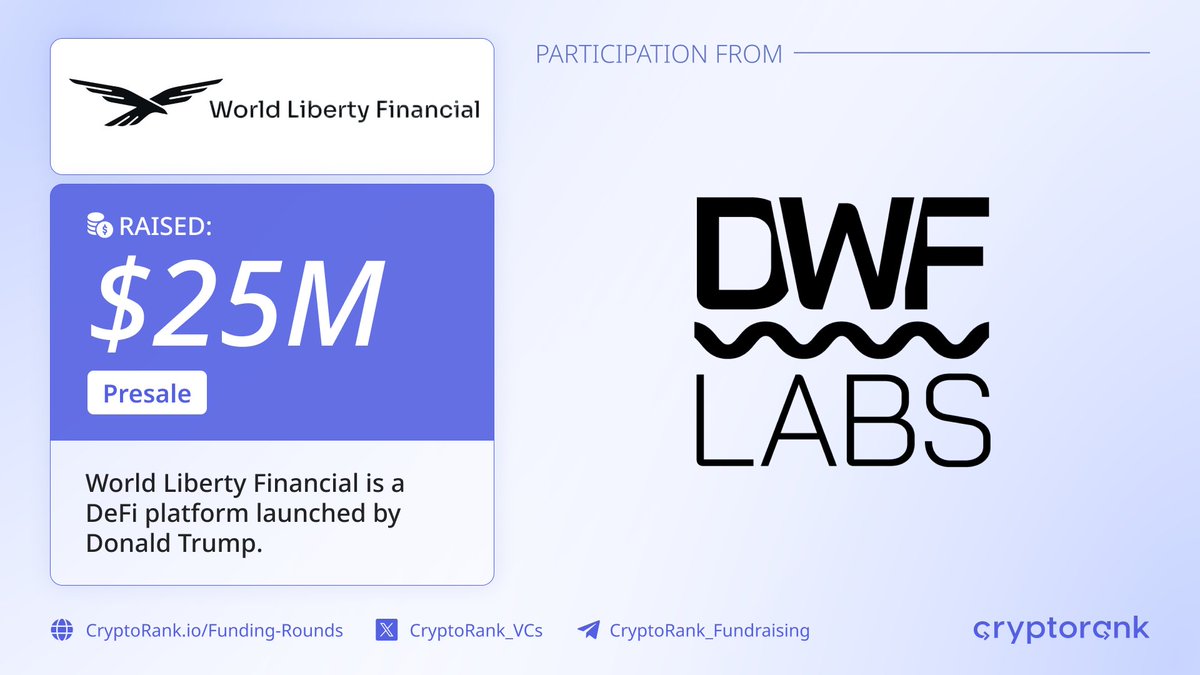
DWF Ventures, the investment arm of Web3 market‑maker DWF Labs, has delivered a detailed evaluation of $WLFI, World Liberty Financial’s newly issued utility token. Published via X, the analysis emphasises $WLFI’s integration into World Liberty’s broader ecosystem and its potential as a key enabler in connecting traditional finance with on‑chain liquidity. Unlike World Liberty’s $TRUMP memecoin, $WLFI is purpose‑built to power the upcoming “WLFI super app”, which will streamline access through web wallets and bank on‑ramps, and underpin planned lending and borrowing services.

The report highlights the success of the USD1 stablecoin—backed by short‑term US Treasuries and cash equivalents—which now commands a market capitalisation approaching $2.5 billion and enjoys listings on major exchanges such as Binance and Coinbase. These developments have significantly boosted investor attention toward the $WLFI token.

World Liberty has raised approximately $500 million across two funding rounds by selling about a quarter of its 100 billion token supply. Among its backers are DWF Labs itself and crypto figure Justin Sun, while ALT5 Sigma has outlined a $1.5 billion treasury strategy centred around $WLFI. DWF Ventures expects that the token could soon be integrated by several DeFi protocols, including Falcon Finance, Ethena and Mantle.

Importantly, DWF Ventures positions $WLFI’s launch as more than a token debut; it sees the initiative as a structural pivot that could catalyse institutional adoption and facilitate compliant capital onboarding—possibly even drawing interest from sovereign investors.

But $WLFI’s entry into the market has triggered concerns. Reports reveal technical difficulties involving the Lockbox contract, intended to unlock 20 percent of token allocations for early investors, which have left many users unable to activate the mechanism. Pre‑market trading responded with a 40 percent drop, raising doubts about launch readiness. Coupling these issues with the political profile of its founders, the token has become entangled in financial and reputational risks.

Indeed, WLFI’s connection to the family of the former president has cast a shadow over its market potential. The token’s political dimensions have already affected diplomatic engagements—such as withdrawals from the Bitcoin Asia 2025 conference—and prompted ethical criticism over conflicts of interest.

Broader scrutiny of World Liberty Financial underscores such tensions. Investigations have revealed that the Trump family commands a substantial share of revenue from token sales and that governance design reflects unusual centralisation for a DeFi project. Further concerns relate to self‑dealing practices: for instance, ALT5 Sigma—a firm acquired by World Liberty—purchased $750 million worth of WLFI tokens. As part of this arrangement, its leadership includes Eric Trump and WLFI co-founder Zach Witkoff, a structure that regulators and critics view as raising red flags.

Ethics experts warn that such close ties between ruling office, private enterprise and foreign investment could undermine democratic safeguards. The New Yorker, for one, described the venture as stretching the norms of political ethics, with World Liberty seen by some as a mechanism for influence through token‑based access channels.

The $WLFI launch is clearly more than a token generation event—it is shaping into a test case for the nexus of politics, finance and regulation in the emerging Web3 era.


Tuta has added a user-controlled key verification feature that brings heightened assurance to encrypted email and calendar exchanges. The feature allows senders and receivers to confirm the authenticity of public encryption keys—either by scanning a QR code or comparing a verification code—before communication begins. Once verified, the client safeguards future exchanges by ensuring the key remains unchanged, alerting users to any unexpected alteration that might signal interception. […]

GUIYANG, CHINA – Media OutReach Newswire – 29 August 2025 – On August 28, the 2025 China International Big Data Industry Expo opened in Guiyang, Guizhou Province. Launched in 2015, it has become the world’s premier platform for the development of big data industry. Opening ceremony venue of the 2025 China International Big Data Industry Expo During the opening ceremony, head of the National Data Administration of […]

A surge of enthusiasm from the United Arab Emirates’ retail investors is bolstering domestic stock markets, signalling growing public confidence in the country’s economic trajectory. Data from the latest edition of the UAE Retail Investor Beat, conducted between 10 and 21 July 2025, shows that 85 per cent of people taking investment decisions are now allocated to UAE-listed equities, with 39 per cent invested in Abu Dhabi shares, 28 per cent in Dubai, and 18 per cent holding positions in both platforms.

Investor confidence appears grounded. Currently, 63 per cent report being “very confident” in the UAE’s economic performance, while a further 29 per cent describe themselves as “somewhat confident.” When looking ahead, 59 per cent express strong confidence in the long-term performance of locally listed stocks, with an additional 32 per cent somewhat confident. Investors remain optimistic about the near future: 48 per cent anticipate substantial gains over the next 12 months, while 34 per cent expect steady growth. On a regional scale, 58 per cent believe the Middle East will generate the highest returns over the next five years, ahead of the United States at 50 per cent.

Sectoral preferences reveal clear priorities. Real estate leads with 55 per cent of investors expressing confidence, followed by technology at 48 per cent, and both financial services and energy at 37 per cent each.

George Naddaf, managing director of eToro MENA, framed these findings in the context of market performance: the Dubai Financial Market and Abu Dhabi Securities Exchange are among the top-performing exchanges globally, outperforming the S&P 500 by a wide margin. He credits sustained earnings, robust macroeconomic conditions, and supportive government measures for underpinning investor sentiment and reinforcing preference for local opportunities.

Despite this supportive sentiment, geopolitical risks remain front of mind. Nine‑tenths of respondents expect tariffs and trade disputes to exert meaningful pressure on their portfolios over the next six months, and 89 per cent have either adjusted or intend to adjust investment strategies in response. More than half—53 per cent—are tilting further towards UAE equities, while 51 per cent are increasing exposure to commodities. Gold and precious metals are viewed as the most resilient asset class by 49 per cent of investors; cryptocurrency ranks second at 45 per cent and is already the most held class, with 54 per cent ownership.

Naddaf described this as a “disciplined, dual-track approach,” combining reinforcement in domestic equities with defensive hedges in commodities.

Capital commitment remains strong. Sixty‑five per cent of UAE retail investors have already stepped up contributions in past months, while 76 per cent anticipate further increases in the coming three months.

VISHNU RAJA
RYO YAMADA
HITORI GOTOH
IKUYO KITA