OpenAI has begun rolling out GPT-6 across ChatGPT subscription tiers, introducing an intelligent interface that combines conversational responses with interactive graphics, charts, calculators and other tools generated directly within conversations. The global expansion, announced on October 7, brings GPT-6 Sol to Plus, Pro, Business and Enterprise subscribers, while Free and Go users begin receiving GPT-6 Luna from October 8. Availability will depend on subscription arrangements, supported applications […]
By Dr. Nilanjan Banik The public argument over Tata Sons has been told as a story of power: a board and a set of trusts pulling in different directions, a regulator applying pressure from outside. Lost in that framing is the party with the least say and the most at stake, the ordinary investor. This […]
US$10 Billion in Venture Capital Convenes to Meet Hong Kong Start-ups; Government, Business and Young Professionals Explore Opportunities in the New Economy
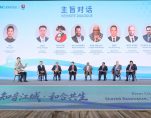
HONG KONG SAR – Media OutReach Newswire – 7 October 2026 – The Global Youth Powerhouse Summit 2026, organised by Hong Kong Youth Professional Global Advocacy, was held on 5 October at the Conrad Hong Kong. Now in its third edition, the Summit coincides with the release of the Hong Kong Special Administrative Region’s First Five-Year Plan for Economic and Social Development (2026–2030) and the latest Policy Address, which together set a clear blueprint for the city’s future. Anchored on these core themes and conducted entirely in English, the full-day programme focused on artificial intelligence, geopolitics, Hong Kong as an education hub, capital markets, life and health technology, and start-up financing. Government and business leaders, corporate representatives and young professionals were invited to examine Hong Kong’s strategic opportunities in the new economic landscape.
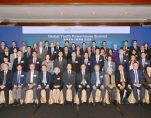
The Global Youth Powerhouse Summit 2026 brings together more than 600 young professionals, government and business leaders and corporate representatives
The Summit aims to connect young professionals with international resources, enabling participants to engage directly with industry leaders, grasp developments at the frontier of industry, and look ahead to the opportunities and challenges arising from artificial intelligence and Greater Bay Area integration. Previous editions have drawn a strong response. Across three editions, the Summit has attracted more than thousands of in-person participants and about 17,000 online participants from over 30 countries and regions, with social media reach exceeding 50 million.
This year’s Summit was the largest yet, bringing together more than 600 young professionals, government and business leaders and corporate representatives. Participants from over 60 countries and regions joined online. More than 30 distinguished speakers and moderators were invited, including officials of the Hong Kong Special Administrative Region Government and representatives of leading local and international organisations such as Huawei, the Alibaba Hong Kong Entrepreneurs Fund, Hong Kong Exchanges and Clearing Limited, Bullish and Endowus. In addition, consular representatives from up to 20 countries attended the Summit.
The Chief Executive of the Hong Kong Special Administrative Region, Mr John Lee, GBM, SBS, PDSM, PMSM, delivered a pre-recorded video speech, encouraging young professionals to seize the opportunities of the times and inject fresh momentum into Hong Kong’s high-quality development. He said: “For our young people, I firmly believe that your opportunities ahead outweigh the difficulties. The HKSAR Government will join hands with all sectors to build platforms for you to thrive in Hong Kong, in our country, and in the global arena.”
The Deputy Secretary for Justice of the Hong Kong Special Administrative Region, Dr Cheung Kwok-kwan, SBS, JP, delivered an opening keynote entitled “Opportunities for the Professional Development of Young People”, and stressed: “As the saying goes, ‘Change is the only constant’—or as our Cantopop classic famously put it, ‘變幻原是永恆’. Today, we no longer measure change in years or decades, but in months and days. For our young professionals, this fast-paced era unlocks unprecedented career horizons. By accelerating Greater Bay Area integration through our new GBA Task Force and empowering you to act as the ultimate ‘super-connectors’ and ‘super value-adders’ helping Mainland enterprises go global, we are turning rapid change into your greatest professional advantage.”
Dr Kevin Lau, MH, Founding Convenor of Hong Kong Youth Professional Global Advocacy, said: “This is more than a high-level forum. It marks a milestone in the maturing of our network of young professionals. This afternoon, venture funds managing an estimated US$10 billion in assets gathered in the room — and what they are looking at is Hong Kong’s next generation. In life and health technology, our core belief is clear: artificial intelligence can assist imaging and diagnosis, but a physician’s care, and the warmth of a human hand, can never be replaced by technology.”
Other distinguished guests included Mr Kevin Choi, JP, Permanent Secretary for Innovation, Technology and Industry; Professor Frederick Ma, GBS, JP, Chairman of the Hong Kong Trade Development Council; Ms Bonnie Y Chan, JP, Chief Executive Officer of Hong Kong Exchanges and Clearing Limited; and Mr James Chau, President of the China-United States Exchange Foundation and World Health Organization Goodwill Ambassador for Sustainable Development Goals. Mr Bryan Che, Chief Strategy Officer of Huawei, and Ms Cindy Chow, Executive Director and Chief Executive Officer of the Alibaba Hong Kong Entrepreneurs Fund, also attended in person to exchange views with young professionals.
Panel discussions
Artificial intelligence: from first-time users to advanced users The opening session began with remarks by Mr Kevin Choi, JP, Permanent Secretary for Innovation, Technology and Industry, and was moderated by Ms Stephaine Chan, Director of the Office of the Vice Chairman of Esquel Group. Panellists included Ms Ilaria Chan, Chair of the Tech For Good Institute; Mr Bryan Che, Chief Strategy Officer of Huawei; and Ms Cindy Chow, Executive Director and Chief Executive Officer of the Alibaba Hong Kong Entrepreneurs Fund. The discussion focused on whether small and medium-sized enterprises, non-governmental organisations and schools can genuinely put artificial intelligence to use, and on the talent, trust and practical-application issues Hong Kong faces in driving “AI for all”.
Mr Kevin Choi, JP mentioned: “Every major technology shift brings uncertainty. Our theme today from entry-level shock to AI-powered users building the next talent leader.”
Ms Stephaine Chan said: “Every AI conversation ends in the same place, right? More investment, better people, better models and stronger policy.”
Ms Ilaria Chan said: “These days, Al is so powerful that they can scan the Internet and social media and find vulnerable young people or old people. They can find it instantly and have a very sophisticated way to trick them and fraud them from scamming.”
Mr Bryan Che: “One of the opportunities of Al is because the interface is much more natural for most people to interact with. On one sense, it’s a lot easier for everyone to get started.”
Ms Cindy Chow said: “So I guess some of the most damaging thing is not allowing people to use or not, you know, really have the attitude to embrace all this new technology, what this new technology has to bring to you.”
Geopolitics: the super-connector This session was moderated by Mr James Chau, President of the China-United States Exchange Foundation and World Health Organization Goodwill Ambassador for Sustainable Development Goals. Speakers included Ms Ilaria Chan, Chair of the Tech For Good Institute; Ms Ellana Lee, Senior Vice President, Managing Editor, Asia Pacific, and Global Head of Productions at CNN; and Professor Frederick Ma, GBS, JP, Chairman of the Hong Kong Trade Development Council.
Mr James Chau said: “Against this backdrop, we often hear Hong Kong described as a super connector, typically framed in terms of trade volumes, capital markets and logistics but I think that these connections that we’re speaking of really only become very valuable and we understand and recognize the human bonds that pin these together.”
Professor Frederick Ma , GBS, JP said: “We are part of China. And yet we are under one country 2 systems connected to the rest of the world. That is the power of Hong Kong.”
Ms Ellana Lee said: “We made a very strategic decision when the times were tough to stay and remain in Hong Kong. I think that has and you know, we make these decisions not just out of a whim, but we are very calculative on why we need to stay. I have 8 cities across Asia Pacific. Hong Kong happens to be the hub for Asia Pacific. And there’s it boils down to four major reasons.”
Ms IIaria Chan: “Simple of how tech is helping people, there is an organization, WHO care for children that was founded 20 years ago that helps orphans in developing China back then Vietnam, Thailand now in Africa, Middle East to find loving permanent homes. But their bottleneck is how they train social workers and governments on how to take care of orphan welfare. Now this year we’ve actually been launching an online product that is able to scale these bottlenecks, especially in areas that are underfunded. This is a great example of Al tech.”
Education: Hong Kong as Asia’s education hub This session was co-moderated by Mrs Jennifer Yu Cheng, JP, Founder of the Future Leaders Foundation, and Ms Jennifer Ma, Founder of JM Edu Consulting. Speakers included Ms Maggie Chau, School Partnership Advisor at the Academy for Educational Development and Innovation of The Education University of Hong Kong; Mr Dion CHEN, MH, Vice-Chairman of the Hong Kong Direct Subsidy Scheme Schools Council; and Professor Charles Ng Wang-Wai, Vice-President for Institutional Advancement of The Hong Kong University of Science and Technology.
Mrs Jennifer Yu Cheng, JP said: “An education hub is more than a place with excellent institutions. It is a place that students and families choose, where young people flourish, and connects education with research, innovation, careers and a wider community.”
Professor Charles Ng said: “With our national policy. And I think we should do better to support this great initiatives and thinking back actually 2023 and home government already in in the government policy in October, if I remember correctly to start to increase the local student quota from 20% to 40%.”
Ms Jennifer Ma said: “As a consultant we need demand to meet supply and we are definitely seeing the demand for Hong Kong education at K12 level…….The advocacy for Hong Kong to be the gateway for China Resources and talents to leave China and go into international arenas. But at the same time, we also see a lot of international people interested in what’s happening in mainland, and therefore Hong Kong is a great gateway. So, with that global education, global education philosophy, that means they really appreciate Hong Kong trilingual education by cultural mindset.”
Mr Dion CHEN, MH mentioned: “In 2026, a lot of DSS schools will work very hard to try to welcome and also promote welcome to Hong Kong and also promote Hong Kong’s education to the students in different countries.”
Ms Maggie Chau said: “Maggie: I can see that all the universities are actually implementing AI in their curriculum. Talking about teacher education, the programs we offer, I mean, not just The Education University of Hong Kong, the programs we offer in all universities implement Al in the curriculum in a way that we draw attention to the use of Al is it has to be ethical.”
Capital markets: AI listings, asset tokenisation and the new economy This session was moderated by Ms Emily CHAN Tan, a former CNBC anchor. Speakers included Ms Bonnie Y Chan, JP; Ms Clara CHAN Ka Chai, Chief Executive Officer of the Hong Kong Investment Corporation Limited; Mr Michael Lau, Senior Vice President and Head of Group Business Development at Bullish and Chairman of Consensus; and Mr Samuel RHEE, Co-founder, Chairman and Group Chief Investment Officer of Endowus.
Ms Clara CHAN Ka Chai said: “We always say that from zero to 1 is the most challenging part. So, the patients in terms of having staying power is the core, but it has to go in hand with other qualities like being proactive, being professional.”
Mr Michael Lau said: “I think it’s an interesting proposition to consider that these types of companies that are so capital. I would start looking beyond the current horizon of where we are to see where it could go next. And so I do think that there is a demand looking to that future where this idea of a tokenized capital market could be quite interesting.”
Mr Samuel RHEE mentioned: “First of all, maybe we just take a step back and just try to understand all of the capital markets, not just equities.”
Ms Bonnie Y Chan, JP said: “I want to point out one thing. I mean, we are operating a stock exchange and I think capital markets at the end of the day, the basic function is to match capital with opportunity. So what I’m very focused on is that I’m not just focused on technology or AI.”
Ms Emily CHAN Tan said: “We are not just witnessing a cyclical recovery, but also some would call this the threshold of a capital markets renaissance.”
Life and health technology: building a health-industry hub This session was moderated by Professor Lo Yuk-lam, BBS, Founding President of the Hong Kong Biotechnology Organisation. Speakers included Professor LI King-Chuen, Founding Dean of the School of Medicine at The Hong Kong University of Science and Technology; Dr Sarah SALVILLA, Director of Health and Strategic Partnerships at FWD Group; and Professor Anthony Wu Ting-yuk, GBS, JP, former Chairman of the Hospital Authority and Non-executive Chairman of Trinity Medical Group. The discussion focused on how AI in healthcare can strengthen the competitiveness of Hong Kong’s health industry.
Professor Lo Yuk-lam, BBS said: “Building HK’s holistic wellness hub, this year marks a defining moment for HK. With the release of our first ever five year plan and their chief executive policy address just a few weeks ago, our city’s road map for healthcare and biotechnology knowledge has never been clearer or more ambitious.”
Professor Anthony Wu Ting-yuk, GBS, JP said: “Every country every city is trying to recruit more talent and I think Hong Kong is an ideal position to attract talents.”
Professor LI King-Chuen said: “Our education system will be individualized. And we will do the factual knowledge transfer through mostly self-directed learning. So we guide them, we build an AI system with prescribed information.”
Dr Sarah SALVILLA said: “Prevention for sure in terms of how do we educate people to be much more proactive in their everyday lives, yes you know, kind of the lifestyle things.”
Start-up pitching: connecting with capital The closing session was moderated by business journalist Ms Elaine Yu, with Mr LU Chin Yung, Senior Vice President (Start-ups) of the Sector Specialist Group at Invest Hong Kong. Representatives of 11 venture funds were present, including the Alibaba Hong Kong Entrepreneurs Fund, Clee Capital, Click Ventures, GT Healthcare Capital Partners, Gobi Partners GBA, HKSTP Ventures, MindWorks Capital, Ryoden Medical Holdings, Seveno Capital, Verge HealthTech Fund and W2 Venture Partners. Together, the funds manage an estimated US$10 billion, have invested in more than 600 start-ups across more than 30 economies, and have backed at least nine unicorns, including Airwallex, Animoca Brands, Prenetics and GoGoX. Start-ups taking part in the pitching session included CELLmeric, Entoptica, PointFit, Syngular, Kodifly, AilsynBio, EveryBaby, A-grade, Orimmune Biotech, Nordia Biotech, Oncolmmu Nostics Limited, The Harbour School (THS), VisionBridge, Eden’s Garden, and CARE CONNECT.
Ms Elaine Yu said: “We have 15 startups and I think a group of students as well, very precocious students WHO are already thinking of ideas, real businesses with commercial viability at the cutting edge of science, research, healthcare and so forth. So, this should be a fun dynamic session.”
Mr LU Chin Yung pointed out: “Hong Kong is great in a lot of rankings in the world and this is not given, this is hard earned by your parents, by some of you sitting here. But as a young founder in Hong Kong, if you come to Hong Kong, you get to enjoy all this very safe environment. You have efficiency and then you also have a very clean government. This one I can say for sure. Yeah. And and all this, it helps the the founders to focus on your business, focus on grow, growing instead of you have to deal with many, many things.”
The Summit closed amid lively exchange. Hong Kong Youth Professional Global Advocacy said it will continue to build the Summit into a platform for dialogue between young professionals and leading figures in government and business, helping Hong Kong’s young talent seize the opportunities of the new economy.
Vice-Chairman, Hong Kong Direct Subsidy Scheme Schools Council
Mrs Carrie Cheng, JP
Founder, Future Leaders Foundation
Dr Cheung Kwok-kwan, SBS, JP
Deputy Secretary for Justice, Hong Kong Special Administrative Region
Mr Kevin Choi, JP
Permanent Secretary for Innovation, Technology and Industry
Ms Cindy Chow
Executive Director and Chief Executive Officer, Alibaba Hong Kong Entrepreneurs Fund
Dr Kevin Lau, MH
Founding Convenor, Hong Kong Youth Professional Global Advocacy
Mr Lau Tak-ho
Senior Vice President and Head of Group Business Development, Bullish, and Chairman, Consensus
Ms Ellana Lee
Senior Vice President, Managing Editor, Asia Pacific, and Global Head of Productions, CNN
Professor King Li
Founding Dean, School of Medicine, The Hong Kong University of Science and Technology
Professor Lo Yuk-lam, BBS
Founding President, Hong Kong Biotechnology Organisation
Mr Raymond Lui
Senior Vice President (Start-ups), Sector Specialist Group, Invest Hong Kong
Ms Michelle Ma
Founder, JM Edu Consulting
Professor Frederick Ma, GBS, JP
Chairman, Hong Kong Trade Development Council
Professor Charles Ng
Vice-President for Institutional Advancement, The Hong Kong University of Science and Technology
Mr Samuel Rhee
Co-founder, Chairman and Group Chief Investment Officer, Endowus
Dr Sit Wai-nga
Director, Health and Strategic Partnerships, FWD Group
Professor Anthony Wu, GBS, JP
Former Chairman, Hospital Authority, and Non-executive Chairman, 全仁醫療集團
Ms Elaine Yu
Business Journalist
Ms Jeanne Cheng, JP
District Officer (Central and Western)
Dr Elsie Leung, GBM, JP
Former Secretary for Justice, Hong Kong Special Administrative Region
Professor Teresa Cheng, GBM, GBS, SC, JP
Secretary-General, International Organization for Mediation, and former Secretary for Justice
The Hon Tommy Cheung, GBM, GBS, JP
Non-official Member, Executive Council
The Hon Dr Lam Ching-choi, GBS, JP
Non-official Member, Executive Council
The Hon Chan Hoi-fung, BBS, MH, JP
Legislative Council Member
The Hon Chan Kin-por, GBM, GBS, JP
Non-official Member, Executive Council
The Hon Nixie Lam
Legislative Council Member
Mr Andrew Yao, SBS, JP
Hong Kong Deputy to the 14th National People’s Congress
Professor Herman Hu, GBS, JP
Hong Kong Deputy to the 14th National People’s Congress
Mr Gordon Lam
Hong Kong Deputy to the 14th National People’s Congress
Mr Chan Chung-ni, SBS, JP
Hong Kong Deputy to the 14th National People’s Congress
Mr Ho Hon-kuen, BBS, MH
Hong Kong Member, 14th National Committee of the Chinese People’s Political Consultative Conference
Mr Tu Haiming, BBS
Hong Kong Member, 14th National Committee of the Chinese People’s Political Consultative Conference
Mr Kung Wing-tak
Hong Kong Member, 14th National Committee of the Chinese People’s Political Consultative Conference
Dr Lo Kam-wing, BBS, JP
Hong Kong Member, 14th National Committee of the Chinese People’s Political Consultative Conference, and President, The Chinese Manufacturers’ Association of Hong Kong
Mr Li Tai-chong, SBS, OM, JP
Member, National Committee of the Chinese People’s Political Consultative Conference
The Hon Lam Wai-chuen
Legislative Council Member
The Hon Lau Man-kwan, JP
Legislative Council Member
The Hon Chong Ho-fung
Legislative Council Member
The Hon Lee Kwong-yu, MH
Legislative Council Member
The Hon Leung Tsz-wing, MH
Legislative Council Member
Mr Ng Yuk-yeung
Hong Kong Member, 14th National Committee of the Chinese People’s Political Consultative Conference
The Hon Fong Kwok-shan
Legislative Council Member
The Hon Lau Ka-keung, BBS, MH, JP
Legislative Council Member
The Hon Revd Canon Peter Koon, SBS, JP
Legislative Council Member
Mr Pablo Macedo Riba
Consul General of Mexico in Hong Kong
Dr Esteban Ramírez González
Consul General of Mexico in Hong Kong
Mr Alberto Martínez
Representative, Consulate General of Spain in Hong Kong
Ms Silvia Civera
Representative, Consulate General of Spain in Hong Kong
Mr Javier Sampedro
Commercial Representative, Consulate General of Spain in Hong Kong
Mr Juha Niemi
Consul General of Finland in Hong Kong and Macao
Mr O’Brien Ernesto Guerra Córdova
Consul General of Venezuela in Hong Kong
Mr Ammala Saenchonghack
Consul General of the Lao People’s Democratic Republic in Hong Kong
Mr Riaz Ahmed Shaikh
Consul General of Pakistan in Hong Kong
Mr Yos Sokhemrin
Consul General of Cambodia in Hong Kong
Mr Maurits Ter Kulve
Consul General of the Netherlands in Hong Kong
Ms Lim Kim Suan
Consul General of Brunei Darussalam in Hong Kong
Mr Hassan Doutaghi
Consul General of Iran in Hong Kong
Mr Ali Abdulla Al-Hitmi
Deputy Consul General of Qatar in Hong Kong
Ms Helen Silvester
British Council
Mr Wilhelm Brauner
Belgium-Luxembourg Chamber of Commerce
Professor Sin Kuen-fung, MH
Co-Executive Director, Academy for Educational Development and Innovation, The Education University of Hong Kong
Mr Lam Siu-hong, JP
Commissioner for Youth, Home and Youth Affairs Bureau
Mr Arnold Lau
Assistant Director-General, Invest Hong Kong
Professor James Dai
Associate Dean of Students, The Hong Kong Polytechnic University
Dr Chan Pui-yin
Vice-President, Hong Kong Medical Association
Ms Cecilia Ho
Chief Executive, Lee Hysan Foundation
Mr Quentin Merour
Consulate General of France in Hong Kong
Ms Christine Ma Lau
Founder and Principal, JEMS Character Academy
Ms Agnes Chan, BBS
Senior Advisor, Office of the Chairman, Greater China, EY
Ms Melissa Pang, BBS, MH, JP
Former President, The Law Society of Hong Kong, and Member, National Committee of the Chinese People’s Political Consultative Conference
Mr Patrick Yeung
Chief Executive Officer, Hong Kong General Chamber of Commerce
Ms Kimberly Kwok
Founder, Mighty Oaks
Mr Larry Chiang
Founder and Chief Executive Officer, International Finance Capital Group Limited
Ms Sophia Kao, GBS, JP
Former Chairperson, Women’s Commission, and founding Chairperson, Financial Reporting Council
Ms Marie Mercy
Consulate General of France in Hong Kong
Mr Peter Shum
Deputy Chairman of Federation of Hong Kong Industries
Mr Daryl Lin
JCI Hong Kong
Mr Jacky Chung
Hong Kong Trade Development Council (represented by Mr Andrew Chui)
Mr Silas Chu
Hong Kong Trade Development Council
Mr Lot Chan
Assistant Director of Health (Preparatory Office for Centre for Medical Products Regulation)
Dr Jeff Lee
Head of the Health Informatics and Technology Office
The issuer is solely responsible for the content of this announcement.
Hong Kong Youth Professional Global Advocacy
Hong Kong Youth Professional Global Advocacy is a community organisation founded in 2023 by young professionals in Hong Kong. It seeks to serve as a bridge between Hong Kong and the world, uniting Hong Kong young people globally through a range of exchange activities and cultivating an overseas youth network that supports “Hong Kong opportunities”. The organisation brings together more than 120 young professionals across finance, real estate, building surveying, manufacturing, environmental protection, healthcare, law, accounting and technology, and works closely with professional bodies, industry associations and the media. Through monthly salons and online exchanges with the Greater Bay Area, Southeast Asia and countries along the Belt and Road, it promotes understanding of the development of the Hong Kong Special Administrative Region and the Chinese Mainland, explores opportunities for collaboration, and ultimately aims to build a stronger network of professional youth and deepen exchange and cooperation with young people around the world.
Arabian Post Staff -Dubai Rasmal Ventures and Türkiye’s Bilişim Vadisi have signed a three-year cooperation agreement aimed at creating a structured route for startups, investors and companies between Türkiye and Gulf markets. The memorandum of understanding, signed in Istanbul, covers joint innovation programmes, investor and business-to-business matchmaking, knowledge exchange, capacity building and the movement of startups, specialists and networks between the two regions. The partnership also involves […]
HONG KONG SAR – Media OutReach Newswire – 2 October 2026 – UstarPay announced that it will co-host “Token2049 Networking Event with BitGo, HashKey & UstarPay” with BitGo and HashKey Cloud during TOKEN2049 Singapore. The event will take place in Singapore and will be subject to registration approval. The exact venue address will be provided to approved participants after registration.
The event will bring together industry participants from digital assets, fintech, payments, Web3 infrastructure, institutional services, and cross-border finance. It aims to provide a face-to-face networking platform for institutions, project teams, infrastructure providers, investors, and professionals. Discussions will focus on digital asset infrastructure, compliant payments, stablecoin use cases, wallet and card services, and how digital assets can enter real-world payment scenarios.
Event Details
Event Name: Token2049 Networking Event with BitGo, HashKey & UstarPay Date & Time: Wednesday, 7 October, 18:00–21:00 GMT+8 Event Partners: BitGo, HashKey Cloud, UstarPay Registration: Submit an application through the official Luma event page Registration Link:https://luma.com/qjgwthvg Entry: Approved participants may enter with a valid QR code
Please note that this event requires registration approval. All participants must submit an application through the official Luma event page. The hosts will review applications based on applicant background, industry relevance, and event capacity. Once approved, participants will receive an event QR code. Only approved participants with a valid QR code will be admitted to the event. An invitation or shared event information does not constitute official admission credentials.
Stablecoins Enter the Next Stage: From On-Chain Assets to Real-World Payments
In recent years, stablecoins have evolved from a funding tool primarily used in crypto trading into a payment and settlement medium within the global digital economy. As cross-border work, global freelancing, online subscriptions, e-commerce, and international trade continue to grow, the market demand for faster, more flexible, and geographically accessible payment methods has continued to increase.
However, for digital assets to truly enter everyday life, one core question remains: how can the speed of on-chain transactions be connected with the trust, compliance, and settlement systems required by the real world?
In traditional financial and payment networks, every movement of funds must address fundamental questions: who the user is, where the funds come from, whether the transaction is compliant, whether risk can be identified, and whether the settlement trail can be audited. For digital asset payments, these questions do not disappear simply because technology becomes faster. Instead, they become essential conditions for digital assets to move toward broader, scalable adoption.
UstarPay’s role is to build the infrastructure that connects on-chain assets with real-world payment scenarios during this transition.
About UstarPay’s Role in Real-World Digital Asset Use
UstarPay is a PayFi-focused infrastructure platform connecting supported digital assets with real-world spending and transaction use cases. Its core vision is to help digital assets move beyond trading, holding, or investment and become more practical for everyday and commercial use, subject to applicable requirements.
By connecting wallet, card, and related technology infrastructure, UstarPay helps eligible individuals and businesses access card and transaction solutions using supported digital assets. In applicable markets, and subject to supported assets, product settings, and relevant requirements, users may explore stablecoins and other supported digital assets for online shopping, travel and hotel spending, subscription services, cross-border purchases, in-store purchases, and, where applicable, ATM withdrawals.
For enterprises, UstarPay explores modular technology support connected to card applications, risk management, and settlement workflows. Relevant use cases may be considered for eligible platforms and businesses, subject to applicable laws, partner requirements, product scope, and case-by-case assessment.
UstarPay believes the future of digital asset use is not only about whether a transaction can be completed, but also whether relevant activity can be verified, monitored, risk-assessed, reviewed, and settled. Based on this view, UstarPay is exploring “Proof-of-Spend” as part of its digital asset application narrative. By connecting identity verification, AML processes, asset custody, on-chain risk assessment, transaction records, and settlement workflows, UstarPay is exploring how digital asset applications can be supported by more verifiable, monitorable, and traceable process foundations.
From a risk management and traceability perspective, UstarPay considers identity verification, on-chain transaction monitoring, asset custody, and settlement records as relevant components where applicable. The company may work with relevant technical service providers in these areas. This registration does not mean that all products, services, or markets are authorized or available. Relevant services remain subject to applicable laws and regulations, user eligibility, supported assets, product settings, partner requirements, and jurisdictional restrictions.
Guided by “Real Crypto, Real Life,” UstarPay’s long-term direction is to help supported digital assets move from on-chain holdings toward card and transaction applications that can be used in everyday and commercial contexts, subject to product configuration, applicable requirements, supported assets, and regional availability.
Event Significance: Connecting PayFi, Stablecoin Payments, and Institutional Infrastructure
The co-hosts of this event span digital asset custody, institutional infrastructure, PayFi, stablecoin payments, and on-chain yield. This reflects the digital asset industry’s ongoing evolution from single-purpose trading scenarios toward more mature financial and payment infrastructure.
As stablecoins continue to become an important tool for value movement in the global digital economy, the market demand for compliant payment access, secure asset custody, risk control infrastructure, and cross-border settlement capabilities continues to grow. Through this event, UstarPay hopes to engage with more industry participants to discuss how digital assets can enter the real world in a safer, more compliant, and more practical way.
Hashtag: #UstarPay
The issuer is solely responsible for the content of this announcement.
About BitGo
BitGo (NYSE: BTGO) is the digital asset infrastructure company delivering custody, wallets, staking, trading, financing, stablecoins, and settlement services from regulated cold storage. Since 2013, BitGo has focused on accelerating the transition of the financial system to a digital asset economy. BitGo maintains a global presence and multiple regulated entities, including BitGo Bank & Trust, National Association, the first federally chartered digital asset trust bank owned by a publicly traded company. Today, BitGo serves thousands of institutions, including many of the industry’s top brands, financial institutions, exchanges, and platforms, and millions of investors worldwide. For more information, visit www.bitgo.com.
About UstarPay
UstarPay is a PayFi-focused infrastructure platform designed to connect digital assets with real-world spending and transaction use cases. By connecting wallet, card, and related technology infrastructure, UstarPay helps eligible users and businesses access convenient card and transaction solutions using supported digital assets.
With a focus on compliance, transparency, and risk management, UstarPay is developing digital asset experiences designed to support traceability and transparency in supported markets. Guided by “Real Crypto, Real Life,” the company is focused on making supported digital assets more practical and relevant to everyday life, subject to applicable requirements and availability. Relevant services remain subject to applicable laws and regulations, user eligibility, supported assets, product settings, and regional availability.
HashKey Cloud is the institutional staking and yield infrastructure of HashKey Group (HKEX: 3887). It focuses on providing secure, auditable multi-chain staking and yield services for global institutions, asset managers, and professional investors. Our services include ETF/DAT staking, prime VIP staking, API staking, and prime yield, empowering institutions to manage on-chain assets and returns with efficiency and confidence.
Disclaimer: Relevant services are subject to applicable laws and regulations, user eligibility, supported assets, partner requirements, and geographic restrictions. Not all services are available in all markets.
Ghana and the Philippines have agreed to expand trade and investment cooperation, establish a chamber of commerce and organise business forums as Manila prepares to open its first resident embassy in Ghana later this year. The commitments emerged from talks between Ghana’s Foreign Affairs Minister Samuel Okudzeto Ablakwa and Philippine Secretary of Foreign Affairs Ma. Theresa P. Lazaro on the sidelines of the 81st United Nations General […]
HONG KONG SAR – Media OutReach Newswire – 22 September 2026 – Hong Kong’s Chief Executive John Lee announced the First Five-Year Plan for Economic and Social Development of the Hong Kong Special Administrative Region (HKSAR) (2026-2030) and his fifth Policy Address on September 16, rolling out measures to further sharpen Hong Kong’s edge amid global competition, consolidate development of the Guangdong-Hong Kong-Macao Greater Bay Area (GBA) and promote green transformation.
Initiatives aim to support high-quality development of the GBA, align rules and mechanisms within the region, and promote cross-boundary collaboration.
“The HKSAR Government will continue its efforts in fostering synergistic development of the GBA,” said Mr Lee. “We will strengthen co‑operation in technological innovation, promote ‘hard connectivity’ in infrastructure, foster ‘soft connectivity’ by deepening the alignment of rules and mechanisms, and achieve ‘connectivity of hearts’ among residents of the three places.”
The HKSAR Government will continue to actively participate in the development of the various major co-operation platforms, including Qianhai of Shenzhen, Nansha of Guangzhou, Hengqin of Zhuhai and the Hetao Shenzhen-Hong Kong Co-operation Zone, to promote mutual benefits.
In terms of “hard connectivity” the HKSAR Government will support Nansha in its role as a high‑standard gateway for opening up, including encouraging the trade to participate in Nansha’s infrastructure development.
“To promote the co‑ordinated development of rail transit in Guangdong, Hong Kong and Macao, we are pressing ahead with the Northern Link Project and the Hong Kong‑Shenzhen Western Rail Link (Hung Shui Kiu‑Qianhai), with target commissioning in 2034 and 2035 respectively, to fully connect the rail transit networks of Hong Kong and Shenzhen,” Mr Lee said.
Regarding “soft connectivity”, Mr Lee said the HKSAR Government will set up a Task Force to explore ways to advance the alignment of rules and mechanisms within the GBA.
To achieve “Connectivity of Hearts” among residents across the GBA, Hong Kong will strengthen co-operation between its higher education institutions and those in other GBA cities by establishing cross‑disciplinary partnerships, facilitating scientific research, knowledge transfer, and commercialisation, with a view to promoting high‑level research.
Hong Kong’s Secretary for Constitutional and Mainland Affairs, Janice Tse, noted that the First Five-Year Plan clearly states that Hong Kong will participate in the development of the GBA into an international first‑class bay area and a world‑class city cluster with global influence.
“Hong Kong will forge closer alignment and synergy with the nine GBA cities in Guangdong Province and Macao, making full use of our respective advantages to jointly promote the high-quality development of the GBA,” Miss Tse said.
To foster financial development in the GBA, Hong Kong will continue to capitalise on institutional innovation, financial infrastructure upgrading and enhanced regulatory alignment to encourage the orderly flow of financial elements among GBA cities.
The Hong Kong Exchanges and Clearing Limited’s Core Climate, in collaboration with the Guangzhou Power Exchange Centre, is working towards the pilot trading of national renewable‑energy, green electricity certificates in Hong Kong in 2026.
“On connecting the Chinese Mainland and the world, the HKSAR Government will continue to support green technology development through the HK$400 million (aboutUS$51 million) Green Tech Fund, leveraging Hong Kong’s function as a springboard for green technology and assisting national green technologies and products in going global,” said Hong Kong’sSecretary for Environment and Ecology, Tse Chin-wan. “On the development of hydrogen energy, we have participated in drafting national hydrogen energy standards with a view to helping these standards align with international practice.”
To meet the country’s “dual carbon” targets and fulfil Hong Kong’s commitment to achieving carbon neutrality before 2050, the HKSAR Government steered the establishment of a production base for sustainable aviation fuel (SAF) in Dongguan, leveraging the leading position of Hong Kong enterprises in the international SAF industry.
“By combining technology strengths with industrial foundation, Hong Kong and Guangdong will jointly develop a globally influential green industry,” Mr Lee said.
The HKSAR Government will take forward the construction of an SAF blending facility in Hong Kong to build an end‑to‑end SAF value chain and reduce logistics costs to make SAF prices more competitive. The target is to achieve an SAF consumption ratio of 1% to 3% for flights departing from Hong Kong International Airport in 2030.
Hong Kong’s Five-Year Plan promotes the integrated development of culture, sports, and tourism, to develop the GBA into a cultured bay area.
Under the strategic framework of the Agreement on Strengthening of Sports Cooperation and Promotion of Integrated Development, Hong Kong will deepen co-operation, and strive to co‑organise important regional and international single‑sport events. It will also strengthen cultural exchanges, pass on Cantonese opera and the characteristics of Lingnan culture, and promote the sales and cross‑boundary exhibition of Hong Kong publications.
Arabian Post Staff -Dubai Saudi Arabia’s local-currency debt market is poised to attract greater foreign participation as riyal-denominated government sukuk enter JPMorgan’s Government Bond Index-Emerging Markets series from 2027, according to Fitch Ratings. Fitch said the planned inclusion should draw additional overseas investment into a market that is already more developed than local-currency debt markets elsewhere in the Gulf Cooperation Council. Foreign investors accounted for 15% of […]
Arabian Post Staff -Dubai Iraq Stock Exchange has begun live trading through Abu Dhabi Securities Exchange’s Tabadul network, giving investors in Iraq direct access to securities listed in Abu Dhabi and opening the Iraqi market to eligible investors across the cross-border platform. ADX said on Tuesday that ISX had become the eighth market to go live on Tabadul, while the wider network now comprises 11 exchanges. The […]
Polymarket has added 15-minute Bitcoin price markets to its US app, giving users a new way to trade contracts tied to whether the cryptocurrency rises or falls during successive quarter-hour windows. The contracts, listed as “BTC Up or Down: 15 min”, settle according to whether a specified Bitcoin reference price at the end of each 15-minute interval is greater than or equal to its level at the […]
Arabian Post Staff -Dubai The UAE’s ambassador to Uzbekistan has received a joint delegation from the Emirates Scholar Center for Research and Studies and the Islamic World Educational, Scientific and Cultural Organization, with talks focusing on expanding academic, cultural and research cooperation with Uzbek institutions. Dr Saeed Matar Al Qamzi hosted the delegation at the UAE Embassy in Tashkent during its visit to Uzbekistan, the Emirates Scholar […]
India’s youth-led Cockroach Janta Party has set Saturday as the deadline for Chief Election Commissioner Gyanesh Kumar to resign, warning that it will begin nationwide protests on October 2 if he remains in office.
Founder Abhijeet Dipke said the movement would start its campaign in Mumbai on Gandhi Jayanti and then take demonstrations to cities across the country. The ultimatum follows allegations of serious internal disagreements within the Election Commission over decisions affecting electoral rolls during the Special Intensive Revision.
“If Gyanesh Kumar does not resign by tomorrow, CJP will begin its nationwide protest from Mumbai on 2 October, and take it to cities across India,” Dipke said on Friday. The organisation had initially given Kumar 48 hours to step down and threatened an indefinite sit-in in New Delhi if its demand was ignored.
The CJP has also launched an “Election Commission Thik Karo” campaign and called for the SIR process to be halted. Its leaders have demanded an independent investigation into electoral-roll decisions and questioned whether safeguards governing voter registration, deletion and data management were properly observed.
The dispute intensified after information emerged that Election Commissioners Sukhbir Singh Sandhu and Vivek Joshi had formally raised objections at least 14 times over 10 months to decisions and orders concerning electoral rolls. The objections reportedly covered registration of new voters, deletion and restoration of names, changes to Form 6 and control of the technology used to maintain voter data.
Some objections concerned decisions that Sandhu and Joshi said had been taken or communicated without their knowledge. The two commissioners also raised concerns about centralising access to electoral-roll systems in New Delhi and, in separate communications, approached the Cabinet Secretary over changes affecting oversight of the commission’s technology infrastructure.
The Election Commission has rejected suggestions that the exchanges demonstrate improper decision-making. It said differing views and observations were a normal part of institutional deliberation and maintained that its final decisions, including those governing the SIR, were unanimous and legally valid.
The commission said it functions under Article 324 of the Constitution, statutory rules and established conventions. Officials have maintained that questions raised while proposals or orders are being considered should not be equated with dissent from final decisions approved by the three-member body.
Opposition parties have nevertheless seized on the disclosures to renew accusations that the electoral-roll revision has been conducted unfairly. Congress organised marches towards election offices in several state capitals on Friday, demanding Kumar’s removal and an independent examination of decisions taken during the revision.
The opposition has alleged that names have been removed from voter lists without adequate safeguards while some additions have lacked sufficient verification, claims the Election Commission disputes. The Bharatiya Janata Party has defended the commission and rejected allegations that the institution has been manipulated to favour the governing party.
BJP spokesperson Sambit Patra said internal deliberations demonstrated that the commission was functioning democratically. He said the final SIR decisions had been reached unanimously by all three commissioners and argued that disagreements during deliberations did not establish that the constitutional body was operating under one person’s control.
The controversy has given the CJP another national issue around which to mobilise young supporters. The organisation describes itself as a youth pressure group rather than a registered political party and emerged this year from an online protest campaign after Chief Justice of India Surya Kant used the words “cockroaches” and “parasites” while criticising a section of unemployed young people during a court hearing.
Its campaign subsequently expanded into street mobilisation over examination irregularities, education and public services. The group’s leaders have also organised inspections of government schools and used social media to highlight complaints about staffing and infrastructure.
Arabian Post Staff -Dubai Iran has floated a plan to dilute and transfer its stockpile of uranium enriched to 60 per cent to a third country, as Tehran seeks to break a diplomatic deadlock with the United States and secure a phased reopening of the Strait of Hormuz. People familiar with Iran’s position said the proposal would involve first reducing the enrichment level of the material and […]
By Nitya Chakraborty Donald Trump-Xi Jinping summit on September 24 in Washington has not led to a major breakthrough in resolving the issues of bilateral trade, AI’s future, West Asia wars and Taiwan’s fate, but the visible bonhomie between the two leaders has laid the ground for a firm understanding that the world’s two biggest […]
Arabian Post Staff -Dubai Iran has presented the United States with a proposed regional ceasefire framework that would halt attacks on Arab states, gradually reopen the Strait of Hormuz and set a timetable for broader negotiations aimed at ending the conflict, according to officials briefed on the diplomatic effort. The proposal, conveyed during talks around the United Nations General Assembly in New York, envisages a ceasefire lasting […]
HONG KONG SAR – Media OutReach Newswire – 11 September 2026 – The 11th Belt and Road Summit was successfully held at the Hong Kong Convention & Exhibition Centre (September 9–10), attracting over 6,200 political and business elites from more than 70 countries and regions under the Belt and Road Initiative (BRI) and beyond, exploring co-operation opportunities for mutually beneficial development.
During the two-day event, more than 60 Memoranda of Understanding (MoUs) and bilateral co-operation agreements were witnessed. The total value of these MoUs, together with new projects and deals finalised before and during the Summit, is over US$3.1 billion.
Hosted by the Hong Kong Special Administrative Region (HKSAR) Government since 2016, the summit remains the premier business and investment platform for Hong Kong’s participation in and contribution to the BRI.
Noting that the BRI is a shared blueprint for the future, rooted in a rich history of cross-cultural collaboration, HKSAR Chief Executive John Lee said: “Hong Kong, as a place where East meets West, is where capital, talent, businesses and opportunities converge. In addition to strengthening our relations with traditional partners, Hong Kong continues to expand our network of friends along the Belt and Road.”
Under the theme “Advancing High-quality Development · Embarking on a New Journey”, business and government leaders discussed co-operation across trade and commerce, legal services, green technology, logistics, artificial intelligence and new quality productive forces.
The summit explored new co-operation landscapes and emerging opportunities in trade, investment and development across Belt & Road markets and other regions, with a special focus on ASEAN, Central Asia and the Middle East, underscoring Hong Kong’s unique role as a “super connector” and “super value-adder”.
Mr Lee has led high-level business delegations to explore opportunities in 13 Belt and Road countries across ASEAN, the Middle East and Central Asia, delivering a total of over 250 MoUs and other agreements. These covered policy coordination, trade and investment, expanded connectivity and support for companies, underlining Hong Kong’s focus on opening new markets, forming new partnerships and advancing regional co-operation.
This year’s summit featured three newly-added special chapters – the GoGlobal Chapter, Central Asia Chapter and Middle East Chapter. The GoGlobal Chapter offered a one-stop platform for exchange and matchmaking for Chinese Mainland enterprises looking to tap new markets overseas, while the Central Asia and Middle East chapters invited local officials and business leaders to share investment opportunities.
“In light of the shifting geopolitics, rising trade protectionism and the reshaping of global supply chains, businesses going global is no longer simply an option; it is an increasingly important strategy for Chinese Mainland enterprises to diversify risks, strengthen resilience and pursue new growth opportunities,” said the HKSAR Government’s Secretary for Commerce and Economic Development, Mr Algernon Yau.
A freshly integrated University Zone highlighted Hong Kong universities’ R&D strengths and their capabilities in technology commercialisation across the Belt & Road region, consolidating Hong Kong’s position as an international education hub. The Summit also introduced a debut Dialogue for Future session, promoting think-tank exchanges on “The Belt and Road Initiative and Asia-Pacific Co-operation in a Changing Global Landscape”.
Through the Project Investment Session, Belt and Road Deal-Making, and Exhibition Zones, this year’s event showcased over 300 investment projects, and arranged more than 800 one-on-one deal-making meetings, helping enterprises connect with potential partners.
WUHAN, CHINA – Media OutReach Newswire – 23 September 2026 – The Global Mayors Dialogue · Wuhan and the 2026 Wuhan International Friendship Cities Cooperation Conference, held from Sept. 18 to 21, brought together 80 international guests from 24 cities across 22 countries, according to organizers.
The Global Mayors Dialogue and the 2026 Wuhan International Friendship Cities Cooperation Conference kicked off on September 20.(Photo by Chen liang)
At the event, mayors and city representatives from six international sister cities of Wuhan called for closer cooperation in technology, industry, education and culture.
Representatives from Manchester in Britain, Kemi in Finland, Cape Town in South Africa, Yangon in Myanmar, Rzeszów in Poland and Turkistan in Kazakhstan took part in discussions on urban innovation, industrial cooperation and cultural exchange.
Manchester: a new start after 40 years of friendship
This year marks the 40th anniversary of the sister-city relationship between Wuhan and Manchester.
Shaukat Ali, lord mayor of Manchester, said the city was ready to deepen cooperation with Wuhan in education, culture, youth affairs, innovation and industry.
“Manchester is committed to promoting urban transformation through open cooperation, sharing opportunities, and fostering common development with international sister cities like Wuhan,” he said.
Ali said Manchester had developed from a post-industrial city into an innovation-oriented economy, with a focus on advanced manufacturing, artificial intelligence, life sciences and green technologies.
He said the two cities could share experience in urban transformation, innovation districts, university-industry cooperation and low-carbon development, while encouraging links among universities, businesses and research institutions.
He also highlighted existing educational and cultural links, including cooperation between Hubei University and Manchester Metropolitan University and exchanges between the Royal Northern College of Music and Wuhan Conservatory of Music.
Kemi: balancing growth with environmental protection
Mikko Koivulehto, chairman of the City Council of Kemi, said the Finnish city sought to balance economic growth with environmental protection.
“We believe that protecting nature and building a prosperous city can go hand in hand,” he said.
Kemi, a port city in Finnish Lapland, has developed industries based on renewable raw materials, clean energy and the bioeconomy. The city is also seeking to expand tourism and improve livability.
This year marks the 10th anniversary of the friendly exchange relationship between Wuhan and Kemi. The two cities have cooperated in areas including trade, the circular economy, tourism and youth exchanges.
Cape Town: technology and jobs key to urban transformation
Lungelo Mbandazayo, city manager of Cape Town, said technological innovation, talent development, infrastructure and green renewal were key to Wuhan’s transformation.
Cape Town, a UNESCO City of Design, is seeking to expand its technology and digital sectors while promoting green technology and an inclusive economy.
Mbandazayo said youth unemployment remained a major challenge for Cape Town and that technological development needed to create jobs.
After visiting Wuhan companies and technology facilities, he said Cape Town hoped to deepen exchanges with Wuhan in technology and talent.
Yangon: seeking practical cooperation with Wuhan
Yangon Mayor Myo Myint Aung said the city was looking to Wuhan for experience in smart-city development, digital governance, intelligent transport and urban resilience.
Wuhan and Yangon signed a letter of intent on friendly exchanges and cooperation during the event.
Yangon is developing a long-term plan to accommodate population growth and expand its urban, industrial and transport infrastructure.
During a visit to Wuhan on Sept. 19, Myo toured the Optics Valley “Photon” suspended monorail, HGTECH and a Xiaomi smart home appliance factory.
“We came to Wuhan not just to observe, but to learn and cooperate,” he said, adding that Yangon hoped to develop smart manufacturing and strengthen cooperation in information technology.
Rzeszów: opportunities in aerospace and technology
Rzeszów Mayor Konrad Fijołek said the Polish city hoped to cooperate with Wuhan in aerospace, sensor technology, biodiversity and climate action.
Rzeszów is home to the “Aviation Valley,” a major aerospace cluster in Central Europe.
“Exploring cooperation with Wuhan is the reason I came here,” Fijołek said.
After visiting HGTECH and a Xiaomi smart home appliance factory, he said Wuhan’s automated manufacturing and technologies in sensors and satellite systems had impressed him.
He said cities could help connect universities, businesses and research institutions and promote international cooperation.
Turkistan: five areas for cooperation
Turkestan Mayor Azimbek Pazylbekuly said his city hoped to expand cooperation with Wuhan in tourism and culture, education and science, investment and entrepreneurship, digitalization and innovation, and transport and logistics.
Wuhan and Turkistan signed a memorandum of intent on friendly exchanges and cooperation during the event.
Turkistan, an ancient Silk Road city and a UNESCO World Heritage site, has been developing industries including food processing, textiles, furniture and construction materials.
Pazylbekuly said cooperation between governments, businesses, universities and research institutions could help turn the two cities’ exchanges into concrete projects.
The conference also included friendship-city anniversary celebrations and a signing ceremony for 10 cooperation projects. A digital list of cooperation opportunities and an initiative on international friendship-city cooperation were released.
During their stay, the visiting mayors toured Wuhan’s technology, manufacturing and ecological facilities, including the Optics Valley suspended monorail, a Yangtze finless porpoise conservation center, Xiaomi, HGTECH and Dongfeng Motor facilities.
Hashtag: #wuhan
The issuer is solely responsible for the content of this announcement.
VIENNA, AUSTRIA – EQS Newswire – 23 September 2026 – AUSTRIACARD HOLDINGS has produced and delivered the first Jaywan payment cards for Wio Bank PJSC, supporting the continued expansion of the UAE’s domestic card scheme and strengthening the country’s payments infrastructure.
Launched by Al Etihad Payments under the Central Bank of the UAE’s National Payment Systems Strategy, Jaywan is the UAE’s domestic card scheme, built to enhance the resilience, efficiency and sovereignty of the country’s payments infrastructure — part of the UAE’s broader vision to advance digital payments and strengthen its national financial ecosystem.
The cards were manufactured at AUSTRIACARD’s Bucharest production facility and combine the company’s secure payment card manufacturing expertise with Wio Bank’s digital-first banking platform, giving Wio customers access to payment products issued under the Jaywan scheme.
The milestone extends AUSTRIACARD’s support for financial institutions participating in the UAE’s national payments ecosystem, reflecting the company’s commitment to secure, high-quality payment solutions and marking a further step in its growth across the Gulf region — and in the shared ambition of AUSTRIACARD and Wio Bank to build a resilient, efficient, locally anchored payments landscape in the UAE.
Burak Bilge, EVP Türkiye, Middle East and Africa, AUSTRIACARD HOLDINGS, said:
“National card schemes are becoming a defining feature of payments across the Middle East and Africa and supporting them is a strategic priority for AUSTRIACARD. Adding Jaywan to the portfolio that already spans international and domestic schemes strengthens what we can offer every issuer we serve. We are pleased to take this step with Wio Bank, the UAE’s first platform bank and one of the region’s fastest-growing digital banks, and we look forward to contributing to the growth of Jaywan and the wider UAE card market.”
Prateek Vahie, Chief Commercial Officer at Wio Bank said:
“At Wio Bank, our focus is on giving customers seamless access to the payment infrastructure that matters most to them. Partnering with AUSTRIACARD to bring Jaywan-issued cards to our customers reflects our commitment to the UAE’s national payments strategy, and it’s another step in building the kind of digital-first banking experience our customers expect.”
About Wio Bank PJSC:
Wio Bank PJSC is the UAE’s leading financial platform, reimagining banking for individuals and businesses. Headquartered in Abu Dhabi and fully regulated by the Central Bank of the UAE, Wio is backed by ADQ, Alpha Dhabi Holding, e& and First Abu Dhabi Bank. By combining advanced technology with a human-centric approach, Wio delivers seamless, personalised financial solutions.
For personal banking, Wio offers smart tools and insights to help individuals and families take control of their finances, enabling them to save, spend and grow with ease. For businesses, Wio provides entrepreneurs and SMEs with a comprehensive digital platform designed to streamline operations, unlock growth opportunities and simplify financial management.
Wio is redefining the banking landscape as a market leader in Banking-as-a-Service (BaaS) and embedded finance, delivering innovative solutions that empower people, businesses, and communities with the infrastructure they need to access long-term wealth creation.
Wio Bank has been widely recognised through regional and international industry awards and rankings, including Forbes Middle East, Fast Company Middle East and Finance Middle East.
AUSTRIACARD HOLDINGS AG leverages over 130 years of experience in information management, printing, and communications to deliver secure and transparent experiences for its customers. They offer a comprehensive suite of products and services, including payment solutions, identification solutions, smart cards, card personalization, digitization solutions, and secure data management. ACAG employs a global workforce of 2,360 people and is publicly traded on both the Euronext Athens and Vienna Stock Exchanges under the symbol ACAG.
By Ashok Nilakantan Ayers NEW YORK: External Affairs Minister S Jaishankar arrived at the 81st UN General Assembly with an unusually broad diplomatic canvas before him. In meetings with European, Ukrainian, Arab, Asian and other counterparts, India was simultaneously talking to countries that sit on opposite sides of some of the world’s sharpest geopolitical divides. […]
Digital-asset companies in South Africa have put at least R2.2 billion of transactions on hold as uncertainty grows over proposed rules that would bring cryptocurrencies more firmly within the country’s exchange-control system. At least three deals have been paused because of the proposed changes, according to people familiar with the transactions. The affected agreements include a large private-equity investment and other deals intended to support small-business capital […]
Hong Kong has laid out a five-year programme to strengthen its established economic pillars while building new growth engines, with a gold-led commodity trading ecosystem among the centrepieces of its strategy through 2030.
Chief Executive John Lee’s 2026 Policy Address and the city’s first Five-Year Plan for Economic and Social Development set out measures covering finance, trade, shipping, aviation, innovation and technology, alongside efforts to attract capital, companies and skilled workers. The government said the programme is designed to reinforce Hong Kong’s international competitiveness and support longer-term economic development.
Gold will serve as the entry point for a broader commodity trading ecosystem. Hong Kong plans to formally launch its central clearing and settlement system for gold in the first quarter of 2027, following trial operations that began in July. The system is intended to support trading that meets international standards and strengthen links among clearing, settlement, storage and physical delivery.
Hong Kong Exchanges and Clearing will announce details this year of new renminbi-denominated, physically settled gold futures contracts. The government also plans to explore tax concessions for qualifying activities across the gold and commodity trading chain, with proposals expected to be put to the Legislative Council for consultation next year.
The Hong Kong Monetary Authority is studying whether the Exchange Fund should moderately increase its gold holdings and participate in local spot and futures markets. Existing physical gold inventories could gradually be transferred to designated vaults appointed by the Hong Kong Precious Metals Central Clearing Company.
Authorities also plan to expand storage and related infrastructure. Since the London Metal Exchange added Hong Kong to its global warehousing network in 2025, approved storage space has exceeded 60,000 square metres and inventories have risen above 20,000 tonnes of metal. More LME-approved warehouses are planned for the Northern Metropolis.
A half-rate tax concession for physical commodity trading is also being pursued to encourage traders to establish or enlarge operations in the city. A joint working group led by the Secretary for Financial Services and the Treasury will examine market opportunities and possible collaboration between exchanges.
The wider financial strategy seeks to strengthen Hong Kong’s role as an offshore renminbi business hub and an international centre for asset management and risk management. The government plans to deepen green and digital finance, widen financing channels for technology companies and strengthen trade finance, supply-chain finance, clearing, settlement and risk-management services.
A proposed Innovation and Technology Industry-Oriented Fund will receive HK$10 billion in government funding and is expected to reach at least HK$40 billion when market capital is included. Priority areas include life and health technology, artificial intelligence and robotics, semiconductors and smart devices, digitalisation, and sustainable development.
The five-year plan also calls for greater emphasis on high-value maritime services rather than relying mainly on traditional port logistics. Measures include reforms to ship registration, support for ship financing and marine insurance, and further development of maritime arbitration and other professional services.
Hong Kong also intends to build a broader aviation industry ecosystem. Plans include developing aircraft-parts processing and trading, participating in research and certification connected with domestically developed aircraft, and expanding sustainable aviation fuel supply chains across the Greater Bay Area. Authorities aim for sustainable aviation fuel to account for 1% to 3% of fuel used by departing flights at Hong Kong International Airport in 2030.
Trade policy will focus on digitalisation, diversification and higher-value supply-chain services. The government wants more companies to use Hong Kong for international orders, foreign-exchange transactions, treasury operations, trade finance and supply-chain management, while attracting regional and international headquarters.
The plan places innovation alongside the traditional pillars, with support directed towards artificial intelligence, robotics, life sciences, microelectronics and advanced manufacturing. It also identifies aerospace technology, marine technology, quantum technology and embodied intelligence as fields for longer-term development.
Lemon is expanding its regulated financial infrastructure across Latin America as the crypto-fintech platform adds payment, investment and digital-asset services to a user base now measured in the millions. Peru’s banking and insurance regulator authorised the organisation of Lima del Sol EEDE, a new electronic-money issuer linked to Lemon Group, in July, giving the company a route towards operating more of its local payments infrastructure through a […]
The United States has sanctioned Iranian cryptocurrency exchange BitBank, accusing it of helping move hundreds of millions of dollars in Bitcoin to the Islamic Revolutionary Guard Corps and processing payments linked to Tehran. The Treasury Department’s Office of Foreign Assets Control designated BitBank on September 17 under Executive Order 13902, which targets sectors of Iran’s economy. The action also covered BitBank’s software developer, Pishtaz Simorgh Electronic Trade […]
CoinEx will shut its cryptocurrency exchange on December 22 after nine years of operation, citing a prolonged market downturn, falling trading activity and mounting regulatory and compliance costs. The platform began an orderly wind-down on September 15, halting new user registrations and restricting several services, while allowing customers to withdraw assets until 02:00 UTC on December 22. CoinEx said all user assets were fully backed and that […]




 https://hkypga.com/
 https://www.facebook.com/hkyproadvocacy?locale=sk_SK
 https://www.instagram.com/gypowerhouse/





 https://www.linkedin.com/company/brand-hong-kong/
 https://x.com/Brand_HK/