News related to
Exchanges

Binance, the world’s largest cryptocurrency exchange, has announced plans to delist the WRX token, native to the WazirX platform, effective December 25, 2024. This decision has precipitated a significant decline in WRX’s market value, with the token’s price plummeting by approximately 60% following the announcement.

The delisting is part of Binance’s routine asset review process, aimed at ensuring all listed digital assets meet the platform’s stringent standards. Factors influencing such decisions typically include trading volume, liquidity, network stability, security, and compliance with regulatory requirements. In this instance, Binance has not provided specific reasons for the removal of WRX.

The market’s reaction to the delisting has been swift and severe. WRX’s value has dropped from an intraday high of $0.249312 to a low of $0.09656, reflecting a loss of investor confidence and a rush to liquidate holdings before the delisting takes effect. This sharp decline underscores the significant impact that delisting announcements can have on a token’s market performance.

WazirX, a prominent cryptocurrency exchange in India, launched the WRX token to facilitate transactions and offer benefits such as trading fee discounts to its users. The token has been integral to WazirX’s ecosystem, and its delisting from Binance raises concerns about its future utility and liquidity.

The relationship between Binance and WazirX has been complex. In 2019, Binance announced the acquisition of WazirX, positioning it as a strategic move to expand into the Indian market. However, in subsequent years, both parties have issued conflicting statements regarding the nature of their partnership, leading to confusion within the crypto community.

In 2022, WazirX faced regulatory scrutiny from Indian authorities over allegations of money laundering, resulting in the freezing of its bank accounts. Binance publicly distanced itself from WazirX during this period, asserting that the acquisition was limited to certain assets and intellectual property, and that Binance did not own WazirX’s operations. This stance further complicated the perceived association between the two exchanges.

The delisting of WRX from Binance is perceived by market analysts as a significant setback for WazirX. Binance’s platform offers substantial liquidity and access to a global investor base; losing this avenue could hinder WRX’s marketability and adoption. Additionally, delisting often signals to investors a lack of confidence in a token’s viability, potentially leading to further depreciation in value.

For WRX holders, the delisting presents immediate challenges. They must decide whether to liquidate their holdings on Binance before the December 25 deadline or transfer their tokens to other platforms that continue to support WRX. This situation underscores the risks associated with centralized exchanges and the importance of due diligence in cryptocurrency investments.

The broader cryptocurrency market has witnessed similar instances where tokens faced significant devaluation following delisting announcements. Such events highlight the influence major exchanges wield over the digital asset ecosystem and the volatility inherent in crypto markets.

In response to the delisting, WazirX has urged its users to utilize its platform for WRX transactions and assured them of continued support for the token. The exchange is exploring listing WRX on other platforms to mitigate the impact of Binance’s decision. However, restoring investor confidence may prove challenging in the short term.

This development also brings to light the regulatory and operational challenges faced by cryptocurrency exchanges operating in jurisdictions with evolving legal frameworks. The Indian government’s stance on cryptocurrency has been ambivalent, with ongoing debates about regulation and legality. Exchanges like WazirX must navigate this uncertain environment while maintaining compliance and ensuring user trust.

Investors are advised to monitor official communications from both Binance and WazirX for further updates on the delisting process. Staying informed about deadlines for withdrawals and exploring alternative platforms that support WRX will be crucial for those choosing to retain their holdings.
Bitflow Finance has launched an Automated Market Maker (AMM) for Runes on the Stacks blockchain, aiming to improve the trading experience for Bitcoin-based assets. This development leverages the recent Nakamoto upgrade, which enhances transaction speeds and security on the Stacks network.

The Nakamoto upgrade has significantly reduced transaction times on Stacks, with block times now averaging less than 10 seconds. This improvement positions Stacks as a competitive platform for decentralized finance (DeFi) applications, offering faster and more secure transactions.

Bitflow’s Runes AMM utilizes this enhanced infrastructure to provide a seamless trading experience for users. By integrating liquidity from various decentralized exchanges (DEXs) and liquidity pools, Bitflow ensures that trades are executed at optimal rates, eliminating the need for users to navigate multiple platforms.

The introduction of the Runes AMM is expected to boost liquidity and trading volume for Runes tokens, a metaprotocol on Bitcoin. This development aligns with the broader trend of integrating Bitcoin with DeFi platforms, offering users more opportunities to engage with the cryptocurrency ecosystem.

In addition to the Runes AMM, Bitflow has introduced a DEX aggregator that scans connected DEXs and liquidity pools to find and execute the most cost-effective trading routes. This feature simplifies the trading process, allowing users to focus on actual trading rather than navigating complex trading processes.

Telegram has taken a significant step into the world of non-fungible tokens (NFTs) by launching a new feature that allows users to trade digital stickers. The messaging platform’s latest initiative, in collaboration with the TON blockchain, introduces the “Sticker Shop” mini-app. This shop will enable Telegram users to purchase exclusive, limited edition NFT stickers using Telegram Stars, a virtual currency tied to Toncoin (TON).

The Sticker Shop allows creators to upload their own digital sticker packs and monetize their artwork by selling them as NFTs. Users can browse the store, buy, and trade these stickers with ease, making this a novel way for creators to gain recognition and profit from their digital creations. Telegram has built this feature around Toncoin, leveraging the TON blockchain to provide a secure and decentralized method for transactions.

The new mini-app aims to merge the growing NFT market with Telegram’s massive user base, which exceeds 700 million monthly active users. Telegram has been steadily expanding its platform with additional features, including payments and bots, and this new offering represents a significant push into the world of blockchain and digital art. The Sticker Shop not only enhances user engagement but also offers a new revenue stream for both Telegram and creators.

Toncoin, a cryptocurrency originally developed by Telegram’s parent company, has been central to the platform’s ambitions in the decentralized finance space. By integrating TON into the Sticker Shop, Telegram seeks to promote the adoption of its blockchain. Toncoin’s role in the system is pivotal, as it underpins all transactions within the Sticker Shop, including the purchase of the NFT stickers.

Telegram’s expansion into NFTs follows broader trends in social media and digital platforms, where companies are increasingly exploring ways to incorporate blockchain technology to offer new features. Major platforms like Twitter and Instagram have already integrated NFTs into their systems, capitalizing on the growing demand for digital assets. However, Telegram’s move is particularly significant given the platform’s focus on privacy and decentralization. This approach aligns with the ethos of blockchain technology, offering a unique blend of both features.

For users, the Sticker Shop promises to be a fun and interactive way to engage with digital art, adding value to stickers that have long been a central part of the Telegram experience. The platform has become known for its vibrant and creative communities, with stickers playing a key role in personalizing conversations. With this new feature, Telegram is tapping into the trend of digital ownership, where users can not only use these stickers in chats but also potentially sell or trade them, further enhancing the sense of ownership.

As Telegram continues to build its ecosystem, the inclusion of NFT capabilities creates a seamless integration with its existing infrastructure. Telegram Stars, the virtual currency within the platform, will allow users to make quick transactions without needing to rely on external crypto wallets or exchanges. This seamless integration lowers the barrier to entry for users who might be unfamiliar with cryptocurrency, thus broadening the appeal of NFTs beyond the crypto-savvy audience.

The focus on limited edition NFT stickers adds an element of rarity and exclusivity to the stickers, similar to how NFTs in other markets have gained value due to their scarcity. By allowing only a limited number of stickers to be sold, creators can cultivate a sense of urgency among buyers, driving demand and increasing the potential for higher prices on the secondary market. This mirrors trends seen in other NFT-based platforms, where the rarity of digital items drives up their perceived value.

The move is not just about providing a platform for creators but also positioning Telegram as a key player in the growing NFT market. The digital sticker economy has already proven to be lucrative for creators, with some stickers fetching high prices due to their uniqueness and the communities that develop around them. By offering a dedicated space for NFTs, Telegram gives these creators the tools to directly monetize their work while reaching a large, engaged audience.

Telegram’s decision to build its Sticker Shop using the TON blockchain also offers a glimpse into the broader strategy of the company. Telegram has consistently pushed for decentralization in its services, and by supporting blockchain technology, the company reinforces its commitment to privacy and data security. Unlike many other tech giants, Telegram has avoided traditional monetization strategies, such as data mining, and instead focuses on offering value-added services like the Sticker Shop to generate revenue. This commitment to a decentralized and user-centric model sets Telegram apart from other social media platforms, many of which have been criticized for exploiting user data.

Despite Telegram’s massive user base, it will face competition from other platforms already capitalizing on the NFT boom. While Telegram’s integration with Toncoin provides a unique selling point, platforms like Twitter and Instagram have already made substantial strides in the NFT space. However, Telegram’s established position as a communications tool could give it an edge in attracting a broader audience to the NFT market. By combining social interaction with digital ownership, Telegram offers a distinct value proposition for both users and creators.

A European Member of Parliament has called for the establishment of a “Strategic Bitcoin Reserve” within the European Union, aiming to position the region as a leader in the global cryptocurrency market. The proposal, made during a speech in the European Parliament, advocates for the EU to take a more active role in the adoption and regulation of Bitcoin, highlighting the potential economic and geopolitical benefits.

The lawmaker’s speech focused on the role of Bitcoin as a reserve asset, similar to gold, with the potential to safeguard Europe’s financial stability amid global economic uncertainty. By creating a reserve, the European Union could enhance its financial sovereignty and reduce reliance on traditional financial systems, particularly in the face of growing interest in digital currencies worldwide. The proposal is seen as a direct challenge to conventional financial policies and aligns with the growing push for central bank digital currencies (CBDCs) across the globe.

Bitcoin, often referred to as “digital gold,” has garnered increasing attention from institutional investors and governments alike, with countries such as El Salvador adopting it as legal tender. The European MP emphasized that Bitcoin’s decentralized nature makes it an ideal asset for hedging against inflation and economic volatility, particularly given the global financial system’s reliance on central banks and fiat currencies. He suggested that the EU, with its strong economic foundation, should embrace Bitcoin as a way to secure its future financial interests.

The call for a Strategic Bitcoin Reserve also touches on broader geopolitical implications. As the United States and China continue to assert dominance in the global economic landscape, the MP pointed out that Europe risks losing its competitive edge by failing to integrate digital assets like Bitcoin into its strategic financial planning. By creating a reserve, the EU could not only protect its financial interests but also position itself as a global leader in the blockchain and cryptocurrency industries.

However, the proposal is not without its critics. Some members of the European Parliament have expressed concerns about the volatility of Bitcoin, which could pose significant risks if the EU were to invest heavily in the cryptocurrency. Bitcoin’s price fluctuations have been well-documented, with the asset experiencing dramatic rises and falls over the years. Critics argue that placing too much faith in Bitcoin could expose the EU to unnecessary financial instability, particularly given the unpredictable nature of the cryptocurrency market.

The EU’s regulatory stance on Bitcoin and cryptocurrencies remains a subject of debate. While some countries, such as Germany, have embraced the use of Bitcoin and other digital assets, others remain wary, with concerns about security, money laundering, and financial crime. The European Central Bank (ECB) has consistently warned about the risks associated with cryptocurrencies, particularly in relation to their use as an alternative to traditional financial systems.

Despite these concerns, the growing interest in Bitcoin as a hedge against inflation has spurred a wave of interest among policymakers. Several EU member states are exploring ways to integrate blockchain technology and cryptocurrencies into their financial systems. For example, France has launched its own regulatory framework for cryptocurrency exchanges, and Estonia has been a pioneer in blockchain adoption for government services. The MP’s proposal for a Strategic Bitcoin Reserve is likely to ignite further debate on how the EU should position itself in the evolving digital economy.

Another important aspect of the proposal is the potential for the EU to influence the global regulatory landscape for cryptocurrencies. As one of the world’s largest economic blocs, the EU has the power to shape global financial regulations. By taking a proactive approach to Bitcoin, the EU could set standards for the cryptocurrency industry, ensuring greater stability and transparency in the market. This could provide a model for other countries and regions to follow, creating a more structured environment for digital asset adoption.

The concept of a Strategic Bitcoin Reserve also ties into the EU’s broader goals of enhancing its digital infrastructure and fostering innovation. The European Commission has been actively promoting the development of digital technologies, including blockchain, as part of its Digital Strategy for 2030. By integrating Bitcoin into its long-term financial strategy, the EU could further its ambitions of becoming a global hub for digital innovation.

Despite the controversy surrounding Bitcoin’s volatility, advocates for the Strategic Bitcoin Reserve argue that it represents a forward-thinking approach to financial stability. By diversifying its reserves and incorporating digital assets into its portfolio, the EU could mitigate the risks associated with relying solely on traditional currencies and assets like gold. This approach could offer a more resilient foundation for the EU’s economy in an increasingly uncertain global financial environment.

Bybit, a prominent cryptocurrency exchange, has announced it will cease offering withdrawal and custody services to users in France beginning January 8, 2025. This decision follows shifting regulatory frameworks in the country, pushing Bybit to re-evaluate its operations within France. The exchange has instructed users to withdraw their assets before this deadline, as it will no longer support transactions for French accounts once the cut-off date passes.

The move comes as part of broader changes within the European Union, where regulators have heightened scrutiny of cryptocurrency platforms. France, in particular, has taken a strong stance on ensuring that cryptocurrency exchanges operate in compliance with strict financial regulations, especially concerning anti-money laundering (AML) and customer protection laws. Bybit’s decision underscores the increasing pressure on non-EU entities to adhere to local laws governing digital asset markets.

French users of Bybit will be required to withdraw all assets from their accounts by the specified date. For accounts holding a balance of 10 USDC or less, a fee of 10 USDC will be applied to cover the administrative costs of transferring these small amounts. Accounts with higher balances will be seamlessly transferred to Coinhouse, a regulated cryptocurrency platform operating within France. Coinhouse will act as the custodian for Bybit’s former French clients, allowing them to continue trading and managing their assets within a legally compliant ecosystem.

This announcement reflects Bybit’s response to the evolving regulatory environment in Europe, where several nations are enhancing regulations to address risks associated with cryptocurrency trading. While Bybit has complied with local regulations in many jurisdictions globally, this move highlights how stricter national regulations can affect the operations of international exchanges.

Coinhouse, which is well-regarded within the French cryptocurrency market, is licensed by France’s Financial Markets Authority (AMF). It provides a more secure and legally compliant platform for users, ensuring that they can continue to access their assets in a fully regulated environment. Bybit’s choice to transfer its users’ assets to Coinhouse reflects a practical approach to ensuring that customers are not left without support during the transition.

This shift follows a broader trend among cryptocurrency exchanges that are adjusting their operations to meet regional regulatory requirements. Over the past year, many exchanges have had to reassess their activities in response to regulatory pressures from governments and financial authorities worldwide. This trend has led to some exchanges scaling back their services or withdrawing entirely from certain markets.

France’s tightening regulations have been a significant factor in prompting Bybit to halt its services. The French government has been proactive in regulating the cryptocurrency sector, aiming to safeguard consumers and prevent illegal activities such as money laundering. With the implementation of the European Union’s Markets in Crypto-Assets (MiCA) regulation, which aims to create a unified regulatory framework for digital assets across the EU, exchanges like Bybit are finding it increasingly difficult to navigate the local requirements without substantial adjustments to their operations.

Bybit’s cessation of services for French users is not an isolated incident. Other major exchanges have made similar decisions in recent years, particularly as regulatory scrutiny on the cryptocurrency industry intensifies. As cryptocurrency trading becomes more mainstream, the need for a clear regulatory framework becomes more urgent. The increasing pressure from regulators highlights the balancing act exchanges must perform between complying with local laws and maintaining their global operations.

For Bybit, this decision marks a shift in its operations in France and could set a precedent for how the exchange navigates other regulatory environments in the future. The company has not made any comments about whether similar actions will be taken in other European countries. However, it is clear that the regulatory landscape in France is playing a significant role in shaping the future of the exchange’s presence in the region.

BANGKOK, THAILAND – Media OutReach Newswire – 17 December 2024 – SCG International has proudly launched Siam Signature, a premium Thai food and beverage brand, at Tamimi Markets – An Nuzhah. This introduction heralds a new era of authentic Thai flavors available in the Saudi market. Premium Products of Siam Signature: Doi Kham: A sustainable brand initiated by Thai royalty, renowned for its exceptional quality. Thai Aree: […]

Simon’s Cat (CAT), a meme-inspired cryptocurrency, has been listed on Binance, one of the world’s leading cryptocurrency exchanges. This development has significantly impacted the token’s market performance and investor sentiment.

Following the announcement of its listing, CAT experienced a substantial price increase, surging over 60% to reach an all-time high of $0.00006811. This surge propelled the token’s market capitalization to approximately $439 million. The listing on Binance has provided CAT with increased visibility and liquidity, attracting a broader range of investors and traders.

The CAT token is now available for trading against several major cryptocurrencies, including USDT, BNB, FDUSD, and TRY. This diverse range of trading pairs enhances its accessibility and appeal to a global audience. The listing on Binance is expected to bolster CAT’s position in the competitive meme coin market, potentially attracting new investors and increasing its market share.

In addition to the Binance listing, CAT has been introduced to the OKX exchange, where it is now available for trading against USDT. This expansion to multiple exchanges is anticipated to further enhance CAT’s liquidity and market presence. The listing on OKX, a prominent cryptocurrency exchange, signifies growing institutional interest and acceptance of the token.

The futures market for CAT has also seen significant activity, with open interest reaching over $17 million. This indicates a strong interest from traders in speculating on the token’s future price movements. The substantial open interest reflects the market’s confidence in CAT’s potential and the increasing demand for exposure to the token.

Despite the positive developments, the listing of CAT on Binance has raised concerns among some market participants. Critics have questioned Binance’s listing practices, citing instances where newly listed tokens experienced significant price volatility, followed by sharp declines. They argue that such patterns resemble pump-and-dump schemes, potentially disadvantaging retail investors. The rapid price fluctuations observed in some tokens listed on Binance have led to increased scrutiny of the exchange’s listing and trading practices.

The CAT token’s surge in price and trading volume underscores the dynamic nature of the cryptocurrency market. It highlights the influence of major exchanges like Binance in shaping the fortunes of digital assets. The listing has not only boosted CAT’s market capitalization but also sparked renewed interest in meme-inspired cryptocurrencies, which have gained popularity for their community-driven initiatives and potential for high returns.

As the cryptocurrency market continues to evolve, the performance of tokens like CAT will be closely monitored by investors and analysts. The listing on Binance and other exchanges is expected to play a pivotal role in determining CAT’s future trajectory. The token’s ability to maintain its momentum and navigate the challenges of market volatility will be crucial in sustaining investor confidence and achieving long-term success.

Advertisements

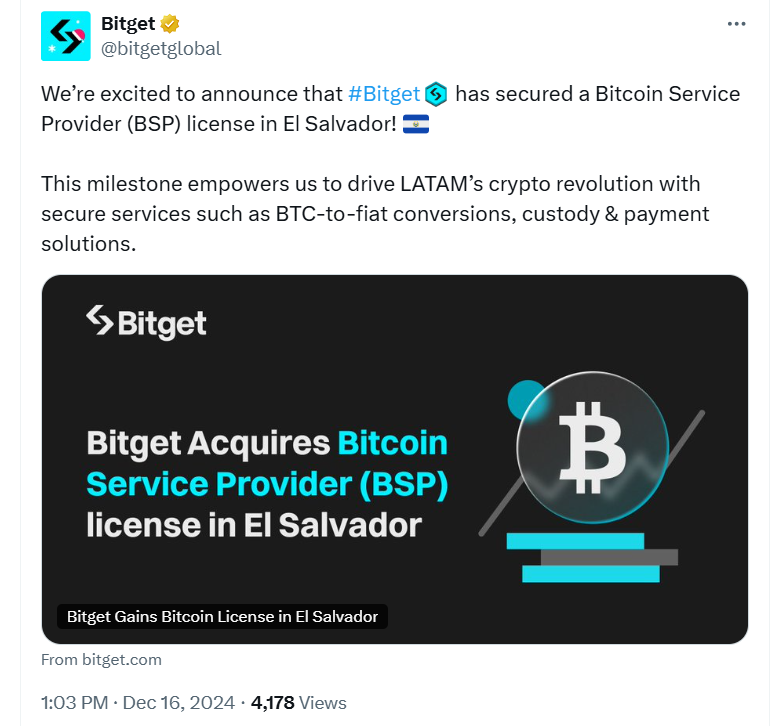
Bitget has received the coveted Bitcoin Service Provider (BSP) license from El Salvador’s Central Reserve Bank, marking a significant step in its global expansion strategy. This authorization allows the platform to offer a range of Bitcoin-related services, including exchanges, payments, and custody solutions, in the Central American nation known for its embrace of cryptocurrency.

The license represents a notable achievement for Bitget, signaling its commitment to adhering to regulatory frameworks in its pursuit of a stronger foothold in Latin America. El Salvador, which made Bitcoin legal tender in 2021, has positioned itself as a hub for crypto innovation, drawing interest from international players eager to tap into its growing digital economy.

Bitget’s decision to prioritize regulatory compliance aligns with its broader mission to establish trust and credibility in the global crypto space. By securing this license, the platform gains access to a burgeoning market while demonstrating its capability to meet the rigorous standards set by El Salvador’s financial authorities. This development underscores the firm’s ambition to build a robust presence in the region, leveraging the country’s pro-Bitcoin stance as a springboard for further growth.

El Salvador’s adoption of Bitcoin as legal tender has attracted significant attention, both for its groundbreaking approach and the challenges associated with integrating digital assets into a traditional economy. The move has created opportunities for companies like Bitget to introduce innovative solutions tailored to the unique needs of the Salvadoran market. By offering services such as secure custodial options and seamless payment integrations, Bitget aims to contribute to the local crypto ecosystem’s development while addressing concerns around security and accessibility.

Bitget’s license acquisition comes at a time when Latin America is experiencing an uptick in cryptocurrency adoption, driven by economic instability, high inflation rates, and limited access to traditional banking services. In this context, Bitcoin and other digital assets are increasingly seen as viable alternatives for financial inclusion. The platform’s expansion into El Salvador is expected to capitalize on these trends, providing users with reliable and regulated avenues for engaging with digital currencies.

Beyond its operations in El Salvador, Bitget has indicated plans to deepen its engagement with the wider Latin American region. Countries such as Brazil, Argentina, and Colombia have shown growing interest in blockchain technology, creating a fertile ground for companies looking to expand their footprint. By obtaining regulatory approvals and investing in localized solutions, Bitget aims to position itself as a leader in the regional crypto market.

El Salvador’s proactive stance on Bitcoin regulation has set it apart from many other nations, where digital assets remain subject to varying degrees of scrutiny and uncertainty. The BSP license issued to Bitget highlights the government’s willingness to work with private sector entities in fostering a dynamic and well-regulated crypto environment. This approach not only enhances the appeal of the Salvadoran market but also sets a precedent for other countries seeking to balance innovation with regulatory oversight.

As part of its expansion strategy, Bitget plans to introduce educational initiatives aimed at increasing awareness and understanding of cryptocurrencies among Salvadorans. These efforts are expected to complement the government’s existing programs and facilitate broader adoption of digital assets across diverse demographics. The company’s emphasis on education reflects its recognition of the need to address skepticism and build confidence among users new to the crypto space.

Bitget’s move also reflects broader industry trends, as major crypto firms increasingly seek to align with regulatory frameworks to ensure long-term sustainability. The BSP license not only enhances Bitget’s credibility but also serves as a testament to its operational rigor and strategic vision. By adhering to the highest standards of compliance, the platform positions itself to attract a diverse user base while mitigating risks associated with the volatile nature of the cryptocurrency market.

XRP has drawn renewed focus in the cryptocurrency market as on-chain data reveals substantial outflows of the token from major exchanges. Market analysts and blockchain trackers indicate that $300 million worth of XRP has been withdrawn, fueling speculation of accumulation by whales and institutional investors. This development arrives amid an extended phase of price consolidation for XRP, sparking discussions on its potential trajectory.

According to data from Coinglass, the significant outflows over the past week indicate a strategic shift by high-net-worth investors, who appear to be betting on the token’s future. The movement of such a considerable volume suggests confidence in XRP’s long-term potential despite broader market uncertainties. Observers highlight that such patterns of withdrawal often correlate with accumulation, as holders transfer their tokens to private wallets to prepare for anticipated price surges.

The timing of these transactions is notable, as XRP has demonstrated resilience following regulatory clarity in its ongoing legal battle with the United States Securities and Exchange Commission (SEC). The partial victory Ripple Labs achieved earlier this year, where XRP was deemed not to be a security when sold on secondary markets, has bolstered investor sentiment and rekindled interest in the asset.

XRP’s price has remained relatively stable, hovering within a tight range between $0.50 and $0.55. Analysts attribute this to broader market conditions and the lack of a significant catalyst in the crypto space. However, the scale of the $300 million outflows has prompted speculation that larger players could be positioning themselves for a breakout. Whale Alert, a blockchain tracker, recorded multiple transactions of XRP worth millions, adding weight to the idea that this activity is a precursor to strategic market movements.

Beyond these transactions, Ripple Labs has been advancing its efforts to expand XRP’s utility. The company has been actively pursuing partnerships with financial institutions globally, emphasizing cross-border payment solutions. Such initiatives aim to solidify XRP’s role as a preferred digital asset for seamless, low-cost transactions, a factor that experts believe could drive demand over time.

The cryptocurrency market has witnessed increased volatility in recent months, with fluctuating macroeconomic indicators and shifting investor sentiment impacting digital asset prices. While Bitcoin and Ethereum continue to dominate trading volumes, altcoins like XRP are gaining traction, especially among those seeking diversification in their crypto portfolios.

Analysts caution, however, that market dynamics remain uncertain. Although the $300 million outflows hint at positive sentiment, they do not guarantee immediate price action. Factors such as liquidity, macroeconomic conditions, and regulatory developments will play critical roles in shaping XRP’s near-term prospects. Some experts suggest that retail investors should carefully monitor market trends and avoid being swayed solely by whale activity.

On the regulatory front, Ripple’s legal entanglements continue to weigh on its ecosystem. Despite the partial victory in its case against the SEC, the broader question of XRP’s status under U.S. securities law remains unresolved. A final decision in the matter, expected in the coming months, could serve as a pivotal moment for the token, potentially influencing its adoption and price.

In addition to its legal battles, Ripple Labs is preparing for a new phase of innovation. Its recent announcements about leveraging XRP for real-world applications, including tokenized assets and central bank digital currency (CBDC) pilots, reflect the firm’s ambition to remain at the forefront of blockchain technology. This approach aligns with the growing demand for decentralized financial solutions, which many see as a transformative force in the global financial system.

Market participants are also paying close attention to XRP’s performance against broader altcoin indices. Some argue that the consolidation phase, coupled with heightened whale activity, presents a favorable entry point for long-term investors. However, the inherent volatility of cryptocurrency markets suggests that any investment carries significant risks.

Unveiling Next Year’s Theme – Education: A Shared Future for All HONG KONG SAR – Media OutReach Newswire – 13 December 2024 – The 14th Learning & Teaching Expo 2024 successfully concludes today. This year’s theme, Shaping Education for a World of Change, marks the largest edition in the event’s history. The Expo united government officials, education experts, industry leaders, exhibitors, and educators from across the globe, […]

NANJING, CHINA – EQS Newswire – 13 December 2024 – Wuxi, the “Pearl of Taihu Lake,” extended a warm invitation across mountains and rivers to Hong Kong, the “Pearl of the Orient,” with a themed event titled “Flowers Bloom in Taihu, Spring Warms Hong Kong.” A Group Photo of the Event On December 12, the 19th China Mei Flower and Wintersweet Exhibition and Wuxi Cultural and Tourism […]

Hong Kong Listed Companies with Increasing Focus on ESG Practices Top Performing Companies Adopted Robust Governance Structure HONG KONG SAR – Media OutReach Newswire – 12 December 2024 – Catherine Leung, Chairperson of the Chamber of Hong Kong Listed Companies (CHKLC) said at the Hong Kong Corporate Governance & ESG Excellence Awards 2024 (Awards) Gala Dinner tonight, “Hong Kong is at the stage of transition faced with […]

BANGKOK, THAILAND – Media OutReach Newswire – 12 December 2024 – Celebrating its 10th year, Chiang Mai Design Week 2024 (CMDW2024), organized by Thailand’s Creative Economy Agency (Public Organization), or CEA, has become a key platform for local creators, designers, artists, and craftsmen. It serves as a hub for talent showcases, knowledge exchange, and innovation, fostering meaningful collaborations among entrepreneurs, designers, and investors. These partnerships create new […]

Brian Quintenz, the head of crypto policy at Andreessen Horowitz, has emerged as a frontrunner for the position of chair at the Commodity Futures Trading Commission (CFTC). This potential appointment has generated considerable attention, particularly in the context of shaping the future of cryptocurrency regulation in the United States. Quintenz’s deep-rooted experience with the regulatory landscape, particularly his tenure at the CFTC under the Trump administration, positions him as a key figure in guiding the U.S. government’s approach to digital assets and derivatives markets.

During his tenure as a commissioner at the CFTC from 2017 to 2021, Quintenz made a significant impact in the world of financial regulation. He was one of the first regulators to recognize the growing importance of digital assets, including cryptocurrencies like Bitcoin and Ethereum, and the need to develop a regulatory framework that both fosters innovation and protects investors. Quintenz was known for his support of the crypto industry, advocating for clearer and more consistent rules governing digital asset markets. His work on derivatives, particularly around crypto futures contracts, laid the foundation for much of the regulatory framework in place today.

Quintenz’s appointment to the CFTC chair could signal a more crypto-friendly regulatory environment in the U.S., one that aligns with the priorities of industry advocates who have long argued for clearer rules to enable innovation without stifling growth. The CFTC, under Quintenz’s guidance, is expected to build upon his prior work, including his advocacy for creating a comprehensive regulatory framework that supports digital asset trading while ensuring financial stability.

Quintenz’s potential leadership is seen as crucial for addressing the growing demand for regulation in the cryptocurrency space, particularly as institutional interest in digital assets continues to rise. The U.S. has been grappling with questions around the appropriate regulatory body to oversee crypto markets, with the CFTC and the Securities and Exchange Commission (SEC) often at odds over jurisdictional issues. Quintenz, however, has long argued that the CFTC is best suited to oversee crypto derivatives and related markets due to its expertise in futures and commodities. If confirmed, Quintenz could play a pivotal role in resolving these jurisdictional disputes and advancing a clear, unified regulatory framework.

Under Quintenz’s leadership, the CFTC could also take a more proactive role in fostering innovation within the digital asset space. His track record at Andreessen Horowitz, one of Silicon Valley’s most influential venture capital firms, shows his keen understanding of the intersection between technology and regulation. At the firm, Quintenz has worked closely with emerging blockchain companies and crypto projects, providing guidance on navigating the complex regulatory landscape. This experience gives him a unique perspective on how to balance the need for regulation with the desire for innovation, making him a natural fit to lead the CFTC as it continues to evolve its approach to crypto.

The crypto industry, which has faced increasing scrutiny from lawmakers and regulators, would likely welcome a more consistent and favorable regulatory framework under Quintenz’s leadership. While some in the industry have expressed concerns about regulatory overreach, many are hopeful that Quintenz’s appointment could provide the clarity and stability needed to drive continued growth. The ongoing battle over cryptocurrency regulations has been marked by conflicting signals from different regulatory bodies, with the SEC taking a more aggressive stance on enforcement, particularly against centralized exchanges. In contrast, the CFTC has been more focused on ensuring that financial markets, including crypto derivatives, function within a legal framework that promotes transparency and market integrity.

One of the key challenges that Quintenz would face as CFTC chair is the evolving nature of the crypto market. With innovations like decentralized finance (DeFi) and non-fungible tokens (NFTs) continuing to gain popularity, the regulatory framework needs to be adaptable enough to keep pace with rapid changes in the industry. Quintenz’s previous work at the CFTC, where he helped craft rules for Bitcoin futures and other digital asset contracts, suggests he understands the importance of staying ahead of market developments and ensuring that regulation evolves in tandem with technological advancements.

Quintenz’s approach to digital asset regulation will likely focus on protecting consumers without stifling innovation. His stance during his time at the CFTC and his work at Andreessen Horowitz indicate that he views regulation as a tool to create a level playing field for all market participants while fostering innovation. This would be in stark contrast to some of the more stringent regulatory approaches favored by other factions within the U.S. government, which seek to impose more controls over the growing crypto market.

His potential appointment also comes at a time when the U.S. is facing mounting pressure to establish a clear and consistent regulatory framework for digital assets. Other countries, such as the European Union, have moved forward with comprehensive crypto regulation, and the U.S. risks falling behind in the global race to regulate emerging financial technologies. Quintenz’s appointment could help solidify the U.S.’s position as a leader in digital asset regulation, ensuring that the country remains competitive while safeguarding the financial system.

The West Africa Energy Cooperation Summit (WA-ECS), held in Lomé, Togo, from December 3-5, brought together governments and international energy leaders for three days of discussions and debate, addressing project development challenges in the ECOWAS region, promoting sustainable energy growth across West Africa, with two projects already signed. LOMÉ, TOGO – EQS Newswire – 11 December 2024 – On Tuesday 3 December, after welcome remarks from Abdoulaye […]

HAIKOU, CHINA – Media OutReach Newswire – 9 December 2024 – The 27th China (Hainan) International Trade Fair for Tropical Agricultural Products took place at the Hainan Free Trade Port on Dec. 5-8. Participants from 2,200 enterprises representing over 10 countries and regions attended the event, sharing the latest agricultural advancements and innovative technologies. The 27th China (Hainan) International Trade Fair for Tropical Agricultural Products During the […]

Coincheck, Japan’s largest cryptocurrency exchange, has marked a significant milestone by becoming the first crypto exchange from the country to be listed on Nasdaq. The Tokyo-based exchange is set to go public through a merger with Thunder Bridge Capital Partners IV, a special purpose acquisition company (SPAC). This development positions Coincheck as a key player in the global crypto landscape, particularly as Japan’s regulatory environment for cryptocurrencies continues to evolve.

The listing was approved by the U.S. Securities and Exchange Commission (SEC) in mid-November 2024, clearing the way for the exchange to begin trading on Nasdaq under the ticker symbol CNCK. This approval followed Coincheck’s filing of a Form F-4 registration and a successful shareholder vote held on December 5. The timing of the listing is crucial, as it coincides with a shift in the U.S. crypto regulatory scene, which could have broad implications for other exchanges and digital asset firms eyeing Nasdaq.

Coincheck’s entry onto Nasdaq reflects the growing acceptance of cryptocurrency as a legitimate financial asset class, even as regulatory scrutiny intensifies globally. The move could also inspire other Japanese exchanges, which have been cautious about entering foreign markets, to explore similar listings, particularly given the global appetite for digital asset investments.

The SPAC merger allows Coincheck to remain a subsidiary of its parent company, Monex Group, which has supported the exchange’s growth over the years. The listing is not only a triumph for Coincheck but also highlights the broader trends in the crypto industry, including the increasing involvement of traditional financial players in the digital asset sector. It also raises questions about the future of Japan’s crypto regulation, with potential changes in the U.S. under the incoming administration of President Donald Trump.

While Coincheck’s Nasdaq debut marks a significant achievement, it also points to a larger trend of global exchanges looking beyond domestic borders to secure listings on international bourses. As one of the first major crypto firms to take this step, Coincheck’s success may pave the way for others in Japan and beyond to follow suit. This trend is likely to continue as the digital asset space matures and as international regulatory standards become clearer.

Binance and Circle have formed a strategic partnership aimed at accelerating the adoption of USDC, a prominent stablecoin, and enhancing the global digital-asset ecosystem. This collaboration is set to significantly expand the reach of USDC, as Binance integrates the stablecoin into its vast array of services, providing access to over 240 million users. Circle, in turn, will contribute its expertise in technology and liquidity, with a focus on fostering greater user trust and driving innovation in the cryptocurrency space.

This partnership underscores the growing importance of stablecoins within the broader cryptocurrency market, with both Binance and Circle working to create more robust infrastructure for their use. As part of the agreement, Binance’s vast exchange network will include USDC for transactions, trading, and savings products, making it one of the largest platforms to integrate the stablecoin. Meanwhile, Circle’s role as the issuer of USDC places it in a pivotal position to influence the way this asset is used within digital finance ecosystems, ensuring that it remains a trusted option for transactions and as a store of value.

Stablecoins have become a central pillar in the cryptocurrency industry due to their stability and their ability to bridge the gap between traditional fiat currencies and digital assets. USDC, in particular, has seen increasing adoption among investors, traders, and institutions, thanks to its backing by fully audited reserves and its operational transparency. This makes it an attractive option for users looking to mitigate the volatility that is commonly associated with cryptocurrencies like Bitcoin and Ethereum. By joining forces, Binance and Circle aim to further enhance USDC’s prominence, creating a seamless, trustworthy experience for users across the globe.

For Binance, which has long been one of the leading cryptocurrency exchanges in the world, the integration of USDC represents a strategic move to diversify its offerings and broaden the scope of services available to its users. Binance has already become a hub for various digital assets, and the addition of USDC aligns with its efforts to cater to a wide range of financial products, from spot trading to decentralized finance (DeFi) and yield farming.

Through its integration of USDC, Binance aims to provide its 240 million users with access to a stable, reliable digital currency for everyday transactions, trading, and investments. This expands the utility of USDC, positioning it as not only a reserve asset but also a practical medium of exchange across Binance’s ecosystem. The stablecoin’s ability to offer faster, lower-cost transactions is expected to provide enhanced efficiency for users, particularly in markets where traditional banking infrastructure is limited or unreliable.

On the other hand, Circle’s involvement in this collaboration emphasizes its role as a leading technology provider in the stablecoin space. Circle has been at the forefront of developing USDC and ensuring its continued success by maintaining strong reserves and complying with regulatory standards. As the company behind USDC, Circle’s commitment to enhancing liquidity and transparency is crucial for the stablecoin’s long-term sustainability.

Circle’s contributions to the partnership will include expanding liquidity and improving the overall user experience for those utilizing USDC across Binance’s platform. The company’s deep understanding of the stablecoin’s infrastructure will enable Binance to tap into new use cases and better serve the growing demand for stablecoins in global markets. Moreover, Circle’s track record of maintaining a 1:1 backing of USDC with traditional currency reserves further solidifies the trust users have in the stablecoin, making it an appealing choice for both institutional and retail investors.

This strategic alliance also comes at a time when regulators across the globe are paying increasing attention to the stablecoin sector. The regulatory landscape surrounding digital assets continues to evolve, with governments exploring frameworks to manage stablecoins while ensuring that they do not pose systemic risks to the financial system. In this context, Binance and Circle’s partnership may help reinforce the legitimacy of USDC, as both companies are committed to maintaining full transparency and regulatory compliance.

By enhancing the adoption of USDC, this partnership could also contribute to the broader acceptance of digital currencies as legitimate financial instruments. USDC’s stability and growing ecosystem have made it a key player in areas like cross-border payments, remittances, and digital asset trading, and Binance’s involvement will only strengthen this trend. The ability to use USDC within Binance’s ecosystem will make it even more accessible to people in regions where access to traditional financial services is limited.

As both Binance and Circle continue to innovate in the digital-asset space, the broader impact of their collaboration is expected to influence how other companies view the role of stablecoins in the financial ecosystem. Other exchanges and financial institutions may look to replicate this partnership model, integrating stablecoins like USDC into their offerings as a way to provide users with more stable and accessible digital assets.

Base, a decentralized layer-2 blockchain built on Ethereum, has shattered previous records, reaching an all-time high of 8.8 million daily transactions. This surge underscores its growing dominance in the blockchain ecosystem, as developers, businesses, and users flock to the platform for faster, cheaper transactions.

The new milestone reflects Base’s increasing popularity among decentralized application (dApp) developers and users who are seeking scalability and cost efficiency. As the blockchain space continues to mature, Base’s ability to handle a vast number of transactions per day without compromising security is a significant achievement, particularly as demand for decentralized finance (DeFi) services and blockchain-based applications expands globally.

This achievement comes as Base positions itself as a leader in the rollup space, an advanced scaling solution designed to alleviate congestion on the Ethereum mainnet. The layer-2 solution has gained considerable attention due to its seamless integration with Ethereum, making it an attractive option for developers who need a fast and efficient platform while retaining access to Ethereum’s security and infrastructure.

The 8.8 million transactions milestone comes amid an upswing in Layer-2 adoption, as the broader Ethereum ecosystem is faced with challenges related to scalability and gas fees. As Ethereum’s popularity continues to rise, users have become more sensitive to transaction costs, which can fluctuate wildly depending on network congestion. Base’s low-cost and high-speed model addresses these issues, which has made it an appealing alternative for developers seeking to mitigate high Ethereum gas fees.

The spike in daily transactions highlights Base’s expanding utility across various sectors. The platform has gained traction with decentralized finance protocols, gaming applications, and non-fungible token (NFT) marketplaces, all of which are driving up the number of daily transactions. By allowing users to access decentralized applications without experiencing the latency and high fees often associated with the Ethereum mainnet, Base is establishing itself as a leading force in Web3 innovation.

One of the most critical factors contributing to Base’s rapid growth is its strategic backing by major players in the crypto and blockchain industries. The platform is supported by Coinbase, one of the largest cryptocurrency exchanges globally, which has provided a strong foundation for Base’s expansion. Coinbase’s involvement not only adds credibility to the platform but also strengthens its integration with the broader cryptocurrency market, helping to attract users who are already familiar with Coinbase’s ecosystem.

As of now, Base is competing with other blockchain solutions like Arbitrum and Optimism, which also offer Layer-2 scaling solutions. However, what sets Base apart is its seamless connection to Ethereum, providing users with a reliable bridge between the scalability of Layer-2 and the robust security features of Ethereum’s Layer-1 chain. This integration has made Base a go-to platform for Ethereum developers who require a high-performance environment for decentralized applications.

Despite the impressive surge in transaction volume, Base is also tackling the complex challenges of ensuring security and decentralization in its system. One of the key concerns for blockchain platforms handling millions of transactions per day is the risk of centralization. In Base’s case, its integration with Ethereum’s robust security model helps mitigate these risks. However, the team behind the platform is continually working to refine and optimize the security protocols to ensure the network remains safe and resilient against potential attacks.

The rapid transaction growth also reflects the increasing interest in blockchain technology from institutional investors. As more companies explore the potential of decentralized applications, smart contracts, and blockchain-powered services, platforms like Base are becoming essential components of the enterprise technology stack. Additionally, Base’s support for developers through easy-to-use tools and infrastructure has positioned it as a go-to solution for building next-generation decentralized applications.

With Web3 technology evolving at a rapid pace, the continued success of platforms like Base depends on their ability to adapt to user demands and integrate new technologies. The demand for blockchain scalability solutions is expected to continue growing as more sectors look to integrate decentralized systems. The 8.8 million daily transaction milestone shows that Base is meeting this demand, while also pushing the boundaries of what is possible with Layer-2 technology.

A major cryptocurrency transaction occurred today when a whale deposited 1.2 million Dogwifhat (WIF) meme coins, valued at approximately $3.47 million, into the Coinbase exchange. This move has drawn attention to the coin’s substantial price surge over the past year.

The whale originally acquired the 1.2 million Dogwifhat tokens 11 months ago for $393,000, purchasing them at an average price of $0.3275 per token. At the time, Dogwifhat was still in its early stages of market entry. However, the meme coin has since experienced a significant rise in value, leading to a remarkable profit for the whale, who is now looking at a return of over $3 million—equating to a 790.58% increase.

This development highlights the continuing volatility and speculative nature of the meme coin market, where such trades can yield enormous returns or losses in short periods. Dogwifhat, like other meme coins, has gained traction largely through social media and online communities, where the power of viral marketing often dictates price movements more than traditional fundamentals.

The surge in Dogwifhat’s value can be attributed to a variety of factors. One significant influence has been the active promotion of the token by its community, bolstered by celebrity endorsements and viral internet trends that have propelled its visibility. As with other meme-based cryptocurrencies, there is often a heightened sense of community-driven hype, which can cause rapid and dramatic price fluctuations.

While some investors and traders view these kinds of investments as speculative, the recent deposit into Coinbase brings attention to the larger narrative surrounding meme coins. These tokens often operate on the fringes of the cryptocurrency market, with value driven less by underlying technology and more by community sentiment, social media influence, and market speculation.

Dogwifhat is part of a growing category of meme coins that includes more prominent examples like Dogecoin and Shiba Inu. Both coins have seen dramatic rises in value, thanks in large part to high-profile endorsements from figures such as Elon Musk, who has referred to Dogecoin as “the people’s crypto.” Despite their volatile nature, meme coins continue to attract investors looking for high-risk, high-reward opportunities in the crypto space.

The Coinbase transaction is also notable because it points to a broader trend of meme coins gaining institutional recognition. As cryptocurrency exchanges like Coinbase continue to list more meme coins, the legitimacy of these tokens in the eyes of institutional investors is being solidified. This shift is reflective of the growing maturity of the digital asset space, where regulatory clarity and mainstream adoption are becoming more prevalent.

However, despite the hype surrounding meme coins, many experts caution against treating these tokens as long-term investments. The lack of fundamental value and heavy reliance on speculative trading can lead to rapid losses, particularly when the market sentiment shifts or when broader economic factors affect cryptocurrency valuations.

The continued rise of meme coins like Dogwifhat underscores a larger theme in the crypto market—the blending of internet culture and digital finance. Social media-driven tokens are attracting an increasingly diverse range of investors, from seasoned traders looking for quick profits to retail investors hoping to capitalize on the next big trend. This phenomenon has raised questions about the sustainability of meme coin markets and their place in the future of digital finance.

Some critics argue that meme coins can be dangerous, as they promote a speculative environment where price surges may not always correlate with any real-world use case or technological advancement. Additionally, the decentralized nature of cryptocurrency markets means that whale traders and large holders can have an outsized impact on the price, leading to unpredictable volatility.

Nonetheless, meme coins continue to play a significant role in the overall cryptocurrency ecosystem. They contribute to the diversity of digital assets available on the market and have become a way for individuals to engage with the rapidly evolving world of blockchain and cryptocurrency without the traditional barriers to entry.

For the whale who made the $3 million profit from their Dogwifhat investment, today’s move represents the culmination of months of speculative trading. It also highlights a growing trend of early investors in meme coins reaping substantial rewards. However, it remains unclear whether the price of Dogwifhat will continue to rise, or if it will eventually face a downturn as market trends shift.

Argentina has approved the use of cryptocurrency-based exchange-traded funds (ETFs), signaling a transformative step in the nation’s financial sector. This move permits investors to engage in assets like Bitcoin, Ethereum, and gold, broadening Argentina’s investment landscape and aligning it with global market standards.

The introduction of these ETFs comes under the libertarian leadership of President Javier Milei, whose policies emphasize decentralization and financial innovation. By embracing crypto ETFs, Argentina positions itself as a forward-thinking player in a rapidly evolving global financial ecosystem. The initiative aims to attract both domestic and international investors, diversifying portfolio options and fostering economic growth.

Crypto ETFs provide a structured way to invest in volatile assets by bundling cryptocurrencies into a single financial product traded on exchanges. This development holds particular significance in a country grappling with inflation and limited access to traditional foreign investment instruments. By enabling the public to invest in alternative assets, the measure seeks to empower individuals and enhance market participation.

The country’s Comisión Nacional de Valores (CNV) played a central role in approving these ETFs, marking a pivotal regulatory shift. The CNV has outlined strict compliance measures to ensure transparency and mitigate risks associated with cryptocurrencies. These steps reflect a balancing act between innovation and safeguarding investor interests, particularly amid global concerns about the volatility and regulatory challenges of digital currencies.

Market analysts view this decision as a strategic alignment with international financial trends, where cryptocurrency ETFs have gained traction in regions like North America and Europe. Argentina now joins a league of nations pioneering regulated access to digital assets, furthering its ambition to modernize its financial infrastructure.

This approval aligns with President Milei’s broader economic agenda, which includes fostering a free-market economy and reducing state intervention. His administration’s focus on financial decentralization resonates with the ethos of cryptocurrency, which advocates for autonomy and borderless transactions. The president has frequently highlighted the potential of digital currencies to address economic challenges, including hyperinflation and currency devaluation, issues that have long plagued the Argentine economy.

Cryptocurrency adoption in Argentina has seen substantial growth in recent years, driven by a combination of economic instability and technological advancements. With limited trust in traditional banking systems, many Argentines have turned to cryptocurrencies as a hedge against inflation and currency depreciation. The legalization of crypto ETFs is expected to amplify this trend, making digital assets more accessible to a broader audience.

The move also aligns with the global shift towards integrating blockchain technology into traditional finance. Experts suggest that Argentina’s adoption of crypto ETFs could catalyze further innovations in the Latin American financial market, setting a precedent for neighboring countries to follow. This regional influence could spur economic collaboration and attract tech-focused investments across borders.

Binance has disclosed its 25th proof of reserves, showing mixed movements in the assets held by users. As of December 1, the crypto exchange’s report highlighted shifts across multiple currencies, with some showing significant increases while others experienced declines.

According to the latest data, Bitcoin (BTC) holdings on the platform decreased by 4.68% compared to the previous month, dropping to 580,000 BTC. Ethereum (ETH), however, saw a notable increase of 5.24%, with the total Ethereum reserve rising to 4.9 million ETH. The rise in Ethereum’s balance suggests a continued confidence in the second-largest cryptocurrency, which has maintained its relevance in the market amid shifting investor preferences.

In stark contrast to the fluctuations in BTC and ETH, Tether (USDT) reserves on Binance surged by 20.93%, reaching $25.2 billion. This growth highlights the continued demand for stablecoins, with USDT maintaining its status as a preferred stablecoin for traders and investors seeking to hedge against volatility in the broader crypto market.

Binance’s native token, Binance Coin (BNB), saw a slight decline of 2.15%, bringing the total BNB balance to 37.1 million. Despite this dip, BNB remains one of the key assets on the platform, closely tied to various Binance services and offerings.

The exchange’s regular release of proof of reserves has been part of its ongoing efforts to assure users of the safety and transparency of their holdings. This initiative was initially implemented following the collapse of FTX in late 2022, which triggered widespread concerns over the solvency of cryptocurrency exchanges. Binance, as one of the largest players in the space, has consistently aimed to bolster user trust through these detailed reports, which are generated in collaboration with independent auditors.

The latest proof of reserves report comes at a time when the global crypto market has seen fluctuating trends. After a year of turbulence, some market participants are showing increased caution, while others are taking the opportunity to reinvest in leading assets like Ethereum. The surge in stablecoin reserves, particularly USDT, reflects the market’s ongoing uncertainty and the preference for liquidity that stablecoins provide in volatile conditions.

While Binance has provided more transparency than many of its competitors, the report does not fully dispel concerns about market dynamics. Experts continue to stress the need for enhanced regulatory oversight in the crypto industry, particularly around proof of reserves and the way exchanges report their holdings. Some analysts have raised questions about the accuracy of the data provided in such reports, suggesting that further scrutiny may be necessary to fully ensure the security of user assets.

Binance’s disclosure of its reserves also aligns with broader industry trends. Following FTX’s collapse, exchanges worldwide have been under pressure to increase their transparency and undergo regular audits to prove they hold sufficient assets to cover user deposits. As the crypto market matures, regulatory frameworks are evolving to address concerns over liquidity, security, and the overall stability of the ecosystem.

Cryptocurrency, particularly Bitcoin, is increasingly seen as a disruptive force across global financial systems, with a potential to reshape even the most traditional sectors. In the Middle East and North Africa (MENA) region, where Islamic finance principles govern a large portion of financial activities, Bitcoin could signal a fundamental shift. Islamic finance, based on Sharia law, prohibits earning income from interest or investments in businesses that conflict […]

Eric Trump, the son of former U.S. President Donald Trump, is set to deliver a keynote address at the Bitcoin MENA conference in Abu Dhabi, marking his debut at a major cryptocurrency event. The conference, one of the most anticipated gatherings of cryptocurrency enthusiasts and investors in the Middle East and North Africa (MENA) region, comes at a time when the global digital asset market is experiencing a surge in both interest and investment.

Bitcoin MENA, which is scheduled to take place in Abu Dhabi in the coming weeks, will bring together industry leaders, investors, regulators, and developers from around the world to discuss the future of digital currencies and blockchain technology. The event is expected to focus on the rapid developments in the cryptocurrency space, regulatory changes, and opportunities for growth, especially in emerging markets.

Eric Trump’s involvement is seen as significant given his family’s established prominence in the political and business arenas. As the executive vice president of the Trump Organization, Eric Trump has been involved in several business ventures, though this marks a rare public appearance in the cryptocurrency sector. His participation is seen as part of a broader trend where mainstream business figures are increasingly engaging with digital assets as part of their investment strategies.

The cryptocurrency market has seen explosive growth over the past few years, with Bitcoin and other digital currencies reaching all-time highs in value. The MENA region, in particular, has emerged as a key player in the global crypto space, with several countries, including the UAE, creating favorable environments for blockchain and cryptocurrency innovations. Abu Dhabi, with its burgeoning tech infrastructure and regulatory framework, has positioned itself as a hub for fintech and digital finance in the region.

The UAE, where Bitcoin MENA is taking place, has been proactive in adopting blockchain technology. The UAE government’s initiative to integrate blockchain into various sectors, including finance, real estate, and healthcare, has been a driving force in the rise of digital assets within the region. The UAE’s progressive stance on cryptocurrencies has attracted significant foreign investment and a growing number of startups focused on blockchain technology.

In particular, the Abu Dhabi Global Market (ADGM), a financial free zone, has been pivotal in shaping the regulatory landscape for cryptocurrencies in the region. ADGM has implemented clear regulations for cryptocurrency exchanges and trading, creating a safer and more attractive environment for investors and businesses. The UAE’s leadership has also signaled its intent to develop the nation into a leading global fintech center, with blockchain technology at the forefront of these ambitions.

The timing of the Bitcoin MENA conference is particularly notable given the broader context of the cryptocurrency market’s performance. Bitcoin, the largest cryptocurrency by market capitalization, recently surpassed $35,000, reaching new heights despite some ongoing concerns around regulatory scrutiny and market volatility. Analysts suggest that the market is entering a new phase, characterized by institutional adoption and growing acceptance of cryptocurrencies as a legitimate asset class.

Several factors have contributed to the rise of cryptocurrency, including the increasing institutional interest in digital assets, as well as the growing recognition of blockchain technology’s potential to revolutionize various industries. Investment firms, hedge funds, and even governments are increasingly looking at ways to incorporate digital currencies into their portfolios, with some countries exploring the creation of central bank digital currencies (CBDCs) as part of their financial strategies.

For Eric Trump, his appearance at the Bitcoin MENA conference aligns with his family’s broader interest in global business opportunities, including those in the tech and finance sectors. Though primarily known for his family’s real estate business, the Trump Organization has diversified its interests into various fields over the years. Eric Trump’s participation is also likely to draw attention from investors who are looking to connect the worlds of traditional business and cryptocurrency.

The UAE’s role as a key player in the digital economy is also attracting increasing interest from global investors, particularly those looking for opportunities in the cryptocurrency and blockchain sectors. The country’s focus on diversifying its economy away from oil dependence has led to a greater emphasis on tech-driven industries, including fintech, artificial intelligence, and digital assets. This approach aligns with the global trend toward digitization and offers promising prospects for growth in the cryptocurrency market.

As Bitcoin and other cryptocurrencies continue to gain traction across the globe, the role of events like Bitcoin MENA will be crucial in shaping the discourse around regulation, innovation, and market development. The conference will provide an opportunity for thought leaders and experts to engage in discussions on the future of digital currencies, including their impact on global financial systems and their potential to disrupt traditional industries.

VISHNU RAJA
RYO YAMADA
HITORI GOTOH
IKUYO KITA
Just in:
L’OCCITANE Celebrates 50 Years Of Provençal Craftsmanship With Holiday 2026 Collection // Salik posts Dhs1.045bn profit despite lower toll traffic // From Dubai to the EU: how UAE-based crypto firms can expand under MiCA // Saudi fund assets forecast to cross $400 billion // Electoral register gains 2.17 lakh voters // The Honey Trap Is The Headline, The Chip Pipeline Is The Story // Microsoft restores services gradually but gives no recovery deadline // US resumes flights after nationwide air traffic shutdown // TORRAS Launches Two New iPhone Duo Cases from Its Popular Ostand Series, Addressing Foldable Phone Users’ Concerns About Difficult Stand Positioning and Scratches // Microsoft outage leaves Outlook and Teams users disconnected // IEA forecasts fourth-quarter oil surplus as Gulf shipments rebound // Microsoft apologises as Outlook services recover after outage // Woman found dead as bank moves to repossess home // Hackers falsify NVIDIA GPU readings to mask cryptomining // China Reconciled To U.S. Curbs On Chips Exports, Woos South Korea For Supply // Yicura BioMed Advances Dual Capital and Industrial Strategy: Completes First Closing of Series B Financing Led by Gobi Partners // Sun World Ba Den Mountain marks Vietnam Culture Day, welcoming Cambodian visitors over Bon Om Touk // 11 Boutique Xinjiang Wineries to Debut in Singapore // US authorities dismantle North Korean cryptocurrency deception infrastructure // UAE crews sustain coastal oil removal as beaches reopen //