Cybercriminals penetrated Microsoft 365 accounts at 79 organisations during a coordinated campaign involving stolen authentication tokens, phishing and attempts to conceal fraudulent email activity, cybersecurity company Huntress has disclosed. The investigation, published on October 22, identified at least 497 successful sign-ins and more than 200,000 failed login attempts between July 14 and September 22. Researchers said attackers reused legitimate sessions captured through deceptive authentication processes, enabling access […]
North Korea-linked hackers have incorporated post-quantum cryptography into a cyberespionage campaign against South Korean organisations, encrypting malware deliveries while exploiting widely used financial security software, cybersecurity researchers disclosed. Kaspersky identified the campaign, named Operation FlashHole, at its Security Analyst Summit in Bali on Wednesday. Its investigation established that at least three organisations in software development, construction and wired communications equipment manufacturing had been affected. The earliest evidence […]
Arabian Post Staff -Dubai The United Arab Emirates has formally nominated senior diplomat Lana Nusseibeh to become the next United Nations secretary-general, introducing a Middle Eastern contender into a leadership contest marked by divisions among the Security Council’s permanent members. President Sheikh Mohamed bin Zayed Al Nahyan submitted her nomination on Wednesday in a letter to the presidents of the General Assembly and Security Council. Nusseibeh, the […]
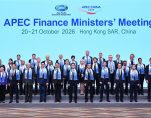
HONG KONG SAR – Media OutReach Newswire – 22 October 2026 – Finance leaders and representatives of international organisations attended the APEC (Asia-Pacific Economic Cooperation) Finance Ministers’ Meeting (FMM) 2026, successfully held in Hong Kong for the first time (October 20-21). Participants engaged in in-depth exchanges on issues concerning regional financial and economic development.
Yesterday (October 21), the FMM issued the 2026 APEC Finance Ministers’ Joint Statement, reaffirming the commitment to building an open, dynamic, resilient, and peaceful Asia-Pacific community by 2040 for the prosperity of all our people and future generations.
Representatives of the participating APEC member economies and international organisations during the meeting.
Minister of Finance and chair of the 2026 FMM, Lan Fo’an, said that all parties should firmly implement the consensus reached at the APEC Economic Leaders’ Meeting, uphold multilateralism, and deepen practical co-operation in fiscal and financial affairs, with a view to contributing to regional economic and financial stability and long-term sustainable growth.
Earlier, John Lee, Chief Executive of the Hong Kong Special Administrative Region (HKSAR) Government, welcomed participants to the FMM.
“This is a historic occasion for Hong Kong. The APEC Finance Ministers’ Meeting – part of APEC China 2026 – is taking place in our city for the very first time. We are honoured to support this significant international event, which brings together the member economies of the Asia-Pacific Economic Cooperation, representing some three billion people and accounting for over 60 per cent of global GDP,” Mr Lee said.
“Under the unique ‘one country, two systems’ principle, Hong Kong enjoys both the China advantage and the global advantage. We are the only common law jurisdiction in China, our country, and have a legal and regulatory regime similar to most of the world’s top financial hubs.”
Speaking during the discussion sessions, Paul Chan, Financial Secretary of the HKSAR, said that amid geopolitical tensions and uncertainties over trade policies, Asia-Pacific economies should strengthen co-operation to maintain the smooth flow of trade and investment, while guarding against financial risks and nurturing long-term growth drivers.
He said that Hong Kong would leverage its unique advantages under the “one country, two systems” principle, and make full use of its diverse financing channels and professional services as an international financial centre to serve as a “super connector” and “super value-adder”.
“Regionally, we need open channels for trade and investment, not new barriers. Connected markets allow capital to reach productive uses and technologies be adopted across borders,” Mr Chan said during a plenary session on Global and Regional Economic and Financial Outlook (October 20).
“Our collective task is to safeguard stability while strengthening the foundations for lasting prosperity. Hong Kong, China stands ready to work with fellow economies to seize opportunities, manage risks and support more resilient, sustainable and inclusive growth across the Asia Pacific.”
The Hong Kong Monetary Authority and the APEC Business Advisory Council (ABAC) held two thematic seminars (October 20) on “Fostering a digitalised, inclusive and sustainable supply chain ecosystem through finance” and “Mobilising capital for nature: scaling finance and regional cooperation across APEC” respectively.
In his welcoming remarks at the seminars, Christopher Hui, Secretary for Financial Services and the Treasury of the HKSAR, said: “In an era of profound economic transformation and evolving global challenges, prosperity will not be secured by any economy acting alone. It will be built through partnership, innovation and resilience. I am therefore delighted that this seminar brings together regulators, business leaders and experts from across the Asia-Pacific region for meaningful exchanges on how we can unlock new opportunities, strengthen financial resilience, and drive sustainable growth for all.”
Following the conclusion of the FMM, Mr Lee and other officials met Mr Lan at Government House to exchange views on economic and financial development of the Chinese Mainland and Hong Kong. Mr Lee expressed his heartfelt gratitude to the country for its trust in and support for Hong Kong, as well as its strong affirmation of Hong Kong’s status as an international financial centre.
During the FMM, a diverse range of tours and visits were arranged for members of delegations from participating economies and international organisations to enjoy the city’s cultural heritage and unique charm as an international metropolis.
The itineraries included visits to the Peak, Hong Kong Museum of Art, Hong Kong Palace Museum, Xiqu Centre, Chinese Culinary Institute and Ocean Park as well as a boat tour to enjoy the renowned views of Victoria Harbour.
Sheikh Mohammed bin Rashid Al Maktoum, Vice President and Prime Minister of the UAE and Ruler of Dubai, has urged Gulf nations to strengthen cooperation and resist divisive social media campaigns that threaten their shared interests and longstanding relationships. His appeal, published on Monday in a message addressed to the people of the Gulf, emphasised that political differences, online disputes and narrow agendas should not undermine generations […]
Ethereum climbed nearly 5% as substantial purchases by large cryptocurrency holders and a recovery in Bitcoin helped lift digital asset prices following a sharp market sell-off. Ether, the native cryptocurrency of the Ethereum blockchain, traded around $2,480 on October 16, registering a gain of approximately 4.6% over 24 hours, according to CoinGecko data. Trading volume reached about $14.48 billion, while its market capitalisation approached $302 billion. The […]
Arabian Post Staff -Dubai EFG Hermes UAE has launched market-making and liquidity provision services on the Abu Dhabi Securities Exchange (ADX), extending its brokerage operations to support trading activity and improve liquidity in selected listed securities. The company, regulated by the UAE’s Capital Market Authority, announced the expansion on Friday, saying it would place buying and selling orders under exchange rules and regulatory requirements. The initiative is […]
Hong Kong property developer New World Development is holding preliminary discussions with banks to extend an approximately HK$88 billion ($11.2 billion) loan by two years, potentially clearing the way for a capital injection.
The proposed arrangement would require unanimous approval from participating lenders and could facilitate a rights issue intended to strengthen the heavily indebted company’s finances, according to people familiar with the private negotiations.
New World is considering repaying approximately 10% of the loan principal as part of the extension, with a target of completing the arrangement before January. That would represent roughly HK$8.8 billion in repayments, although the proposed terms remain subject to negotiations.
Discussions are at an early stage, and the conditions could change before any agreement is reached. There is no certainty that the banks will approve the extension or that the company will proceed with a subsequent equity fundraising.
The negotiations follow months of efforts by the Cheng family, New World’s controlling shareholder, to develop a financial support package for the property group. A potential rights issue or share placement could be announced as early as November, provided the necessary arrangements are finalised.
A rights issue would allow existing shareholders to purchase additional shares, usually in proportion to their holdings. Such a transaction could provide fresh capital without immediately increasing the company’s borrowing, although shareholders declining to participate would face dilution.
The proposed loan extension concerns financing arranged in 2025 through one of Hong Kong’s largest corporate refinancing transactions. That agreement followed prolonged negotiations with creditors as New World sought to avert a potential default and manage substantial repayment obligations.
Under the earlier restructuring, lenders agreed to extend the maturity of approximately HK$63.4 billion in borrowings originally due in 2025 and 2026 by three years. Loans maturing from 2027 onwards retained their original repayment dates, subject to additional credit protection and collateral requirements.
A further two-year extension would give the developer additional time to manage repayments while pursuing equity financing and asset disposals. The precise maturity schedule and interest terms of any revised arrangement have not been publicly established.
New World’s latest financial disclosures underline the importance of securing lender support. Total debt stood at approximately HK$143.3 billion at the end of June 2026, down HK$2.7 billion from the previous financial year.
Net debt nevertheless increased by HK$6.2 billion to HK$126.3 billion, while the company’s net gearing ratio rose to 68.3% from 58.1%. The figures indicate that its balance sheet remains under pressure despite efforts to reduce gross borrowings.
The group reported approximately HK$17 billion in cash and bank balances and HK$15.8 billion in undrawn banking facilities at the financial year-end, giving it total capital resources of about HK$33 billion.
Those resources provide liquidity for operations and financial commitments, but they are considerably smaller than the outstanding debt burden. Access to banking facilities also remains subject to their contractual conditions.
New World’s annual revenue declined to approximately HK$20 billion from HK$27.7 billion a year earlier. However, core operating profit increased to HK$7.7 billion from approximately HK$6 billion, reflecting an improvement in underlying operating performance.
The company reported HK$2.23 billion in net profit from recurring operations, compared with a HK$1.23 billion loss in the preceding year. Gross financing costs fell 15% to HK$6.3 billion.
Its board decided against paying a final dividend for the financial year ended June 30, preserving resources as management continued its financial restructuring programme.
Alongside discussions with banks, New World has pursued exchanges of outstanding securities to lengthen its repayment profile. On October 14, the company indicated that it expected to issue approximately $189.1 million in new secured notes maturing in 2032 following the early results of a debt exchange offer.
The developer has also been restructuring property commitments. At the end of September, it announced arrangements to surrender its operating rights for the 11 SKIES commercial development near Hong Kong International Airport.
The agreement involves a HK$2.3 billion termination payment to the Airport Authority and additional works and services obligations, with the latter subject to a specified cost ceiling.
For the financial year ended June, New World recorded approximately HK$29.6 billion in attributable contracted sales from property developments and asset disposals. Hong Kong accounted for approximately HK$22.1 billion, with mainland China contributing the remaining sales.
The company also reduced capital expenditure by 6% to HK$11.8 billion during the financial year.
Ras Al Khaimah Ruler Sheikh Saud bin Saqr Al Qasimi held talks with India’s External Affairs Minister Subrahmanyam Jaishankar on Friday, focusing on strengthening economic and trade cooperation between the UAE and India.
The meeting brought together the Supreme Council Member and the visiting minister as both countries seek to expand commercial partnerships, investment opportunities and diplomatic engagement. Discussions also covered bilateral relations and developments affecting the Gulf region.
Jaishankar described the meeting as an opportunity to exchange views on strengthening relations between the two countries and expanding engagement across the region. He acknowledged Sheikh Saud’s perspectives on bilateral cooperation and confirmed that the situation in the Gulf featured in their discussions.
The talks took place during the final day of Jaishankar’s three-day official visit to the UAE, which began on October 14. The visit was intended to review progress under the Comprehensive Strategic Partnership and identify opportunities for further cooperation across economic and diplomatic sectors.
Neither side announced a new investment agreement, trade target or commercial project following Friday’s meeting. The discussions nevertheless provided another channel for engagement between India’s government and the leadership of individual UAE emirates, alongside established federal diplomatic arrangements.
Economic cooperation remains central to relations between the two countries. Their Comprehensive Economic Partnership Agreement, which entered into force in May 2022, provides preferential market access for eligible goods and establishes mechanisms to facilitate trade and investment.
The agreement has supported efforts to diversify commercial exchanges beyond traditional energy transactions, with businesses exploring opportunities in manufacturing, logistics, infrastructure, technology and services. Its implementation also provides a framework for addressing commercial barriers and encouraging greater participation by companies operating in both markets.
Ras Al Khaimah has pursued investment partnerships involving manufacturing, industrial production, construction materials and logistics. Its industrial infrastructure and connections to regional shipping networks provide opportunities for businesses seeking production facilities and access to markets across the Gulf.
The emirate’s commercial engagement with India was also discussed during a July meeting between Sheikh Saud and India’s Ambassador to the UAE, Deepak Mittal, who was accompanied by business representatives.
That meeting examined opportunities for cooperation across several sectors and ways to utilise Ras Al Khaimah’s economic advantages. The discussions reflected continuing engagement between the emirate’s leadership and businesses interested in developing commercial operations within its jurisdiction.
Friday’s meeting followed talks on Wednesday between Jaishankar and UAE Deputy Prime Minister and Foreign Minister Sheikh Abdullah bin Zayed Al Nahyan in Abu Dhabi.
The two ministers reviewed cooperation under the Comprehensive Strategic Partnership and Comprehensive Economic Partnership, with particular attention to trade, investment and economic development. They also exchanged views on international issues and developments affecting regional stability.
Sheikh Abdullah reaffirmed the UAE’s commitment to strengthening bilateral relations and identifying opportunities that support the development priorities of both countries. Their discussions covered existing cooperation and possibilities for expanding engagement in sectors considered important to their respective economies.
The diplomatic exchanges come as governments and businesses assess the implications of uncertainty across the Gulf for investment, shipping and energy supplies. Regional stability remains an important consideration for commercial activity involving the UAE and India, particularly given their extensive trade and transport connections.
Jaishankar also participated in the Raisina Middle East Dialogue in Abu Dhabi on Thursday, joining discussions about international connectivity, strategic partnerships and the changing economic geography of global trade.
Speaking during a session examining continental corridors, he highlighted growing competition, emerging transport constraints and the importance of building reliable partnerships. His remarks addressed the challenges facing countries seeking secure commercial connections amid shifting geopolitical and economic conditions.
The dialogue, held on October 14 and 15, brought together participants to examine regional and international developments, including connectivity initiatives and cooperation between governments.
India’s relationship with the UAE also encompasses energy supplies, defence cooperation and investment, alongside extensive people-to-people connections. These established links provide an additional foundation for discussions involving the federal government and individual emirates.
The Embassy of India in Abu Dhabi estimated that approximately 4.3 million nationals from India were living in the UAE in 2024, representing roughly 35 per cent of the country’s population.
Ras Al Khaimah’s geographical position near the Strait of Hormuz adds a regional dimension to discussions about trade and connectivity. The emirate borders Oman and maintains industrial and maritime facilities serving businesses involved in manufacturing, construction materials and international commerce.
Arabian Post Staff -Dubai Dubai’s Government Media Office has opened discussions with Shenzhen News Group on expanding media cooperation, strengthening institutional links and increasing coverage of the emirate across Chinese news platforms. The meeting took place in Shenzhen during the Dubai Business Forum – China, organised by Dubai Chambers, bringing together representatives of both organisations to examine opportunities for content development, professional exchanges and collaboration in digital […]
Arabian Post Staff -Dubai Saudi Arabia’s next Media Forum will take place in Riyadh from February 1 to 3, 2027, under the patronage of King Salman bin Abdulaziz Al Saud, organisers have confirmed. Mohammed bin Fahad Al-Harthi, president of the Saudi Media Forum, reiterated the dates during a reception on the sidelines of MIPCOM, the international television and entertainment industry market in Cannes, France. The gathering brought […]
An Israeli advertising company used online advertisements to track internet users and facilitate spyware infections, potentially exposing hundreds of millions of people worldwide, cybersecurity researchers have disclosed. Investigations published on Thursday by the University of Toronto’s Citizen Lab and advertising security company Confiant identified Discover-Tech as an intermediary connecting commercial surveillance operators with major digital advertising networks. The researchers documented spyware infections at Al Jazeera and surveillance […]
Australia has unveiled draft legislation requiring cryptocurrency platforms to report transactions involving Australian residents to tax authorities from July 2027, alongside measures enabling international exchanges of financial information. The Treasury released the proposed legislation on October 15, opening public consultation until October 28. The measures would introduce the Organisation for Economic Co-operation and Development’s Crypto-Asset Reporting Framework into Australian law and establish domestic reporting requirements for digital […]
Google DeepMind and Singapore’s Government Technology Agency have developed an artificial intelligence system designed to identify scams within private smartphone conversations without sending messages to external servers.
The technology, announced on Wednesday at Singapore International Cyber Week, uses a customised version of Google’s Gemma model to recognise manipulation in conversations and warn users before they transfer money or disclose sensitive information.
The partners have not announced a public release date, named supported messaging applications or published independent accuracy figures. Their announcement describes a model that messaging platforms and operating system developers could integrate, rather than a scam detection application already available for general download.
The initiative forms part of the National AI Partnership between Google DeepMind and Singapore’s government. It addresses fraud schemes that unfold through extended conversations, rather than relying exclusively on suspicious links, keywords or individual messages.
Google DeepMind said the model had been adapted using examples of scams involving impersonation of banks, public institutions and prominent local figures. Its training also covered regional fraud patterns intended to make fraudulent exchanges appear credible to Singaporean users.
The system operates through two stages to limit the processing demands placed on smartphones. A lightweight classifier initially examines incoming messages for possible threats, consuming relatively little computing power. Messages considered suspicious then undergo a more detailed assessment using the fine tuned Gemma model.
During the second stage, the AI examines a broader section of the conversation to assess whether the exchange displays patterns of manipulation. This contextual approach is intended to distinguish ordinary conversations from attempts to build trust before requesting payments, passwords or other confidential details.
Where the model identifies potentially fraudulent behaviour, it generates a warning on the handset, encouraging the recipient to pause and exercise caution. The alert is designed to intervene before a person acts on a scammer’s instructions, although the organisations have not disclosed measured reductions in fraud losses from using the system.
A central feature is that the analysis takes place locally. Conversations do not need to be uploaded for cloud based examination, an important distinction for messaging services that use end to end encryption to prevent intermediaries from reading message contents.
Mark Chen, director of trust and safety at GovTech Singapore, said the collaboration sought to identify targeted local scams in real time while keeping personal communications private. The partners present local processing as a way of reconciling fraud prevention with confidentiality.
The privacy safeguards also extend to development. Google DeepMind said the model was fine tuned inside a government managed Google Cloud environment described as a sovereign sandbox, where training material remained isolated.
According to the company, private citizen conversations and personally identifiable information were excluded from training. Instead, developers used anonymised datasets derived from scam reports and intelligence feeds. Testing included synthetic conversations and local material covering different scam categories and changing impersonation methods.
Those measures describe the development process and proposed operation, rather than an independent assessment of the finished product. The partners have not released detailed public benchmarks showing false positive rates, missed scams, battery consumption or performance across different smartphone models.
Singapore has strong reasons to pursue additional protections. Google DeepMind said scams account for more than half of crimes reported in the country, while cumulative losses since 2019 exceed S$4 billion. It estimated that social engineering schemes account for as much as 80 per cent of scam losses.
Such schemes often depend on prolonged interaction, with perpetrators establishing apparent relationships or authority before introducing requests for money. Detecting suspicious intent across multiple messages therefore presents a different technical challenge from blocking known fraudulent websites or telephone numbers.
The announcement comes alongside separate Android security enhancements unveiled by Google, including optional cloud assisted analysis in Google Messages. That service uses a protected computing environment, whereas the Singapore collaboration specifically centres on keeping conversation analysis on the handset.
The distinction is significant because the two approaches involve different arrangements for processing private communications. The Singapore model is designed to assess message content without transmitting conversations externally, although its practical privacy protections will also depend on how individual applications implement the technology.
Google DeepMind said its model was optimised for smartphones commonly used in Singapore. It has not specified the minimum hardware requirements, participating mobile manufacturers or whether the technology will eventually support additional languages and markets.
Standard Chartered has introduced Bitcoin and Ether trading through existing bank accounts for eligible wealthy clients in the United Arab Emirates, extending its digital asset services beyond institutional investors. The bank announced on Wednesday that it had obtained approval from Dubai’s Virtual Assets Regulatory Authority for the service, which will initially be restricted to clients classified as Professional Investors. It described the offering as its first cryptocurrency […]
Arabian Post Staff -Dubai Saudi Aramco’s headquarters complex in Dhahran was targeted during a Houthi missile attack on Tuesday evening, triggering a fire in an administrative building, Saudi Arabia’s Energy Ministry confirmed on Wednesday. The ministry said the incident caused a limited fire but no deaths or injuries. Emergency teams responded immediately and took measures to secure the affected premises, according to an official statement. The attack […]
A former OpenAI engineer has appeared in a San Francisco federal court accused of secretly installing a recording device in a conference room used for confidential executive meetings. Abdulrahman Alfozan, 35, a Saudi national, was arrested on 9 October and made his initial court appearance on Tuesday, 13 October, the US Department of Justice said. He remains in federal custody pending a detention hearing scheduled for 19 […]
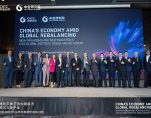
HONG KONG SAR – Media OutReach Newswire – 13 October 2026 – On October 13, the CICC Global Institute (CGI) held its 2026Q4 Macro Forum in Bangkok, Thailand, under the theme “China’s Economy amid Global Rebalancing: New Paradigms and New Industries”. The forum featured welcome remarks, keynote speeches, two thematic dialogues and an evening discussion session.
Yanliang Miao, Chief Economist and Senior Managing Director of CICC, shared his insights on China’s economic transformation and the evolving international monetary order in his opening remarks and keynote speech. He noted that understanding China requires a global rebalancing perspective, considering both the dynamism of emerging industries and the implications of the transition from old to new growth engines for jobs, incomes and demand. Alongside its green and digital transitions, China is also working toward a growth model supported by higher household incomes and services-led consumption. Turning to the international monetary order, he observed that shifts in the global economy, trade networks and financial technology are driving the evolution toward a more diversified international monetary system. Economic and trade strength do not automatically translate into international currency status: institutional credibility and the depth and breadth of financial markets remain central to understanding this evolution and the internationalization of the renminbi.
Huimin Wu, Executive Dean of CICC Global Institute and Deputy Head of Research Department at CICC, noted that, as discussed in The New Pattern of Dual Circulation, a book jointly published this year by CICC Global Institute and CICC Research Department, China’s economy is entering a new stage of development. Its trade and outward investment are undergoing a paradigm shift, while emerging industries are becoming increasingly important drivers of growth in the global economy. These changes are both part of the broader process of global economic rebalancing and deeply shaped by it, giving rise to a new pattern of interaction between China and the global economy.
The forum brought together experts and industry representatives from institutions including the International Monetary Fund (IMF), ASEAN+3 Macroeconomic Research Office (AMRO), Shanghai Advanced Institute of Finance (SAIF) at Shanghai Jiao Tong University, National University of Singapore, ICBC Standard Bank, Wood Mackenzie, and NSQ Capital. Discussions focused on the transformations of China’s trade and outward investment and their global implications, as well as the prospects for emerging industries such as innovative pharmaceuticals, green energy, and artificial intelligence.
This marked the first time the CGI Quarterly Macro Forum was held in Southeast Asia. Taking place during the week of the IMF and World Bank Annual Meetings, amid international discussions on global economic opportunities and challenges, the event brought Chinese perspectives to the global conversation and offered Chinese insights into key issues concerning China’s economy that are of broad international interest.
As an important part of CGI’s ongoing efforts to strengthen international exchanges, present China’s perspective, and foster a deeper understanding of China’s economic transformation process, the event was an innovative exploration. Looking ahead, CGI will continue to deepen its international engagement and work toward building an international dialogue platform focused on China’s economy, contributing to greater mutual trust and consensus, and playing a positive role in this cause.
Hashtag: #CICC
The issuer is solely responsible for the content of this announcement.
About CICC
China International Capital Corporation Limited (CICC, 601995.SH, 3908.HK) was founded in 1995. Our experience in professional services includes leading several prominent transactions, reflecting our close involvement in China’s economic reform and development. Our vision is to become a first-class investment bank with international competitiveness. Our extensive network and cross-border business practices have enabled us to offer high-quality, value-added financial services to a diversified client base. This includes a full-service and balanced business model that offers investment banking, equities, FICC (Fixed Income, Currencies and Commodities), asset management, private equity and wealth management services, all of which draw on our comprehensive research and technology capability. Headquartered in Beijing, the Group has over 200 securities business offices in China, and established subsidiaries or branches in places including Hong Kong SAR, New York, London, Singapore, Frankfurt, Tokyo, Ho Chi Minh City and Dubai. As an investment bank with Chinese roots and an international reach, we are committed to providing first-rate financial services to both our Chinese and global clients to help them achieve their goals.
Arabian Post Staff -Dubai RISE Summit 2026 will open at Dubai World Trade Centre on Wednesday, bringing sovereign wealth funds, institutional investors, government officials and developers together to examine shifts in international investment and the financing of major projects. The one-day gathering on 14 October, organised around the theme Recharging Momentum in Global Economies, will consider how geopolitical tensions, borrowing costs and technological change are influencing decisions […]
The partnership combines the catalytic capital capabilities, convening platforms, and innovation networks of the Temasek Trust Collective with the World Bank Group’s global development expertise, reach, and country-level insights to help promising solutions move from pilot to scale.
Both organisations will explore co-financing and innovative financing approaches to mobilise additional resources, initially focusing on climate and energy, water, agriculture, and health.
A regional Knowledge Node will be established at Temasek Shophouse in Singapore to connect philanthropic partners with development expertise, networks, and opportunities, and to help promising solutions move from pilot to scale.
BANGKOK, THAILAND – Media OutReach Newswire – 12 October 2026 – Temasek Trust and the World Bank Group today signed a memorandum of understanding (MoU) to establish a strategic partnership aimed at harnessing the complementary strengths of philanthropy and development finance to advance shared development priorities. The MoU was signed on the sidelines of the inaugural World Bank Group Philanthropy Forum held as part of its Annual Meetings in Bangkok.
Desmond Kuek, Executive Director and CEO of Temasek Trust, and Paschal Donohoe, Managing Director and Chief Knowledge Officer of the World Bank Group, at the MoU signing for a strategic partnership between Temasek Trust and the World Bank Group to advance shared development priorities.
The partnership combines the Temasek Trust Collective’s catalytic capital capabilities, convening platforms, and innovation networks with the World Bank Group’s global development expertise, reach, and country-level insights. Together, they will strengthen cross-sector collaboration and help promising solutions achieve impact at scale.
Paschal Donohoe, Managing Director and Chief Knowledge Officer, World Bank Group, said: “As development needs grow and resources come under pressure, partnership matters more than ever. Philanthropic organizations bring deep expertise and innovative solutions that align closely with our core missions and jobs agenda. The Philanthropy Hub will connect ideas, resources, and partners to take those solutions to scale, and to deliver for people and communities around the world.”
Desmond Kuek, Executive Director and CEO of Temasek Trust, said: “Today’s development challenges do not fit neatly into silos – and neither can our response. Philanthropy can move early, take risks, and unlock the partnerships and capital needed to turn bold ideas into lasting impact. Working in concert with the World Bank Group and its Philanthropy Hub, we can bridge systemic gaps, scale what works, and forge new pathways for collective action.”
Under the MoU, Temasek Trust and the World Bank Group plan to collaborate across three areas:
Convening and knowledge exchange: Bringing together governments, development institutions, businesses, philanthropies, and other partners to deepen collaboration, learning, and partnership development around shared priorities. This includes mutual participation in platforms such as the World Bank Group Philanthropy Forum and the Philanthropy Asia Summit; engaging senior leaders in high-level dialogues; and facilitating dedicated exchanges on World Bank Group missions, including Mission 300 and Water Forward, as well as approaches to co-funding, building coalitions, and developing country compacts.
Shared knowledge and insights: Connecting philanthropic partners more effectively with World Bank Group platforms, expertise, programmatic support, and institutional knowledge. The collaboration may also facilitate country-level engagement by providing insights into local development challenges, innovations, and opportunities, together with guidance and connections to relevant stakeholders, knowledge, and partnerships. By building shared knowledge and a repository of effective solutions, the parties aim to help translate promising pilots into replicable and scalable models that can advance impact outcomes.
Coordinating partners and capital towards shared priorities: Identifying capital mobilisation approaches to support larger, more coordinated, mission-aligned partnerships. Temasek Trust and the World Bank Group will also assess how their respective philanthropic networks and partners can be better aligned around common interests, while sharing knowledge on models for deploying and aggregating capital to support development solutions. Any specific financing arrangements or projects would be considered separately and remain subject to each party’s mandates, policies, procedures, resources, and approvals.
Initial priority areas include water, agriculture, health, climate, and energy, with potential collaboration linked to relevant World Bank Group initiatives.
Knowledge Node at Temasek Shophouse
In 2027, under the strategic partnership and as part of the Philanthropy Hub, Temasek Trust will establish a Knowledge Node at Temasek Shophouse in Singapore. It will connect philanthropic partners with a wide range of World Bank Group datasets, expertise, and relevant networks to support evidence-building and collaboration and will help promising solutions progress towards wider adoption.
Hashtag: #TemasekTrust
The issuer is solely responsible for the content of this announcement.
About Temasek Trust
Temasek Trust is the philanthropic arm of Temasek Holdings, with community stewardship goals of protecting the planet, uplifting communities, connecting people, and advancing capabilities. By forging new pathways in philanthropy and impact investing with like-minded partners, Temasek Trust advances catalytic philanthropy as a force for good. Through the Temasek Trust Collective, an ecosystem of organisations united by a shared purpose of building better for every generation, Temasek Trust builds capacity, convenes partnerships, mobilises capital, and catalyses solutions to drive positive impact. For more information, visit www.temasektrust.org.sg. Follow us on LinkedIn, Instagram, Facebook, and YouTube.
Jeffrey Epstein spent years cultivating filmmaker Woody Allen through expensive gifts, private travel and carefully arranged social encounters, using their relationship to gain access to influential figures, particularly in France, newly examined correspondence shows. Emails released by the US Department of Justice trace a relationship that began at a New York dinner on 2 December 2010 and continued until Epstein’s death in August 2019. The records show […]
Two companies affiliated with cryptocurrency market maker DWF Labs have sued custodian BitGo in London, seeking $141 million over allegations that it sold discounted tokens before contractual trading restrictions expired. DWF Maas and Falcon Digital filed the claim in the High Court, accusing BitGo of breaching agreements covering Falcon Finance’s FF token and ESPORTS tokens. They contend that premature transfers to cryptocurrency exchanges depressed prices and reduced […]
Airtel Money shares dropped below their initial public offering price on Friday as the African payments business made a subdued London market debut despite demand for its shares substantially exceeding supply. The stock rose briefly to £2 before retreating to £1.93, three pence below the £1.96 offer price. That represented a decline of approximately 1.5% from the flotation price, reversing the modest gains recorded earlier during conditional […]
India’s communications minister has rejected suggestions that powerful business interests are preventing Elon Musk’s Starlink satellite internet service from launching, insisting that the country does not permit monopolies and applies common regulatory requirements to competing operators.
Jyotiraditya Scindia responded on Friday after Musk questioned billionaire Mukesh Ambani’s influence over the approval process, escalating a dispute over Starlink’s prolonged wait to begin commercial operations in one of the world’s largest telecommunications markets.
“India does not allow a monopoly in any sector,” Scindia told a media briefing, defending the government’s handling of satellite communications licences and its approach to competition.
The intervention followed Musk’s question on his social media platform X on Thursday: “Is Ambani the real boss of India?” Musk suggested that Starlink’s difficulties reflected the influence of established business interests but offered no evidence that Ambani had interfered with regulatory decisions.
The Ministry of Communications had already dismissed Musk’s earlier allegation that unnamed oligarchs were obstructing Starlink to protect their market position. It described the regulatory framework as fair and non-discriminatory and called suggestions of unequal treatment “baseless and misconceived”.
Officials said three licensed satellite communications operators were undergoing security assessments and remained at broadly comparable stages of the approval process. Those operators are Starlink, Reliance Jio’s satellite venture and Eutelsat OneWeb, which has links with Bharti Airtel.
Starlink has obtained a licence to provide satellite services, but that authorisation does not itself permit an immediate commercial launch. The company must satisfy security conditions before proceeding to spectrum assignment, another requirement for starting operations.
The distinction has become central to the disagreement. Musk has questioned why his company cannot begin serving customers after years of work to meet regulatory requirements, while the government maintains that obtaining a licence is only one stage of a process applicable to every provider.
Security scrutiny covers issues arising from satellite networks’ ability to deliver communications across borders and from the need for operators to comply with domestic interception, monitoring and other lawful requirements. The government has not announced a date for completing the assessments or assigning spectrum to Starlink.
Musk initially accused unnamed influential figures of seeking to preserve what he described as a monopolistic hold over connectivity. He argued that delays harmed people without adequate internet access, particularly communities that could benefit from satellite connections where terrestrial networks are difficult to extend.
His subsequent reference to Ambani made the dispute more personal. Reliance Jio, part of the conglomerate led by Ambani, is among the dominant providers of mobile connectivity in India, alongside Bharti Airtel. Neither the size of those businesses nor their presence in the satellite sector establishes the interference alleged by Musk.
Reliance Jio had not publicly answered the accusation by Friday. The absence of a response leaves Musk’s specific suggestion about Ambani unsupported, while the government’s explanation addresses the formal approval process rather than every concern raised about its duration.
The controversy has also drawn political attention. Opposition leader Rahul Gandhi joined the exchanges on X, responding to Musk’s remarks with a pointed comment about the influence of powerful figures. His intervention widened a disagreement initially centred on satellite licensing into a debate about corporate power and government decision-making.
Starlink’s proposed service differs from conventional mobile broadband. Its network uses low-Earth-orbit satellites to connect customer terminals, potentially extending internet access to remote locations without the same dependence on ground-based fibre or mobile towers.
That potential has made the timing of market entry important for Starlink, although affordability, equipment costs and regulatory obligations will also shape the service’s commercial prospects. No confirmed nationwide launch date or final retail pricing has been announced for customers in India.
The regulatory dispute follows years of preparations by SpaceX to enter the market. Starlink has also explored distribution partnerships with established telecommunications companies, including Reliance Jio and Bharti Airtel, demonstrating that competition in satellite broadband can coexist with commercial cooperation.
India’s satellite spectrum framework envisages administrative assignment rather than conventional auctions, subject to prescribed charges and conditions. Operators still require individual approvals before they can activate services, and holding an authorisation does not remove obligations connected with network security.
The Ministry of Communications has said a licensee may move towards spectrum assignment once its security assessment is completed. That sequence applies to the three companies currently seeking to introduce satellite broadband services under the government’s approval framework.




 https://www.brandhk.gov.hk/
 https://www.linkedin.com/company/brand-hong-kong/
 https://x.com/Brand_HK/
 https://www.facebook.com/brandhk.isd
 https://www.instagram.com/brandhongkong






 YouTube




