News related to
Saudi

Artificial Intelligence is expected to contribute around US$320 billion to the Middle East’s Gross Domestic Product (GDP) by 2030, with the Gulf Cooperation Council countries accounting for nearly 80 percent of that impact, translating to approximately US$260 billion, according to a latest report by global accounting firm PriceWaterhouseCoopers (PwC). The Gulf Cooperation Council (GCC) countries—Bahrain, Kuwait, Oman, Qatar, Saudi Arabia, and the United Arab Emirates—are at a […]

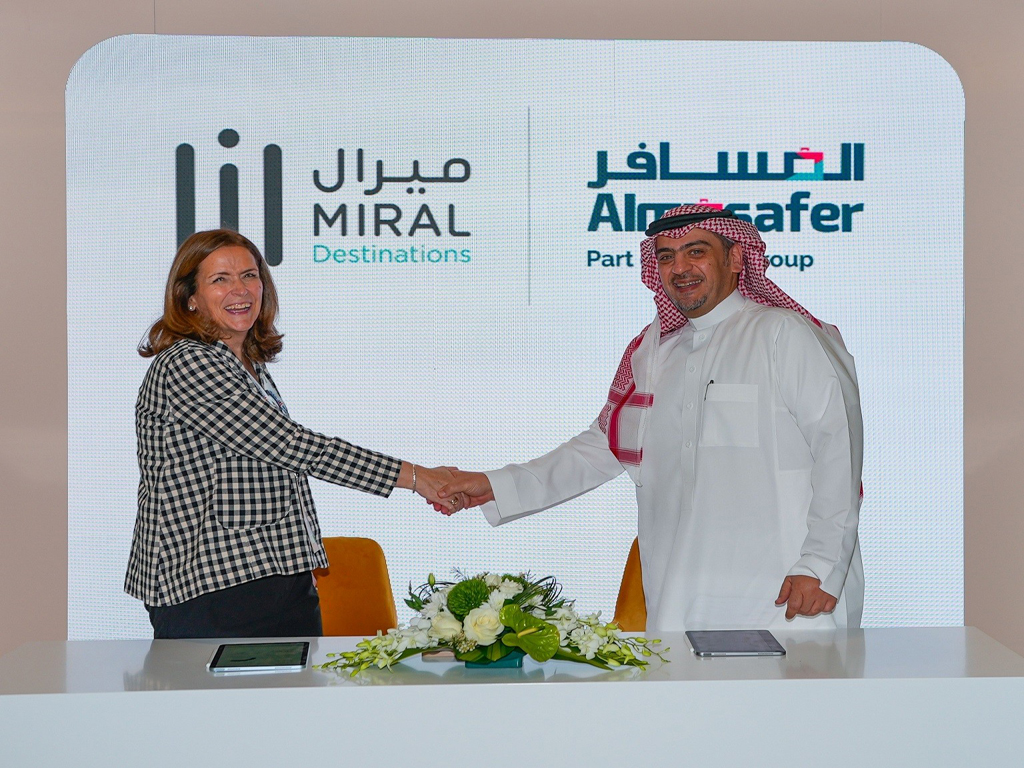
Almosafer, a leading travel services provider in Saudi Arabia, has entered into a strategic partnership with Abu Dhabi-based Miral to promote Yas Island as a premier leisure destination among travellers from the Kingdom and the wider Gulf Cooperation Council region.

Under the agreement, Almosafer will leverage its extensive consumer travel platforms and regional expertise to market Yas Island’s diverse attractions, including theme parks, luxury accommodations, and cultural events. This collaboration aims to boost visitor numbers from Saudi Arabia, a market that has shown significant growth in outbound tourism.

Yas Island has experienced a surge in popularity, recording over 38 million visits in 2024—a 10% increase from the previous year. The destination’s appeal has been bolstered by a variety of attractions, such as Warner Bros. World, SeaWorld, and Yas Waterworld, as well as a calendar filled with international events and performances. Notably, there has been a 56% increase in visitors from the GCC, with Saudi Arabia contributing a substantial portion of this growth.

The partnership between Almosafer and Miral is expected to further enhance Yas Island’s visibility and accessibility to Saudi travellers. Almosafer plans to integrate Yas Island offerings into its booking platforms, provide tailored travel packages, and launch targeted marketing campaigns to showcase the destination’s unique experiences.

This initiative aligns with broader regional efforts to promote tourism and diversify economies. By capitalising on the growing interest in leisure travel among Saudi residents, the collaboration seeks to position Yas Island as a top choice for family vacations, cultural exploration, and entertainment within the GCC.

ADVERTISEMENT

Saudi Telecom Company’s Tali Ventures and Aramco’s Wa’ed Ventures have jointly led a $19 million investment in Graphiant, a US-based network connectivity start-up, as part of a broader $102 million Series B funding round. The move underscores the Kingdom’s strategic push to enhance its digital infrastructure and diversify its economy in line with Vision 2030. Graphiant, headquartered in California, specialises in providing a unified network solution that […]

A group of prominent Senate Democrats, led by Elizabeth Warren and Minority Leader Chuck Schumer, has urged the Trump administration to reconsider newly announced artificial intelligence chip agreements with Saudi Arabia and the United Arab Emirates . The lawmakers argue that these deals could compromise U.S. national security by potentially exposing advanced technology to adversaries like China and Russia, while also limiting the availability of critical components for American companies.

The agreements, unveiled during President Donald Trump’s recent trip to the Middle East, involve major U.S. tech firms such as Nvidia Corp. and Advanced Micro Devices Inc. selling tens of thousands of advanced semiconductors to the Gulf nations. These deals could pave the way for the sale of over a million more chips, coinciding with the administration’s plans to rescind and rewrite Biden-era rules that had capped the access of these countries to such technology.

Critics within the Senate express concern that these moves could inadvertently aid China’s technological advancement, given the close ties between the Gulf states and Beijing. They also warn that the agreements might strain the domestic supply of AI chips, potentially hindering the growth of U.S. companies reliant on these components.

OpenAI CEO Sam Altman has defended the administration’s decisions, dismissing critics as “naïve” and emphasizing the strategic benefits of the deals. Altman, along with White House AI advisor David Sacks, argues that the agreements shift the technological balance in favor of the U.S. against China. Despite these assurances, concerns persist among lawmakers and national security experts about the potential risks associated with the export of sensitive technology to the Gulf region.

The deals have also sparked debate within the tech industry, with some companies eager to pursue opportunities in the Gulf, while others express apprehension regarding security and geopolitical implications. The collaborations highlight a divide in the industry and raise broader questions about the global strategic direction of emerging technologies.

Saudi Basic Industries Corporation is advancing plans to list its gas subsidiary, National Industrial Gases Company , potentially within the current year. The Riyadh-based industrial giant is in early-stage talks with major financial advisers, including Lazard Inc., HSBC Holdings, JPMorgan Chase & Co., and Morgan Stanley, aiming to navigate the initial public offering process. This move reflects SABIC’s strategic intent to unlock value from its non-core assets […]

Advertisements
ADVERTISEMENT

Eight Sleep, the US-based sleep fitness company, has launched its flagship Pod 5 system in Saudi Arabia, aiming to address the Kingdom’s widespread sleep quality issues. The move follows internal data indicating that Saudi Arabia ranks lowest among over 30 global markets in sleep quality.

The Pod 5 system features a temperature-controlled mattress cover and blanket, offering adjustable cooling and heating between 55°F to 110°F. Integrated surround-sound speakers provide soothing soundscapes and guided meditations, developed in collaboration with neuroscientist Andrew Huberman. A new Health Check feature monitors heart rate and breathing during sleep, providing overnight health insights through AI analysis. The system’s price ranges from $2,849 for the Core model to $6,099 for the full setup, with an annual subscription fee starting at $199.

Eight Sleep’s expansion into Saudi Arabia follows its entry into the UAE market, where sales within the first three months were five times higher than the average for other markets. The company plans to expand further into the GCC region, with Saudi Arabia and the UAE as key focus markets.

The launch of Pod 5 in Saudi Arabia comes amid growing awareness of sleep health in the region. A survey of 2,727 people across the GCC found that only half manage to sleep for the recommended six to eight hours per night, with 24 percent getting less than six hours. Cities such as Riyadh and Jeddah are among the worst in the world for sleep, according to data from wearable device company Whoop.

Eight Sleep’s Pod technology aims to address these issues by offering personalized sleep solutions. The system’s AI-powered features adjust bed temperature automatically, track sleep health metrics, and provide personalized sleep fitness scores. The company claims that after one month of using the Pod, members reported 32% better sleep quality scores on average, with improvements in daytime energy, sleep interruptions, and sleep onset time.

The sleep tech market in Saudi Arabia is growing, with both wearable and non-wearable technologies playing important roles in improving sleep quality and managing sleep disorders. Non-wearable sleep tech devices, such as smart mattresses and sleep-enhancing pillows, currently dominate the market. Consumers frequently want to test the comfort and functionality of these products in retail settings before making a purchase.

The United Arab Emirates has committed to increasing its energy sector investments in the United States to $440 billion over the next decade, a significant expansion from the current $70 billion. This strategic move was announced by Sultan Al Jaber, chief executive of Abu Dhabi National Oil Company , during a high-profile meeting with US President Donald Trump amid his Gulf tour aimed at fostering major business […]

ADVERTISEMENT

Donald Trump concluded his Gulf tour with the White House touting more than $2 trillion in economic agreements, a figure that has drawn significant scepticism from financial analysts and diplomatic observers. The administration presented the headline number as a demonstration of strengthened U.S.-Gulf relations and expanded economic ties. However, a detailed examination of the announced agreements reveals a far lower total when measured against firm commitments. Official […]

Elon Musk confirmed that Saudi Arabia has authorised the deployment of Starlink, his satellite internet service, for aviation and maritime applications. The announcement was made during the Saudi-US Investment Forum in Riyadh, where Musk also expressed interest in introducing Tesla’s autonomous vehicles to the Kingdom.

Starlink, operated by Musk’s aerospace company SpaceX, aims to provide high-speed internet connectivity, particularly in underserved and mobile regions. The approval in Saudi Arabia allows the service to cater to the country’s aviation and maritime sectors, enhancing communication capabilities in these industries.

Musk’s participation in the forum coincided with a visit by former U.S. President Donald Trump, who was in the Kingdom to strengthen bilateral economic ties. During the event, Musk showcased Tesla’s Optimus humanoid robots and discussed the potential introduction of Tesla’s self-driving vehicles in Saudi Arabia, aligning with the nation’s Vision 2030 initiative to diversify its economy through technological innovation.

Saudi Arabia has been investing heavily in its transportation and logistics infrastructure, aiming to become a global hub in these sectors. The integration of Starlink’s satellite internet service is expected to bolster the Kingdom’s capabilities in aviation and maritime operations, contributing to its broader economic diversification goals.

While Musk did not provide a specific timeline for the introduction of Tesla’s autonomous vehicles in Saudi Arabia, his discussions with Saudi officials indicate a mutual interest in exploring advanced transportation technologies. The Kingdom’s commitment to embracing innovative solutions positions it as a potential market for Tesla’s self-driving technology.

The United Arab Emirates has finalised a significant agreement with the United States to import advanced American-made artificial intelligence semiconductors, marking a pivotal step in Abu Dhabi’s ambition to become a global AI hub. The deal, announced during President Donald Trump’s Gulf tour, permits the UAE to import 500,000 Nvidia H100 chips annually, facilitating the development of large-scale data centres in the region.

This agreement coincides with the UAE’s broader commitment to invest $1.4 trillion in the U.S. over the next decade, focusing on sectors such as AI infrastructure, semiconductors, energy, and manufacturing. The investment framework includes partnerships with major U.S. companies like BlackRock, Microsoft, and Global Infrastructure Partners, aiming to mobilise up to $100 billion for next-generation data centres and energy infrastructure.

A key component of the deal is the construction of a 10-square-mile, 5-gigawatt data centre in Abu Dhabi, led by Emirati firm G42 and involving several U.S. tech companies. This facility is set to be the largest of its kind outside the United States, significantly enhancing the UAE’s data processing capabilities and supporting its AI initiatives.

The agreement also includes substantial U.S. investments in the UAE, with American energy companies expected to invest in upstream oil and gas and unconventional energy projects. Top U.S. firms such as ExxonMobil, Oxy, and EOG Resources are involved in these initiatives, reflecting a deepening of bilateral energy ties.

President Trump’s Gulf tour, which included visits to Saudi Arabia, Qatar, and the UAE, focused on securing financial commitments from wealthy energy producers to boost the U.S. economy and create jobs. The UAE’s pledge to increase its energy sector investments in the United States to $440 billion by 2035, up from the current $70 billion, underscores the success of this diplomatic effort.

The UAE’s strategic shift towards the U.S. in technology and energy sectors is seen as a move to decouple from Chinese influence, particularly in AI. Emirati officials have explicitly pursued this realignment to secure U.S. technology transfers, including advanced semiconductors like Nvidia’s H100 GPUs. This pivot follows U.S. pressure to remove Chinese equipment from critical infrastructure, exemplified by G42’s removal of Huawei technology from its data centres.

The $1.4 trillion investment framework also encompasses initiatives in critical minerals and industrial capacity. The UAE’s $1.2 billion mining partnership with Orion Resource Partners targets lithium, cobalt, and rare earth metals essential for AI hardware and renewable energy systems. Additionally, Emirates Global Aluminum plans to build the first new aluminum smelter in the U.S. in 35 years, aiming to nearly double the country’s domestic production.

President Donald Trump’s strategic tour across the Middle East has ignited internal discord within his administration, as China-focused officials express concern over expansive artificial intelligence agreements with Saudi Arabia and the United Arab Emirates . These deals, involving the acquisition of advanced semiconductors from U.S. firms Nvidia and Advanced Micro Devices , are perceived by some as potential threats to national security and economic interests. During his […]

ADVERTISEMENT

President Donald Trump has announced a series of agreements exceeding $200 billion between the United States and the United Arab Emirates, including a $14.5 billion deal involving Etihad Airways, Boeing, and GE Aerospace. The announcement was made during Trump’s visit to the UAE, part of his broader Middle East tour aimed at strengthening economic and diplomatic ties. Etihad Airways confirmed the purchase of 28 wide-body Boeing aircraft […]

VinFast, Vietnam’s electric vehicle champion, is steering into the Gulf with ambition and pride, transforming the nation’s global image from factory floor to innovation force. HANOI, VIETNAM- Media OutReach Newswire – 16 May 2025 – Ford means America. Toyota means Japan. And now VinFast – a name unfamiliar to most Westerners just 8 years ago – is becoming synonymous with Vietnam. The automaker, born from the Vingroup […]

Apple continues to hold its position as the world’s most valuable brand, maintaining a dominant lead in the annual Kantar BrandZ rankings. The technology giant’s brand value remains firmly ahead of its competitors, driven by sustained innovation, strong consumer loyalty, and expanding services. Among the global giants, Saudi Aramco stands out as the only company from the Gulf Cooperation Council and Middle East region to secure a spot within the Top 100, reflecting its growing international recognition amid shifting energy markets.

The Kantar BrandZ report evaluates thousands of brands worldwide based on consumer perceptions, financial performance, and market presence. Apple, which has consistently topped the rankings for several years, saw its brand value strengthen further due to its diversified product ecosystem and significant investments in augmented reality, artificial intelligence, and subscription services. Its ability to integrate hardware, software, and services continues to set it apart, contributing to record-breaking revenues and reinforcing customer engagement across the globe.

The inclusion of Saudi Aramco in the Top 100 highlights the resilience and strategic positioning of this energy giant amid global transitions. As the world accelerates its shift towards renewable energy, Saudi Aramco’s presence in the rankings underscores its efforts to diversify and adapt to evolving demands. The company has been investing heavily in cleaner energy technologies and sustainability initiatives, while still capitalising on its vast oil reserves and refining capabilities. This dual approach has helped maintain its strong financial standing and global brand stature.

Saudi Aramco’s entry into the list marks an important milestone for the GCC and the Middle East, regions that have been working to boost their global business profiles beyond the traditional hydrocarbon sector. The company’s brand value benefits from its critical role in global energy supply chains and its status as one of the largest integrated energy and chemicals companies worldwide. Its prominence in the BrandZ ranking reflects the ongoing transformation of the regional economy and the growing importance of Gulf-based enterprises in international markets.

Technology companies dominate the upper echelons of the BrandZ Top 100, with Apple’s closest rivals including Microsoft, Amazon, Google, and Samsung. These brands owe their high valuations to their broad global reach, innovation pipelines, and ability to capture consumer attention in a fast-evolving digital landscape. The report shows a marked increase in the value of brands involved in cloud computing, software services, and digital entertainment, signalling shifts in consumer behaviour and business investment.

Financial services and luxury goods brands also feature prominently, with firms such as Visa, Mastercard, and Louis Vuitton holding strong positions. These sectors benefit from sustained consumer demand and adaptation to digital channels, including e-commerce and fintech innovations. Luxury brands have further capitalised on expanding affluent markets in Asia and the Middle East, contributing to their steady brand valuation growth.

Saudi Aramco’s inclusion is particularly notable given the absence of other Middle Eastern brands in the Top 100, illustrating the challenging environment for regional companies in competing at this global scale. Despite high national revenues and significant economic influence, many Gulf firms have yet to establish the kind of global brand recognition needed to appear alongside the world’s largest multinational corporations. This reflects broader economic and strategic factors, including the diversification efforts underway across GCC countries and their focus on building competitive industries beyond energy.

The report also highlights evolving consumer expectations around sustainability and corporate responsibility, with brands that demonstrate genuine commitment to environmental and social governance increasingly favoured in valuation metrics. For energy companies like Saudi Aramco, this presents both challenges and opportunities, as stakeholders scrutinise their environmental impact and transition strategies. The company’s public commitments to reducing carbon emissions and investing in alternative energy projects are critical to its ongoing reputation and brand strength.

Among the factors contributing to Apple’s sustained brand leadership is its capacity to maintain premium pricing while expanding its user base globally. Its flagship products such as the iPhone, iPad, and Mac continue to enjoy strong demand, while services like Apple Music, iCloud, and the App Store generate consistent recurring revenue streams. Innovations in health technology, privacy features, and integration with smart home devices further deepen consumer engagement and brand loyalty.

The Kantar BrandZ rankings serve as a barometer for global business trends, reflecting shifts in consumer sentiment, technological advancement, and economic power distribution. Apple’s dominance underlines the continuing importance of technology innovation as a driver of brand value, while Saudi Aramco’s position signals the evolving role of energy companies in the global economy. As the world grapples with climate change and digital transformation, these rankings highlight how adaptability and strategic vision underpin the most valuable brands.

The presence of Saudi Aramco in the Top 100 is likely to inspire other Gulf-based companies to pursue greater international brand recognition through strategic investments, partnerships, and innovation. Governments across the region have increasingly prioritised economic diversification and global competitiveness, aiming to foster industries such as technology, finance, tourism, and renewable energy. Building strong, globally respected brands will be essential to this long-term vision.

This year’s BrandZ report underscores the growing concentration of brand value among a relatively small group of global leaders, with the top 10 brands accounting for a significant share of total valuation. While new entrants occasionally disrupt the rankings, the core list remains dominated by technology firms and consumer-focused corporations with expansive ecosystems and high consumer trust.

Saudi Aramco’s performance within this competitive context is a testament to its strategic management and financial robustness. It reflects its ability to navigate geopolitical uncertainties, market volatility, and the pressures of a shifting energy paradigm. As international investors and consumers become more conscious of sustainability, Saudi Aramco’s ongoing brand strategy will likely focus on balancing its traditional strengths with innovation in low-carbon energy solutions.

The Kantar BrandZ Top 100 also illustrates broader global economic trends, including the rise of Asian brands and the shifting influence of different markets. Chinese companies such as Tencent, Alibaba, and Huawei continue to climb the rankings, leveraging vast domestic markets and aggressive expansion strategies. Meanwhile, European brands have seen mixed fortunes amid economic challenges and regulatory shifts, emphasising the competitive pressures on established global players.


ADVERTISEMENT

Saudi Arabia has authorised SpaceX’s Starlink satellite internet service for deployment in its aviation and maritime sectors, marking a significant step in the Kingdom’s push to modernise its digital infrastructure. The announcement was made by Elon Musk during the Saudi-US Investment Forum in Riyadh, where he expressed gratitude to the Kingdom for the approval. The decision aligns with Saudi Arabia’s broader ambitions to diversify its economy and […]

Matein Khalid I was neurologically programmed to disbelieve every communique issued by the Indian or Pakistani military in the wartime and thus missed the spectacular 50% rise in the shares of A​VIC Chengdu Aircraft, a Shenzhen listed vendor of the $39 million J-10 fighter jet that downed three Indian ​$250 million Rafales, a MiG-29 and Sukhoi-30 while Frenc​h, British and US intelligence told sources in Reuters, Bloomberg, […]

Saudi Aramco has unveiled 34 preliminary agreements with major American firms, collectively valued at up to $90 billion, marking one of its most substantial single-day commitments to deepening commercial ties with the United States. The signings, announced during the U.S.-Saudi Investment Forum in Riyadh, coincide with U.S. President Donald Trump’s Gulf tour and underscore Aramco’s strategic push to diversify its portfolio under Saudi Arabia’s Vision 2030 initiative.

The agreements span a broad spectrum of sectors, including energy, technology, and finance. In the energy domain, Aramco has entered into memoranda of understanding with U.S. liquefied natural gas producers NextDecade and Sempra, securing approximately 6.2 million tons of LNG supply. This move aligns with Aramco’s ambition to reach nearly 7.5 million tons of LNG capacity by 2030. Additionally, a $3.4 billion investment is earmarked for the expansion of the Motiva refinery in Texas, enhancing its refining capabilities.

In the technology sector, Aramco has partnered with Nvidia to establish advanced industrial AI infrastructure, including an AI Hub and a robotics center. Collaborations with Amazon Web Services and Qualcomm aim to drive digital transformation and enhance industrial networks and AI capabilities. An agreement with ExxonMobil focuses on evaluating significant upgrades to their SAMREF refinery, with plans to expand it into an integrated petrochemical complex.

The financial services front sees Aramco forging agreements with asset management giants such as PIMCO, State Street Corporation, and Wellington. A notable initiative includes the establishment of a unified investment fund, named ‘Fund of One,’ in collaboration with BlackRock, Goldman Sachs, Morgan Stanley, and PIMCO, aimed at streamlining short-term cash investments.

Acwa Power has formalised Memorandums of Understanding valued at $500 million with several US companies, reinforcing its strategic collaborations in the energy sector. These agreements were signed during the Saudi-US Investment Forum held in Riyadh, aiming to bolster innovation and investment in renewable energy and infrastructure. The new MoUs build upon Acwa Power’s existing partnerships with American firms, which now collectively exceed $6 billion. The latest agreements […]

U.S. President Donald Trump has announced plans to lift longstanding U.S. sanctions on Syria, in place since 1979 and intensified during the Syrian Civil War. During his Middle East tour, Trump revealed the decision at the U.S.-Saudi Investment Forum, describing the sanctions as historically significant yet now detrimental. The sanctions had frozen Syrian assets, banned petroleum imports, and isolated the country from the global economy. Critics highlight […]

Supermicro, a prominent American server technology company, has entered into a transformative partnership with Saudi data centre developer DataVolt. This landmark deal, valued at $20 billion, is set to accelerate the deployment of ultra-dense GPU platforms and rack-scale systems across DataVolt’s extensive infrastructure. The collaboration signals a robust technological alliance between the United States and Saudi Arabia, with both parties committing to ambitious infrastructure projects in the […]

VISHNU RAJA
RYO YAMADA
HITORI GOTOH
IKUYO KITA
Social Media Auto Publish Powered By : XYZScripts.com