News related to
Saudi

HSBC is focusing on enhancing its presence in Asia, leveraging strong growth from its Middle East and North Africa investment banking operations. By capitalizing on the economic momentum in the MENA region, the banking giant seeks to extend its influence in Asia, where it has a long-established footprint. The move is seen as a strategic effort to position HSBC as a leading financial institution in both regions, […]

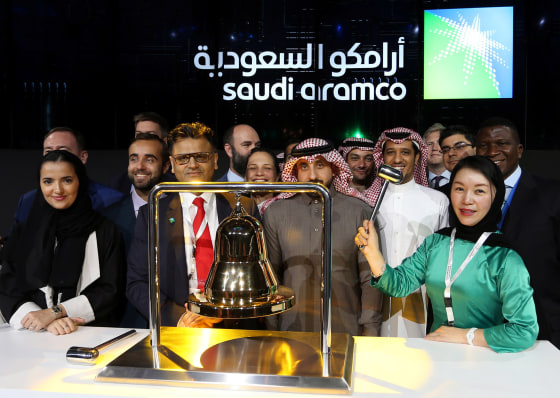
Nice One, a rising star in Saudi Arabia’s beauty and e-commerce sectors, made a remarkable debut on the Riyadh stock exchange this January, reflecting the ongoing boom in IPO activity across multiple industries in the Kingdom. The IPO raised an impressive $320 million, a significant milestone for the company, which saw its stock price soar by 30% on its first trading day—the maximum allowed by the exchange.

Shares of Nice One were initially priced at 35 riyals per unit, marking a strong start for the company. As the market opened, the price quickly rose to a high of SAR 64.50, before stabilizing at SAR 55.70 by the close of Wednesday’s trading session. This surge not only underscored investor confidence in the company but also highlighted the growing demand for opportunities in the region’s burgeoning beauty and e-commerce markets.

For the broader Saudi economy, Nice One’s IPO serves as a testament to the Kingdom’s strategic push to diversify its economy away from oil dependency and build up other sectors such as technology, retail, and digital services. This wave of IPOs, particularly in non-energy sectors, aligns with Saudi Vision 2030, an ambitious plan to reshape the country’s economic landscape and foster growth in new industries.

Nice One’s debut has caught the attention of investors and analysts alike, with many viewing it as a potential model for other startups within the beauty and e-commerce space. The company’s rapid rise, spurred by the increasing popularity of online retail in the Kingdom, highlights the shifting consumer behavior in Saudi Arabia, particularly among younger generations who are eager to embrace digital and mobile-first shopping experiences.

The beauty and e-commerce sectors have experienced significant growth in recent years, particularly as digital transformation has accelerated across the region. Online shopping platforms, like Nice One, have become increasingly popular as consumers seek convenience, variety, and competitive pricing. This shift in buying habits has been particularly pronounced during the COVID-19 pandemic, which further propelled the growth of e-commerce, with many consumers opting for home delivery and digital shopping solutions.

Nice One’s success also reflects the growing appeal of online beauty products in the Saudi market. The beauty industry in the region has become a major player in the global market, driven by an increasingly affluent and brand-conscious population. Saudi Arabia is home to a young, tech-savvy demographic, with high disposable incomes and a keen interest in beauty and wellness products. This has created an attractive market for local and international brands looking to expand their presence in the Middle East.

The company’s strong performance is expected to encourage other players in the e-commerce and beauty sectors to follow suit. Analysts predict that as Saudi Arabia’s stock market continues to liberalize and attract international investment, more companies within high-growth industries will consider IPOs as a means to raise capital and gain exposure on a regional or global scale.

It’s worth noting that the success of Nice One’s IPO is also closely tied to Saudi Arabia’s wider push to strengthen its capital markets. The Tadawul exchange, the largest in the Arab world, has become a focal point for IPO activity. As part of its ongoing reforms, the government has introduced initiatives designed to make the stock market more attractive to both local and international investors, including new regulations and incentives for IPO listings.

Beyond the financial impact, Nice One’s IPO also holds significance for the future of the Saudi retail and digital landscape. The company’s strong debut is a clear indicator that there is substantial growth potential in Saudi Arabia’s beauty and e-commerce markets, which have gained increasing traction both within the Kingdom and across the wider Middle East region. This sets the stage for further investment and innovation, as more companies within these sectors look to scale and capture a larger share of the market.

With a price jump of 30% on its debut, Nice One’s IPO is being seen as a benchmark for other companies that are eyeing expansion in the highly competitive beauty and e-commerce space. It serves as a signal to the market that there is a strong appetite for well-positioned companies in high-growth industries. The success of Nice One could pave the way for more consumer-focused businesses to consider listing on Tadawul, further diversifying the Kingdom’s economy.

Looking forward, the focus will be on how Nice One navigates its post-IPO growth phase. While the early performance of its stock has been promising, the company will need to demonstrate its ability to scale and maintain investor confidence. This will require continued innovation, strategic expansion, and effective management of the rapidly evolving beauty and e-commerce landscape.

Saudi Arabia has announced a historic move, opening doors for foreign investments in publicly-traded companies that own real estate in the holy cities of Makkah and Madinah. This marks a significant shift in the Kingdom’s approach to foreign investment, as the government seeks to diversify its economy and attract international capital to support its ambitious Vision 2030 economic plan. The decision to allow foreign investors into one […]

ADVERTISEMENT

A shift in recruitment strategies across the Middle East, especially in the UAE and Saudi Arabia, signals a major move towards prioritizing skills over traditional job roles, industry experts say. Companies in these regions are adjusting their hiring approaches to match the rapidly changing demands of modern workplaces and the skills required for innovation. The concept of hiring based on specific skill sets, rather than predefined roles, […]

Abu Dhabi’s real estate sector has experienced a significant surge in foreign direct investment (FDI), with a 225% increase in the first half of 2024 compared to the same period in 2023. The emirate attracted AED 3.28 billion ($893 million) from 971 individual investors spanning 75 countries, including the United States, the United Kingdom, China, Kazakhstan, and Russia. ([adrec.gov.ae](https://adrec.gov.ae/en/News/Foreign-Direct-investments?utm_source=chatgpt.com))

This influx of foreign capital underscores the growing confidence in Abu Dhabi’s property market. The Abu Dhabi Real Estate Centre (ADREC), the regulatory body overseeing the sector, attributes this growth to strategic initiatives aimed at positioning the emirate as a premier global investment destination. Rashed Al Omaira, Acting Director General of ADREC, emphasized the emirate’s commitment to creating a business-friendly environment characterized by innovation, transparency, and efficiency. ([adrec.gov.ae](https://adrec.gov.ae/en/News/Foreign-Direct-investments?utm_source=chatgpt.com))

In the first half of 2024, the real estate market recorded 12,439 transaction activities valued at AED 36.2 billion ($9.85 billion). This includes AED 23.7 billion from 7,088 sales and purchase transactions and AED 12.5 billion from 5,351 mortgage transactions. ([adrec.gov.ae](https://adrec.gov.ae/en/News/Foreign-Direct-investments?utm_source=chatgpt.com))

The surge in FDI is part of a broader trend of international interest in Abu Dhabi’s real estate. In February 2024, Fiera Capital, a Toronto-listed fund managing $166 billion in assets, announced the opening of its first Middle East office in Abu Dhabi. The firm plans to establish an office in Saudi Arabia within the next 18 to 24 months, aiming to engage more closely with sovereign wealth funds, family offices, pension funds, and listed corporations in the region. ([Financial News London](https://www.fnlondon.com/articles/fiera-capital-plans-saudi-arabia-office-following-middle-east-foray-in-2024-ac7cc384?utm_source=chatgpt.com))

Additionally, Abu Dhabi’s Modon Holding has been active in international real estate investments. The company acquired half of Citadel’s new office tower at Broadgate in the City of London, marking a strategic entry into the London real estate market. The tower at 2 Finsbury Avenue is set to complete in 2027 and is one-third pre-let to Citadel. ([ft.com](https://www.ft.com/content/ed5b219c-e18a-4b8b-bfe8-88430f7dbd76?utm_source=chatgpt.com))

Modon Holding also expanded its portfolio by acquiring the luxury development La Zagaleta in Marbella, Spain. This acquisition includes the Majarambuz project, a 2.2 million square meter development in Sotogrande. The group plans to develop these areas while maintaining the exclusivity and legacy of the original developments. ([Cinco Días](https://cincodias.elpais.com/companias/2024-12-19/modon-holding-con-sede-en-abu-dabi-adquiere-en-marbella-la-urbanizacion-de-lujo-la-zagaleta.html?utm_source=chatgpt.com))

In Egypt, a partnership between Egypt’s Safwat Kaliouby Group (SKG) and the Emirati KSH Investment Company resulted in a 24 billion Egyptian pound ($500 million) agreement to develop a real estate project along the Nile in Cairo. The project will span 20,000 square meters and include residential and commercial towers, as well as a five-star hotel. ([reuters.com](https://www.reuters.com/markets/deals/egyptian-emirati-companies-sign-500-mln-real-estate-deal-egypt-2024-07-09/?utm_source=chatgpt.com))

These developments highlight Abu Dhabi’s growing influence in the global real estate market and its strategic efforts to attract and deploy foreign direct investment. The emirate’s focus on creating a transparent and efficient investment environment continues to position it as a preferred destination for investors worldwide.

The Middle East is poised for a significant economic transformation in 2025, with countries across the region intensifying their diversification strategies to reduce reliance on oil revenues. Saudi Arabia, the United Arab Emirates (UAE), and other Gulf Cooperation Council (GCC) nations are implementing robust measures to foster growth in non-oil sectors, aiming for sustainable economic futures. Saudi Arabia’s Public Investment Fund (PIF) has committed $200 million as […]

Advertisements
ADVERTISEMENT

HONG KONG SAR – Media OutReach Newswire – 24 January 2025 – Financial Secretary of the Hong Kong Special Administrative Region (SAR), Paul Chan, wrapped up his participation at the World Economic Forum (WEF) Annual Meeting in Davos, Switzerland (January 23) with a flurry of thematic meetings, panel discussions and high-level exchanges with global political, business and financial leaders. As a panelist for a discussion session titled […]

Saudi Crown Prince Mohammed bin Salman has pledged to invest at least $600 billion in the United States over the next four years. This commitment was made during a phone call with President Donald Trump, who had previously suggested that Saudi Arabia could be his first foreign destination if the kingdom agreed to purchase $500 billion worth of U.S. products. The two leaders discussed enhancing bilateral cooperation […]

ADVERTISEMENT

Donald Trump has urged Saudi Arabia to make a $1 trillion investment in the United States and to help lower oil prices. Speaking at a rally in Michigan, the former U.S. president emphasized the economic benefits of such a partnership for both countries, asserting that it would create millions of jobs and foster mutual prosperity. The call comes at a time when energy prices and geopolitical concerns […]

Kingdom Holding Company (KHC), the investment firm led by Saudi Arabian Prince Alwaleed Bin Talal, has indicated a willingness to invest in TikTok should the platform be acquired by Elon Musk or another party. This development emerges as TikTok’s parent company, ByteDance, faces mounting pressure to divest its U.S. operations to avert a potential ban. KHC’s CEO, Talal Ibrahim al-Maiman, stated that the firm would consider investing […]

The International Monetary Fund (IMF) has revised its 2025 gross domestic product (GDP) growth projection for Saudi Arabia downward to 3.3%, attributing this adjustment primarily to the extension of oil production cuts by the Organization of the Petroleum Exporting Countries and its allies (OPEC+).

This revision marks a significant decrease from the IMF’s earlier forecast of 4.6% growth for the same period. The 2024 growth estimate has also been lowered to 1.4%. These adjustments have influenced the broader economic outlook for the Middle East and Central Asia region, with the IMF now anticipating a growth rate of 3.6% in 2025, down from the 3.9% projected in October.

The downward revision is largely due to the decision by OPEC+ to extend oil production cuts. In December, the alliance, which includes Saudi Arabia, postponed the commencement of output increases by three months to April 2025 and further extended the full unwinding of cuts, citing concerns over weak demand and rising production from non-OPEC+ countries.

Despite the anticipated slowdown in oil sector growth, Saudi Arabia is actively pursuing its Vision 2030 initiative, aimed at diversifying the economy and reducing dependence on oil revenues. The non-oil sector has shown resilience, with projections indicating growth rates exceeding 4% in both 2024 and 2025. This expansion is supported by substantial investments in large-scale projects, including NEOM and the Red Sea developments.

The IMF also forecasts a 2.6% decline in energy commodity prices for 2025, a more significant drop than previously expected. This projection reflects the complex dynamics of global oil markets, where production decisions by major exporters like Saudi Arabia play a crucial role in influencing prices.

ADVERTISEMENT

Dubai Islamic Bank (DIB), the United Arab Emirates’ largest Shariah-compliant lender by assets, has increased its shareholding in Türkiye’s T.O.M. Group from 20% to 25%. This strategic move underscores DIB’s commitment to expanding its presence in Türkiye’s burgeoning digital banking and financial technology sectors. The initial acquisition occurred in October 2023, marking DIB’s entry into Türkiye’s digital financial services market. The T.O.M. Group, established by Aydın Group, […]

The International Monetary Fund (IMF) has adjusted its 2025 GDP growth projection for Saudi Arabia to 3.3%, attributing the revision primarily to the extension of oil production cuts by OPEC+ members. This adjustment also led to a downward revision of the IMF’s growth forecast for the Middle East and Central Asia region to 3.6% for 2025, down from the previously projected 3.9%. Saudi Arabia, the world’s largest […]

Emaar Properties, Dubai’s largest real estate developer, is in discussions with several Indian entities, notably the Adani Group, to divest a portion of its Indian operations. The company has not disclosed specific details regarding the valuation or terms of the potential transaction. This development follows reports indicating that Adani Realty, the real estate division of Indian billionaire Gautam Adani’s conglomerate, is in advanced talks to acquire a […]

ADVERTISEMENT

Chinese solar giant Trinasolar is seeking a strategic partner in the United Arab Emirates (UAE) for a major solar power initiative valued at $5 billion. This ambitious project is designed to further the company’s foothold in the Middle East’s rapidly expanding renewable energy sector. The program aims to leverage Trinasolar’s advanced technologies and the UAE’s increasingly aggressive push towards sustainability, a combination that could mark a significant […]

A Dubai court has ordered the former CEO of Drake & Scull International, Khaldoun Al Tabari, alongside a former employee, to pay a staggering $41.3 million in damages. The court ruling follows the company’s involvement in financial mismanagement that led to significant losses. Al Tabari and the ex-employee, identified as an unnamed former senior manager, were found guilty of embezzlement and fraudulent practices during their tenure at […]

Global sukuk issuance is forecasted to approach $190 billion to $200 billion in 2025, driven by monetary easing and substantial financing needs in core Islamic finance countries, according to S&P Global Ratings.

In 2024, the total issuance stabilized at $193.4 billion, slightly down from $197.8 billion in 2023. This performance was underpinned by a significant increase in foreign currency-denominated issuance and a drop in local-currency issuance. The stabilization was further aided by strong financing needs in core Islamic finance countries, the need to attract foreign capital, and improving global liquidity conditions, with major central banks starting to ease their monetary policy.

Local currency-denominated sukuk issuance fell by 14.6% year on year, primarily due to lower issuance in Malaysia, Pakistan, Turkiye, and Indonesia. The largest drop was in Malaysia, where government issuance decreased because of a smaller fiscal deficit due to the reduction of subsidies. Similarly, Malaysia’s central bank’s issuance fell as a result of tighter liquidity conditions for the Islamic banks as their financing growth continued to outpace deposit growth. Pakistan also saw lower local-currency issuance, as the government’s fiscal position remains under pressure and monetary conditions remain tight, as did Turkiye, where tight monetary conditions resulted in lower local currency-denominated issuance. However, local-currency issuance in Saudi Arabia resumed its growing trend as the government tapped the market with jumbo issuance and started issuing retail sukuk.

Conversely, foreign currency-denominated sukuk issuance increased significantly, rising to $72.7 billion in 2024 from $56.5 billion in 2023. This surge was mainly attributable to the Gulf Cooperation Council (GCC) countries, Malaysia, and Indonesia. Among GCC countries, Saudi Arabia and Kuwait led the way, with banks, corporations, and the government of Saudi Arabia stepping up their foreign-currency issuance, while banks and corporations in Qatar and Oman were also more active in this area. The United Arab Emirates ended the year with marginally lower foreign-currency sukuk issuance than last year. In Malaysia, performance was mainly underpinned by increased issuance by the International Islamic Liquidity Management Corporation and a couple of issuances by the central bank and the sovereign wealth fund. Indonesia’s higher sukuk volumes were due to the country’s increased sovereign issuance.

Fitch Ratings reported that global outstanding sukuk grew 8.5% year-on-year to $900 billion by the end of the third quarter of 2024. Sukuk held a large 30% share of the global debt capital market outstanding in core markets. In the GCC, the debt capital market is about $1 trillion outstanding, with sukuk holding a 37% share.

The U.S. Federal Reserve’s 50-basis-point rate cut in September improved financing conditions, leading to a rise in global sukuk issuances. Fitch expects rates to reach 4.5% at the end of 2024 and 3.5% at the end of 2025, boosting issuance activity in the fourth quarter of 2024 and into 2025. A further decline in interest rates is anticipated to support refinancing upcoming maturities and funding diversification goals.

Despite the positive outlook, risks to the sukuk pipeline remain. Sharia-related complexities, rising geopolitical risks, and oil price volatilities could affect market growth. Bashar Al Natoor, global head of Islamic finance at Fitch Ratings, noted that while there is a build-up of the sukuk pipeline partially supported by the recent Fed cut, these downside risks could impact the market.

In the first half of 2024, global sukuk issuance reached $91.9 billion, a slight increase from $91.3 billion during the same period in 2023. This growth was significantly influenced by a 23.8% rise in foreign currency issuances, which hit $32.7 billion by June 30, 2024, up from $26.4 billion the previous year. Saudi Arabia, the United Arab Emirates, Oman, Malaysia, and Kuwait were the main contributors to this increase.

However, the market might face disruptions starting next year with the adoption of the Accounting and Auditing Organization for Islamic Financial Institutions’ (AAOIFI) Standard 62 guidelines. These guidelines, which transition the industry toward asset-backed sukuk by requiring the real transfer of underlying assets to investors, could impact the market depending on investor and issuer response. Despite potential challenges, existing sukuk are unlikely to be disrupted as any changes in contractual obligations would require investor consent.

Saudi Arabia is gearing up for a substantial increase in initial public offerings (IPOs) in 2025, with plans to list up to 56 companies over the next two years. This ambitious agenda underscores the kingdom’s commitment to diversifying its economy and attracting foreign investment. Dr. Sultan Altowaim, Head of Research at Al Rajhi Capital, revealed that seven IPOs have already been approved or completed, with two scheduled […]

Dubai’s real estate market, renowned for its rapid expansion and high returns, is encountering signs of strain as it grapples with unprecedented growth and emerging challenges. The city has experienced a significant surge in property prices, with forecasts indicating an 8% increase in 2025, driven by a shortage of housing supply.

In the third quarter of 2024, Dubai recorded 47,269 property transactions, the highest quarterly figure on record, marking a 41.8% increase compared to the same period in 2023. This surge has led to a 19.9% rise in property prices year-over-year.

Despite the robust demand, the market is facing a significant supply shortage. Knight Frank estimates that approximately 300,000 homes are expected to be built in Dubai between now and the end of 2029, with apartments accounting for 80.1% of the supply and villas making up 17.4%. However, only 8,900 new villas are anticipated by the end of 2024, and an additional 19,700 by the end of 2025, indicating a persistent villa shortage.

This supply-demand imbalance is contributing to rising property prices. Faisal Durrani, Partner and Head of Research for MENA at Knight Frank, noted that house prices in Dubai continue to be fueled by relentless demand, with prices in the mainstream market climbing by 4.3% in the third quarter, taking city-wide prices up by 19.9% compared to the same time last year.

The luxury segment is also experiencing significant growth. Properties valued over $1 million now account for 18.1% of all sales, up from 6.3% in 2020. This trend underscores Dubai’s appeal to high-net-worth individuals seeking premium real estate options.

Looking ahead, industry experts anticipate a moderation in price increases. Farooq Syed, CEO of Springfield Properties, forecasts residential prices to rise between 5% and 10% in 2025, driven by robust demand for off-plan properties. He emphasized that Dubai’s ability to balance rapid expansion with policies prioritizing market stability and long-term value creation will continue to position it as a leader in global real estate.

However, the market’s rapid growth has also led to concerns about affordability and sustainability. The limited availability of sites across key locations is contributing to rising prices for off-plan homes, while stock in the secondary market is experiencing significant price growth, especially where older homes have been refurbished.

The influx of international buyers is influencing the market dynamics. The opening of international schools in Dubai has accompanied significant house-price inflation, as developers create housing projects aimed at affluent families seeking quality education for their children. This trend has notably increased property prices in areas with international schools, as seen in regions such as Brittany, Marbella, Portugal, the south of France, and Switzerland.

In response to the growing demand for luxury properties, developers are undertaking significant projects. For instance, the Trump Organization, in partnership with Saudi real estate company Dar Global, is set to develop Trump-branded properties in Dubai. These ventures include a $4 billion project in Oman and a Trump Tower in Dubai, featuring a hotel and residential units, set to launch next year.


The luxury market is also attracting high-profile individuals. Soccer star Neymar recently purchased a $54.45 million penthouse in Dubai’s Bugatti Residences, underscoring the city’s appeal to affluent buyers.

Despite the challenges, Dubai’s real estate market remains resilient, supported by strategic government reforms, robust foreign investment, and a diversified economic landscape extending beyond oil. The city’s strong infrastructure and investor-friendly policies continue to attract both residents and high-net-worth individuals, positioning Dubai as a preferred destination for long-term investment.

However, the market’s rapid growth has also led to concerns about affordability and sustainability. The limited availability of sites across key locations is contributing to rising prices for off-plan homes, while stock in the secondary market is experiencing significant price growth, especially where older homes have been refurbished.

The influx of international buyers is influencing the market dynamics. The opening of international schools in Dubai has accompanied significant house-price inflation, as developers create housing projects aimed at affluent families seeking quality education for their children. This trend has notably increased property prices in areas with international schools, as seen in regions such as Brittany, Marbella, Portugal, the south of France, and Switzerland.

In response to the growing demand for luxury properties, developers are undertaking significant projects. For instance, the Trump Organization, in partnership with Saudi real estate company Dar Global, is set to develop Trump-branded properties in Dubai. These ventures include a $4 billion project in Oman and a Trump Tower in Dubai, featuring a hotel and residential units, set to launch next year.

Arf, a blockchain-powered fintech platform, has entered into a significant strategic partnership with LuLu Financial Holdings to transform global payment systems. The collaboration will focus on enabling T-0 settlement for cross-border transactions, aiming to revolutionize the speed and efficiency of payments across international borders. This innovative solution seeks to provide businesses and consumers with real-time settlement options, eliminating delays traditionally associated with international payments. Arf, known for […]

Saudi Arabia has officially assumed leadership of the International Society for Reef Conservation (ICRI) Secretariat, marking a pivotal moment in the global fight to protect coral reefs. The move was confirmed during the 2025 ICRI conference, where environmental ministers and stakeholders from around the world gathered to discuss the escalating challenges coral reefs face and the urgent need for coordinated global action. Saudi Arabia’s selection as the […]

VISHNU RAJA
RYO YAMADA
HITORI GOTOH
IKUYO KITA
Social Media Auto Publish Powered By : XYZScripts.com