News related to
Saudi

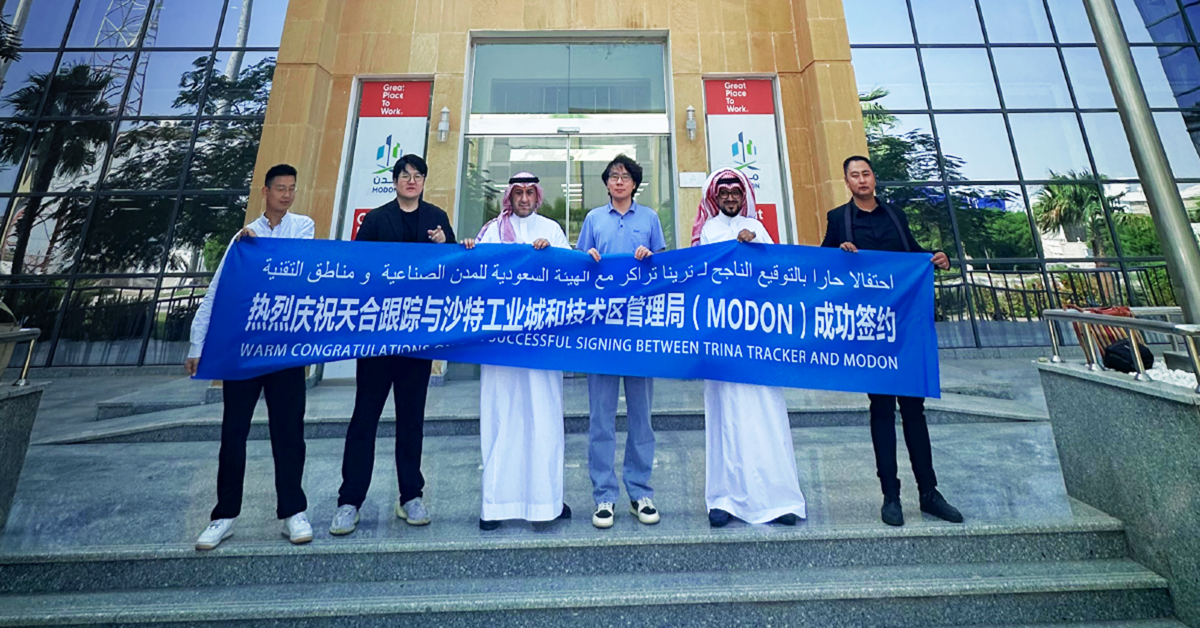
TrinaTracker, a division of China’s Trina Solar, has inaugurated a manufacturing facility in Jeddah’s 3rd Industrial City, Saudi Arabia, with an annual production capacity of 3 gigawatts . This strategic move aligns with Saudi Arabia’s ambitious Vision 2030 plan, aiming to diversify its energy portfolio by significantly increasing renewable energy sources.

The newly established plant specializes in producing TrinaTracker’s Vanguard series of solar trackers and smart control systems. These advanced trackers are designed to optimize the orientation of solar panels, enhancing energy capture and overall efficiency. Notably, the facility operates with zero pollutant emissions during its production processes, underscoring TrinaTracker’s commitment to sustainable manufacturing practices.

This Jeddah-based factory marks TrinaTracker’s fourth manufacturing hub, complementing existing facilities in China, Spain, and Brazil. The decision to establish a presence in Saudi Arabia reflects the company’s strategy to localize production and meet the growing demand for solar energy solutions in the Middle East.

Saudi Arabia has set an ambitious goal to source at least 50% of its power from renewable energy by 2030, targeting an expansion to 130 GW of renewable capacity. Of this, 58.7 GW is expected to come from solar energy. The integration of TrinaTracker’s manufacturing capabilities is poised to play a pivotal role in achieving these targets, providing locally produced, state-of-the-art solar tracking technology.

The Kingdom’s commitment to renewable energy is further evidenced by several large-scale solar projects. The Sudair Solar PV Project, located in Sudair Industrial City, is nearing full operational status. Once completed, this 1.5 GW facility will supply power to approximately 185,000 households and is expected to offset an estimated 2.9 million tons of carbon dioxide emissions annually. The project utilizes bifacial solar panels with single-axis tracking technology, enhancing efficiency and energy output.

In addition to domestic initiatives, Saudi Arabia has engaged in international collaborations to bolster its renewable energy infrastructure. In December 2024, during French President Emmanuel Macron’s visit to Riyadh, agreements were signed with French energy giants TotalEnergies and EDF Renewables. TotalEnergies is set to construct a 300 MW solar park in Rabigh Industrial City, while EDF Renewables will develop two solar parks totaling 1.4 GW. These projects are slated to commence operations by 2026 and are part of the Kingdom’s broader strategy to attract foreign investment and expertise in the renewable sector.
Dara Holdings, the family office of Saudi billionaire Lubna Olayan, has significantly increased its investments in female-led startups across the United Arab Emirates since mid-2024. This strategic move aims to address the gender financing disparity prevalent in the region’s traditionally male-dominated business landscape. In February 2025, Dara Holdings participated in a $10 million seed funding round for qeen.ai, a Dubai-based artificial intelligence startup co-founded by former Google […]

The United States government is escalating its demands for Ukraine to grant substantial mineral rights to American companies, a move that has led to heightened tensions between President Donald Trump and Ukrainian President Volodymyr Zelenskyy. The proposed agreement seeks to provide the U.S. with access to Ukraine’s vast reserves of critical minerals, valued at approximately $500 billion, in exchange for continued military and financial support amid Ukraine’s […]

Burjeel Holdings, a prominent super-specialty healthcare provider in the MENA region, has announced that its Board of Directors has authorised management to explore a share buyback programme of up to 10% of the group’s share capital. This initiative is pending approval from shareholders and the Securities and Commodities Authority. The company plans to execute the buyback through open market purchases, fully funded by its operating cash flow. […]

ADVERTISEMENT

President Donald Trump convened a pivotal meeting at the White House on Thursday, bringing together key figures from the professional golf world in an effort to mend the division between the PGA Tour and the Saudi-funded LIV Golf. The discussions included prominent attendees such as Tiger Woods, PGA Tour Commissioner Jay Monahan, and Yasir Al-Rumayyan, governor of Saudi Arabia’s Public Investment Fund . The primary focus of […]

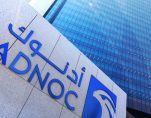
Abu Dhabi National Oil Company has successfully completed a $2.84 billion share offering in its subsidiary, ADNOC Gas. The sale involved approximately 3.1 billion shares, priced at 3.40 dirhams each, representing 4% of ADNOC Gas’s total share capital. This transaction stands as the largest share sale in the Middle East and North Africa region since Saudi Aramco’s $12.3 billion offering in June.

The offering witnessed exceptional demand from institutional investors across the Gulf Cooperation Council and international markets, with total oversubscription reaching 4.4 times. The pricing of 3.40 dirhams per share reflects a 43% premium over ADNOC Gas’s initial public offering price of 2.37 dirhams per share and a 5% discount to the company’s closing share price of 3.58 dirhams on February 20, 2025, the last trading day before the offering.

Settlement of the offering is expected to occur on or around February 26, 2025. Post-transaction, ADNOC will retain an 86% majority stake in ADNOC Gas, while the company’s free float will increase by 80%, bringing it to a headline figure of 9%. This enhanced liquidity is anticipated to pave the way for ADNOC Gas’s inclusion in major indices such as the Morgan Stanley Capital International Emerging Market Index and the Financial Times Stock Exchange Emerging Market Index, potentially during the next quarterly review, subject to meeting all relevant inclusion criteria.

Khaled Al Zaabi, Group Chief Financial Officer at ADNOC, expressed pride in completing the UAE’s first-ever marketed offering and the largest placement on the Abu Dhabi Securities Exchange to date. He highlighted that the exceptional demand and competitive pricing underscore strong investor confidence in ADNOC Gas’s performance and growth prospects. Al Zaabi reaffirmed ADNOC’s commitment as a long-term majority shareholder, emphasizing the subsidiary’s integral role in Abu Dhabi’s decarbonization and growth ambitions.

ADNOC Gas has demonstrated consistent growth and profitability. In its full-year 2024 financial results, the company reported an adjusted net income of $5 billion, the highest since its IPO, with $1.38 billion earned in the fourth quarter alone. These figures significantly surpass Bloomberg consensus estimates. The company’s robust performance aligns with its strategic update announced in November 2024, which outlined a refreshed growth pipeline. This includes the planned acquisition of Ruwais LNG and a target of over 40% adjusted EBITDA growth by 2029.

The successful offering is expected to diversify ADNOC Gas’s shareholder base and enhance liquidity. A higher free float is also projected to facilitate the company’s inclusion in prominent emerging market indices, broadening its investor base and increasing awareness of its value proposition.

BofA Securities, Citi, EFG-Hermes, First Abu Dhabi Bank, HSBC, and International Securities acted as joint global coordinators and bookrunners for the offering. ADNOC has agreed to a restriction on selling additional shares for a period of six months from the closing of the offering, subject to certain exceptions and unless waived by the joint global coordinators.

ADNOC Gas, operational since early 2023, was formed by consolidating ADNOC’s gas processing, liquefied natural gas , and industrial gas operations into a single entity. The company went public on the ADX, raising approximately $2.5 billion in one of the region’s largest IPOs in recent years. This latest share sale further underscores ADNOC’s strategy to unlock value from its assets and attract a diversified investor base.

The Saudi Red Sea Authority has formalised a partnership with the Ministry of Municipalities and Housing through a memorandum of understanding aimed at advancing the development and management of marinas along the Red Sea coastline. This strategic alliance encompasses the creation of marine vessel maintenance centres, enhancement of beach facilities, and the promotion of coastal tourism destinations, all in alignment with the objectives of Saudi Vision 2030.

The MoU was signed by SRSA’s Chief Executive Officer, Mohammed Al-Nasser, and the Deputy Minister for Licensing and Project Coordination, Mohammed Al-Mulhim. This collaboration underscores SRSA’s commitment to establishing comprehensive regulations and operational standards for marinas, overseeing their development, and ensuring environmental safeguards in marine tourism zones. A key focus is to attract a diverse range of visitors and expand the coastal tourism sector.

Central to the agreement is the utilisation of the Balady platform for processing applications related to the establishment, development, and operation of both onshore and offshore marinas within the designated areas. These facilities will be constructed in accordance with the Saudi Building Code and the approved Marina Planning and Design Code. The partnership also addresses the licensing procedures for commercial operations and the specific requirements for constructing marine fuel stations.

Beyond marina development, the MoU outlines plans for the creation and licensing of marine vessel repair and maintenance centres, providing a regulatory framework for their operations. Additionally, there is a concerted effort to develop and manage beach areas within the specified regions, which includes issuing necessary construction and commercial permits.

The collaboration extends into technological integration, with both entities aiming to enhance coastal monitoring systems and promote coastal tourism destinations. This involves identifying investment opportunities and mapping both tangible and intangible assets along the Red Sea shoreline. A significant aspect of the partnership is the development of policies and initiatives designed to bolster the local workforce in the municipal, housing, and coastal tourism sectors. The agreement also emphasises the advancement of smart marina initiatives, contributing to the development of sustainable coastal cities and improving the overall quality of life.

This MoU is a testament to SRSA’s ongoing efforts to expand strategic partnerships, share expertise, and adopt best practices to fulfil its mission of enhancing coastal tourism. These initiatives are in direct support of the broader goals outlined in Saudi Vision 2030, aiming to create a dynamic and sustainable tourism industry.

Established in November 2021, the Saudi Red Sea Authority serves as the regulatory body for marine and navigational tourism activities within Saudi Arabia’s Red Sea domain. Its responsibilities include issuing necessary licences and permits, formulating policies, and identifying areas suitable for marine tourism, all while ensuring the protection of the marine environment. The authority plays a pivotal role in promoting investment opportunities and enhancing human capital through targeted training programmes.

Advertisements
ADVERTISEMENT

Zain KSA and Dell Technologies have entered into a strategic partnership aimed at revolutionising Saudi Arabia’s cloud ecosystem. The collaboration seeks to position Zain KSA as the premier provider of seamless cloud solutions for businesses across the Kingdom.

The Memorandum of Understanding was formalised during the LEAP 2025 technology conference in Riyadh. The agreement was signed by Mohamed Talaat, Vice President for Saudi Arabia and Egypt at Dell Technologies, and Fahad Alsahmah, Chief Business Officer at Zain KSA. This partnership is set to leverage Dell’s extensive expertise in Infrastructure-as-a-Service , Software-as-a-Service , and Anything-as-a-Service models to enhance Zain KSA’s cloud offerings.

Under the terms of the MoU, Zain KSA will utilise Dell’s advanced cloud solutions to develop an open cloud architecture. This architecture is designed to provide businesses with unparalleled flexibility and choice in managing their cloud requirements. The automated platform will enable customers to seamlessly onboard, access services, and manage invoicing through a user-friendly interface. This initiative aims to simplify cloud adoption for enterprises of all sizes, thereby accelerating digital transformation efforts within the region.

Fahad Alsahmah expressed enthusiasm about the collaboration, stating, “By leveraging Dell’s technical expertise, we are poised to create a transformative platform that streamlines cloud adoption for businesses. This unified marketplace will grant access to premier cloud solutions from leading providers, empowering enterprises to manage their cloud services with ease and advance their digital transformation journeys.”

Mohamed Talaat highlighted Dell’s commitment to supporting innovation and digitalisation in Saudi Arabia. He remarked, “Our profound understanding of cloud technologies, coupled with our consultancy prowess, positions us to furnish Zain KSA with a cutting-edge cloud platform. We are eager to collaborate closely with Zain KSA to define and establish a comprehensive framework for these transformative technological solutions.”

This partnership aligns with Saudi Arabia’s Vision 2030 objectives, which emphasise the importance of digital transformation and technological innovation. By enhancing the cloud infrastructure, Zain KSA and Dell Technologies aim to provide businesses with the tools necessary to navigate multi-cloud environments effectively. This will enable organisations to bolster their digital strategies, optimise operational efficiency, and reduce costs through a flexible, pay-as-you-go model.

The introduction of Zain Multi Cloud, as part of this collaboration, signifies a significant advancement in Saudi Arabia’s cloud services landscape. This unified platform integrates public, private, and hybrid cloud environments, offering businesses a centralised system to manage their diverse cloud needs. Compatibility with leading cloud providers—including Alibaba Cloud, Google Cloud, Microsoft Azure, AWS, Oracle Cloud, Huawei Cloud, and Zain Cloud—ensures that enterprises can select services that best align with their specific requirements.

The user-centric design of the platform features an intuitive control panel, simplifying the management process and strengthening governance over cloud infrastructures. This approach not only enhances the user experience but also reinforces security and compliance measures, which are critical in today’s rapidly evolving digital landscape.

As cloud computing becomes increasingly integral to the strategic operations of both public and private sectors, this partnership is poised to play a pivotal role in driving the Kingdom’s digital economy forward. By providing robust, scalable, and efficient cloud solutions, Zain KSA and Dell Technologies are set to empower businesses to innovate and thrive in an increasingly competitive market.

TrinaTracker, a subsidiary of Trinasolar Co. Ltd and a global leader in smart solar tracking solutions, has inaugurated a manufacturing facility in Saudi Arabia. Located in Jeddah’s 3rd Industrial City, the plant is slated to commence operations in the first quarter of 2025, specializing in the production of the Vanguard series of solar trackers and smart control systems. This development underscores TrinaTracker’s commitment to localization and enhancing […]

Abu Dhabi National Oil Company has announced plans to sell approximately 3.1 billion shares, equating to a 4% stake, in its subsidiary ADNOC Gas. This strategic move is projected to raise up to $3 billion, marking one of the most significant share sales in the Middle East and North Africa region since Saudi Aramco’s $12.3 billion offering in June of the previous year.

The offering is set to commence immediately and is expected to conclude on Friday, February 21, 2025. It will be open to qualified institutional and other investors across various countries, including the United Arab Emirates. The final number of shares to be placed and the offering price will be determined at the close of the book-building process, in accordance with the Block Trade Rules of the Abu Dhabi Securities Exchange .

ADNOC currently holds a 90% majority stake in ADNOC Gas. At the last closing price of AED 3.58 per share, the offering is valued at approximately AED 11.1 billion . This initiative aligns with ADNOC’s strategic objectives to enhance the liquidity and free float of ADNOC Gas, while providing a pathway to a more diversified shareholder base and potential inclusion in major indices.

Khaled Al Zaabi, Group Chief Financial Officer at ADNOC, stated, “Since its IPO in March 2023, ADNOC Gas has consistently delivered strong growth, robust financial performance, and superior shareholder returns. As a world-class integrated gas processing company, ADNOC Gas is ideally positioned for further expansion.”

The offering will be subject to a customary 180-day lock-up period for both ADNOC and ADNOC Gas, subject to certain exceptions and unless waived by the joint global coordinators. Major financial institutions, including BofA Securities, Citi, EFG-Hermes, First Abu Dhabi Bank, HSBC, and International Securities, are acting as joint global coordinators and joint bookrunners for this offering.

This move follows ADNOC Gas’s initial public offering in March 2023, which raised approximately $2.5 billion, marking one of the region’s largest IPOs at that time. The company was formed earlier that year by consolidating various gas processing operations into a single entity, aiming to streamline operations and enhance efficiency.

In May of the previous year, ADNOC also raised $935 million by selling a 5.5% stake in its drilling unit to institutional investors, reflecting the company’s ongoing strategy to monetize assets and attract foreign investment.

ADNOC Gas operates an extensive network, managing over 3,000 kilometers of pipeline infrastructure and 26 processing trains. The company plays a crucial role in processing and distributing natural gas within the UAE and to international markets. The funds raised from this stake sale are expected to support ADNOC Gas’s ambitious growth plans, including expanding its processing capacities and exploring new markets.

The energy sector in the UAE has seen significant foreign direct investment in recent years. In 2019, ADNOC attracted major investments from U.S. asset managers BlackRock and KKR, as well as Italian firm Eni, collectively bringing in billions of dollars. These investments have been pivotal in expanding ADNOC’s infrastructure and operational capabilities.

The decision to divest a portion of ADNOC Gas aligns with the company’s broader strategy to optimize its portfolio, enhance capital efficiency, and provide attractive opportunities for global investors. As the global energy landscape continues to evolve, ADNOC remains committed to adapting its business model to meet emerging challenges and capitalize on new opportunities.

ADVERTISEMENT

Matein Khalid Who would have thought that an elegiac hillbilly like J.D. Vance would articulate the requiem for the Western Alliance and NATO at Munich even as Donald Trump prepares for his alpha male sword dance in the Saudi desert, though I really hope POTUS-47 does not try to take on Putin in judo because the little guy is a certified black belt, who can pulverize DonnyT […]

President Donald Trump addressed a gathering of international financiers and technology leaders at the Future Investment Initiative Priority Summit in Miami Beach on Wednesday. The event, hosted by Saudi Arabia’s sovereign wealth fund, the Public Investment Fund , aimed to foster global investment partnerships and economic collaboration. In his opening remarks, President Trump declared, “The United States is back and open for business.” He emphasized his administration’s […]

Saudi Arabia’s state-owned oil giant, Aramco, has signed definitive agreements to acquire a 25% equity stake in Unioil Petroleum Philippines, a prominent player in the Philippine petroleum sector. This strategic move aims to capitalize on the anticipated growth of the high-value fuels market in the Philippines and represents a significant step in Aramco’s global downstream expansion.

Established in 1966, Unioil operates a robust network of 165 retail stations and four storage terminals across the Philippines. The company’s diversified operations have positioned it as one of the fastest-growing entities in the country’s fuel industry. By acquiring a substantial stake in Unioil, Aramco plans to extend its brand presence and introduce its range of products, including Valvoline-branded lubricants, to selected retail stations within the archipelago.

Yasser Mufti, Aramco’s Executive Vice President of Products and Customers, expressed enthusiasm about the partnership, stating, “This investment represents another step forward in our global strategy to expand Aramco’s retail network, and we look forward to introducing Aramco’s high-quality products and services to customers in the Philippines.” This sentiment underscores Aramco’s commitment to enhancing its participation in vibrant economies through collaboration with established local partners.

The financial specifics of the transaction have not been publicly disclosed. However, the acquisition aligns with Aramco’s broader strategy to secure additional outlets for its refined products and strengthen its global retail footprint. This move follows Aramco’s previous retail acquisitions in Chile and Pakistan, highlighting a consistent pattern of strategic investments aimed at diversifying its market presence and tapping into emerging economies with growing energy demands.

The Philippines, with its expanding economy and increasing energy consumption, presents a lucrative opportunity for Aramco. The country’s demand for high-value fuels is projected to rise, driven by rapid urbanization, industrial growth, and a burgeoning middle class. By integrating into the Philippine market, Aramco positions itself to meet this rising demand while fostering economic growth within the region.

Unioil’s Chief Executive Officer, Janice Co Roxas-Chua, welcomed the partnership, noting that the collaboration with Aramco is poised to enhance Unioil’s service offerings and operational capabilities. “Partnering with a global leader like Aramco allows us to bring world-class products and services to our customers, further elevating the standards of the Philippine fuel industry,” she remarked.

This acquisition is subject to customary closing conditions, including regulatory approvals. Both companies are expected to work closely with Philippine authorities to ensure compliance and facilitate a smooth transition. Upon completion, consumers in the Philippines can anticipate access to a broader range of high-quality fuel products and services, reflecting the combined expertise and resources of Aramco and Unioil.

ADVERTISEMENT

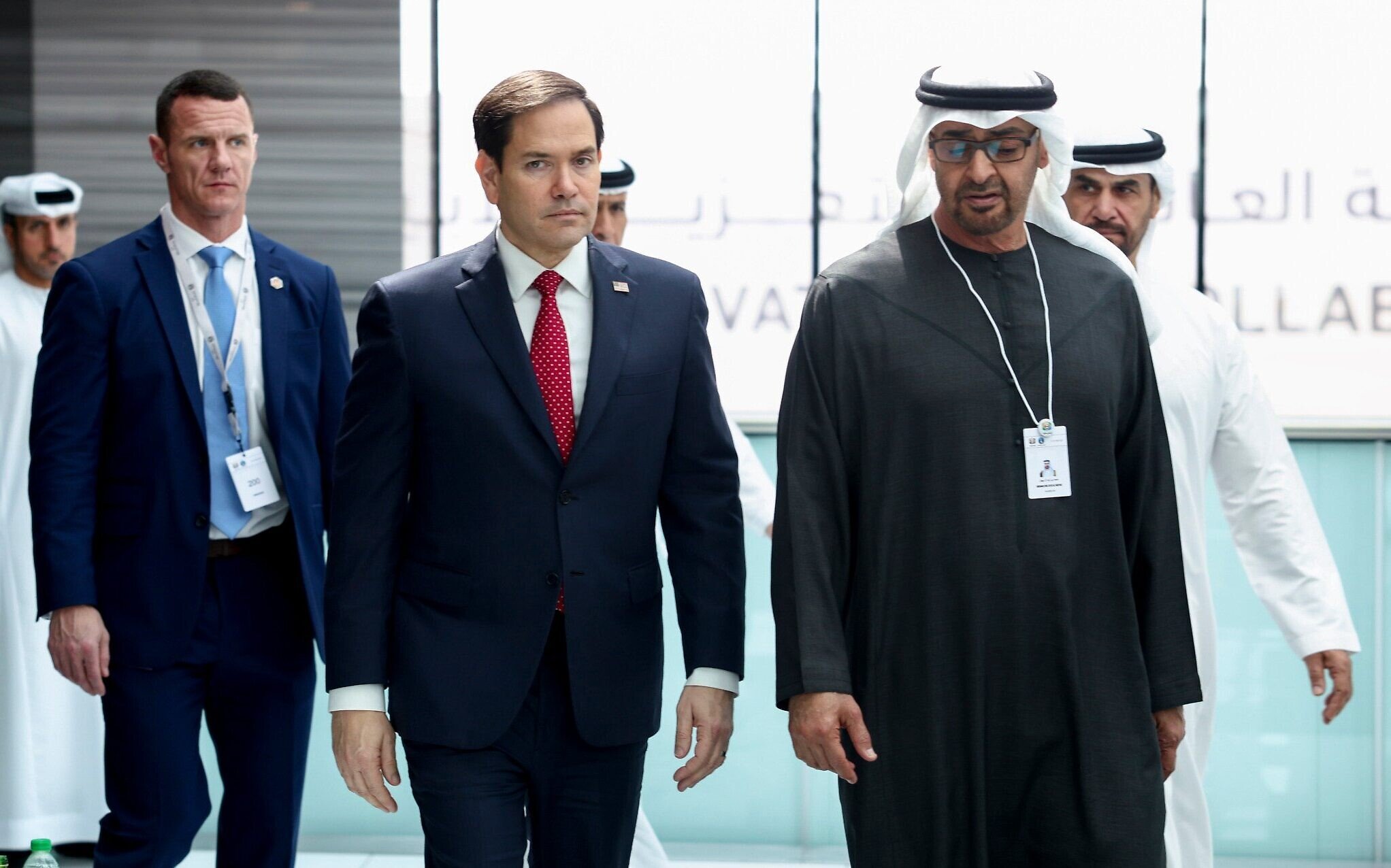
US Secretary of State Marco Rubio concluded his Middle East tour with a visit to the United Arab Emirates on Wednesday, engaging in discussions with President Sheikh Mohammed bin Zayed Al Nahyan. The talks focused on regional stability, the ongoing conflicts in Gaza and Ukraine, and the enhancement of bilateral relations between the two nations.

During the meeting in Abu Dhabi, both leaders underscored the importance of collaborative efforts to address pressing regional issues. A significant portion of their dialogue centered on the Gaza conflict, with President Sheikh Mohammed expressing firm opposition to any displacement of Palestinians from the territory. He reiterated the UAE’s commitment to a two-state solution as the viable path to enduring peace in the region.

The discussions also encompassed the war in Ukraine. The UAE has played a mediating role in facilitating prisoner exchanges between Russia and Ukraine, highlighting its position as a neutral party capable of fostering dialogue. Secretary Rubio acknowledged the UAE’s contributions and emphasized the need for continued international cooperation to resolve the conflict.

Prior to his arrival in the UAE, Secretary Rubio engaged in high-level talks in Saudi Arabia, where he met with Russian Foreign Minister Sergey Lavrov. These discussions marked the highest-level engagement between the United States and Russia since the onset of the Ukraine conflict in 2022. The meetings aimed to explore potential avenues for peace and to address the broader implications of the war on global security.

In addition to geopolitical issues, Secretary Rubio and President Sheikh Mohammed explored opportunities to strengthen economic and defense ties between the United States and the UAE. Both parties recognized the mutual benefits of deepening cooperation in sectors such as technology, energy, and defense. The UAE’s strategic location and its role as a hub for innovation make it a pivotal partner in advancing shared interests.

The visit coincided with the International Defense Exhibition and Conference in Abu Dhabi, a premier event showcasing the latest advancements in defense technology. Secretary Rubio’s presence at IDEX underscored the United States’ commitment to supporting the security and defense capabilities of its allies in the region. The exhibition provided a platform for defense contractors and government officials to discuss potential collaborations and to address emerging security challenges.

While in Abu Dhabi, Secretary Rubio also toured the Abrahamic Family House, a symbol of interfaith harmony comprising a mosque, church, and synagogue within a single complex. This visit highlighted the UAE’s efforts to promote tolerance and coexistence among diverse religious communities. Secretary Rubio commended the initiative, noting that such efforts are essential in fostering mutual understanding and peace in a region historically marked by religious and cultural divisions.

The Middle East tour, which included stops in Israel and Saudi Arabia before culminating in the UAE, reflects the United States’ strategic interest in engaging with key regional players. In Israel, Secretary Rubio met with Prime Minister Benjamin Netanyahu to discuss security concerns and the ongoing situation in Gaza. The discussions reaffirmed the strong bilateral relationship and the United States’ unwavering support for Israel’s right to self-defense.

In Saudi Arabia, the focus shifted to the broader implications of the Ukraine conflict and its impact on global energy markets. Secretary Rubio’s meeting with Crown Prince Mohammed bin Salman aimed to align strategies on stabilizing energy supplies and addressing the humanitarian crisis resulting from the war. The dialogue also touched upon the importance of maintaining open channels of communication with Russia to prevent further escalation.

Throughout the tour, Secretary Rubio emphasized the United States’ commitment to pursuing diplomatic solutions to complex international challenges. He highlighted the necessity of multilateral cooperation and the role of regional partners in achieving sustainable peace and stability. The engagements underscored a multifaceted approach, combining diplomatic outreach with strategic partnerships to address both immediate conflicts and their underlying causes.

The UAE visit, in particular, showcased the depth of the bilateral relationship and the shared vision for a stable and prosperous Middle East. Both nations expressed optimism about the prospects of enhanced collaboration across various domains, setting the stage for future initiatives aimed at promoting peace, security, and economic growth in the region.

As Secretary Rubio returns to Washington, the outcomes of his Middle East tour are poised to influence U.S. foreign policy in the region. The insights gained from direct dialogues with regional leaders will inform the United States’ strategies in addressing the intertwined challenges of geopolitical conflicts, energy security, and regional stability. The administration’s approach will likely continue to balance assertive diplomacy with support for allies, aiming to foster an environment conducive to lasting peace and cooperation.

RIYADH, SAUDI ARABIA – Media OutReach Newswire – 19 February 2025 – Sahm Capital, the first fintech-driven financial company to secure full Capital Market Authority (CMA) licensing (license no. 22251-25), is proud to announce its participation as a platinum sponsor at the Capital Market Forum (CMF) 2025. Organized by the Saudi Tadawul Group, CMF 2025 took place from February 18–20, 2025, in Riyadh, Saudi Arabia, serving as […]

ADVERTISEMENT

  The Middle East’s rapid digital transformation has created both opportunities and vulnerabilities. As cyberattacks on financial institutions, government agencies, and energy sectors rise, organizations are increasingly turning to biometric multi-factor authentication (MFA) as a critical security measure. Traditional password-based authentication is no longer sufficient to combat modern cyber threats. As cybercriminals deploy AI-driven attacks, phishing schemes, and credential-stuffing techniques, biometric MFA has emerged as a more […]

Saudi Arabia’s ACWA Power has entered into a definitive agreement to acquire significant stakes in power generation and water desalination assets from French utility developer ENGIE. The transaction, valued at $693 million, marks ACWA Power’s strategic expansion into Kuwait and a bolstered presence in Bahrain.

The acquisition encompasses a combined capacity of 4.61 gigawatts in gas-fired power generation and 1.11 million cubic meters per day of water desalination. Additionally, the deal includes the associated operations and maintenance companies in both countries.

In Kuwait, ACWA Power will acquire an 18% stake in the Az Zour North Independent Water and Power Project . This facility, operational since 2016, boasts a 1,500 MW gas-fired combined cycle power plant and a desalination plant capable of producing 107 million imperial gallons of water daily. The plant operates under a 40-year Energy Conversion and Water Purchase Agreement with Kuwait’s Ministry of Electricity and Water.

In Bahrain, the acquisition involves several key assets:

– Al Ezzel Independent Power Plant : ACWA Power will obtain a 45% stake in this 940 MW facility, which has been a cornerstone of Bahrain’s power infrastructure.

– Al Dur IWPP: A 45% stake in this project will be transferred to ACWA Power. The facility has a power generation capacity of 1,234 MW and a desalination capacity of 218,000 cubic meters per day.

– Al Hidd IWPP: ACWA Power will acquire a 30% stake in this plant, which provides 1,000 MW of power and produces 410,000 cubic meters of desalinated water daily.

Marco Arcelli, CEO of ACWA Power, stated, “We consolidate our presence in Bahrain, where we are already a reliable supplier of power and water, and we enter Kuwait, where we recently submitted a bid for a large power and desalination plant.”

The transaction is subject to customary regulatory and stakeholder approvals. Upon completion, ACWA Power will assume responsibility for the operations and maintenance of the acquired assets, further solidifying its position as a leading provider of power and water solutions in the Middle East.

This strategic move aligns with ACWA Power’s broader objectives to expand its footprint in the Gulf region and enhance its portfolio of energy and water projects. By integrating these assets, the company aims to leverage operational synergies and contribute to the sustainable development of the region’s infrastructure.

ENGIE’s decision to divest its stakes in these assets is part of its strategic realignment to focus on achieving net-zero carbon emissions by 2045. The proceeds from the sale are expected to be reinvested into renewable energy projects and other sustainable initiatives.

The Az Zour North plant in Kuwait represents a significant milestone as the country’s first IWPP, developed under a public-private partnership framework. Its successful operation has paved the way for increased private sector participation in Kuwait’s utility sector.

ACWA Power has signed a power purchase agreement worth SAR 8.6 billion with the Egyptian Electricity Transmission Company to develop a 2-gigawatt wind power plant in South Hurghada, Egypt. The 25-year agreement was formalized on February 18, 2025, marking a significant milestone in Egypt’s renewable energy expansion.

The project encompasses the development, financing, construction, ownership, and operation of the wind energy facility. Financial closure is anticipated in 2026, following the completion of environmental studies expected by mid-2026. This initiative aligns with Egypt’s strategic objectives to diversify its energy mix and reduce reliance on fossil fuels.

Saudi Arabia’s Minister of Energy, Prince Abdulaziz bin Salman, announced the agreement during the Egypt Energy Show . He highlighted that this project is the largest of its kind in Egypt and is part of a broader collaboration between Saudi and Egyptian companies in the renewable energy sector. Collectively, these initiatives aim to add approximately 1.696 GW of renewable energy capacity to Egypt’s grid, with a total investment nearing SAR 6.2 billion.

In addition to the wind project, Saudi and Egyptian authorities are advancing the Saudi-Egypt Electricity Interconnection Project. Valued at SAR 6.7 billion, this project is designed to facilitate the exchange of up to 3,000 megawatts of electricity between the two nations upon completion of both phases. This interconnection is poised to enhance grid stability and energy security in the region.

Egypt has been actively pursuing renewable energy projects in collaboration with international partners. Notable developments include the Benban Solar Park in Aswan, which boasts an installed capacity of 1.8 GW and features contributions from multiple developers. Another significant venture is the 500 MW Gulf of Suez Wind Farm, developed in partnership with international stakeholders.

The United Arab Emirates and Russia have taken significant steps to enhance their financial and economic collaboration. On 17 February 2025, both nations convened the inaugural UAE-Russia Strategic Financial Dialogue in Abu Dhabi, culminating in the signing of an agreement aimed at eliminating double taxation on income and capital. This pact is designed to prevent tax evasion and foster a more transparent and competitive tax environment, thereby […]

In a significant diplomatic and economic development, the United Arab Emirates and Ukraine have formalized a Comprehensive Economic Partnership Agreement during Ukrainian President Volodymyr Zelensky’s official visit to Abu Dhabi. The accord aims to bolster bilateral trade, investment, and economic collaboration between the two nations, marking a pivotal moment in their diplomatic relations.

The signing ceremony, held in Abu Dhabi, was attended by UAE President Sheikh Mohamed bin Zayed Al Nahyan and President Zelensky. Under the terms of the CEPA, 99% of Ukrainian imports of UAE goods and 97% of Ukrainian exports to the UAE will be exempt from customs duties, effective immediately. This strategic move is projected to contribute approximately $369 million to the UAE’s Gross Domestic Product and $874 million to Ukraine’s GDP by 2031. The agreement is also expected to accelerate Ukraine’s economic recovery and create new opportunities for cooperation in sectors such as infrastructure, heavy industry, aviation, aerospace, and information technology.

President Zelensky’s visit to the UAE comes at a time when momentum is building for potential peace talks to end the ongoing conflict in Ukraine. The UAE, home to a significant number of Russian and Ukrainian expatriates, has been considered a potential site for these discussions. During his visit, President Zelensky emphasized priorities such as repatriating Ukrainian captives, enhancing economic partnerships, and initiating humanitarian programs. He expressed gratitude for the UAE’s mediation efforts, which have reportedly resulted in saving many lives.

In addition to the CEPA, the two leaders agreed to establish a Ukraine-UAE Investment Council, aiming to explore promising investment opportunities in Ukraine, particularly in infrastructure projects. This initiative underscores the UAE’s commitment to supporting Ukraine’s economic development and post-war reconstruction efforts.

The UAE’s involvement in facilitating dialogue and supporting Ukraine’s sovereignty has been evident through its diplomatic engagements. Sheikh Mohamed bin Zayed Al Nahyan reaffirmed the UAE’s dedication to supporting peaceful resolution efforts and alleviating the humanitarian impact of the Ukraine conflict. He emphasized the importance of reaching peaceful solutions to crises around the world and reiterated the UAE’s commitment to building partnerships based on cooperation and understanding to promote peace, stability, and prosperity for all.

Concurrently, high-level talks between U.S. and Russian officials are set to occur in Saudi Arabia, aiming to explore a peace dialogue regarding the Ukraine conflict. Notably, Ukraine has been excluded from these discussions, a move President Zelensky criticizes, emphasizing the necessity of consulting strategic partners before any negotiations with Russia. He has declared that Ukraine will disregard any peace agreements forged between the U.S. and Russia without its involvement, underscoring the importance of including Ukraine in any peace negotiations.

The CEPA between the UAE and Ukraine is the first such agreement Ukraine has signed with a Gulf country, highlighting the UAE’s role as a strategic partner in Ukraine’s economic and diplomatic endeavors. Bilateral trade between the two nations reached $372.4 million in 2024, and the new agreement aims to further enhance this economic relationship by reducing or eliminating customs duties and opening new avenues for collaboration in various sectors.

This development reflects a broader trend of Middle Eastern countries engaging more actively in global diplomatic efforts, positioning themselves as neutral grounds for conflict resolution and as pivotal players in international economic partnerships. The UAE’s strategic support and facilitation of dialogue underscore its growing influence in global affairs, particularly in fostering peace and stability in conflict regions.

As the situation in Ukraine remains fluid, the international community continues to monitor the developments closely. The UAE’s proactive approach in mediating and supporting Ukraine’s sovereignty may serve as a model for other nations seeking to play a constructive role in global peace efforts. The success of the CEPA and the potential for future diplomatic resolutions could significantly impact the geopolitical landscape, offering a pathway toward stability and economic growth in the region.

VISHNU RAJA
RYO YAMADA
HITORI GOTOH
IKUYO KITA
Social Media Auto Publish Powered By : XYZScripts.com