News related to
Saudi

Saudi Arabia’s Public Investment Fund , managing assets totaling $925 billion, has imposed a one-year suspension on PricewaterhouseCoopers from securing advisory and consulting contracts. This directive, effective until February 2026, affects PwC’s operations within one of the world’s most lucrative markets. The firm’s auditing services, however, remain unaffected.

Executives across PIF and its over 100 subsidiaries received instructions to cease awarding consulting projects to PwC. The fund did not publicly disclose the reasons behind this decision, and representatives from both PIF and PwC declined to comment.

This development comes two years after PwC established its regional headquarters in Saudi Arabia, obtaining a license to operate within the kingdom. The firm employs more than 2,000 professionals across Riyadh, Jeddah, AlUla, Al Khobar, and Dhahran, with operations spanning over 20 locations in the Middle East.

PwC’s non-audit services in the region encompass mergers and acquisitions, tax advisory, and strategic consulting. The Middle East has been the fastest-growing geography within PwC UK, the corporate entity overseeing the firm’s activities in the region. In its most recent fiscal year, PwC reported revenues of £1.97 billion in the Middle East, marking a 26% increase from the previous year.

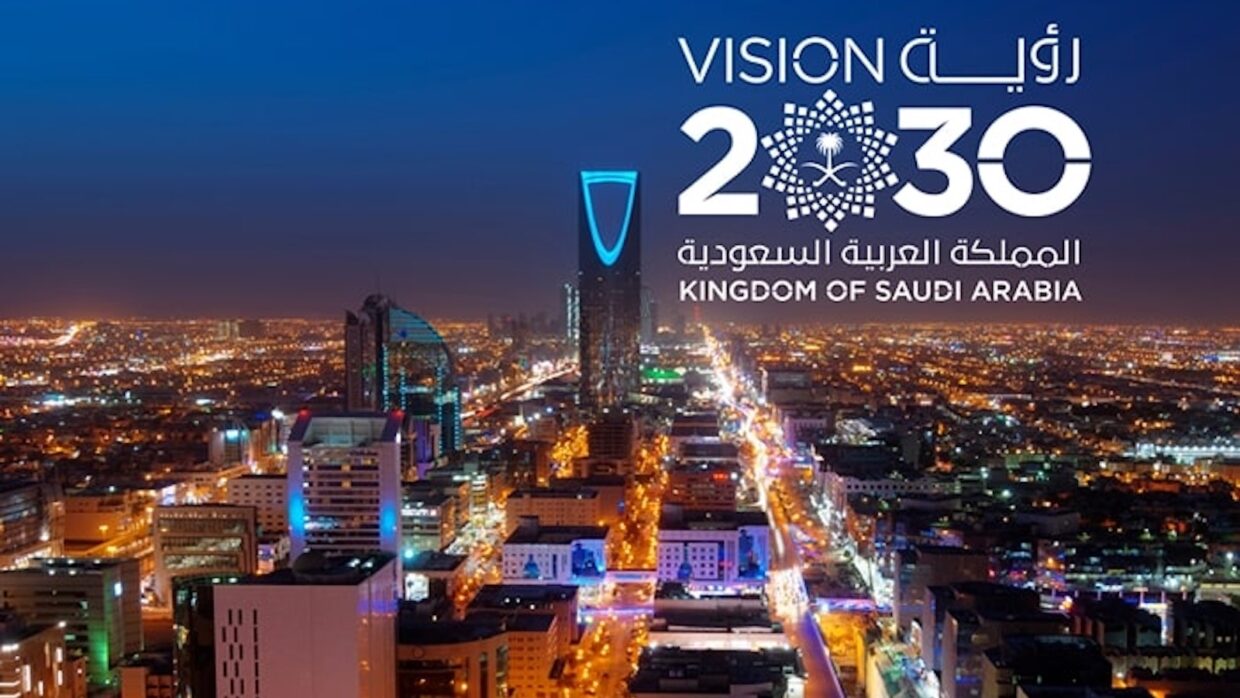
The PIF plays a pivotal role in Saudi Arabia’s Vision 2030, an ambitious initiative aimed at diversifying the economy away from oil dependence. The fund has been instrumental in launching nearly 100 affiliated companies, including the $1.5 trillion Neom project—a futuristic city on the kingdom’s west coast. Other significant projects under PIF’s purview involve developing historic sites like Diriyah and AlUla into global tourist destinations.

The Middle East represents one of the most profitable markets for global consulting firms, including McKinsey & Company and Boston Consulting Group. The PIF’s decision to suspend PwC’s advisory role may have implications for the consulting landscape in the region, given the fund’s substantial influence and investment activities.

This move aligns with a broader trend of fiscal prudence within Saudi Arabia. The kingdom has been recalibrating its ambitious Vision 2030 economic transformation plans, emphasizing financial transparency and ethical governance. Government departments have been instructed to reduce spending on consultants, and state-related entities are tightening their budgets. Some projects are being scaled back or phased over extended timelines to ensure economic stability.

PwC has not publicly commented on the suspension but is expected to address the concerns raised by PIF. Meanwhile, other consulting firms operating in the region may face closer scrutiny as Saudi Arabia reinforces its commitment to financial integrity and accountability.

Oil prices fell on Friday, heading for their first monthly decline since November, as global economic growth uncertainties and potential fuel demand reductions weighed on the market. The more active May Brent crude futures slipped 31 cents, or 0.4%, to $73.26 a barrel by 6:48 a.m. Saudi time, while U.S. West Texas Intermediate crude futures were at $70.04 a barrel, down 31 cents, or 0.4%. The front-month […]

Merger and acquisition activity in the Middle East and North Africa region experienced a significant uptick in 2024, with total deal value reaching $92.3 billion, a 7% increase from the previous year. The number of deals also rose by 3%, totaling 701 transactions compared to 679 in 2023. This growth has been largely attributed to substantial reforms in capital markets, strategic policy changes, and enhanced efforts to attract foreign investments.

The Gulf Cooperation Council countries were at the forefront of this surge, accounting for 580 deals worth $90 billion. Cross-border transactions played a pivotal role, representing 52% of the total deal volume and 74% of the overall value. Sovereign wealth funds such as the Abu Dhabi Investment Authority , Mubadala Investment Company from the United Arab Emirates , and the Public Investment Fund from Saudi Arabia were instrumental in driving this activity.

The UAE emerged as a key player, recording the region’s largest M&A deal of the year. Clayton Dubilier & Rice, Stone Point Capital, and Mubadala Investment announced the acquisition of Truist Insurance for $12.4 billion. Following closely, Saudi Aramco acquired a 22.5% stake in Rabigh Refining and Petrochemical Company from Japan’s Sumitomo Chemical for $8.9 billion. Additionally, a consortium comprising PAG, Mubadala, and ADIA acquired a 60% stake in China’s Zhuhai Wanda Commercial Management Group for $8.3 billion.

Outbound deals dominated the M&A landscape, contributing 61% of the total deal value with 199 transactions amounting to $56.6 billion. The MENA region continued to attract foreign direct investment, with 163 inbound deals valued at $11.4 billion, marking an 18% increase in volume and a 42% surge in value compared to 2023.

Sector-wise, technology and consumer products led in deal volume, each experiencing a 10% year-on-year increase. The United States stood out as the largest acquiring country outside the region, with 48 transactions totaling $4.6 billion.

The UAE maintained its position as a preferred investment destination, achieving the highest volume and value for inbound transactions. The country recorded 96 deals valued at $7.6 billion, representing 67% of the total deal value. The technology sector was particularly vibrant, with 35 deals driven by the nation’s focus on artificial intelligence, cybersecurity, and digital transformation. Notably, Microsoft’s $1.5 billion acquisition of Abu Dhabi’s Group 42 underscored the strengthening ties between the UAE and the United States.

Saudi Arabia also attracted significant investment, with the UAE and Saudi Arabia collectively reporting 318 deals valued at $29.6 billion. Both countries were among the top bidders in the MENA region, highlighting their active participation in the M&A landscape. In 2024, the United States was the favored target destination for MENA investors, with 41 deals amounting to $19.9 billion.

Domestic M&A activity saw an uptick, contributing 48% of the total deal volume with 339 deals, up from 333 in 2023. The combined disclosed value of domestic transactions stood at $24.4 billion. The technology and consumer products sectors attracted increased investor interest, fueled by digital transformation and evolving consumer behaviors, together accounting for 35% of the total domestic deal volume.

The oil and gas sector continued its upward trajectory, leading in disclosed deal value with $9 billion, representing 37% of the total domestic deal value. This was largely due to Saudi Aramco’s $8.9 billion acquisition of Rabigh Refining and Petrochemical Company.

Matein Khalid Had Warren Buffett, oracle of Omaha, been born North Indian, he would have summarized Wall Street’s temper tantrum since last Friday with his famous observation “only when the tide goes out do you discover who’s been swimming nanga punga (naked)”. When history’s most iconic value investor ran up $300 billion in cash, I knew that the tide had run out for this deliciously profitable but […]

ADVERTISEMENT

Umm Al Qura for Development and Construction, the developer behind Makkah’s transformative Masar Destination project, has set its initial public offering price at SAR 15 per share. This pricing, at the upper limit of the anticipated range, reflects robust investor interest, with institutional orders surpassing expectations. The IPO’s institutional tranche witnessed an oversubscription rate of approximately 241 times, amassing orders totaling around SAR 473 billion from both […]

The Gulf region’s strategic importance in global supply chains is increasing as the US seeks to secure critical minerals vital for technology and clean energy. With an eye on reducing dependence on China, the US is now pivoting towards the Gulf, an area rich in natural resources and energy infrastructure, to diversify its supply of rare earth elements and minerals. Recent geopolitical shifts have made it clear […]

A 2 Billion THB Investment in Pediatric Excellence and Smart Hospital Innovation BANGKOK, THAILAND – Media OutReach Newswire – 27 February 2025 – Samitivej Hospital, a leader in pediatric care, unveils its newly expanded standalone Samitivej International Children’s Hospital at Samitivej Srinakarin Hospital. Backed by a 2 billion THB investment, the expansion strengthens Samitivej’s commitment to becoming Asia-Pacific’s Leading Pediatric Referral Hub, providing specialized care, innovative treatments, […]

Advertisements
ADVERTISEMENT

Saudi Arabia’s Public Investment Fund is reportedly in preliminary discussions to acquire a stake in the aerostructures unit of Leonardo SpA, Italy’s prominent aerospace and defence company. This potential investment aligns with PIF’s strategic objective to diversify Saudi Arabia’s economy by expanding its footprint in the global aerospace sector. The aerostructures division of Leonardo is responsible for the design and manufacturing of critical components for both civil […]

Saudi Basic Industries Corporation , a global leader in diversified chemicals, has unveiled plans to implement cost-cutting strategies and explore new investment avenues following an unexpected net loss of 1.89 billion riyals in the fourth quarter of 2024. This loss surpasses the 1.73 billion riyals deficit recorded during the same period in 2023 and contrasts sharply with analyst forecasts, which had anticipated a profit exceeding 1 billion […]

Saudi Arabia and Abu Dhabi are intensifying their efforts to transform their energy sectors, aiming to significantly increase renewable energy capacities by 2030 and 2035, respectively. These initiatives are central to their broader strategies for economic diversification and environmental sustainability. Saudi Arabia’s Vision 2030 outlines a target for renewables to constitute 50% of the nation’s energy mix by 2030, equating to approximately 130 gigawatts of renewable capacity. […]

ADVERTISEMENT

UAE-based fintech company Flow48 has successfully raised $69 million in a Series A funding round, combining debt and equity, to enhance its financing solutions for small and medium-sized enterprises and expand into Saudi Arabia. The investment round was led by Paris-based venture capital firm Breega, with participation from investors including 212, Speedinvest, Daphni, Endeavor Catalyst, Evolution Ventures, and Plus VC. Founded in 2022 by CEO Idriss Al […]

Saudi Arabia’s residential real estate market is experiencing significant affordability challenges as property prices continue to escalate, particularly in major urban centers like Riyadh. According to Knight Frank’s Summer 2024 Saudi Arabia Residential Market Review, the first half of 2024 saw a 38% surge in total real estate transactions across all asset classes, totaling over 106,700 deals. The total value of these transactions grew by 50% to SAR 127.3 billion during the same period. Residential transactions accounted for 61% of all real estate deals by value, with a 41% increase in the number of deals, reaching just under 91,860 sales. The value of residential transactions rose by 48% to SAR 77.6 billion. citeturn0search2

Despite the robust activity, the market is grappling with deepening affordability issues. Knight Frank’s Winter 2023-24 report highlighted a 36% decline in the total value of mortgages issued, amounting to SAR 74.2 billion, as higher interest rates and escalating property prices deter potential buyers. Mortgage rates have risen from 3% to 5% over the past year, further eroding purchasing power, especially in the villa segment. This trend indicates that while transaction volumes are increasing, the financial burden on buyers is intensifying. citeturn0search3

The government’s ambitious Vision 2030 plan aims to achieve a 70% homeownership rate by the end of the decade. However, the Financial Times reported that property prices in Riyadh have surged dramatically since the pandemic, with house prices rising by 81% and apartment prices by 56% since 2020. This rapid appreciation has made homeownership increasingly unattainable for many Saudis, particularly in Riyadh, where the current homeownership rate stands at 53.2%. To combat this, the National Housing Company has initiated projects to construct over 30,000 housing units, and state-subsidized bank loans are being offered to assist buyers. Despite these efforts, the influx of young Saudis to Riyadh for new job opportunities has intensified demand, further driving up prices. citeturn0news9

Knight Frank’s research indicates that 77% of expatriates residing in Saudi Arabia are interested in purchasing homes within the Kingdom. However, 75% are willing to allocate under SAR 1.5 million for a property, with almost 40% unwilling to spend over SAR 750,000. This presents a significant challenge, as average prices in cities like Riyadh are approximately SAR 800,000 for a two-bedroom apartment and SAR 2.7 million for a three-bedroom villa. The disparity between expatriates’ budgets and prevailing market prices underscores the pressing need for more affordable housing options. citeturn0search8

The affordability crisis is further exacerbated by the Kingdom’s substantial investments in mega-projects under the Vision 2030 initiative. Business Insider reported that Saudi Arabia has invested $1.3 trillion in real estate and infrastructure over the past eight years, with the Neom megacity project alone receiving $28.7 billion in funding. While these projects aim to modernize the economy and reduce dependence on oil revenue, they have also contributed to rising property values, making it more challenging for average citizens to enter the housing market. citeturn0news10

Saudi Arabia and the United Arab Emirates are actively transitioning from oil-dependent economies to leaders in artificial intelligence to drive sustainable development. This strategic shift aligns with their broader goals of economic diversification and technological innovation. Saudi Arabia’s Vision 2030 plan emphasizes AI as a cornerstone for future growth. The kingdom has committed substantial resources to this end, including a $100 billion AI initiative aimed at fostering […]

RIYADH, SAUDI ARABIA – Media OutReach Newswire – 24 February 2025 – Sahm Capital, a leading financial services provider, empowered investors at the CMF Riyadh 2025 Investor Bootcamp. Hadeel Bedeeri, General Manager of Sahm Capital, led a session on navigating the IPO process, equipping attendees with essential knowledge to thrive in Saudi Arabia’s evolving capital market. The Investor Bootcamp, held on February 19th, 2025, is part of […]

ADVERTISEMENT

MG Motor has achieved a significant milestone in the Middle East automotive market, recording 70,033 vehicle sales in 2024. This figure represents a 10% increase compared to the previous year, underscoring the brand’s growing popularity in the region. The Kingdom of Saudi Arabia emerged as MG’s largest market, contributing over 30,000 units to the total sales. This robust performance solidifies MG’s position among the top car manufacturers […]

President Sheikh Mohamed bin Zayed Al Nahyan’s state visit to Italy has significantly bolstered the relationship between the United Arab Emirates and Italy. During a dinner banquet hosted by Italian President Sergio Mattarella, both leaders expressed their commitment to enhancing bilateral cooperation across various sectors.

President Mattarella welcomed Sheikh Mohamed and his delegation, highlighting the deep-rooted ties between the two nations and their mutual desire to further strengthen collaboration for the benefit of their peoples. In response, Sheikh Mohamed conveyed his appreciation for the warm reception and emphasized the strategic partnership’s ongoing growth. He noted that this visit reflects both countries’ aspirations to work together towards elevated cooperation and joint economic development.

A symbolic exchange of honors took place during the banquet. Sheikh Mohamed awarded President Mattarella the Order of Zayed, the UAE’s highest civilian honor bestowed upon world leaders. In return, President Mattarella conferred upon Sheikh Mohamed the Order of Merit of the Italian Republic, Italy’s highest accolade for foreign dignitaries.

The UAE delegation accompanying Sheikh Mohamed included Sheikh Abdullah bin Zayed Al Nahyan, Deputy Prime Minister and Minister of Foreign Affairs; Sheikh Hamdan bin Mohamed bin Zayed Al Nahyan, Deputy Chairman of the Presidential Court for Special Affairs; and Sheikh Mohammed bin Hamad bin Tahnoon Al Nahyan, Advisor to the UAE President. The Italian side was represented by several ministers, senior officials, and other dignitaries.

As Sheikh Mohamed’s aircraft entered Italian airspace, it was ceremoniously escorted by a squadron of Italian military jets, symbolizing the importance of this visit. This gesture underscores the mutual respect and the strengthening ties between the two nations.

The discussions between the leaders encompassed a wide range of topics, including investment opportunities, advancements in artificial intelligence, and cultural exchanges. Both countries are keen to explore collaborative ventures in these areas to foster innovation and economic growth.

Energy cooperation emerged as a focal point during the talks. The UAE’s Abu Dhabi National Oil Company and Italy’s energy giant Eni are expanding their partnership beyond traditional oil and gas sectors. Their collaboration now includes renewable energy projects, aligning with global efforts to transition towards sustainable energy solutions.

Defense and security were also prominent on the agenda. Italy’s Leonardo remains a key supplier to the UAE Armed Forces, and both nations are exploring avenues to deepen their defense cooperation. This includes potential joint ventures and knowledge exchange programs aimed at enhancing the capabilities of their respective armed forces.

Emerging sectors such as climate change mitigation, food security, and the space industry were identified as promising areas for future collaboration. Both countries recognize the importance of addressing global challenges through joint initiatives and are committed to working together to develop innovative solutions.

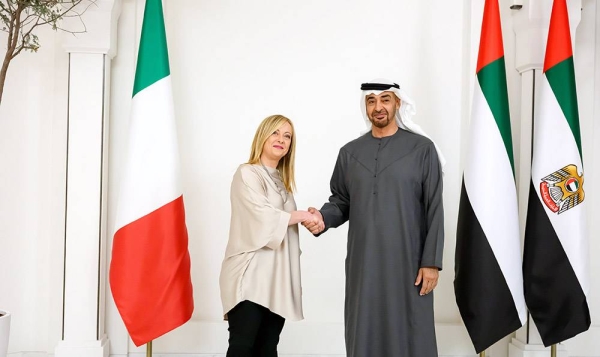
This visit follows Italian Prime Minister Giorgia Meloni’s diplomatic mission to Abu Dhabi, which took place approximately a month prior. During that visit, multiple cooperation agreements were signed, including a significant energy deal involving Albania. These developments signify a renewed vigor in UAE-Italy relations, moving beyond traditional frameworks to embrace broader regional and global partnerships.

Analysts suggest that the UAE-Italy relationship is evolving into a strategic alliance with the potential to influence regional dynamics. Both nations are positioning themselves as key players in the Indo-Mediterranean region, leveraging their economic and geopolitical strengths to foster stability and prosperity.

The leaders also discussed the possibility of developing trilateral and regional alliances, particularly focusing on Africa and East Asia. While Italy prioritizes Eastern Europe, the UAE maintains a strong focus on Africa, creating opportunities for strategic alignment and collaborative initiatives in these regions.

ADVERTISEMENT

Qatar’s government has entered a five-year partnership with San Francisco-based Scale AI to integrate artificial intelligence into its public services. This collaboration aims to enhance operational efficiency and service quality across various government sectors.

The Ministry of Communications and Information Technology announced that the agreement focuses on deploying AI-powered tools such as predictive analytics, automation, and advanced data analysis. These technologies are expected to streamline government operations, making them more responsive and effective.

Over the next five years, Scale AI will develop more than 50 AI use cases tailored to Qatar’s governmental needs. Trevor Thompson, Scale AI’s global head of growth, emphasized the significance of this initiative, stating it “can be a blueprint for other governments around the world” and reflects a commitment to driving impactful change swiftly.

This move positions Qatar competitively in the regional race for AI leadership, especially amid similar advancements by neighboring countries like Saudi Arabia and the United Arab Emirates. The financial specifics of the deal have not been disclosed.

Founded in 2016, Scale AI specializes in providing accurately labeled data essential for training AI models. The company collaborates with major clients, including Microsoft and Morgan Stanley, to create and refine datasets that power various AI applications.

The partnership aligns with Qatar’s broader strategy to modernize its public sector through digital transformation. By integrating AI solutions, the government aims to improve service delivery, reduce operational complexities, and foster a more efficient administrative environment.

As part of the agreement, Scale AI will also offer training programs to develop the skills of Qatar’s national workforce. This initiative is designed to equip government employees with the necessary expertise to manage and sustain AI-driven systems, ensuring long-term success and self-reliance in technological operations.

The collaboration is expected to yield several benefits, including enhanced data-driven decision-making, improved public service responsiveness, and the creation of new opportunities within the tech sector. By embracing AI, Qatar aims to set a precedent for innovative governance in the region.

This development comes as part of Qatar’s ongoing efforts to diversify its economy and reduce reliance on hydrocarbon revenues. Investing in cutting-edge technologies like AI is a strategic move to build a knowledge-based economy and position the nation as a hub for technological innovation.

The successful implementation of AI solutions in government services could serve as a model for other nations seeking to modernize their public sectors. Qatar’s proactive approach demonstrates a commitment to leveraging technology for national development and improved quality of life for its citizens.

The Gulf Cooperation Council economies are poised to outpace global economic growth in 2025, driven by strategic diversification efforts and robust non-oil sector expansion. According to First Abu Dhabi Bank’s latest Global Investment Outlook report, the GCC’s gross domestic product is projected to nearly double, reaching 3.6% in 2025, surpassing the International Monetary Fund’s global growth forecast of 2.8%.

Saudi Arabia stands at the forefront of this regional surge, with its non-oil GDP anticipated to grow by 4.4% in 2025, up from 3.5% the previous year. This projection aligns with PwC’s analysis, which also foresees a 4.4% expansion in the kingdom’s non-oil economy for the same period. The IMF further estimates that Saudi Arabia’s overall economy will expand by 3.3% in 2025, with growth accelerating to 4.1% in 2026. This optimistic outlook is bolstered by Moody’s recent upgrade of Saudi Arabia’s sovereign credit rating to Aa3, reflecting the success of its economic diversification initiatives and reduced reliance on oil revenues.

The United Arab Emirates is also projected to experience significant economic growth. The IMF forecasts a 5.1% increase in the UAE’s GDP for 2025, while the World Bank anticipates growth rates of 4% in 2025 and 4.1% in 2026. These projections are underpinned by the UAE’s strategic investments in non-oil sectors, business-friendly regulations, and a low corporate tax regime. S&P Global Ratings highlights that the UAE’s GDP growth is expected to remain strong between 2025 and 2027, supported by buoyant non-hydrocarbon activities.

Oxford Economics echoes this positive sentiment, predicting that the GCC’s regional GDP growth will nearly double to 3.6% in 2025, outpacing the global forecast of 2.8%. This growth is attributed to gradual increases in oil production and sustained robust trajectories in non-energy sectors. The World Bank concurs, projecting that the GCC region will grow by 3.4% in 2025 and 4.1% in 2026, compared to an expected 3.3% growth rate for the broader Middle East and North Africa region.

FAB’s Group Head of Global Private Banking, Michel Longhini, emphasized the region’s resilience, stating, “The 2025 global economic environment presents unique challenges, but the GCC region continues to stand out as a beacon of resilience and opportunity.” This resilience is further demonstrated by the UAE’s non-oil GDP growth, which is expected to remain strong at 4.9% in 2024 and 5% in 2025, supported by government initiatives to attract foreign investments and promote economic diversification.

In Saudi Arabia, economic growth is expected to accelerate in 2025 due to an increase in oil production, following two years of modest performance. A Reuters poll of economists indicates that the kingdom’s economy is forecasted to grow by 4.4% in 2025, up from an anticipated 1.3% this year. This growth is driven by plans to reverse previous production cuts and bolster non-oil revenues.

Saudi Arabia is rapidly transforming the Gulf Cooperation Council’s private equity landscape through strategic initiatives, regulatory reforms, and its unwavering commitment to Vision 2030. This ambitious blueprint is redefining the region’s investment environment, setting new standards for growth, diversification, and global collaboration.

Over the past five years, private equity investments in Saudi Arabia have experienced remarkable expansion. In 2023 alone, the Kingdom attracted nearly $4 billion in private equity, a significant increase from previous years. This surge is largely attributed to the nation’s stable economic climate, with inflation rates maintained at 2.1 percent in 2024 and a projected 2.3 percent in 2025, fostering a conducive environment for investors.

A pivotal element of this growth is Saudi Arabia’s strategic push to privatize key state-owned assets, including sectors such as airports, water, sports, and energy services. This move has unlocked investment opportunities exceeding $50 billion, actively inviting private sector participation across critical areas like infrastructure, healthcare, education, tourism, and entertainment. The Public Investment Fund , the Kingdom’s sovereign wealth fund, plays a central role in this transformation. Notably, PIF has entered into agreements with Japanese financial institutions, securing up to $51 billion to enhance capital flows through both debt and equity channels. Additionally, PIF plans to establish a $1 billion joint fund with the Hong Kong Monetary Authority, targeting investments in firms expanding into Saudi Arabia, particularly in manufacturing and renewable energy sectors.

The Kingdom’s dedication to Vision 2030 is further exemplified by the establishment of the Savvy Games Group in 2021. This initiative aims to position Saudi Arabia as a global gaming hub by 2030, with plans to invest $37.8 billion in the video game industry. The strategy includes acquiring leading game developers and publishers, fostering job creation, and contributing significantly to the national GDP. In line with this vision, Savvy Games Group acquired the American mobile game developer Scopely for $4.9 billion in 2023 and is reportedly in discussions to acquire the gaming division of Niantic for $3.5 billion.

Public-private partnerships are also instrumental in empowering Saudi businesses to expand globally. These collaborations offer domestic companies the opportunity to engage with international markets and learn from global best practices. Experts highlight that PPPs are pivotal in transforming Saudi Arabia’s economy, leading to increased foreign direct investment and sustainable economic growth. The government’s proactive approach in fostering these partnerships underscores its commitment to creating a vibrant environment for both local and international investors.

Saudi Arabia has announced a significant investment of SR13.4 billion to expand the Qurayyah Independent Power Plant in the Eastern Province. This expansion aims to add 3.01 gigawatts of power generation capacity, addressing the Kingdom’s growing energy demands and supporting its economic development. The Saudi Power Procurement Company , the nation’s sole licensed electricity buyer, has signed a power purchase agreement with the Saudi Electricity Company and […]

Saudi Arabia has rapidly become a pivotal player in the Gulf Cooperation Council’s private equity sector, driven by strategic reforms and its ambitious Vision 2030 agenda. Over the past five years, the Kingdom’s private equity investments have experienced remarkable growth, escalating from $523 million in 2019 to $4 billion in 2023, reflecting a compound annual growth rate of 66%. This surge underscores Saudi Arabia’s commitment to creating an investor-friendly environment that appeals to both domestic and international stakeholders.

A significant factor contributing to this expansion is the dominance of buyout transactions, which have consistently constituted approximately 80% of the total private equity capital deployed in the country. This trend indicates a robust market for mergers and acquisitions, aligning with the nation’s objectives to diversify its economy and reduce reliance on oil revenues. Additionally, growth equity investments are gaining momentum, supporting mid-sized companies poised for expansion and further stimulating economic diversification.

The Kingdom’s strategic initiatives, particularly the Shareek Program launched in 2021, play a crucial role in this transformation. Designed to bolster large Saudi enterprises, Shareek aims to accelerate private sector investments, fostering economic development and enhancing the global competitiveness of Saudi businesses. By facilitating partnerships between the public and private sectors, the program seeks to unlock new investment opportunities and drive sustainable growth.

Sector-wise, technology and infrastructure have emerged as focal points for private equity investments. The government’s emphasis on digital transformation and smart city projects has attracted substantial capital, leading to advancements in these areas. For instance, the development of NEOM, a futuristic city envisioned under Vision 2030, exemplifies the type of large-scale infrastructure projects drawing investor interest. Such initiatives not only modernize the nation’s landscape but also create a plethora of opportunities for private equity firms seeking to capitalize on the burgeoning demand for innovative solutions.

In tandem with these developments, Saudi Arabia’s Public Investment Fund has been instrumental in anchoring foreign investments within the Kingdom. By collaborating with international asset managers and financial institutions, PIF aims to attract $100 billion in annual foreign direct investments by 2030. Notable partnerships include a $2 billion Middle East infrastructure fund with Canadian asset manager Brookfield and agreements with Japanese financial entities, reflecting the Kingdom’s strategic approach to integrating global expertise and capital into its economic framework.

However, the rapid evolution of the private equity landscape is not without challenges. Proposed changes by the Accounting and Auditing Organization for Islamic Financial Institutions could introduce complexities in the Islamic debt market, potentially affecting transaction structures and investor appeal. The new rules mandate issuers of Islamic bonds to transfer legal ownership of underlying assets to investors, aiming for closer adherence to Islamic principles of risk-sharing. While intended to enhance compliance, these changes may increase transaction costs and deter investment if not managed adeptly.

Liquidity concerns persist, particularly in sectors with less mature market infrastructures. The developing nature of the private equity and venture capital ecosystems necessitates continuous efforts to deepen capital markets and enhance investor confidence. Initiatives to address these issues include the maturation of Saudi Arabia’s stock market, which is progressively offering more exit avenues for private equity investments, thereby improving liquidity and attracting further capital inflows.

The Kingdom’s proactive stance in privatizing state-owned assets across various sectors, such as energy, infrastructure, healthcare, education, tourism, and entertainment, has unlocked vast opportunities for both local and international investors. With investments now exceeding $50 billion, these privatization efforts signify a pivotal shift in Saudi Arabia’s economic landscape, promoting private sector involvement and fostering a more dynamic investment climate.

In the realm of sports and entertainment, Saudi Arabia has made significant strides, exemplified by its $1 billion investment in DAZN, a sports streaming service owned by billionaire Sir Leonard Blavatnik. This strategic move not only amplifies the Kingdom’s presence in the global sports industry but also aligns with its broader objectives to diversify the economy and enhance its international image. The collaboration aims to broadcast Saudi sports and events to over 200 markets, showcasing the nation’s commitment to expanding its cultural and entertainment footprint worldwide.

Saudi Arabia is poised to lead the Middle East and North Africa region in initial public offerings in 2025, with 27 companies planning to list on its stock exchange. This surge underscores the Kingdom’s efforts to diversify its economy and strengthen its capital markets. According to a report by EY, the MENA region anticipates 38 company IPOs and 22 fund listings in 2025, spanning various sectors. The […]

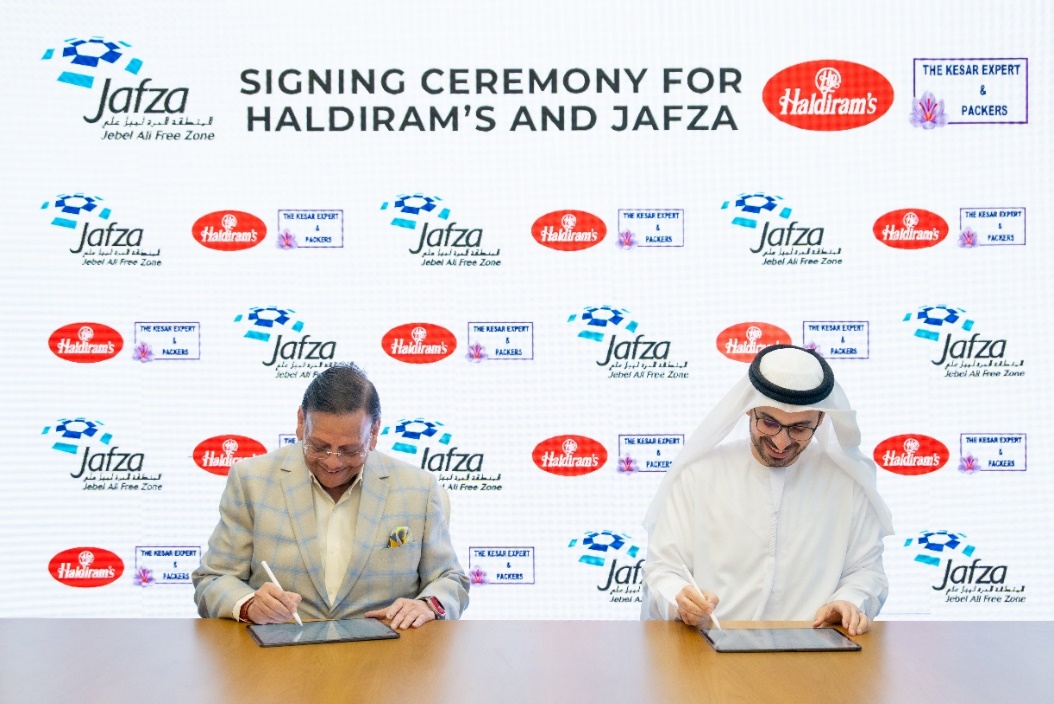
Jebel Ali Free Zone has entered into a partnership with Indian multinational food brand Haldiram’s to establish one of the largest saffron processing facilities in the Gulf Cooperation Council region. The agreement was formalised during the Gulfood event in Dubai.

Scheduled to commence operations in March 2025, the facility will be managed by Kesar Expert & Packers, a company with 22 years of experience in high-quality saffron processing in India. The plant aims to obtain the globally recognised European BRCGS certification, ensuring the quality and purity of its saffron products.

Initially, the hub will process 30 metric tonnes of saffron annually, with plans to expand capacity to 100 metric tonnes over the next five years. This growth strategy will leverage the Comprehensive Economic Partnership Agreement between the UAE and India, as well as the advanced connectivity and infrastructure provided by Jebel Ali Port and Jafza.

The collaboration also explores further avenues, including expanding Haldiram’s presence in Dubai and investing in additional food processing and distribution facilities. This initiative underscores Dubai’s position as a global trade hub, bolstered by Jafza’s thriving food and beverage sector, which currently hosts over 770 companies.

This development aligns with a series of significant engagements by Indian food and beverage companies at Gulfood. Reliance Consumer Products Limited introduced its renowned brand Campa to the UAE market, marking its inaugural entry, facilitated by Abu Dhabi’s Agthia Group. Additionally, Lulu Retail has signed nine strategic memorandums of understanding with global manufacturers to enhance product offerings across the GCC and beyond. Among these agreements is the introduction of Milaf Cola, a carbonated date beverage from Saudi Arabia, to LuLu stores throughout the GCC, with future plans to enter the Indian market.

VISHNU RAJA
RYO YAMADA
HITORI GOTOH
IKUYO KITA
Social Media Auto Publish Powered By : XYZScripts.com