News related to
Saudi

A second term for Donald Trump could usher in significant changes for investors in the Middle East, with the potential for both increased economic opportunities and geopolitical instability. Trump’s return to the presidency would likely revive his administration’s assertive economic policies, reshaping U.S. foreign relations, particularly toward China, Europe, and Middle Eastern nations, while possibly impacting global market dynamics in ways that will directly affect Gulf economies.

Trump’s “America First” approach, previously marked by attempts to realign American foreign policy priorities, could lead to heightened trade tensions with major global economies, including the European Union and China. During his previous term, the Trump administration imposed steep tariffs on Chinese goods and withdrew from the Trans-Pacific Partnership, signaling a shift from multilateral agreements to bilateral deals with clear U.S. advantages. These policies could place Middle Eastern investors in a challenging position, especially those with extensive ties to both Western and Asian markets. His re-election could rekindle these policies, affecting key industries and the economic strategies of regional stakeholders, who may need to reassess their portfolios to navigate potential trade disruptions.

One area of likely change would be Trump’s approach to the U.S.-China trade war, which saw tariffs as high as 25% imposed on hundreds of billions in imports. The escalating tariffs strained trade flows globally, and with Trump’s potential return, the continuation or expansion of such tariffs could push China to deepen its ties with Gulf nations as it seeks alternative partners. The Middle East, particularly Saudi Arabia and the UAE, has already seen increased investment from China under the Belt and Road Initiative, and a further intensification of U.S.-China rivalry could strengthen these relations. Additionally, Gulf economies that depend heavily on oil exports may find opportunities as China looks for secure energy suppliers outside of the American sphere.

Simultaneously, Trump’s proposed policies are expected to drive further U.S. disengagement from traditional allies in Europe, compelling these countries to secure alternative economic partnerships. This shift could create an environment where European countries turn to the Middle East to establish closer trade relations, viewing Gulf states as critical energy providers and investment hubs. Regional investors could benefit from an increased inflow of European capital seeking to mitigate the effects of U.S. tariffs.

In terms of defense, Trump has consistently voiced support for reducing U.S. military commitments abroad, urging allies in Europe and the Middle East to shoulder more responsibility for their own defense. This could result in reduced U.S. military presence in Gulf nations, which may encourage these states to expand defense partnerships within the region and seek additional security alliances beyond the U.S. This shift could spur an increase in local defense spending and the development of domestic defense industries, presenting investment opportunities in these sectors. However, it may also bring heightened insecurity, which could lead to market instability, especially in oil-dependent economies that rely on stable energy production and export environments.

The Middle East’s energy sector might experience new pressures and opportunities under a Trump administration focused on American energy independence. Trump has previously supported policies that increase domestic oil and gas production in the U.S., which could lead to a drop in oil prices globally, impacting the revenue of oil-exporting countries in the Gulf. To counter this, Gulf economies may be motivated to diversify and boost non-oil sectors such as technology, real estate, and tourism, creating new avenues for regional and international investors.

Trump’s stance on Iran could also lead to renewed tensions in the region. During his first term, the administration’s “maximum pressure” campaign aimed at curbing Iran’s nuclear ambitions led to economic sanctions and heightened regional conflicts. If reinstated, such policies could escalate instability in areas around the Strait of Hormuz, a key chokepoint for global oil exports. Middle Eastern markets might face disruptions if these tensions spill over, particularly for industries dependent on steady energy flows and safe trading routes. Yet, defense and energy infrastructure investments may see a boost in response to these renewed geopolitical challenges.

Trump’s previous involvement in brokering the Abraham Accords set a precedent for Arab-Israeli normalization. A return to power could see a renewed push for expanded economic ties between Israel and more Arab states, following the precedent of UAE, Bahrain, Morocco, and Sudan establishing official relations with Israel. Investors across the Gulf could benefit from these expanded commercial ties through greater market access, technology transfers, and joint ventures, particularly in high-growth sectors like technology, renewable energy, and tourism. The prospect of regional integration holds promise for attracting further foreign direct investment (FDI) and bolstering Middle Eastern economies.

Middle Eastern investors, therefore, may need to prepare for a mixed impact, balancing potential market volatility with strategic opportunities. Gulf Cooperation Council (GCC) countries, particularly the UAE and Saudi Arabia, may find themselves in a pivotal position, with increased leverage in securing favorable trade agreements as both Western and Eastern economies seek partnerships in response to Trump’s policies. Yet, they may also have to contend with the risks of being on the frontline of fluctuating U.S. policies toward the region, especially regarding defense and energy.

The facility caters to high-tech end-user industries, such as Aerospace, Healthcare, 5G, Artificial Intelligence (AI) and Electric Vehicles (EV) SINGAPORE – Media OutReach Newswire – 7 November 2024 – SABIC, a global diversified chemicals company, today announced the official launch of its new US$170 (S$220) million ULTEM™ resin manufacturing facility in Singapore, marking the company’s first advanced specialty chemical manufacturing facility in the region producing the high-performance […]

The Trump administration’s latest strategy to impose stricter sanctions on Iran and Venezuela is set to have a significant impact on global oil markets. As tensions rise over geopolitical maneuvering and energy security concerns, experts predict that these measures will strain already delicate oil supplies and could lead to higher prices globally. The decision underscores the U.S.’s firm stance against two key oil producers, both of which have been facing international isolation due to their respective political landscapes.

Under the previous administration, sanctions against these nations were ramped up, but the current approach seeks to tighten those restrictions even further, with the aim of curbing oil exports from both Iran and Venezuela. Analysts believe that this intensification is intended to increase pressure on the governments in Tehran and Caracas, while also signaling the U.S.’s commitment to reducing foreign oil dependency. The new sanctions could, however, complicate matters for oil-importing nations, as they will likely face higher costs and uncertainty in accessing sufficient supply.

Iran, whose oil industry has been a target of U.S. sanctions for years, faces restrictions that limit its ability to engage in global trade. With the United States and many European countries pressuring buyers not to purchase Iranian oil, Tehran’s market share has drastically shrunk. Despite this, Iran has still managed to export oil to certain regions, including China, albeit covertly. The latest sanctions are expected to curb these exports even further, as U.S. officials vow to penalize any entities engaging in trade with Tehran’s oil sector. This will likely exacerbate Iran’s economic woes and deepen the global oil supply shortage.

Venezuela, already grappling with a humanitarian crisis and a collapsed economy, is another major target of U.S. sanctions. The Latin American nation holds some of the largest oil reserves in the world but has struggled to maintain production levels due to mismanagement, lack of investment, and the effects of sanctions imposed by Washington. As production continues to decline, Venezuela’s role as a key oil exporter diminishes. With further sanctions on the horizon, experts anticipate a further decline in Venezuelan oil output, further straining the global oil market.

These sanctions could have widespread ramifications beyond Iran and Venezuela. Global oil prices, already volatile in recent months due to the ongoing war in Ukraine and other supply disruptions, are expected to rise as oil becomes scarcer. Some analysts are predicting that a more severe reduction in output from these two countries could push oil prices well above current levels, forcing governments and companies worldwide to adjust their energy strategies.

The administration’s move to implement stricter sanctions on these oil-rich countries aligns with broader U.S. goals of reducing global reliance on unstable regimes. By limiting Iran and Venezuela’s capacity to export oil, Washington is seeking to restrict revenue streams that could fund political instability or hostile actions. However, experts warn that these policies may not be fully effective in the long term and could further alienate both countries, making future diplomatic engagement more difficult.

For international oil markets, these measures represent a critical crossroads. A reduced supply of oil from Iran and Venezuela may benefit other oil-producing countries like Saudi Arabia, Russia, and the United States, which are all positioned to fill the gap. However, these nations are already producing at near maximum capacity, and additional pressure on these producers could create upward price pressures. Furthermore, non-compliance with the sanctions by other nations, especially China, could result in a fractured global response, leading to even more volatility in the markets.

The oil markets’ response to these sanctions will likely hinge on the willingness of major players to support U.S. policies. If countries such as China and India, two of the largest oil consumers, continue to trade with Iran and Venezuela despite U.S. warnings, the impact of these sanctions could be muted. On the other hand, if these nations adhere to the U.S.-led restrictions, the oil supply could shrink significantly, which would lead to higher costs for energy consumers worldwide.

One of the more significant ramifications of these sanctions is the effect on U.S. allies. Countries that are heavily dependent on Venezuelan or Iranian oil, such as certain European nations, may face challenges in meeting their energy needs. This could prompt some to seek alternative sources of oil, such as those from the U.S. itself, which has ramped up production in recent years. While U.S. shale production has boomed, it is unclear if it will be able to absorb the loss of oil exports from these countries and meet global demand.

The sanctions’ broader economic impact cannot be ignored. Countries around the world are grappling with inflation and supply chain disruptions, which are already driving up energy costs. The additional strain on oil markets caused by these new sanctions could further exacerbate economic instability, especially in developing nations that are highly reliant on affordable energy.

Strengthening Ties in Innovation and Investment with the Middle East HONG KONG SAR – Media OutReach Newswire – 6 November 2024 – At the Future Investment Initiative Institute 8th Edition (FII8), held from 29th October to 31st October in Riyadh, Saudi Arabia, the Hong Kong Science and Technology Parks Corporation (HKSTP) made significant strides in bridging Hong Kong and the Middle East’s innovation and technology (I&T) ecosystems […]

ADVERTISEMENT

Gulf markets experienced an upward swing today as oil prices rebounded and optimism surfaced across key regional sectors. The market’s movement also responded to global cues, with investors eyeing gains in the energy sector after oil prices recovered from a recent dip, fueled by U.S. plans to replenish strategic reserves. The rally comes at a time when former U.S. President Donald Trump claimed victory in the ongoing U.S. election campaigns, drawing attention to potential shifts in international relations and economic policies.

Saudi Arabia’s Tadawul All Share Index (TASI) edged up 0.1%, bolstered by gains across the financial and utility sectors. Zain KSA, one of the kingdom’s major telecom firms, reported a slight rise following a positive quarterly performance, indicating a robust demand for telecom services within the region. Investment flows also gained momentum as Saudi Arabia continues to position itself as a leading regional hub, with over 540 multinational companies having established regional headquarters in the kingdom, surpassing the nation’s ambitious 2030 target.

The Abu Dhabi Securities Exchange (ADX) rose by 0.1%, supported by the solid performance of Borouge, an energy giant and diversified holdings firm. This positive development in the UAE capital aligns with a broader trend of stable gains across the GCC, where Dubai’s DFM General Index gained 1%. Notable contributions came from Emirates Central Cooling Systems Corp and Salik Co., which posted gains of 1.8% and 1.3% respectively, underlining investor confidence in infrastructure and cooling solutions as demand spikes amid steady urban growth.

In Qatar, the Qatari index rose 0.8% as Qatar National Bank, the Gulf’s largest lender, saw its shares climb 1.1%. The bank’s upward trajectory helped support broader market sentiment, with investors anticipating further gains from upcoming earnings announcements, particularly in the petrochemical sector where Industries Qatar saw a 0.7% rise. Qatar’s stock performance also mirrors the cautiously optimistic outlook seen across the region, where energy investments and government spending continue to drive economic activity.

Meanwhile, Bahrain’s index increased by 0.3%, supported by financial sector stability, while Kuwait’s stock market remained flat. Oman’s MSM 30 index, however, slipped by 0.6%, marking a modest decline amid mixed sentiments on oil output and demand.

Oil prices, an essential driver for Gulf economies, climbed by over 1% following a steep drop in previous sessions. This gain was attributed to the U.S. government’s plans to boost the Strategic Petroleum Reserve, a move anticipated to buoy oil demand in the near term, while supply outlook remains restrained due to geopolitical factors. This resurgence in oil prices provided a welcome reprieve for GCC markets, which had felt pressure from international oil price volatility.

Saudi Aramco has seen significant financial performance in recent quarters, but its aggressive expansion and capital expenditure strategy are drawing attention amid broader concerns about the oil market. Despite strong earnings and robust cash flow, the company’s large-scale investments in both traditional energy and new technologies have raised questions about its ability to sustain these levels of expenditure while delivering consistent returns. In its latest financial results, […]

Abu Dhabi’s National Marine Dredging Company (NMDC) is pursuing its first significant acquisition in the Gulf region, with plans to finalize a deal by the end of the year. The state-backed firm, which has expanded its portfolio through several infrastructure and engineering projects, has been actively exploring new ventures in the region to diversify its operations and strengthen its position in the global construction and marine services […]

Advertisements
ADVERTISEMENT

China’s strategic move to sell its inaugural sovereign dollar bonds in Saudi Arabia marks a significant step in its international finance ambitions, reflecting its broader goal of bolstering ties within the Middle East. This issuance aligns with China’s ongoing efforts to deepen its influence in global bond markets, strategically selecting Riyadh as a financial hub to tap into capital flows and investment networks in the region. By […]

Saudi Aramco reported a notable 15% decline in its third-quarter profit, dropping to $30.6 billion from $35.5 billion in the same period last year. This dip primarily reflects a challenging energy market characterized by lower crude oil prices and weaker refining margins, marking a sharp shift from the high revenue periods driven by last year’s energy crisis.

The oil giant’s revenues reached approximately $110 billion, down from $113 billion, a decrease in line with broader market conditions as Brent crude prices moderated. This price shift has dampened Aramco’s earnings compared to 2022, when energy markets saw historic highs amid global supply disruptions. Although this downturn is partly attributed to the natural easing of prices, the effects have been compounded by Aramco’s reduced sales volumes.

The IPO market in the Gulf Cooperation Council (GCC) region is forecasted to maintain its growth trajectory into 2024, as demand for public offerings remains strong across sectors. Despite a quieter third quarter, characterized by fewer listings and a modest decline in proceeds, PwC’s latest report suggests that the GCC’s financial climate and ongoing economic reforms continue to drive interest in initial public offerings. The Middle East is anticipated to sustain a high level of activity, with the broader economic diversification strategies across the Gulf states playing a significant role.

PwC’s analysis indicates a downturn in Q3 2024 IPO activity across the GCC, with total proceeds for the quarter at approximately $900 million, a decline from the earlier quarters that marked a robust first half of the year. While the number of IPOs decreased, companies in sectors including financial services, healthcare, and utilities exhibited strong investor interest. The UAE and Saudi Arabia led the region’s IPO landscape in terms of total proceeds, with companies in both countries achieving record valuations.

In Saudi Arabia, regulatory support from Tadawul, the Kingdom’s stock exchange, coupled with favorable market conditions, has bolstered the appeal of public listings. Saudi firms raised over $4.2 billion in the first nine months of the year, predominantly through listings on Tadawul’s main market and the Nomu parallel market, which caters to small and medium enterprises (SMEs). The Kingdom’s Vision 2030 agenda aims to diversify revenue sources beyond oil, incentivizing companies to go public as part of its economic development blueprint. The Saudi government’s ongoing privatization drive is expected to increase the number of IPOs in key sectors, particularly energy and finance, over the next year.

Similarly, in the UAE, the public markets are being buoyed by ambitious government-led economic plans, with key initiatives from the Abu Dhabi Securities Exchange (ADX) and the Dubai Financial Market (DFM) that attract local and international investments. Notably, ADX has introduced programs to enhance liquidity and broaden access to various asset classes, while Dubai has prioritized IPO listings as part of its 2024 economic strategy. This is aimed at solidifying its status as a leading financial hub in the region, with both private and semi-private entities expressing interest in going public. Among the year’s notable listings was Abu Dhabi’s AD Ports Group, which raised significant funds on the ADX, signaling strong investor demand in sectors tied to infrastructure and logistics.

PwC also highlighted the role of government-backed entities, which accounted for a substantial portion of 2024’s IPOs. These listings typically attract significant investor attention due to their perceived stability and backing by national economic policies. Moreover, as global financial markets face headwinds from inflationary pressures and higher interest rates, the relative stability of GCC economies has enhanced the appeal of the region’s IPOs among both regional and international investors. Analysts predict that GCC markets will continue to draw substantial foreign investment, with the Middle East emerging as a unique IPO hotspot compared to other global regions where IPO activity has stagnated.

Investment experts note that while Q3 may have shown slower activity, it reflects a common cyclical slowdown rather than a downturn in interest. The anticipation for the fourth quarter is high, with several large-scale IPOs scheduled for listing across GCC exchanges, particularly in sectors aligned with government diversification priorities such as renewable energy, technology, and digital services. This aligns with the broader trend of market expansion in the GCC, where digital transformation, energy transition, and healthcare modernization are generating sustained investor interest.

In Oman and Kuwait, where public offerings have traditionally been more limited, regulators are introducing measures to improve market access. Oman’s Capital Market Authority (CMA) has been streamlining processes to support more listings, particularly for companies in growth-oriented sectors. In Kuwait, reforms aimed at increasing foreign ownership and easing regulatory requirements are seen as steps to boost investor confidence. Bahrain, while smaller in market size, has also benefited from the uptick in GCC investor interest, as it targets niche sectors with high growth potential.

ADVERTISEMENT

OPEC+ has announced a delay in the anticipated resumption of oil supply cuts, reflecting the ongoing challenges within the global crude market as prices continue to struggle. This decision follows a meeting of the coalition’s Joint Ministerial Monitoring Committee, where key players voiced concerns over persistent low oil prices and their impact on market stability.

In its recent deliberations, OPEC+ leaders emphasized the need for a strategic approach to support oil prices, which have seen significant fluctuations in the past year. Current benchmarks for crude oil have hovered around $80 per barrel, well below the levels needed for many member countries to balance their budgets. The ongoing geopolitical tensions and the potential economic fallout from inflationary pressures have further complicated the landscape, prompting OPEC+ to reconsider its production strategy.

The decision to delay the resumption of supply cuts is particularly notable given that earlier predictions had pointed towards an increase in production levels by the end of the year. Several member states, particularly those reliant on oil revenue, had anticipated a gradual easing of the cuts implemented to stabilize the market amid the COVID-19 pandemic. Instead, the coalition now appears to be adopting a more cautious stance, prioritizing price recovery over volume increase.

Saudi Arabia, the de facto leader of OPEC, has been vocal in advocating for measures to sustain oil prices. The Kingdom’s Energy Minister, Prince Abdulaziz bin Salman, reiterated the importance of market stability, emphasizing that the organization must remain vigilant in its assessment of global demand and supply dynamics. His remarks highlight the broader sentiment among OPEC+ members regarding the delicate balance required to navigate current market conditions.

Market analysts have pointed to several factors contributing to the ongoing volatility in oil prices. Demand forecasts have been revised downward, largely influenced by slowing economic growth in major economies such as China and Europe. Additionally, concerns regarding a potential resurgence of COVID-19 variants and their impact on global mobility have added to the uncertainty. As a result, some analysts project that oil demand may not rebound to pre-pandemic levels for some time.

Iran’s position within OPEC+ has also added complexity to the group’s dynamics. With ongoing negotiations surrounding the Joint Comprehensive Plan of Action, there is speculation about Iran’s potential return to the market. Should sanctions be lifted, the influx of Iranian oil could further exacerbate supply challenges, undermining efforts to stabilize prices. The coalition remains divided over how to handle Iran’s situation, as some members fear that increased production from Iran could lead to an oversupply, thereby pushing prices lower.

U.S. shale production continues to be a significant player in the global oil market. The American shale industry has proven to be remarkably resilient, adapting quickly to changing price environments. As crude prices struggle, shale producers have ramped up production, providing a counterbalance to OPEC+’s efforts to restrict supply. This dynamic has led to a tug-of-war in the market, with OPEC+ trying to manage its output while the U.S. shale industry responds to price signals by increasing production.

As OPEC+ deliberates its next steps, the energy market is also keeping a close eye on the potential impacts of environmental policies and the transition towards renewable energy sources. The global shift towards sustainability and decarbonization is expected to influence long-term oil demand. Many analysts predict that the transition could accelerate, particularly as countries commit to more aggressive climate goals. This has raised questions about the future role of oil in the global energy mix and how OPEC+ will adapt to these changes.

Looking ahead, OPEC+ faces the challenge of balancing its traditional role as a stabilizer in the oil market with the evolving landscape of energy consumption and production. The coalition’s next meeting, scheduled for December, will be crucial in shaping its strategy. Participants will likely focus on assessing both the short-term market outlook and the long-term implications of the ongoing transition towards alternative energy sources.

CEO Speaks in FinTech Panel Discussions HONG KONG SAR – Media OutReach Newswire – 4 November 2024 – XTransfer, the World’s Leading & China’s No.1 B2B Cross-Border Trade Payment Platform, was featured at Hong Kong Fintech Week 2024 last week as both an exhibitor and a main sponsor. The event attracted significant attention to XTransfer‘s booth, where attendees learned about the company’s innovation for secure and speedy […]

Saudi Arabia, as host of the 16th United Nations Convention to Combat Desertification (UNCCD) Conference of the Parties (COP16), is intensifying its call for comprehensive global efforts to address the escalating crises of land degradation, desertification, and drought. With a staggering 40% of the world’s land already classified as degraded, impacting around 3.2 billion people, Saudi officials have underscored the pivotal role COP16 could play in reshaping […]

RIYADH, SAUDI ARABIA – Media OutReach Newswire – 3 November 2024 – Sahm Capital is pleased to announce that retail investors can now subscribe to the highly anticipated Tamkeen Human Resources Co. Initial Public Offering (IPO) through the Sahm App [https://sahmcapital.onelink.me/Wjbt/oamyoiri]. Tamkeen, a leading company in the Saudi human resources sector, has set its final IPO offer price at SAR 50 per share, following a successful institutional […]

ADVERTISEMENT

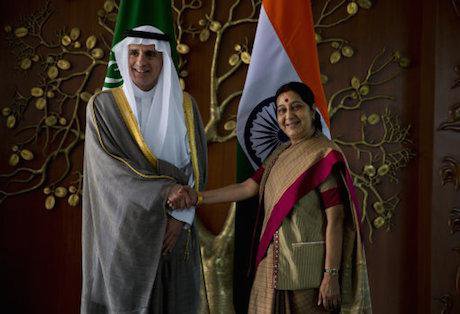
Saudi Arabia and India have signed a Memorandum of Understanding (MoU) to jointly explore the potential of establishing a transnational electricity grid. The agreement, signed between Saudi Energy Minister Prince Abdulaziz bin Salman and India’s Power Minister Raj Kumar Singh, represents a significant step towards energy collaboration, aligning with both nations’ ambitions to foster energy security, reduce emissions, and support the production of green hydrogen. This MoU was formalized during the Middle East and North Africa Climate Week in Riyadh, a platform that convened leaders to discuss sustainability and climate action.

The agreement outlines plans for technical and economic feasibility studies to assess the viability of cross-border power connectivity. Officials from both sides have expressed optimism about the project’s potential, which would facilitate the exchange of electricity during peak periods and in emergencies. The grid is expected to allow for efficient electricity trade between the two nations, leveraging renewable energy sources to stabilize their respective grids and reduce reliance on fossil fuels. This partnership comes amid broader efforts by both governments to prioritize sustainable energy and manage peak energy demands through enhanced interconnectivity.

In addition to the grid, Saudi Arabia and India agreed to explore opportunities in green hydrogen production, aiming to establish robust supply chains for materials essential to the renewable energy industry. These initiatives will rely on both countries’ natural resources and technological capabilities. India, with its extensive renewable energy infrastructure, and Saudi Arabia, with its abundant solar energy potential, are seen as complementary partners in this endeavor.

HONG KONG SAR – Media OutReach Newswire – 1 November 2024 – Paul Chan, Financial Secretary of the Hong Kong Special Administrative Region Government, wrapped up his Middle East visit (October 31) by meeting top officials in Saudi Arabia, witnessing the signing of various bilateral memoranda of understanding (MoUs) and delivering a keynote speech at the “Future Investment Initiative” (FII). Hong Kong’s Financial Secretary, Paul Chan, speaks […]

Hassana Investment Company, the investment arm of the Saudi Public Pension Agency, is set to invest $2 billion in Brookfield Asset Management’s new Middle East-focused fund. This partnership is part of a broader strategy to enhance investment opportunities in the region, signaling significant confidence in Brookfield’s capabilities to generate returns through diversified investments. The fund aims to capitalize on growing infrastructure and real estate needs within the […]

ADVERTISEMENT

Saudi Arabia’s Public Investment Fund (PIF) has formalized its strategic collaboration with a leading Japanese financial institution through a series of memoranda of understanding (MoUs) potentially valued at up to $51 billion. This initiative aims to bolster investment opportunities and foster economic ties between the two nations, aligning with Saudi Arabia’s Vision 2030 agenda focused on economic diversification and sustainability.

The agreements underscore a growing trend of international partnerships that enhance the PIF’s global footprint. The MoUs cover a wide range of sectors, including technology, renewable energy, infrastructure, and entertainment. This move marks a significant step in PIF’s ongoing strategy to attract foreign investment while enabling Japanese companies to tap into Saudi Arabia’s burgeoning market.

The Japanese bank involved in the MoUs, a prominent player in the global financial landscape, has expressed commitment to collaborating on various projects that support Saudi Arabia’s long-term development goals. By leveraging Japan’s advanced technological expertise and experience in sustainable practices, the partnership aims to introduce innovative solutions to address pressing challenges in the Kingdom, particularly in areas such as clean energy and urban development.

Recent developments in the energy sector highlight a growing emphasis on sustainability. The PIF has been increasingly focused on renewable energy initiatives, with significant investments in solar and wind projects. This new partnership with the Japanese bank is expected to further accelerate these efforts, allowing for the exchange of knowledge and technology that can enhance the Kingdom’s energy landscape.

The PIF’s collaboration with Japanese entities is seen as a response to global shifts towards sustainability. As countries strive to meet their climate commitments, Saudi Arabia’s ability to innovate in green technology and invest in clean energy becomes paramount. The partnership aims to support Saudi Arabia’s ambitious goals of generating 50% of its power from renewable sources by 2030.

The PIF’s strategy aligns with the global trend of sovereign wealth funds diversifying their portfolios and seeking international partnerships to mitigate risks. This initiative illustrates the PIF’s commitment to building a resilient investment ecosystem that can withstand market fluctuations while promoting sustainable growth. By partnering with established international financial institutions, the PIF can leverage their expertise to enhance its investment strategies.

The collaboration is also a testament to Japan’s keen interest in participating in the Saudi market. Japanese companies have been increasingly exploring opportunities in the Kingdom, particularly in sectors like infrastructure and technology. The MoUs are expected to facilitate the entry of more Japanese firms into Saudi Arabia, potentially leading to the creation of jobs and the transfer of skills and technology.

Analysts view this partnership as a positive step for both nations. For Saudi Arabia, it presents an opportunity to diversify its economy and reduce dependence on oil revenues. For Japan, the collaboration allows access to one of the fastest-growing markets in the Middle East. The partnership aligns with Japan’s broader strategy of engaging with the Gulf Cooperation Council (GCC) nations to enhance trade relations and secure energy supplies.

As the world grapples with the impacts of climate change, the focus on renewable energy is becoming increasingly critical. The PIF’s proactive approach in collaborating with Japanese entities reflects its recognition of the importance of sustainable development. By investing in green technologies, Saudi Arabia positions itself as a leader in the global energy transition, attracting further investment and interest from international markets.

The partnership is expected to yield significant economic benefits for both countries. The infusion of Japanese capital and expertise into Saudi Arabia’s projects could lead to improved infrastructure, enhanced technological capabilities, and increased job creation. This, in turn, could stimulate economic growth and elevate the standard of living for many Saudis.

The PIF’s collaboration with the Japanese bank comes at a time when Saudi Arabia is actively seeking to enhance its global investment strategy. The PIF has set ambitious targets to grow its assets under management to over $2 trillion by 2030, focusing on sectors that align with the Kingdom’s long-term vision. The partnership with Japan is a strategic move in this direction, providing the PIF with the necessary tools and expertise to navigate the complexities of global markets.

RIYADH, SAUDI ARABIA – Media OutReach Newswire – 31 October 2024 – Madar is proud to announce its certification as a Best Places to Work for 2024, a recognition that highlights the company’s unwavering commitment to fostering an inclusive, collaborative, and innovative work environment. This certification is based on the feedback provided by employees and a comprehensive HR assessment. This prestigious recognition underscores Madar’s dedication to building […]

HONG KONG SAR – Media OutReach Newswire – 31 October 2024 – Paul Chan, Financial Secretary of the Hong Kong Special Administrative Region (HKSAR) Government, is visiting Saudi Arabia to attend the FII (Future Investment Initiative) and strengthen the HKSAR’s connections with the country and the wider Middle East region. Hong Kong’s Financial Secretary, Paul Chan, speaking during his visit in Saudi Arabia. In Riyadh (October 30), […]

Saudi Arabia’s ACWA Power has made a significant leap in the renewable energy sector by securing deals worth over $1.78 billion, aimed at bolstering its portfolio in renewable energy and battery storage projects. These agreements come as part of the company’s strategy to enhance its presence in the sustainable energy market and contribute to the Kingdom’s ambitious Vision 2030 initiative, which seeks to diversify its energy sources […]

Investcorp, a global alternative investment powerhouse with a strong presence in the Gulf, has formalized a strategic partnership with Awaed, Saudi Arabia’s pioneering commission-free trading platform. This move underscores Investcorp’s continued expansion in the Middle East’s fintech sector, aligning with Saudi Arabia’s Vision 2030, which aims to diversify the nation’s economy by promoting non-oil industries, including financial technology.

The collaboration with Awaed is positioned to provide Awaed’s growing user base access to Investcorp’s recently launched Saudi Pre-IPO Growth Fund. The fund, which Investcorp launched to help promising Saudi enterprises prepare for public offerings, aims to bridge international capital with local businesses ready for substantial growth. According to sources familiar with the development, this fund will allow Awaed users to engage in pre-IPO investments, an option typically reserved for high-net-worth and institutional investors. This democratization of access to Investcorp’s fund represents a new frontier for retail investors, who now have an unprecedented opportunity to back burgeoning companies within Saudi Arabia’s rapidly transforming economy.

Established in 2021, Awaed is Saudi Arabia’s first platform to offer commission-free trading and has seen swift adoption among Saudi nationals seeking affordable, accessible investment solutions. This partnership marks a significant step for Investcorp as it becomes one of the few global asset managers to embrace a fintech-focused partnership model in the Kingdom. By aligning with Awaed, Investcorp aims to tap into Saudi Arabia’s youthful, tech-savvy population, many of whom are increasingly exploring investment options beyond traditional asset classes. The collaboration reflects a deepening trend where global asset managers are seeking ways to engage with the rapidly evolving financial landscape across the Gulf Cooperation Council (GCC) region.

Investcorp’s strategy behind the partnership aligns closely with its broader investment narrative in the GCC and Asia. The company recently announced a $1 billion platform, supported by the China Investment Corporation (CIC), to stimulate cross-border investments between China and GCC nations, including Saudi Arabia. This initiative highlights Investcorp’s commitment to facilitating global capital flows that foster economic growth within and beyond the Gulf region.

Hazem Ben-Gacem, Co-CEO of Investcorp, has previously expressed that the company views the GCC as a critical growth hub. With an established 40-year legacy across asset classes, Investcorp sees this latest partnership as an extension of its long-standing relationship with the region. The move to support retail investors through Awaed signals a shift in Investcorp’s approach, as the asset manager traditionally focused on high-net-worth and institutional clients. This partnership not only amplifies Investcorp’s influence in the local market but also strengthens its position as a key player in Saudi Arabia’s emerging fintech sector.

The timing of Investcorp’s collaboration with Awaed coincides with increased government and private sector support for the fintech ecosystem in Saudi Arabia. The Saudi Central Bank and the Capital Market Authority have both been active in implementing regulatory frameworks that encourage innovation while ensuring consumer protection. This regulatory backing has enabled companies like Awaed to flourish, as seen in the company’s rapid user adoption since its launch.

Looking ahead, the partnership’s implications for Saudi Arabia’s investment landscape are substantial. By enabling access to pre-IPO opportunities, Investcorp and Awaed are positioning themselves at the forefront of a shift where retail investors become active participants in wealth creation through high-growth local companies. This arrangement could also stimulate further investment interest among global asset managers eyeing the GCC as a burgeoning market ripe with opportunities in sectors such as fintech, real estate, and logistics.

Foreign direct investment (FDI) in the United Arab Emirates reached a landmark $16 billion in 2023, marking a robust 37% increase in greenfield projects from the prior year. This notable surge, amid ongoing global economic challenges, underscores the UAE’s strategic appeal as a premier investment destination in sectors ranging from renewable energy to high-tech manufacturing and healthcare. Global uncertainties have challenged capital flows worldwide, with the UAE […]

VISHNU RAJA
RYO YAMADA
HITORI GOTOH
IKUYO KITA
Social Media Auto Publish Powered By : XYZScripts.com