News related to
Saudi

Dubai Residential REIT’s debut on the Dubai Financial Market marked a significant milestone, closing nearly 14% higher at AED 1.25 per unit from its offer price of AED 1.10. The $584 million offering, backed by Dubai Holding, attracted overwhelming demand, with the IPO oversubscribed 26 times, reflecting strong investor confidence in Dubai’s residential real estate sector. The REIT, focusing exclusively on residential leasing, launched with a market […]

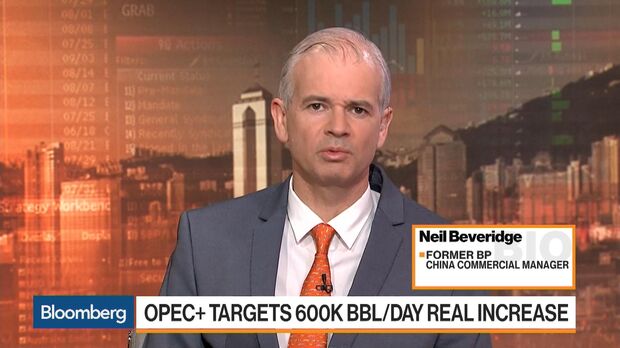
Prince Abdulaziz bin Salman’s tenure as Saudi Arabia’s energy minister has marked a decisive shift in OPEC+ dynamics, culminating in a significant production decision that underscores Riyadh’s growing influence within the cartel. The latest OPEC+ meeting saw Saudi Arabia successfully advocate for a third consecutive super-sized monthly output increase, a move that has reshaped the alliance’s approach to oil supply management despite opposition from key players such as Russia.

Since assuming office six years ago, Prince Abdulaziz has positioned Saudi Arabia as a firm leader within OPEC+, emphasising discipline and adherence to agreed production quotas. This approach contrasts with the historically more conciliatory stance the kingdom sometimes took within the cartel. The current strategy reflects a broader ambition to reclaim market share lost to non-compliant members and emerging producers outside the alliance’s remit.

The decision to boost output again—by approximately 500,000 barrels per day—signals a willingness to absorb short-term price volatility in favour of longer-term market dominance. Riyadh’s strategy appears geared towards punishing those within OPEC+ who have routinely exceeded their quotas, thereby undermining the cartel’s collective efforts to control supply and sustain prices. Saudi Arabia’s emphasis on stringent compliance aims to reinforce OPEC+ cohesion, even at the risk of dampening crude prices temporarily.

Russia’s resistance to the output increase highlighted fissures within OPEC+ as Moscow has consistently advocated a more cautious production approach, citing concerns over oversupply and the fragility of global demand recovery. Russia’s stance reflects a balancing act between maximising revenue and preserving the alliance’s unity. However, Saudi Arabia’s assertiveness in pushing the hike through demonstrates Riyadh’s readiness to leverage its dominant production capacity and market position to set the cartel’s agenda.

Global oil markets responded to the output hike by seeing a downward adjustment in prices, reflecting the increased supply entering the market. This shift contrasts with the supply restraint policies of previous years, which had been instrumental in stabilising prices amid fluctuating demand and geopolitical uncertainty. Market analysts note that the Saudi-led increase could signal a new phase in OPEC+ policy, one in which Riyadh is prioritising market share recovery over price support.

The broader context of this development involves multiple factors. The energy transition and climate policies worldwide have added pressure on oil producers, particularly those heavily reliant on hydrocarbons. Saudi Arabia’s move suggests a pragmatic response to these challenges, aiming to maximise current revenues while investing in diversification strategies such as renewable energy and petrochemicals.

The kingdom’s position as the de facto swing producer within OPEC+ gives it substantial leverage. Saudi Arabia can modulate output to influence global prices, a power that has been increasingly evident under Prince Abdulaziz’s stewardship. The kingdom’s vast spare capacity and low production costs enable it to sustain output increases that smaller or higher-cost producers cannot match.

The decision also reflects Saudi Arabia’s geopolitical considerations. Energy policy remains a critical tool of regional influence and international diplomacy. By asserting control over OPEC+ production decisions, Riyadh reinforces its leadership role not only within the cartel but also in broader energy markets, which remain pivotal to global economic stability.

The internal dynamics of OPEC+ have evolved since the alliance’s formation in 2016. Initially established to coordinate between OPEC members and major non-OPEC producers like Russia, the group has faced ongoing challenges balancing competing national interests. Saudi Arabia’s push for discipline and market share signals a new era where Riyadh asserts a more centralised command, even if that risks tensions with key allies.

The output increase also responds to market signals, including stronger oil demand forecasts and inventory levels that have stabilised. By expanding supply, Saudi Arabia aims to pre-empt supply shortages that could push prices beyond levels palatable to consuming nations and industries. This approach seeks to sustain demand growth by ensuring adequate supply and avoiding disruptive price spikes.

Critics argue that the output hike risks destabilising markets by flooding them with excess supply amid uncertainties in global economic growth, inflation, and energy transition timelines. They caution that prolonged lower prices could undermine investment in the oil sector, affecting long-term supply security. However, proponents view Saudi Arabia’s move as a necessary recalibration to reinforce market order and assert control over a fragmented supply landscape.

The ripple effects of the Saudi-led decision extend beyond OPEC+ members. Non-OPEC producers, including the United States shale industry, watch closely as changes in cartel policy impact global price signals and investment decisions. The output hike could influence the pace and scale of shale production, which remains a significant factor in global supply dynamics.

As the alliance navigates these complexities, Saudi Arabia’s approach under Prince Abdulaziz bin Salman sets a clear tone of leadership and strategic resolve. The kingdom’s readiness to push through output increases despite opposition illustrates its confidence in wielding its production capacity as a geopolitical and economic tool.

This assertive posture aligns with Saudi Arabia’s broader economic vision, including the ambitious Vision 2030 plan to diversify its economy and reduce dependence on oil revenues. Managing oil production to balance market share and price stability forms a critical part of this strategy, enabling the kingdom to finance diversification projects and maintain fiscal stability.


Saudi Aramco has successfully raised $5 billion through a three-part dollar-denominated bond issuance, marking its return to the international debt market. The offering comprises five-year, ten-year, and thirty-year tranches, with the longest maturity attracting nearly half of the total proceeds.

The 30-year tranche, amounting to approximately $2.5 billion, was priced at a spread of 185 basis points over U.S. Treasuries, reflecting strong investor demand despite prevailing market uncertainties. The five-year and ten-year tranches were priced at spreads of 80 and 130 basis points over Treasuries, respectively. These tighter spreads indicate robust confidence in Aramco’s creditworthiness and the broader appeal of long-dated corporate debt.

Aramco’s bond sale comes amid a backdrop of heightened volatility in the U.S. Treasury market, with 30-year yields fluctuating due to concerns over fiscal policy and rising national debt. Despite these challenges, investors have shown a keen interest in long-term corporate bonds, as evidenced by similar issuances from Alphabet, Siemens, and Snam, which have also been well-received.

The success of Aramco’s bond offering underscores a broader trend where investors are seeking higher yields through long-duration corporate debt, even as government bond yields remain volatile. This shift is partly driven by the search for stable returns in a low-interest-rate environment and concerns over inflation and fiscal sustainability.

Aramco’s move aligns with its strategic objectives under Saudi Arabia’s Vision 2030 plan, aiming to diversify the kingdom’s economy beyond oil. The funds raised are expected to support Aramco’s international expansion and investment in non-oil sectors, reinforcing its commitment to long-term growth and diversification.

The bond issuance also reflects Aramco’s proactive approach to capital management, leveraging favourable market conditions to secure funding at competitive rates. By tapping into the global debt market, Aramco demonstrates its financial resilience and adaptability in navigating complex economic landscapes.

Passenger traffic across the Middle East is projected to reach 530 million by 2043, doubling from current levels, according to forecasts presented at the International Air Transport Association Annual General Meeting held in Dubai. This growth represents an average annual increase of 3.9% over the two-decade period from 2023 to 2043, slightly outpacing the global average of 3.8%.

Kamil Al Awadhi, IATA’s Regional Vice President for Africa and the Middle East, highlighted the region’s strategic geographic position and robust infrastructure investments as key drivers of this anticipated growth. He noted that Middle Eastern carriers have fully recovered from the pandemic-induced downturn, with cargo performance also showing a 6.4% increase as of April 2024.

The surge in passenger numbers is underpinned by significant investments in airport infrastructure across the region. Dubai has initiated the expansion of Al Maktoum International Airport, with plans to accommodate up to 260 million passengers annually upon completion, positioning it as the world’s largest airport. In Abu Dhabi, a new terminal commenced operations in November, enhancing the capital’s capacity to handle increased traffic. Qatar continues to expand Hamad International Airport in Doha, while Saudi Arabia has launched Riyadh Air and announced the development of a new terminal in Riyadh with a capacity for 120 million passengers annually.

These developments are complemented by the region’s efforts to diversify economies and reduce reliance on oil revenues. Saudi Arabia’s Vision 2030 initiative, for instance, emphasizes tourism and infrastructure development, with the Red Sea International Airport beginning operations in September 2023 to serve the burgeoning tourism sector.

The Middle East’s role as a global aviation hub is further reinforced by its proximity to emerging markets in South Asia and Africa. This strategic location allows airlines to offer efficient connectivity between East and West, capitalizing on the growing demand for air travel in these regions.

Industry analysts suggest that the anticipated growth will necessitate a corresponding increase in fleet size and workforce. Airlines are expected to place substantial orders for new aircraft to meet demand, while also investing in training programs to ensure a skilled workforce capable of supporting expanded operations.

Environmental considerations remain a focal point, with IATA members committed to achieving carbon-neutral growth from 2020 and a 50% reduction in net aviation carbon emissions by 2050 relative to 2005 levels. Airlines in the region are exploring sustainable aviation fuels and more efficient aircraft to align with these goals.

ADVERTISEMENT

Saudi Aramco has filed a new prospectus for an Islamic bond issuance programme, indicating a potential return to the debt markets following a $5 billion conventional bond sale earlier this week. The prospectus, dated 30 May, was submitted to the London Stock Exchange, where the sukuk would be listed. Under its terms, Aramco has a year to issue the Islamic bonds. This move comes as the company […]

OPEC+ is poised to consider a more substantial oil production increase for July than the previously agreed 411,000 barrels per day , according to sources familiar with the group’s deliberations. The move reflects escalating internal tensions and strategic manoeuvring within the alliance. Eight member countries have been accelerating output beyond initial plans, a strategy reportedly orchestrated by Saudi Arabia and Russia to discipline non-compliant allies and reclaim […]

Advertisements
ADVERTISEMENT

Saudi Arabia’s sovereign wealth fund, the Public Investment Fund , is evaluating an initial public offering for its wholly-owned technology arm, Saudi Information Technology Company , as part of broader efforts to bolster the kingdom’s economic diversification strategy. According to individuals familiar with the matter, PIF has approached investment banks to submit proposals for roles in a potential share sale of SITE. The discussions are in preliminary […]

Saudi Aramco has secured $5 billion through a three-part bond sale, signalling its commitment to leveraging debt markets to sustain growth and maintain financial stability amidst declining oil revenues. The bond issuance, comprising five-, ten-, and thirty-year tranches, attracted strong investor interest, with spreads tightening significantly from initial guidance, reflecting confidence in the company’s creditworthiness despite a challenging energy market landscape. The bond sale follows a 4.6% […]

OPEC and its allies, collectively known as OPEC+, have reaffirmed their existing oil production targets through 2026, opting to maintain current supply restraints despite ongoing market volatility and internal disagreements over future quotas.

During a virtual ministerial meeting on Wednesday, the 22-member alliance confirmed that the group-wide production cuts, initially set in 2022, will remain in place. These cuts include a 2 million barrels per day reduction agreed upon in November 2022, along with additional voluntary cuts totaling 3.85 million bpd by eight key producers—Saudi Arabia, Russia, the United Arab Emirates, Kuwait, Iraq, Algeria, Oman, and Kazakhstan. The voluntary cuts are structured in two layers: a 1.65 million bpd reduction extended through the end of 2026 and a 2.2 million bpd cut scheduled to expire in March 2025.

The alliance’s decision to uphold these targets comes amid a backdrop of fluctuating oil prices and concerns over global demand. Brent crude futures have hovered around $65 per barrel, a significant drop from earlier highs, influenced by factors such as increased production from non-OPEC countries and economic uncertainties stemming from global trade tensions.

A more contentious discussion is set to take place on Saturday, when the eight core OPEC+ members implementing voluntary cuts will convene to decide on July production levels. These countries have been gradually unwinding the 2.2 million bpd cut since April, with increases of 411,000 bpd implemented in both May and June. The group is expected to consider a similar hike for July, potentially accelerating the rollback of cuts and impacting global oil supply dynamics.

ADVERTISEMENT

Moscow and its surrounding regions experienced one of the most extensive aerial assaults since the onset of the conflict, as Russia’s Defence Ministry reported intercepting 337 Ukrainian drones overnight. The attack resulted in at least three fatalities and significant disruptions across multiple sectors. Russian authorities confirmed that 91 drones were downed over the Moscow region, with 74 of these intercepted as they approached the capital. The remaining […]

Dr Akinwumi Adesina, nearing the conclusion of his decade-long presidency at the African Development Bank , has called upon his successor to prioritise Africa’s financial sovereignty and ensure the continent’s interests are robustly defended on the global stage. This appeal comes as the AfDB prepares to elect a new leader during its annual meeting in Abidjan, Côte d’Ivoire, on 29 May. The incoming president will assume office […]

Saudi Arabia Railways has expanded the capacity of the Haramain High-Speed Railway to accommodate over two million pilgrims during the 1446 AH Hajj season, marking a 25% increase from the previous year. This enhancement translates to an additional 400,000 seats, aiming to streamline pilgrim transportation between the holy cities of Mecca and Medina.

The operational plan encompasses 4,768 train trips across the 453-kilometre electrified corridor, connecting Mecca, Medina, Jeddah, King Abdulaziz International Airport, and King Abdullah Economic City. Each of the 35 high-speed trains can reach speeds up to 300 km/h and accommodates 417 passengers, facilitating swift and efficient travel for pilgrims.

A notable feature of the Haramain Railway is its integration with King Abdulaziz International Airport, allowing arriving pilgrims to transfer directly from air to rail without exiting the airport premises. This seamless connectivity underscores the Kingdom’s commitment to enhancing the pilgrimage experience through infrastructural advancements.

In collaboration with other government agencies, SAR continues the ‘Hajj Without a Baggage’ initiative for the second consecutive year. This program ensures that pilgrims’ luggage is transported directly from their departure airports to their accommodations in Mecca, enabling them to travel unencumbered on the Haramain Railway.

The expansion of the Haramain High-Speed Railway aligns with Saudi Arabia’s Vision 2030, which emphasizes the development of sustainable and efficient transportation infrastructure. By increasing the railway’s capacity and integrating advanced logistical solutions, the Kingdom aims to provide a safer and more comfortable pilgrimage experience for millions of worshippers.

Over 6,000 delegates from 81 countries convened in Abidjan on Monday as the African Development Bank commenced its 2025 Annual Meetings, focusing on strategies to harness Africa’s capital for sustainable development. The five-day event, held at the Sofitel Abidjan Hotel Ivoire, is set to culminate in the election of a new president to succeed Dr. Akinwumi Adesina, whose decade-long tenure concludes in September. The summit’s theme, “Making […]

ADVERTISEMENT

Saudi Arabia’s premier travel company, Almosafer, has been appointed the first global travel agency partner of Hotel Management Company Adeera, a firm backed by the Public Investment Fund . The partnership is designed to bolster the Kingdom’s hospitality sector by integrating Adeera’s hotel brands into Almosafer’s expansive travel platforms, targeting both domestic and international travellers.

This collaboration aligns with Saudi Arabia’s Vision 2030, aiming to diversify the economy and enhance the tourism industry. By leveraging Almosafer’s digital reach and Adeera’s commitment to authentic Saudi hospitality, the alliance seeks to offer seamless booking experiences and promote the Kingdom’s cultural heritage to a global audience.

Muzzammil Ahussain, CEO of Almosafer, emphasized the significance of the partnership, stating, “Our expansive digital reach and integrated platforms make us the perfect partner to showcase PIF company Adeera’s authentic Saudi hospitality brand and services to the world.” He highlighted the goal of connecting travellers to the unique culture and heritage of Saudi Arabia through this initiative.

Stefan Leser, CEO of Adeera, echoed this sentiment, noting, “Saudi Arabia’s unique hospitality culture is an essential part of its identity and integral to the Kingdom’s ambitious tourism goals.” He expressed confidence that the partnership with Almosafer would further connect tourists to authentic Saudi hospitality that reflects the Kingdom’s unique culture.

Adeera, established by the PIF, aims to develop and manage hotel brands that embody Saudi Arabia’s rich hospitality traditions while adhering to global standards. The company focuses on creating homegrown hospitality brands and enhancing the capacity of the local sector through training and skills development programs in collaboration with international hospitality specialists.

Almosafer, a part of Seera Group, operates a comprehensive travel platform catering to various sectors, including consumer, corporate, and government travel. The company’s portfolio includes services for leisure and religious travel, offering a range of travel solutions from flight bookings to hotel reservations and local activities.

The partnership between Almosafer and Adeera is expected to play a pivotal role in promoting Saudi Arabia as a premier travel destination. By integrating Adeera’s hospitality offerings into Almosafer’s platforms, the collaboration aims to provide travellers with access to top-tier Saudi Arabian hospitality experiences.

The African Development Bank is convening in Abidjan, Côte d’Ivoire, this week to elect a new president, as the institution confronts significant financial pressures following proposed reductions in U.S. contributions. The U.S. government’s plan to decrease its support to the AfDB and its African Development Fund by $555 million presents a substantial challenge for the incoming president. The successor to President Akinwumi Adesina, who concludes his tenure […]

NesmaKent Energy Company , the joint venture between Saudi Arabia’s Nesma & Partners and the international engineering firm Kent, has secured a significant project management consultancy contract with Saudi Aramco. This contract marks a milestone for NKJV, positioning the partnership as a crucial player in the kingdom’s energy infrastructure development amid expanding ambitions in the energy sector.

The PMC contract involves comprehensive project oversight and management services for one of Saudi Aramco’s large-scale energy initiatives. NKJV’s responsibilities will span across planning, execution monitoring, quality control, cost management, and ensuring adherence to safety and environmental standards. This contract is part of Aramco’s broader strategy to engage specialised joint ventures that combine local expertise with international engineering standards, reinforcing Saudi Arabia’s Vision 2030 objectives to diversify and modernise its energy sector.

Nesma & Partners, well-established for its construction and engineering projects within the kingdom and region, has brought extensive local market knowledge and regulatory experience to the partnership. Kent, recognised for its global engineering and project consultancy portfolio, contributes advanced technical capabilities and international project management best practices. Together, the joint venture is expected to deliver high-quality consultancy services that meet Aramco’s stringent operational and environmental benchmarks.

The contract signals the growing trend among Saudi energy entities to engage collaborative partnerships that marry domestic strengths with foreign technological expertise. This aligns with the kingdom’s policy to increase localisation and private sector participation in mega projects. NKJV’s role as a PMC will extend beyond traditional supervisory functions, encompassing risk mitigation, technical advisory, and integration of innovative engineering solutions aimed at optimising project delivery and operational efficiency.

Saudi Aramco’s selection of NKJV follows a competitive tender process where multiple firms vied for the contract. The award underscores Aramco’s confidence in NKJV’s combined capabilities and track record. The project itself forms part of a wider portfolio of energy infrastructure investments by Aramco, which include enhancements in oil production facilities, downstream expansions, and renewable energy projects as the company transitions towards sustainable energy sources.

NesmaKent Energy’s contract exemplifies the shifting dynamics within the Saudi energy sector, where engineering consultancy and project management are gaining prominence as critical factors in successful project execution. The emphasis on specialised joint ventures highlights the kingdom’s commitment to leveraging cross-border partnerships to accelerate technological transfer and capacity building.

Industry experts note that the contract reinforces the strategic positioning of Nesma & Partners and Kent in the Middle East’s energy market. Nesma’s long-standing presence in Saudi Arabia has enabled it to navigate complex regulatory environments and develop robust relationships with government entities and private sector clients. Kent’s engineering pedigree, with a portfolio spanning oil and gas, petrochemicals, and infrastructure, complements Nesma’s regional experience with global standards.

The joint venture’s involvement in this Aramco project is expected to generate significant employment opportunities and skill development programmes in line with Saudi Arabia’s localisation agenda, known as Saudisation. NKJV plans to incorporate training modules and knowledge transfer frameworks to build local competencies in project management and engineering consultancy.

The energy project under NKJV’s management consultancy contract is critical to Aramco’s operational goals, encompassing upgrades to production capacity and the integration of advanced monitoring and control technologies. These developments are part of Aramco’s efforts to maintain its position as the world’s leading energy producer while adapting to evolving global energy demands and environmental regulations.

The scope of NKJV’s mandate also includes coordinating with multiple contractors, subcontractors, and regulatory bodies to ensure seamless execution. This requires a high level of technical expertise, project coordination skills, and compliance with international safety and quality certifications. NKJV’s approach reportedly emphasises sustainability and innovation, incorporating digital tools such as Building Information Modelling and real-time project analytics to enhance transparency and decision-making.

As Saudi Arabia intensifies its focus on energy diversification, including the expansion of renewable energy projects alongside traditional hydrocarbon investments, the expertise of joint ventures like NKJV will be crucial. Their ability to deliver complex projects efficiently and within budget will be pivotal in meeting the kingdom’s long-term strategic targets.

NesmaKent Energy’s success in securing this contract may open doors for further collaborations between Saudi and international firms in the energy consultancy sector. This contract reflects a broader trend of joint ventures becoming key conduits for technology transfer and knowledge exchange in the Gulf’s infrastructure and energy projects.

ADVERTISEMENT

Saudi Aramco is exploring asset sales to bolster its balance sheet as it navigates declining oil revenues and intensifies its international expansion efforts. The state-owned oil giant has engaged investment banks to propose strategies for monetising its assets, according to individuals familiar with the matter. While specific assets and banks involved remain undisclosed, the move underscores Aramco’s proactive approach to financial management amid market challenges.

The company’s net income fell by 12% to $106.2 billion in 2024, down from $121.3 billion the previous year, primarily due to lower oil prices and reduced production volumes. Consequently, Aramco plans to cut its total dividend payout by nearly a third in 2025, distributing $85.4 billion compared to $124 billion in 2024. This reduction is expected to impact Saudi Arabia’s budget, which heavily relies on Aramco’s dividends to fund its Vision 2030 economic diversification initiative.

In response to these financial pressures, Aramco is actively seeking investors for infrastructure assets in its $100 billion Jafurah gas project, aiming to become a major global natural gas player. The company intends to maintain majority ownership and operational control while attracting external investments to support development. This strategy follows previous deals, including nearly $28 billion raised in 2021 through selling 49% stakes in its oil and gas pipeline subsidiaries.

Aramco’s international expansion includes signing preliminary agreements with U.S. companies valued at up to $90 billion, encompassing sectors such as liquefied natural gas, artificial intelligence, and technology. Key deals involve a 20-year LNG purchase agreement with NextDecade’s Rio Grande LNG export project in Texas and collaborations with ExxonMobil to upgrade the Samref refinery in Saudi Arabia. Additionally, Aramco is in discussions to invest in two new refineries in India, seeking stable markets for its crude amidst increased competition from cheaper sources like Russia.

Despite the dividend cut, Aramco plans capital investments between $52 billion and $58 billion in 2025, focusing on expanding its gas capabilities and integrating its upstream and downstream businesses. The company expects potential operating cash flows of $9 billion to $10 billion from growth in its upstream gas business and $8 billion to $10 billion from its downstream business by 2030.

Aramco’s financial adjustments come amid a broader context of declining oil prices, with Brent crude trading around $70 a barrel, down from approximately $100 three years ago. The company’s performance-linked dividend has seen a significant reduction, reflecting broader struggles in the oil industry. Analysts suggest that Aramco may need to tap into debt markets to finance its dividend and capital expenditure commitments if oil prices remain subdued.

HONG KONG SAR – Media OutReach Newswire – 24 May 2025 – Chief Executive of the Hong Kong Special Administrative Region (HKSAR), John Lee, hailed as a “success” his recent visit to the Middle East (May 10-15), where he led a delegation of more than 50 business leaders and entrepreneurs from Hong Kong and Mainland China on a visit to Qatar and Kuwait. “This Middle East visit […]

Over 25,000 professionals from more than 30 countries convened at the Riyadh Front Exhibition & Conference Center between 20 and 22 May for the Saudi Entertainment and Amusement Expo and the Saudi Light & Sound Expo. The events featured over 550 exhibitors, highlighting Saudi Arabia’s commitment to transforming its entertainment sector in line with Vision 2030. Sarkis Kahwajian, Associate Vice President at dmg events, the organiser of […]

The Saudi Entertainment and Amusement Expo and the Saudi Light & Sound Expo concluded on 22 May at the Riyadh Front Exhibition & Conference Center, drawing over 25,000 industry professionals and more than 550 exhibitors from over 30 countries. The events underscored Saudi Arabia’s commitment to transforming its entertainment landscape in alignment with Vision 2030. Sarkis Kahwajian, Associate Vice President at dmg events, the organiser of both […]

New York-based consulting firm Elevate has acquired RISE Group, a marketing and commercial services consultancy headquartered in Riyadh and Dubai. The acquisition, for an undisclosed amount, is pending customary regulatory approvals. This move marks Elevate’s strategic entry into the Middle East and North Africa region, aiming to capitalise on the burgeoning sports and entertainment sectors. As part of the agreement, RISE co-founders Seth Holmes and Tom Berrington […]

Gulf nations are intensifying their investments in global sports, strategically deploying sovereign wealth funds to diversify economies and enhance international standing. Saudi Arabia, the United Arab Emirates , and Qatar are at the forefront of this movement, each utilising sports as a vehicle for economic diversification and soft power projection. Saudi Arabia’s Public Investment Fund , managing assets exceeding $700 billion, has acquired significant stakes in domestic […]

Matein Khalid While I never ​ever found diamonds in any coal mine, the truth is​ I never looked since I never really believed that De Beers/James Bond propaganda that diamonds are forever. In fact, my ​i​ndustry sixth sense​ tells me that diamonds are forever – worthless. I guess, my only investment in diamonds was a romantic one when I proposed to my then GF and now proud […]

VISHNU RAJA
RYO YAMADA
HITORI GOTOH
IKUYO KITA
Social Media Auto Publish Powered By : XYZScripts.com