News related to
Saudi

The United States and Saudi Arabia are preparing to sign a preliminary agreement to collaborate on the development of a civil nuclear industry in the Kingdom. This marks a significant step in the two countries’ ongoing energy partnership, reflecting shared interests in enhancing the security and sustainability of global energy resources.

US Energy Secretary Chris Wright, addressing reporters in Riyadh, confirmed the impending deal, which is set to open a new chapter in Saudi Arabia’s ambitions to develop its own nuclear energy sector. The announcement comes amid growing global demand for cleaner and more sustainable energy solutions. Wright’s comments emphasised the importance of this agreement in both supporting Saudi Arabia’s long-term energy goals and strengthening the bilateral ties between the two nations.

The move follows Saudi Arabia’s ambitious Vision 2030 initiative, a broad economic reform programme designed to diversify the country’s economy away from its heavy reliance on oil exports. Among its many facets, Vision 2030 aims to establish a robust nuclear energy sector that can generate significant portions of the country’s electricity, reducing its dependence on fossil fuels. This is crucial for the Kingdom as it seeks to address both domestic energy needs and environmental concerns.

Saudi Arabia has made significant strides in recent years towards the development of nuclear energy. In 2018, the country’s nuclear authorities announced plans to construct two nuclear reactors by 2030, as part of a broader strategy to introduce nuclear power as a reliable energy source. These efforts have garnered attention from global nuclear power experts and energy companies, particularly those from the US, Russia, and China, all of which are vying for a role in the development of the Saudi nuclear industry.

The United States’ involvement in this sector is not new. Over the past decade, American firms have been at the forefront of nuclear technology development, exporting their expertise in reactors, fuel production, and regulatory frameworks. Saudi Arabia’s decision to move forward with a preliminary agreement highlights the growing importance of collaboration with nuclear powers like the US to achieve these ambitious goals. Additionally, American support could help ensure that the Kingdom adheres to international nuclear safety standards, a crucial consideration in the nuclear energy field.

The potential partnership between the US and Saudi Arabia is a step forward in strengthening their long-standing relationship, which spans multiple areas including defence, trade, and energy. Saudi Arabia’s energy infrastructure, heavily dependent on oil, has been under increasing pressure to adapt to the changing global energy landscape. As the world moves towards more sustainable energy sources, Saudi Arabia aims to take advantage of nuclear energy’s potential to generate electricity without emitting the high levels of greenhouse gases associated with fossil fuel consumption.

For the United States, the deal also represents a strategic move to expand its influence in the Middle East’s evolving energy market. The US has long maintained strong energy ties with the Kingdom, but this agreement will further cement its role as a key partner in Saudi Arabia’s energy diversification plans. By providing expertise in the nuclear field, the US ensures that it will be a prominent player in shaping the future of Saudi Arabia’s energy sector.

Critics, however, have raised concerns about the environmental impact of nuclear energy, especially with the potential risks associated with radioactive waste disposal and reactor safety. Despite these concerns, both nations appear committed to ensuring that the nuclear technology used in Saudi Arabia meets the highest safety standards. The Kingdom’s regulatory bodies are expected to follow stringent international protocols, a key point of focus in the upcoming agreement.

In the broader context, this agreement comes at a time when nuclear energy is experiencing a resurgence globally, driven by the need for cleaner alternatives to fossil fuels. Countries like China and Russia have been aggressively advancing their own nuclear energy sectors, while nations in Europe and Asia are exploring similar initiatives. With the increasing demand for clean energy, Saudi Arabia’s foray into the nuclear power industry positions it as a potential leader in the region, with the ability to export energy solutions to neighbouring countries.

The US-Saudi nuclear cooperation deal also plays a part in the shifting dynamics of international geopolitics. The Middle East has long been a region of strategic importance, and energy remains a critical element in the geopolitical landscape. By fostering deeper cooperation with Saudi Arabia, the US further solidifies its influence in the region, while also promoting energy security for both countries.

Matein Khalid “We went eyeball to eyeball and the other guy blinked” – JFK said about Nikita Peasantovich Shoe Bangarov after Stalin’s henchman in the Red Terror back down in the Cuban missile crisis. Trump has gone eyeball to eyeball with the bond market and Xi Jinping but only the Dragon Empire’s Emperor for Life has blinked while the bond vigilantes have gone berserk in the netherworld […]

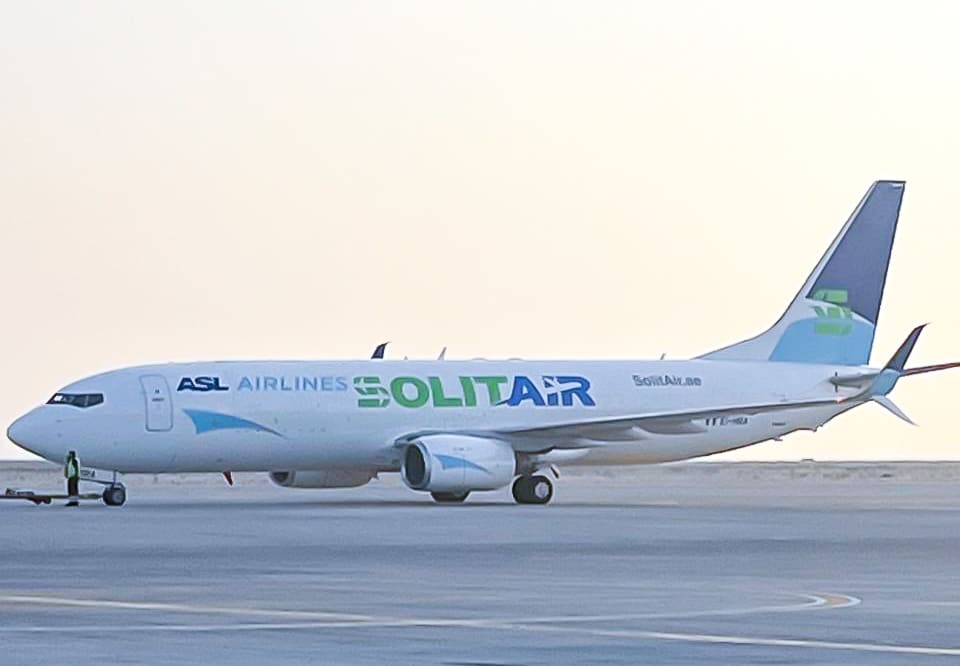
Dubai-based cargo airline SolitAir has secured its Air Operator Certificate from the United Arab Emirates’ General Civil Aviation Authority , marking a significant milestone in its operational expansion. The certification, issued under UAE Civil Aviation Regulations Part V, Chapter 4, authorises SolitAir to operate as a licensed air cargo carrier, following a rigorous evaluation of its operational, safety, and financial standards.

Headquartered at Dubai World Central , SolitAir specialises in middle-mile cargo services, connecting key logistics hubs across the Middle East, South Asia, and Central Asia. The airline’s fleet now comprises three Boeing 737-800 Boeing Converted Freighters —one of which is on a dry lease—and one Boeing 737-400 BCF. This expansion supports operations from its 220,000-square-foot logistics facility at DWC, enhancing its capacity to meet growing regional demand.

The AOC also facilitates SolitAir’s transition from chartered operations to in-house management of its aircraft. Notably, the airline has taken delivery of a 20-year-old Boeing 737-800 BCF, previously operated by carriers including Air India Express and TUI fly Germany. This aircraft, converted to a freighter in 2023, is currently undergoing maintenance in Sofia before entering service under SolitAir’s registry.

SolitAir’s operational strategy includes partnerships with ASL Airlines Ireland, from which it leases two additional Boeing 737-800 BCFs. These aircraft continue to operate under ASL’s ‘5H’ code, reflecting the collaborative nature of SolitAir’s fleet management approach.

The airline has initiated routes to Bangalore, India; Erbil, Iraq; and Riyadh, Saudi Arabia, aligning with its focus on underserved regional markets. Future plans involve expanding services to Africa, the Gulf Cooperation Council countries, the Indian subcontinent, and Central Asian nations, catering to integrators, freight forwarders, express operators, and e-commerce entities.

Saudi Arabia’s leading petrochemical firms are projected to report significant year-on-year declines in net profits for the first quarter of 2025, reflecting ongoing challenges in global demand, pricing pressures, and operational headwinds across the sector. Saudi Basic Industries Corporation , the kingdom’s flagship chemicals producer, is expected to post a 47% drop in net profit to SAR 130 million for Q1 2025, down from SAR 246 million […]

ADVERTISEMENT

Matein Khalid We are now living “ten days that shook the world” in real life, as John Reed did that fateful autumn long ago in Lenin’s shadow as the Bolshies stormed the Winter Palace in October 1917 before he was resurrected to begin his next life as the chairman/CEO of Citicorp in 1984. Is this just a magic realism joke? No. The fall of Tsar Nicki and […]

The Central Bank of the United Arab Emirates has officially granted Tap Payments a Retail Payment Services license, marking a significant advancement for the fintech company in the Middle East and North Africa region. This authorization enables Tap Payments to offer comprehensive payment solutions, including merchant acquiring, payment aggregation services, and domestic fund transfers within the UAE.

Established in 2014, Tap Payments has rapidly expanded its footprint across the MENA region, serving over 100,000 businesses in countries such as Saudi Arabia, Kuwait, Bahrain, Qatar, Oman, Egypt, Jordan, Lebanon, and the UAE. The company’s mission centers on simplifying online payments and fostering financial inclusion through innovative technology.

The acquisition of the UAE license aligns with Tap Payments’ strategic vision to unify and streamline payment processes across the region. This development is particularly timely, as the UAE’s e-commerce market is projected to reach $17 billion by 2025, reflecting a compound annual growth rate of 11%. The surge in digital transactions underscores the growing demand for secure and efficient payment solutions.

In addition to the UAE, Tap Payments has secured regulatory approvals in several other Gulf Cooperation Council countries. In March 2024, the company obtained the Electronic Payment Service Provider License from the Central Bank of Kuwait, adhering to the latest business regulations issued in May 2023. This achievement underscores Tap Payments’ commitment to compliance and innovation in the financial technology sector.

In May 2024, Tap Payments received the Payment Service Provider license from the Qatar Central Bank. This milestone aligns with Qatar’s National Vision 2030, emphasizing the country’s dedication to fostering a robust digital economy. The license enables Tap Payments to offer its full suite of payment solutions to businesses and consumers in Qatar, further solidifying its presence in the region.

SILQ Group, a newly established commerce platform, has secured $110 million in a funding round led by Sanabil Investments, the venture capital arm of Saudi Arabia’s Public Investment Fund , and Valar Ventures, co-founded by tech entrepreneur Peter Thiel. This investment underscores the growing interest of major financial entities in innovative commerce solutions within the Middle East. Sanabil Investments, a wholly owned subsidiary of the $925 billion […]

Advertisements
ADVERTISEMENT

Global oil prices have fallen to their lowest levels in over four years, driven by escalating trade tensions and fears of a global economic slowdown. Brent crude dropped by 3.79% to $60.44 per barrel, while West Texas Intermediate declined by 4.13% to $57.12, marking their lowest points since February 2021. This decline follows the United States’ implementation of 104% tariffs on Chinese imports, after Beijing maintained its 34% retaliatory tariffs on U.S. goods. The escalating tit-for-tat measures have dampened hopes for a swift resolution, raising concerns about a deepening global recession and diminishing energy demand.

Compounding the situation, the Organization of the Petroleum Exporting Countries and its allies plan to increase output by 411,000 barrels per day in May, potentially leading to a supply surplus. Analysts warn that this move could further destabilize the market. Despite a slight easing from a 1.1 million-barrel decrease in U.S. crude inventories, overall sentiment remains bearish. Goldman Sachs forecasts further declines in oil prices through 2025 and 2026. Additionally, Russia’s ESPO Blend oil has, for the first time, dropped below the $60 Western price cap, underlining the global pressure on oil markets.

In Canada, oil and gas executives are adopting a cautious approach in response to the price slump. Doug Bartole, CEO of InPlay Oil, indicated that while immediate cutbacks in production or spending are not planned, sustained low prices, especially around $50 per barrel, could prompt strategic reassessments. InPlay recently completed a C$321 million acquisition of Alberta oil assets from Obsidian Energy, despite market uncertainties. Analysts from ATB Capital Markets have downgraded InPlay’s share target based on current low WTI price levels. Economist Peter Tertzakian noted that while major oil sands companies can sustain lower prices, smaller firms may need to adjust capital expenditures if the price slump continues. Meanwhile, Birchcliff Energy CEO Chris Carlsen highlighted a potential benefit for natural gas producers, as reduced oil drilling may decrease associated gas output, potentially tightening supply.

The sharp decline in oil prices poses significant challenges for Saudi Arabia’s ambitious Vision 2030 megaprojects, including the futuristic Neom city. Oil remains the backbone of the kingdom’s economy, despite efforts to diversify. With Brent crude recently falling to $62 a barrel and forecasts suggesting further declines due to global economic instability and increased OPEC+ output, the country faces a budget deficit and reduced oil-derived income. Saudi Aramco’s anticipated dividends have dropped significantly, compounding financial pressures. Analysts expect the government may scale back or delay lower-priority projects, focus on key investments like global events, or increase borrowing and taxation. Notably, plans for “The Line” have reportedly been reduced to a 1.5-mile stretch associated with the 2034 FIFA World Cup. Despite reassurances from Saudi officials, concerns persist that the ambitious Neom development, championed by Crown Prince Mohammed bin Salman, may need to be downsized unless oil revenues recover.

The U.S. administration’s tariff policies have been a significant factor in the market’s volatility. While some argue that the tariffs, impacting about 1% of the $28 trillion U.S. economy, are intended to shift global trade dynamics in favor of the United States and counter countries like China, others believe that the market’s reaction has been exaggerated. Despite the uproar, these tariffs would channel approximately $300 billion annually to the U.S. Treasury. Critics argue that the U.S., while the world’s largest importer, has a relatively low import-to-GDP ratio compared to other countries. They contend that China has more to lose in a trade war due to its export-reliant economy and employment structure. American public sentiment appears cautiously supportive of fair trade measures, especially against perceived Chinese industrial subsidies. Some suggest that markets should adopt a wait-and-see approach rather than panicking, likening the administration’s stance to the backlash faced by UK Prime Minister Liz Truss over her economic reform attempts, suggesting a resistance to market-driven pressure.

Falling oil prices, encouraged by policies aimed at reducing regulatory burdens, may bring lower gasoline costs but also discourage new oil production due to unprofitable pricing levels and economic uncertainty. Efforts to stimulate future energy production, such as expanding drilling access and reviving coal via executive order, are counterbalanced by cautious industry investment amidst global trade tensions. Additionally, March 2025 was the second-warmest on record globally, with Arctic sea ice hitting a near half-century low, continuing a concerning trend of climate anomalies. On the tech front, battery startup Bedrock Materials is shutting down due to competitiveness issues against cheaper lithium-ion technology from China. Meanwhile, Tesla alum Drew Baglino’s Heron Power is raising $50 million to develop advanced solid-state transformers, reflecting continued clean-tech investment. Furthermore, the Bezos Earth Fund and Global Methane Hub announced a $27.4 million initiative to identify and breed cattle and sheep that emit less methane, a step toward sustainable livestock farming. These developments reflect significant intersections between policy, environment, and innovation shaping global energy and climate landscapes.

Stock markets across the United Arab Emirates have witnessed notable declines, influenced by escalating global trade tensions and fluctuating oil prices. The Dubai Financial Market and the Abu Dhabi Securities Exchange have both been affected, reflecting broader regional economic concerns.

The DFM’s main index recorded a 3.1% drop, with Dubai Islamic Bank experiencing a 5.7% decline. Similarly, the ADX index fell by 2.6%, influenced by a 5% decrease in ADNOC Gas shares. These downturns align with a broader trend observed across Gulf Cooperation Council markets, as investors react to the intensifying trade disputes between major global economies.

U.S. President Donald Trump’s recent implementation of comprehensive tariffs has heightened fears of a global recession. In retaliation, China announced a 34% tariff on American goods, effective April 10. President Trump stated he would not engage in negotiations with China until the U.S. trade deficit is addressed. These developments have contributed to increased volatility in global markets, with the S&P 500 companies in the U.S. losing $5 trillion in value over two days.

Oil prices, a critical component of Gulf economies, have also been affected. Brent crude prices declined nearly 15% over five days to just over $64 per barrel, marking a 30% decrease from the previous year. This decline is well below the break-even point for many Middle Eastern oil producers, adding to the economic strain in the region.

The Saudi stock market has not been immune to these pressures. The Saudi benchmark index experienced a 6.8% drop, its sharpest fall since May 2020. Major financial institutions like Al Rajhi Bank and Saudi National Bank lost nearly 6%, while oil giant Saudi Aramco fell 5.3%. These declines underscore the pervasive impact of global trade tensions on the region’s financial markets.

Analysts suggest that Gulf nations may need to consider austerity measures and fiscal cutbacks in response to these economic challenges. The increased tariffs and declining oil revenues could compel governments to reassess their spending and economic strategies to navigate the turbulent financial landscape.

The broader implications of these developments are significant. The escalating trade war between the U.S. and China has the potential to disrupt global supply chains, affecting economies worldwide. For the Gulf region, which is heavily reliant on oil exports and international trade, the ramifications could be particularly severe.

Matein Khalid In a financial panic, investors sell what they can and not what they must. So the most ominous data points for me is the dramatic widening in US corporate credit/high yield spreads, which means Mr. Market is now certain that default risk will strangle capital markets as varied as auto finance, subprime mortgages, student loan and credit card receivables. The widening of Asian sovereign credit […]

ADVERTISEMENT

Greenlogue/AP NEOM Green Hydrogen Company has initiated a substantial recruitment campaign to staff its forthcoming green hydrogen facility at Oxagon in Saudi Arabia’s northwestern region. This initiative seeks to attract skilled professionals across various departments, including Corporate, Environment, Health, Safety, and Security , Risk Management, Operations & Maintenance, Finance, Information Technology, and Cyber Security. The construction of this plant is progressing on schedule, with full operational capacity […]

Saudi Arabia’s Tadawul All Share Index experienced a significant decline, closing down 7.4% on Sunday, marking its steepest single-day drop since March 2020. This downturn erased over $130 billion in market value, reflecting investor concerns over the escalating oil price war and the kingdom’s economic adjustments. The sharp decline in TASI was primarily driven by the collapse of negotiations between the Organization of the Petroleum Exporting Countries […]

Oil prices have experienced a significant decline, reaching their lowest levels since April 2021, driven by escalating trade tensions between the United States and China, coupled with strategic decisions by OPEC+ regarding oil production. Brent crude futures dropped by $2.28, settling at $63.30 per barrel, while U.S. West Texas Intermediate crude decreased by $2.20 to $59.79 per barrel. This marks a continuation of a downward trend, with […]

Arabian Post Staff -Dubai The United States has imposed a series of tariffs on countries within the Middle East and North Africa region, aiming to address what the administration describes as long-standing unfair trade practices. While these measures are poised to affect various sectors, exemptions granted to oil exports are expected to mitigate the overall economic impact on the region’s leading exporters. Gulf Cooperation Council countries—including Saudi […]

ADVERTISEMENT

HONG KONG SAR – Media OutReach Newswire – 6 April 2025 – ​Associate Director-General of Investment Promotion at Invest Hong Kong (InvestHK) Mr Charles Ng will commence his duty visit to the Middle East from today (April 6) to April 10, with key engagements in Saudi Arabia and the United Arab Emirates (UAE). The visit underscores Hong Kong’s commitment to deepening economic ties with these dynamic markets […]

Saudi Arabia’s Capital Market Authority has announced that foreign investors are now permitted to invest in listed companies owning real estate in Mecca and Medina. This policy change, effective immediately, allows non-Saudis to acquire up to 49% of shares in these firms, aiming to attract foreign capital and enhance market liquidity in alignment with the Kingdom’s Vision 2030 economic diversification plan. Historically, non-Muslims have faced restrictions on […]

Oil markets witnessed a significant downturn as Brent crude, the global benchmark, tumbled over 13% in two days, settling just above $66 per barrel. This sharp decline follows the dual impact of OPEC+ unexpectedly increasing production and the imposition of new tariffs by President Donald Trump.

On April 4, 2025, Saudi Arabia led an initiative within OPEC+ to substantially boost oil output by 411,000 barrels per day starting in May. This move aims to penalize member countries like Kazakhstan and Iraq for consistently exceeding production quotas. The decision contributed to an 8% drop in oil prices, with Brent crude falling below $65 per barrel for the first time since 2021.

Concurrently, President Trump intensified trade tensions by imposing tariffs on imports from Canada, China, and Mexico. China responded with a retaliatory 34% tariff on U.S. imports, escalating fears of a global economic slowdown and further pressuring oil prices.

Goldman Sachs revised its 2025 oil price forecasts downward, cutting Brent crude to $69 and West Texas Intermediate to $66 per barrel. JPMorgan raised its global recession probability to 60%, up from 40%, reflecting growing concerns over economic stability.

The surge in supply and escalating trade disputes have led to significant losses in energy stocks. Major oil companies, including Chevron, APA, Occidental Petroleum, and Diamondback Energy, experienced notable declines. The Energy Select Sector SPDR ETF fell nearly 7% on the day and almost 13% for the week.

Analysts suggest that until production is significantly reduced, oil prices may continue to fall. The geopolitical backdrop includes U.S. relations with Saudi Arabia, key to both energy policy and diplomatic efforts related to Russia, Iran, and broader Middle East tensions.

In contrast, natural gas stocks have shown resilience, supported by rising LNG exports and less exposure to OPEC’s dynamics. Companies like EQT, Expand Energy , and Coterra Energy are highlighted as attractive investments due to geographic advantages and favorable valuations.

The current downward trend in oil prices is primarily driven by OPEC+’s decision to increase output and the introduction of U.S. tariffs. Analysts expect the tariffs to curb economic activity and demand for energy, weighing on oil prices. The bank also said higher-than-expected crude supply and a demand squeeze from softer U.S. economic activity and tariff escalation posed downside risks to oil price forecasts.

The Organization of the Petroleum Exporting Countries and its allies, known as OPEC+, decided on Monday to increase output for the first time since 2022, further pressuring crude prices. The group will make a small increase of 138,000 barrels per day from April, the first step in planned monthly increases to unwind its nearly 6 million bpd of cuts, equal to almost 6% of global demand.

The larger-than-expected decline in crude stocks supported the downward trend in oil prices, pointing to weakening demand in the U.S. The U.S. Energy Information Administration is expected to announce the official inventory data during the day.

The risks to oil prices remain tilted to the downside with new supply from OPEC+ and non-OPEC producers expected to push the market well into an oversupply. Brent prices on Wednesday fell to their lowest since December 2021 after U.S. crude inventories rose and in the wake of the decision by OPEC+ to increase their output quotas.

Oil prices had already been trading lower in the last few weeks, partly because of expectations that U.S. president Donald Trump could swiftly end Russia’s war in Ukraine. This, in turn, is likely to increase Russian oil output thanks to sanctions relief.

The benchmark previously dropped to $66.77 a barrel, the lowest since November. “The current downward trend in oil prices is primarily driven by OPEC+’s decision to increase output and the introduction of U.S. tariffs,” said Darren Lim, commodities strategist at Phillip Nova. He said another factor was President Donald Trump’s decision to pause all U.S. military aid to Ukraine after his Oval Office clash with President Volodymyr Zelenskiy last week.

Those politics are likely connected with the wheeling and dealing of Donald Trump, referring to the U.S. president’s calls for lower oil prices. U.S. tariffs of 25% on imports from Canada and Mexico took effect at 12:01 a.m. EST on Tuesday, with 10% tariffs on Canadian energy, while tariffs on imports of Chinese goods were increased to 20% from 10%. Analysts expect the tariffs to curb economic activity and demand for energy, weighing on oil prices.

The bank also said higher-than-expected crude supply and a demand squeeze from softer U.S. economic activity and tariff escalation posed downside risks to oil price forecasts. Chinese demand is also down, with a period of refinery maintenance looming, said Josh Callaghan, head of crude derivatives at Arrow Energy Markets.

Oil prices declined for a third day on Wednesday, as investors worried about OPEC+ plans to proceed with output increases in April, and U.S. President Donald Trump’s tariffs on Canada, China, and Mexico escalated trade tensions. Brent futures fell $1.02, or 1.44%, to $70.02 a barrel by 1149 GMT. U.S. West Texas Intermediate crude declined $1.33, or 1.95%, to $66.93 a barrel.

ADVERTISEMENT

President Donald Trump’s administration has announced sweeping tariffs, including a baseline 10% levy on all imports into the United States, with higher rates for specific countries. This development has prompted companies across the Middle East to evaluate potential repercussions and strategize accordingly. The Gulf Cooperation Council nations—comprising Saudi Arabia, the United Arab Emirates , Qatar, Kuwait, Oman, and Bahrain—are subject to the 10% tariff. Given that many […]

The Organization of the Petroleum Exporting Countries and its allies, collectively known as OPEC+, have announced a significant policy shift by accelerating oil production increases. This decision, made during a virtual meeting on Thursday, involves eight member countries—Saudi Arabia, Russia, Iraq, the United Arab Emirates, Kuwait, Kazakhstan, Algeria, and Oman—agreeing to boost output by 411,000 barrels per day starting in May. This adjustment consolidates three months’ worth of planned increases into a single month, surpassing the initially scheduled 135,000 bpd increment.

This move aims to discipline member nations that have been exceeding their production quotas and to address concerns over market stability. The coalition emphasized that these adjustments could be paused or reversed depending on evolving market conditions, underscoring their commitment to maintaining equilibrium in the global oil market.

The announcement had an immediate impact on oil prices. Brent crude futures dropped by 7.1%, settling at $69.63 per barrel, while West Texas Intermediate declined by 7.8% to $66.15 per barrel. These declines represent the steepest single-day percentage drops since mid-2022, reflecting market apprehension about potential oversupply amid existing economic uncertainties.

Compounding these market jitters are newly announced tariffs by U.S. President Donald Trump. The administration has imposed a baseline tariff of 10% on imports from several global economies, raising fears of an escalating trade war that could dampen global economic growth and, consequently, reduce energy demand. Analysts have noted that these tariffs could lead to increased inflation and slower economic expansion, particularly affecting emerging markets in Asia, which are pivotal centers for oil demand growth.

The timing of OPEC+’s decision aligns with these geopolitical developments. By increasing supply, the alliance appears to be responding to external pressures, including calls from major consumers for more affordable energy prices. However, this strategy carries risks, as it may exacerbate price volatility and strain relations within the group, especially with members that have been advocating for more conservative production increases.

Market analysts are closely monitoring the situation, noting that the combination of heightened supply and potential demand contraction due to trade tensions could lead to a surplus in the oil market. This scenario may prompt OPEC+ to reassess its strategy in the coming months to prevent a prolonged downturn in prices.

Absa Group Ltd., South Africa’s third-largest bank by assets, plans to open a representative office in Dubai during the first quarter of 2026, pending regulatory approval. Yasmin Masithela, CEO of Absa’s corporate and investment banking division, stated that the move aims to capitalise on the growing trade and investment flows between Africa and the Middle East. The strategic decision positions Absa alongside South African banking counterparts such […]

Checkout.com has partnered with Tabby to integrate Buy Now, Pay Later solutions into its platform, enabling merchants in the United Arab Emirates and Saudi Arabia to offer consumers flexible payment options at checkout. This collaboration aims to enhance the shopping experience, foster consumer loyalty, and drive business growth by providing greater flexibility at the point of purchase. The BNPL market in the Middle East has witnessed significant […]

RIYADH, SAUDI ARABIA – Media OutReach Newswire – 1 April 2025 – Recently, at JINGDONG Logistics’ warehouse in Riyadh, goods were being efficiently processed, destined not only for Middle East countries but also for parts of North Africa. Currently, JINGDONG Logistics operates five warehouses in the Middle East, including Saudi Arabia Warehouse No. 1. Last year, JINGDONG Group also established a strategic partnership with Saudi Electricity Company […]

President Donald Trump has indicated that his first international trip in his second term will likely include visits to key countries in the Middle East, namely Saudi Arabia, the United Arab Emirates , and Qatar. While speaking to the press in the Oval Office, Trump suggested the visit could occur next month, though he noted it might be slightly delayed depending on diplomatic and scheduling considerations.

This trip is expected to be a crucial moment in Trump’s foreign policy, as it will focus on reinforcing the United States’ strategic relationships in the region, particularly in the wake of his administration’s efforts to reshape the dynamics of the Middle East through initiatives such as the Abraham Accords and military partnerships. The planned visit underscores the ongoing importance of these Gulf nations as key players in both regional and global geopolitical matters, including security, energy, and economic cooperation.

The president’s statement reflects the evolving nature of U.S. foreign policy in the Middle East, where traditional alliances have been reinforced while new partnerships, especially with the UAE and Bahrain, have emerged over the past few years. The Abraham Accords, signed in 2020, have opened new avenues for diplomatic engagement in the region, with several Arab countries normalising ties with Israel, a move that has significantly altered the political landscape.

Saudi Arabia, as a longstanding ally of the United States, remains at the heart of the Middle East’s geopolitics, particularly in relation to energy markets and security concerns regarding Iran’s growing influence. Trump’s administration was marked by its staunch support for the kingdom, including a controversial stance on the murder of journalist Jamal Khashoggi and its military cooperation in the region. A visit to Riyadh would likely reaffirm these strategic ties, especially as the U.S. continues to grapple with Iran’s nuclear ambitions and its role in regional instability.

The UAE has also become an increasingly influential partner, not only in terms of energy and security but also in fostering technological innovation and investment. In addition to hosting Israeli diplomatic missions following the Abraham Accords, the UAE has positioned itself as a hub for economic development, hosting major events like Expo 2020 Dubai and advancing its space exploration programme. Trump’s engagement with the UAE signals an ongoing commitment to strengthen ties with nations that have emerged as leaders in the Middle East’s economic diversification efforts.

Qatar, a key player in regional diplomacy and a host to the massive U.S. military base at Al Udeid, will also play a central role in Trump’s plans. As a small but influential country, Qatar has positioned itself as a mediator in various regional conflicts, often serving as an intermediary between conflicting parties in the region. Trump’s relationship with Qatar has been critical, particularly in relation to military cooperation and counter-terrorism efforts, and his visit would likely reaffirm the importance of these ongoing collaborations.

While the specifics of the trip remain unclear, the White House has made it known that the president’s travels will reflect the continued prioritisation of U.S. interests in the Middle East. Following years of tension over issues such as the U.S. withdrawal from Afghanistan and its approach to Iran, the Middle East remains a focal point of U.S. foreign policy. This visit could signal a shift towards a more engaged and active approach, particularly as the region faces new challenges ranging from economic instability to security threats from non-state actors.

Experts suggest that Trump’s trip will also serve as a signal to other global powers, particularly China and Russia, of the U.S.’s commitment to maintaining its influence in the Middle East. The region’s role in global energy production, combined with its strategic location at the crossroads of Europe, Africa, and Asia, makes it a critical area for U.S. interests. Trump’s visit is expected to focus on advancing energy partnerships, countering the growing influence of China in the region, and ensuring that U.S. military presence continues to be a stabilising factor in the face of Iranian provocations and broader geopolitical shifts.

Trump’s visit comes at a time when the Middle East is witnessing significant shifts in its diplomatic and economic alignments. Saudi Arabia, for example, has begun to recalibrate its foreign policy, striking deals with China and Russia, and there are signs that the kingdom is exploring new relationships outside its traditional Western alliances. Trump’s visit could also serve to counter these new trends, reinforcing U.S. leadership in the region.

The trip could be particularly significant for the future of U.S. relations with Israel. Although Israel’s peace agreements with several Arab states have altered the region’s political landscape, U.S. support for Israel remains a cornerstone of its Middle East policy. Trump’s visit will likely address how the U.S. plans to build on these agreements while navigating the evolving dynamics between Israel and its Arab neighbours.

As Trump prepares for his visit, discussions will also revolve around the broader implications of his foreign policy agenda. The Middle East is not only a region of military importance but also a key player in the global fight against terrorism, as well as in shaping energy markets and technological innovations. Trump’s emphasis on strengthening partnerships with countries like Saudi Arabia, the UAE, and Qatar will be crucial in setting the tone for the next phase of U.S. involvement in the region.

Global Footprint and B2C-B2B Synergies Drive Long-term Development Results Highlights Revenue surged by 71.7% to historical high of US$345.78 million. Net profit hit historical high and grew by 151.5% to US$19.04 million, net profit margin improved by 1.7 percentage points to 5.5%. The Board of Directors has recommended a final dividend of HK7.5 cents per share. The Business-to-Customer (B2C) YesStyle Platforms recorded revenue of US$265.64 million, up […]

VISHNU RAJA
RYO YAMADA
HITORI GOTOH
IKUYO KITA
Social Media Auto Publish Powered By : XYZScripts.com