News related to
Saudi

The subscription window for Abdulaziz Ahmad Al-Twijri Trading Company’s initial public offering on the Nomu–Parallel Market will run from 2 to 9 November 2025, focusing exclusively on qualified investors. The offering involves 1 million shares — equivalent to 20 % of the company’s post-IPO capital. The Capital Market Authority approved the registration in June 2025.

Al-Twijri had earlier attempted an IPO in June 2023, when it proposed to list 600,000 shares; the attempt was cancelled after failing to attract full subscription. The current issue is built on a base capital prior to offering of SAR 40 million, paid up via 4 million shares at a nominal value of SAR 10 each. Post-offering, the company will issue 5 million shares, with the floated portion representing 20 %.

Al-Twijri’s core operations span wholesale of food, hygiene and personal care products, medical supplies, plus real-estate leasing and management. In its prospectus, the firm indicates plans to channel proceeds toward expansion of storage capacity and related working capital needs.

The company has appointed Yaqeen Capital as financial advisor and bookrunner, and a spectrum of Saudi capital firms — including Derayah, Al Rajhi Capital, SNB Capital, Riyad Capital, Albilad Capital, AlJazira Capital, Alistithmar Capital, Alinma Capital, ANB, Alkhabeer, SAB Capital, Sahm Capital, GIB Capital and Musharaka Capital — as receiving agents.

Under Saudi capital markets rules, the offering is limited to qualified investors as defined by CMA guidelines. The CMA has emphasised that its approval is procedural; it does not constitute an investment endorsement.

Analysts note that the timing taps into broader momentum in Saudi Arabia’s IPO market. During the second quarter of 2025, Saudi listings captured about 76 % of all GCC IPO proceeds, with strong interest in offerings on both the main market and Nomu. Participation by institutional or high-net-worth investors will be critical to achieving full allocation.

Al-Twijri’s promoters — chiefly members of the Al-Twijri family — will retain controlling interest. In past filings, Mohamed and Khalid Al-Twijri held 30.5 % each, with minority holders covering the remainder. Post-IPO, their combined share will remain significant.

Branded residential developments in the Middle East and North Africa are now capturing a larger share of global signings, with standalone projects set to make up 45 per cent of the regional portfolio—well above the global average of 36 per cent.

Data from Global Branded Residences shows that the MENA region now accounts for 36 per cent of new global branded residence signings, outstripping traditional hubs such as North America, Europe and Asia. The region currently has 99 completed branded residences and 241 under development, representing 13 per cent of existing global supply and 25 per cent of the pipeline. The UAE leads with 201 projects, followed by Saudi Arabia and Egypt.

Dubai remains the most active city globally, with nearly 160 branded developments either completed or in the pipeline—surpassing markets like Miami, London, and New York. The breakdown in MENA shows that 31 per cent of completed branded residences are standalone, while 51 per cent of the pipeline comprises standalone projects. This shift indicates broader confidence among developers in models unlinked to hotel operations.

Fashion and lifestyle brands are playing an increasingly prominent role in driving the shift away from purely hospitality-anchored residences. In MENA, fashion labels account for 51 per cent of non-hotel branded projects—nearly double the global average of 26 per cent. Non-hotel brands now represent 30 per cent of the regional pipeline, up from 24 per cent among completed schemes. In effect, branded residences in the region are diversifying beyond hotels into lifestyle, design and luxury branding.

Fairmont is poised to be the largest operator in the region, with 19 schemes across completed and pipeline stages. New entrants include jewellery brand De Grisogono and hospitality/lifestyle brand Nobu.

Globally, the branded residences sector has expanded rapidly over the past decade. The total number of schemes globally stands at 1,746—779 completed and 967 under development. Across this global portfolio, hotel brands still dominate, accounting for 79 per cent of projects. However, standalone branded residences—those without hotel attachments—are projected to rise from about 8 per cent of the world’s projects to 12 per cent over time.

Broadly, the market is seeing several converging trends. Buyers are increasingly willing to pay a premium—often 20 to 35 per cent or more—for branded units over comparable non-branded luxury real estate, citing consistency of design, service, and long-term resale value. Developers, in turn, see branding as a differentiator that supports stronger pricing, absorption rates and margins. In fast-growing wealth markets, branding provides credibility and global marketing reach.

Asia Pacific has also moved into the spotlight. GBR has formally launched operations in APAC, targeting markets such as Thailand, Vietnam, India, Malaysia and emerging resort destinations. The firm forecasts that branded development projects in APAC may more than double, with the region evolving into one of luxury real estate’s fastest growing markets.

Nevertheless, challenges remain. Aligning brand partnerships with regional regulatory, legal and operational frameworks is complex. Delivering consistent service quality over time, especially in newer locations with less mature hospitality infrastructure, is no small task. In denser branded markets, developers must differentiate amenities, design and buyer experience to avoid commoditisation.

Riyadh — DataVolt, in partnership with the Energy & Water Academy and Innovatics, has inaugurated the Kingdom’s first industry-integrated National Diploma in Data Science and AI, embedding real-world projects into foundational training for Saudi talent. The diploma carries full approval from the Technical and Vocational Training Corporation and College of Excellence, and is granted endorsement by the Ministry of Communications and Information Technology alongside support from the […]

Oil markets climbed modestly on Wednesday as traders digested OPEC+’s decision to raise production by only 137,000 barrels per day from November — a figure widely viewed as cautious and aimed at managing oversupply pressures. Brent crude gained about 0.7 per cent to $65.93 a barrel, while US West Texas Intermediate added 0.8 per cent, reaching $62.24.

The measured increase is part of an ongoing tug-of-war between easing supply fears and softening demand estimates. Analysts argue that the restrained hike helped calm immediate market jitters about a flood of new barrels entering global markets. At the same time, the surge in output from non-OPEC producers—especially the United States—is tipping the scale toward a heavier supply environment.

The U. S. Energy Information Administration raised its 2025 forecast for domestic oil production to a record 13.53 million barrels per day, up from earlier projections. That upward revision intensifies concerns that global inventories could swell, placing downward pressure on prices. The EIA warns that crude inventories may build further, potentially squeezing prices in the coming months.

OPEC+ has signalled a cautious approach. The bloc’s members, including Saudi Arabia and Russia alongside six others, opted for incremental supply additions rather than aggressive increases. The decision underscores a balancing act: securing market share without triggering a disruptive oversupply.

Some market watchers believe the group is constrained by internal capability limits and the risk of destabilising the market. Only about 75 per cent of the targeted 2.7 million bpd raise since April has actually materialised, as certain member states struggle to meet output goals. Meanwhile, signs of macro slowdown and tepid fuel demand, especially in Asia and Europe, loom as headwinds.

Large oil majors are already adjusting strategies to navigate the tighter margins. Chevron, ExxonMobil, BP, Shell, and TotalEnergies are implementing cost cuts, trimming share buybacks, and streamlining operations to preserve balance sheets. Oil prices under $65 are straining profitability across the sector, particularly for producers with high breaking-even costs. Shell, for instance, has taken a $600 million impairment hit tied to biofuel and remediation operations in Europe.

In Argentina, falling oil revenues threaten the government’s ambitious economic plans centred on energy exports. Output at the country’s Vaca Muerta formation peaked in August but has shown signs of deceleration due to weaker global pricing and elevated costs. Local industry sources warn that strapped fiscal conditions and foreign-exchange restrictions are discouraging further investment.

Futures markets also reflect a state of tension. The structure remains sensitive to signals that either reassure or alarm about supply and demand balances. Traders are closely watching upcoming US inventory data, geopolitical developments affecting Russian shipments, and demand dynamics from China. Some analysts regard the cautious output hike as a temporary reprieve, with the risk that a sharper fall may take prices into the $50–$60 range if oversupply intensifies.

The International Energy Agency projects a potential surplus of 3.3 million barrels per day in 2026, even if current output levels persist — a scenario that would further test OPEC+’s capacity to contain downside. In contrast, OPEC’s internal modeling suggests a smaller deficit under the same conditions, reflecting wide divergences in forecasting assumptions. Investors and policymakers now wait for signs of demand resilience or fresh supply shocks, both of which could dictate whether oil stabilises in the $60s or slips further.

ADVERTISEMENT

The World Bank has upgraded its 2025 growth forecast for the Middle East, North Africa, Afghanistan, and Pakistan region to 2.8 percent, up from 2.6 percent, while trimming the outlook for 2026 amid intensifying conflict and faltering oil output. Expansion in the Gulf and non-oil sectors is driving the upward revision in 2025, securing a more optimistic tone for this year. But persistent geopolitical stress—particularly in Iran, […]

Greenlogue/AP Saudi Arabia’s Public Investment Fund has mandated Crédit Agricole CIB, JPMorgan and Société Générale to arrange a dual-tranche, euro-denominated green bond issue in three- and seven-year maturities, sources close to the matter said. This marks the fund’s inaugural euro green bond issuance and appears set to be its only green debt deal of the year. By pursuing this move, the sovereign wealth fund signals a further […]

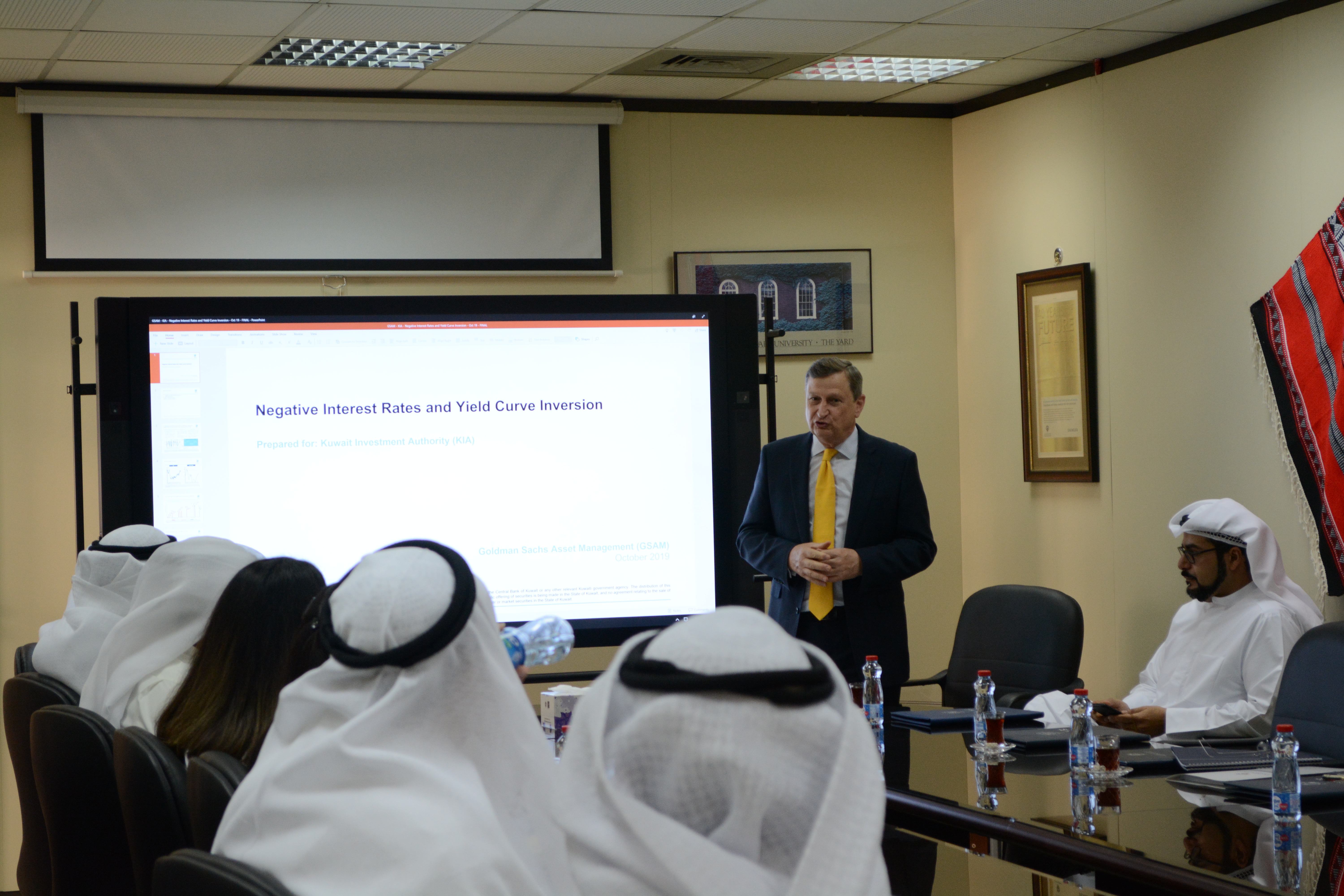
Goldman Sachs has launched a new office in Kuwait, asserting a significant push to enhance its reach across the Middle East and deepen its ties with Gulf-region clients under fresh leadership.

The New York-based investment bank said its role over five decades in Kuwait spans investment banking, capital markets and asset management. As part of its latest expansion, Goldman has tapped Mohammad Almatrouk as managing director of the Kuwait office, pending regulatory green light, while Fahad Alebrahim has been appointed managing director of the firm’s private wealth business in Kuwait.

David Solomon, Goldman Sachs’s Chairman and Chief Executive, framed the move as a commitment to “grow our capabilities across the Middle East and better serve our clients,” emphasising Kuwait’s economic vision as a catalyst for the firm’s expansion.

Goldman Sachs points to a long-standing capacity-building partnership in Kuwait that includes a professional training scheme designed to nurture talent at institutions such as the Kuwait Investment Authority, the Public Institution for Social Security and the Kuwait Fund. That programme, the bank says, will continue to play a central role in integrating local human capital into its global operations.

The choice of Kuwait underscores a growing focus on the Gulf’s institutional capital. Kuwait, host to one of the world’s largest sovereign wealth funds, has attracted global financial firms looking to align with its diversification and investment ambitions. Goldman Sachs’s decision follows earlier regional expansions, such as establishing a presence in Abu Dhabi and securing a banking licence in Saudi Arabia.

Kuwait’s Director General of the Direct Investment Promotion Authority, Sheikh Dr. Meshaal Jaber Al-Ahmad Al-Sabah, praised the move as aligned with Kuwait’s economic diversification and global integration goals. He stressed that opening the office supports national priorities including talent development and sustainable growth.

Regional analysts view Goldman’s Kuwait office as part of a broader recalibration by global banks to embed themselves closer to Gulf capital sources. Over the past two years, deal activity in sovereign and quasi-sovereign asset structures has exploded, prompting major firms including Lazard, JPMorgan and Deutsche Bank to expand in the Gulf with new leadership hires.

Inside Goldman Sachs, the timeline coincides with a leadership transition: the firm’s co-head for the Middle East and North Africa, Fadi Abuali, is slated to retire after nearly 28 years of service. His departure is expected to reshape the firm’s regional hierarchy just as Kuwait becomes a new hub.

Some observers caution the move carries execution challenges. Regulatory approvals in Kuwait must be secured, and Goldman must integrate the new office into its broader Gulf operations without duplicating functions. Success will depend on maintaining local relationships while delivering global platform advantages.

Advertisements
ADVERTISEMENT

Cisco will unveil its latest innovations at GITEX GLOBAL 2025 in Dubai, aiming to equip enterprises across the Middle East and broader region with infrastructure built specifically for the AI era. The showcase focuses on AI-ready data centres, resilient network architectures, and strengthened security frameworks designed to support advanced workloads in data-intensive environments.

By joining the AI Infrastructure Partnership alongside BlackRock, Microsoft, NVIDIA, xAI and others, Cisco has committed to accelerating capital flows into datacentre and infrastructure projects. The partnership expects to unlock $30 billion in initial funding, scaling up to $100 billion including debt financing. Cisco brings its network, security and systems expertise to support the platform’s mission of secure, at-scale AI infrastructure.

At the heart of Cisco’s push is its new Cisco Data Fabric, launched in integration with Splunk, which provides federated data access across systems such as Amazon S3, Iceberg, Delta Lake and Snowflake, routing workloads intelligently to the best analytics or storage engine. This architecture is intended to reduce data movement, shorten analysis latency, and enable enterprises to transform machine data into AI-ready intelligence.

To support retrieval-augmented generation and agentic AI deployments, Cisco introduced the Secure AI Factory solution with NVIDIA and VAST Data. This validated architecture accelerates data extraction and retrieval at scale while enforcing security guardrails for every token processed. AI PODs built under this architecture offer pre-validated, high-performance building blocks for enterprise AI.

Networking and security are being redefined for the AI workload environment. At Cisco Live 2025, the company launched a next-generation network architecture for campus, branch and industrial environments, delivering unified management and devices purpose-built to support AI traffic patterns. It also introduced Hybrid Mesh Firewall and Universal Zero Trust Network Access to embed security into network fabric across hybrid and distributed environments. These features aim to simplify policy enforcement, improve visibility, and reduce complexity in securing both human users and AI agents.

Cisco CEO Chuck Robbins disclosed that fiscal year 2025 saw record AI infrastructure orders. In its final quarter, the company secured over $800 million from webscale clients, bringing total AI-focused orders to more than $2 billion—more than double its initial target. He described the pipeline as steadily growing into “hundreds of millions” as enterprises demand scalable, secure solutions.

In the Middle East, Cisco plans to demonstrate the regional relevance of its technologies under the theme “Make AI Work for You.” According to Cisco’s new AI Readiness Index, a vast majority of organisations in the UAE expect to expand their data centre capacity for AI within five years. The company will also present its work with Splunk on security and observability platforms at the event.

Cisco’s collaboration with Saudi Arabia’s HUMAIN is intended to build out an open, scalable AI infrastructure ecosystem aligned with Vision 2030. The multi-year programme includes deployment of cloud-based AI infrastructure, joint research initiatives, and efforts to grow local talent and innovation. The partnership underscores Saudi ambitions to position itself as a global AI hub.

Cisco sees accelerating demand for network modernisation. Its internal research reports that 97 percent of IT leaders view modernised networks as critical to deploying AI, cloud and IoT workloads, and 98 percent rate secure networking as essential for growth. However, the same study notes that only 40 percent of organisations have begun deploying advanced segmentation or intelligent control, illustrating an execution gap.

To strengthen its AI strategy, Cisco also expanded its presence in Indonesia by signing a Letter of Intent with BRIN to develop AI and cybersecurity capabilities via its Country Digital Acceleration programme. The plan includes building an AI Centre of Excellence and delivering training in AI, security and networking to 500,000 Indonesians by 2030.

Splunk’s observability portfolio itself is being reworked to embrace agentic AI, deploying AI agents to automate tasks such as root cause detection, alert correlation and issue resolution. This is intended to lighten the operational burden on IT and engineering teams while driving real-time insight.

A consortium led by Saudi Arabia’s Public Investment Fund, with Silver Lake and Jared Kushner’s Affinity Partners, has struck a deal to acquire Electronic Arts for approximately $55 billion, taking the iconic game publisher private. Under the agreement, EA’s shareholders will receive $210 per share, a 25 percent premium over the share price before the deal emerged, as the consortium combines fresh equity with a leveraged debt […]

Scientists have found that a marine heatwave triggered mass die-offs of clownfish across central Red Sea reefs once thought to offer thermal refuge, and that elsewhere these fish are now shrinking to withstand rising ocean temperatures. Research published in npj Biodiversity indicates that the 2023 marine heatwave caused bleaching in all monitored anemones across three reefs off Saudi Arabia, leading to mortality of more than 66 per […]

ADVERTISEMENT

Google has chosen Saudi startup Lahint for inclusion in its Growth Academy: AI for GovTech 2025 cohort, positioning the company among 24 global government-technology innovators supported by Google. The move aims to strengthen Lahint’s capacity to deliver AI-enabled public services and further Saudi Arabia’s push for digital transformation under Vision 2030.

Lahint, established in 2023 by Ahmed Saber and Mohamed Ibrahim, secured a $1 million pre-seed investment earlier this year to scale its AI and automation offerings in government services. The platform currently manages more than 60 digital government services and serves over 200 businesses, integrating robotic process automation and AI to streamline licensing, permits and administrative workflows.

By integrating Lahint into its accelerator, Google pledges technical support, mentorship and access to cloud infrastructure—tools that could accelerate Lahint’s roadmap to full automation of priority public services. Lahint has already earned multiple ISO certifications and is accredited by the Saudi Data & AI Authority with a Waee badge for AI ethics compliance.

Lahint has advanced its internal timeline for key automation milestones. The company is now targeting completion of its GovTech automation program by early 2026, a shift from an earlier 2027 target. This acceleration comes alongside newly signed partnerships with government entities to deploy real-time status reporting and predictive compliance tools covering domain areas such as licensing, taxation and corporate registration.

Saudi Arabia’s broader AI landscape is scaling rapidly. In 2025, the kingdom announced over $14.9 billion in investments at LEAP and pursued MoUs under SDAIA to reinforce its data and AI infrastructure. The establishment of HUMAIN, a state-backed AI company under the Public Investment Fund, is central to that strategy. HUMAIN, launched in May 2025, has already inked collaboration agreements with Nvidia, AMD and Qualcomm to develop AI factories and Arabic large language models.

Google’s AI programme in Saudi Arabia is part of a wider arrangement. A $10 billion joint investment by Google Cloud and the Public Investment Fund backs a national AI hub to reinforce the local ecosystem and serve regional demand.

iFLYTEK is stepping up its engagement in the Middle East, unveiling two flagship AI products at GITEX 2025 in Dubai as part of a broader strategy to localise its offerings and anchor its presence in the region.

The company’s showcase spans three core portfolios—AI Translation, AI Infrastructure and AI Solutions—tailored for Gulf markets, with particular emphasis on Arabic dialect support and secure deployment. Among the new offerings is the AI Translation Earbuds, designed to enable seamless multilingual communication, and the e-ink AINote 2 work device, both making their global debut at the event. The debut underscores iFLYTEK’s intent to go beyond product marketing, emphasising solutions that address regional business needs.

Vincent Zhan, Vice President of iFLYTEK, asserted that the company is focused “to deliver intelligent solutions that address real business challenges” rather than merely present tech demonstrations. The firm has already placed a local team in Dubai to oversee deployment, maintenance, and customer support. It also customised algorithms to handle multiple Arabic dialects, expecting that linguistic responsiveness will differentiate it from global rivals.

iFLYTEK’s portfolio for the event includes the Spark WallEX system, designed for intelligent space management, along with Spark Smart Blackboard and Spark GuideX. The firm says these are engineered to support a range of sectors, including education, healthcare, enterprise operations and government. Its “All-in-One AI Solution” is positioned as a secure infrastructure package for organisations seeking turnkey AI adoption.

The Middle East expansion is part of a larger international push. Outside Asia, iFLYTEK is targeting Europe, as trade tensions and regulatory pressures create incentives to diversify markets. It is reportedly planning offices in France and Hungary, with growth ambitions in Spain and Italy. In March 2025, Zhan cited tariffs in the US as influencing iFLYTEK’s decision to look more aggressively into Europe and the Gulf.

China’s AI giant also faces headwinds. It was placed on a US trade blacklist in 2019, making procurement of certain high-end components dependent on US approvals. To mitigate vulnerability, iFLYTEK has shifted many of its models to Huawei’s chip platforms. It developed its Xinghuo X1 large language model in partnership with Huawei, reportedly running entirely on domestic chips. The firm claims to have pushed chip efficiency from 20 per cent to nearly 80 per cent of equivalent U. S. hardware, though Huawei leadership acknowledges that domestic chips still lag behind by a generation.

Market observers note that iFLYTEK’s shift toward the Gulf aligns with governments in the UAE and Saudi Arabia pushing AI-first national strategies. However, the company must navigate regulatory, data residency and market competition risks. In the Gulf, local AI and language processing firms are emerging, and global players like Amazon and Microsoft are pressing deeper into the region.

iFLYTEK’s presence at major global events is integral to its positioning. In July 2025, at MWC Shanghai, it launched the Spark All-in-One AI Machine and Dual-Screen Translator 2.0—capable of handling translation across dozens of languages—to reinforce its push into enterprise AI. The company has also rolled out smart products such as the AINOTE Air 2 across Asia and Gulf markets, with strong uptake in multilingual productivity segments.

Saudi Arabia has announced that half of all jobs in licensed tourism establishments must be staffed by Saudi nationals by 2028, signalling a significant policy shift to move citizens into non-oil sectors. The Ministry of Tourism says the measure will tackle the overreliance on expatriate labour and realign the workforce with Vision 2030 economic diversification goals. Under the new framework, the Saudisation ratio will rise gradually: 40 […]

OPEC+ delegates are weighing two divergent paths for November oil quotas: a modest lift mirroring October’s 137,000 barrels per day increase or a more aggressive jump, possibly two to three times larger. Diplomatic and market pressures appear to be pulling members in different directions.

Ahead of Sunday’s formal meeting, one source familiar with the deliberations described 137,000 bpd as the “base case,” replicating this month’s incremental pace. A second source, speaking on condition of anonymity, indicated that under more aggressive assumptions the group may opt for increases of 280,000 bpd or even 400,000 bpd. Those in favour of larger hikes argue that strengthening demand and constrained Russian output justify a bolder step.

Analysts are aligning with the moderate view. Goldman Sachs, for instance, projects a November quota increase of around 140,000 bpd, citing tight inventory levels in Asia and Europe and declining U. S. crude stockpiles. Pressure for a more substantial increase, however, is mounting given elevated oil prices and a desire among key producers to reclaim or expand market share.

During a meeting of the Joint Ministerial Monitoring Committee this week, OPEC+ emphasised full compliance with output agreements, urging shirking members to compensate for previous breaches. While the JMMC lacks decision-making power on quotas, it retains the ability to summon full OPEC+ sessions if necessary. This move underscores growing unease about cohesion ahead of the upcoming vote.

Market reaction has already shown sensitivity. Oil prices—which had climbed amid tight supply forecasts—slid more than 3 per cent early this week as traders factored in the possibility of an oversupplied market if OPEC+ moves decisively upward. Further pressure arrived as Iraq’s Kurdistan region resumed exports to Turkey, adding to short-term supply. Expectations of a November increase of at least 137,000 bpd have also fed concerns about potential gluts.

Saudi Arabia is anticipated to respond to this industrial backdrop by raising its official selling prices for November crude to Asia. Refining sources suggest increases of 20–40 cents per barrel for Arab Light, and larger bumps for heavier grades—moves intended to optimise returns amid the shifted supply landscape. Observers note, however, that these pricing adjustments may be constrained by growing global volumes and rising freight costs.

Within OPEC+ circles, some major players favour the status quo increment. They caution that a more aggressive hike could undermine prices and strain discipline among reluctant members. Others view a bold move as an opportunity to reshape global oil dynamics—forcing non-allied producers to respond and reasserting the cohesion and influence of the alliance.

Russia is under particular scrutiny. Its output has been running below forecasts, and further declines—coupled with Western sanctions and infrastructure disruptions—are cited by several sources as a justification for a larger quota increase across the group. Still, Moscow’s appetite for more substantial volume gains remains unclear, balancing revenue interests with geopolitical strategy.

ADVERTISEMENT

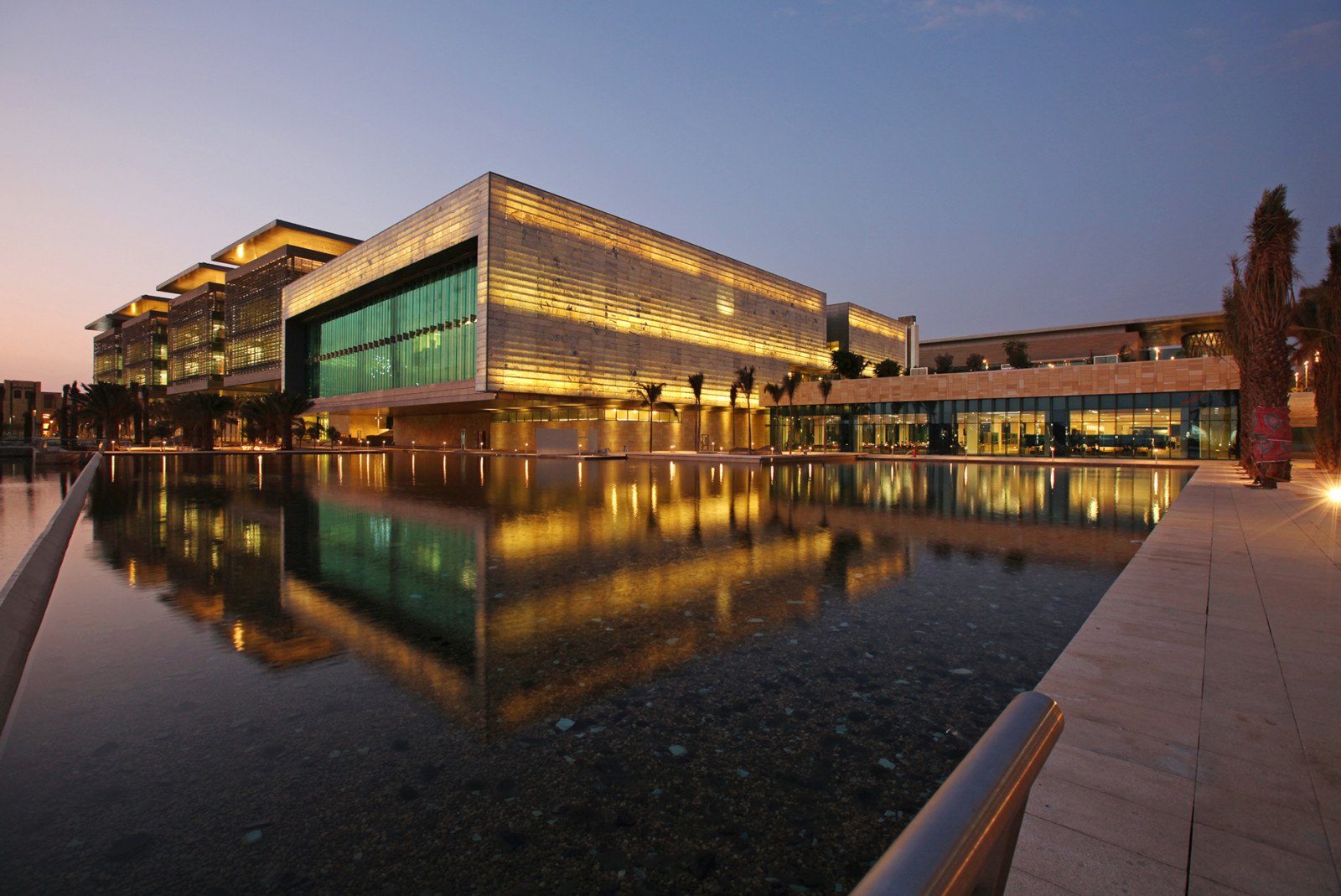
Jeddah — King Abdullah University of Science and Technology has initiated the KAUST Mathematics Competition, a national contest designed to identify and nurture top mathematics talent among students in Grades 8 through 11 across Saudi Arabia. The competition invites both Saudi nationals and residents studying in the Kingdom’s schools to test themselves on challenging topics such as algebra, number theory, combinatorics and geometry.

Phase One of KMC will take place as a two-hour elimination exam at eight regional centres. Students in the junior stream will face 24 multiple-choice questions, while those in the senior stream will tackle 30 multiple-choice items. From that round, the top 200—split evenly between junior and senior tracks—will advance to the final phase. That final round, conducted at KAUST over three days in April, will require written answers to six problems. KAUST will bear the costs of travel, lodging and meals for finalists. The participation fee is set at 100 Saudi riyals per student.

KAUST’s rationale for KMC aligns with its broader talent development mission: to foster advanced thinking skills and attract gifted students into STEM pathways. The competition also offers attractive incentives: cash awards, enrolment in KAUST Academy programmes, and a prize for first-place winners in each track — admission to a summer mathematics camp hosted jointly by KAUST and the University of Cambridge.

KAUST’s pre-university programmes, especially its Science Research School Initiative, already train middle and high school students for international Olympiads. SRSI’s mandate includes preparing students in mathematics, chemistry, physics, informatics and biology through intensive on-campus training. Students in grades 6 to 12 benefit from the training, and many go on to represent Saudi Arabia in global contests. KAUST also partners with other institutional programmes focused on gifted education.

The decision to launch KMC complements an existing competitive ecosystem. The KFUPM Mathematics Olympiad, for instance, has long been held for secondary school students at multiple centres across the country. That contest historically serves as a pipeline to select candidates for the International Mathematical Olympiad. Meanwhile, Saudi youth continue to perform strongly at regional contests: in the 29th Junior Balkan Mathematical Olympiad held in North Macedonia, six Saudi students won two gold, two silver and two bronze medals.

By Manish Rai In his maiden speech in the United Nations General Assembly, Syria’s interim president, Ahmed al-Sharaa, called for lifting of international sanctions on Syria, becoming the first head of state from Syria to address the gathering in nearly 60 years. This signifies the first appearance of a Syrian president since Nureddin al-Atassi took office in 1967. Syrian President Sharra engaged in a series of bilateral […]

Aluminium Products Company of Saudi Arabia and Hong Kong–based Asia Aluminum Group have inked a master framework agreement to build the largest integrated downstream aluminium industrial complex in the Kingdom, with planned investment reaching up to USD 500 million. The initiative centres on three joint ventures covering aluminium extrusion, modular housing, and solar panel frame manufacturing. The agreement was signed in Hong Kong by ALUPCO Chief Executive […]

ADVERTISEMENT

Global investment firm KKR has acquired a minority stake in ADNOC Gas Pipeline Assets LLC, reinforcing its commitment to Middle East energy infrastructure. ADNOC retains full operational control and ownership of the pipelines. KKR’s move builds on longstanding ties with Abu Dhabi’s national energy group. In 2019, KKR and BlackRock acquired a portion of ADNOC’s oil pipeline business in a landmark deal; that investment was later sold […]

Tesla has launched sales of its Cybertruck in Qatar, bolstering its Middle East expansion as the electric carmaker seeks growth beyond saturated U. S. and Chinese markets. The announcement was made via its social media channel on 3 October, following its earlier push into Saudi Arabia this year.

Underlining its Gulf ambitions, Tesla has already made the Cybertruck available in Saudi Arabia and the United Arab Emirates, and now Qatar joins as one of the first markets outside North America to offer the pickup. The company plans to support local sales with online ordering, pop-up showrooms, Supercharger stations, and service centres.

Tesla does not provide regional breakdowns for Cybertruck deliveries, but a U. S. recall filing notes that 46,096 units had been built between November 2023 and early 2025. Analysts say the Qatar move is timely, given Tesla faces weakening demand and intensifying rivalry in its core markets.

Qatar, meanwhile, has signalled ambition in building an EV framework. The country is working toward installing 1,000 public charging stations by 2025 and targeting 4,000 by 2035. A partnership between Tesla, the utility Kahramaa, and real estate projects like Doha Festival City aims to deploy Superchargers capable of delivering 250 kW charging, enabling about 200 miles of range in 15 minutes.

Tesla’s introduction in Qatar is part of a broader Gulf strategy that seeks to replicate its Saudi model—offering multiple variants of the Cybertruck tailored to regional conditions. For example, orders in Saudi Arabia include both All-Wheel Drive and Cyberbeast trims, with the Saudi AWD variant priced starting at around 434,990 Saudi Riyal.

However, Tesla is also reshaping its product line due to weak uptake. It has dropped the standalone rear-wheel-drive Cybertruck variant from its U. S. configurator, leaving only two higher-end models in the lineup. This shift signals that Tesla is consolidating its offerings to better match market demand.

Competition in the Gulf is mounting. Chinese manufacturers BYD and Zeekr are pushing aggressively into the region, and the U. S. EV maker Lucid—backed by Saudi Arabia’s sovereign wealth fund—poses a formidable local rival.

Tesla’s Q3 performance provided a temporary boost: the company reported record global deliveries, partly driven by a rush before the U. S. EV tax credit expired on 30 September. Yet analysts anticipate a steep drop in Q4 sales given the expiration of that incentive.

Tesla’s entry into Qatar underscores its strategic pivot toward markets where expansion potential remains, even as challenges loom in technology adaptation, climate conditions, and consumer uptake.

Saudi Arabia confronts mounting fiscal headwinds as oil revenues falter and large-scale investments under its Vision 2030 agenda intensify strain on the state’s budget, a fresh analysis by Fitch Ratings warns. Fiscal consolidation efforts are threatened by rising expenditures, volatile energy markets and valuation setbacks to flagship development projects.

Fitch anticipates the kingdom will record a fiscal deficit equivalent to 5.3 percent of GDP in 2025—more than double earlier forecasts of 2.3 percent—and projects a narrowing to 3.3 percent in 2026. That trajectory, the ratings agency argues, rests on fragile assumptions about revenue rebound and disciplined spending cuts. The downgrade in oil income, combined with persistent capital outlays, introduces high risk to Saudi’s consolidation plans.

The Public Investment Fund, corner-stone of Vision 2030, channels vast investment into infrastructure, technology, tourism and real estate. But it has also borne losses: in 2024, the PIF recognised an $8 billion writedown of its “gigaprojects,” including NEOM, reflecting cost overruns and market volatility. That impairment eroded some of the cushion these high-profile ventures were meant to provide.

Fitch treats PIF as a government-related entity, equating its credit profile with that of the sovereign given its central role in state economic strategy and the expectation of ongoing state support. However, Fitch cautions that heavy spending commitments in the pre-budget statement expose weaknesses in the consolidation path. The agency notes that worsening oil market dynamics and delays in translating megaprojects into stable returns heighten exposure.

Saudi Arabia’s finance ministry projects 2026 revenues of 1.14 trillion riyals against expenditures of 1.31 trillion, signalling an ambition to shrink deficit to 3.3 percent. The government anticipates revenue growth of 5.1 percent and spending reductions of 1.7 percent relative to 2025 projections. But achieving that will depend heavily on improved non-oil income and restrained capital outlays.

Crude price downturns have compounded pressure. With oil income constituting roughly 60 percent of Saudi’s state revenue, any softness in the energy market imposes acute stress. Analysts say the kingdom is caught in a bind: it must maintain investment momentum to stay on track with Vision 2030, yet it must also restrain spending lest debt and deficits spiral.

Investors and economists point to NEOM as a test case. Massive in scale and ambition, NEOM has come under scrutiny following the substantial writedown. Critics suggest that the project’s capacity to generate returns fast enough to justify its cost is increasingly in question. That, in turn, weakens one of the main pillars of the kingdom’s diversification rationale.

To mitigate risks, Saudi authorities are leaning on non-oil revenue sources, including taxes, fees and state levies, which remain robust. Public consumption and private sector growth also play supportive roles. But these revenue streams may not suffice to offset deep slippage in oil proceeds.

The Middle East and North Africa are experiencing a wave of sovereign bond issuance as governments tap global debt markets to meet financing needs, even though oil prices have held in the mid-$60s per barrel and credit spreads remain compressed. Kuwait re-entered the international capital markets after an eight-year hiatus, successfully issuing $11.25 billion in three, five and ten-year bonds at spreads of 0.40 to 0.50 percentage […]

China’s largest state banks have committed over $3.75 billion in debt financing to Saudi Aramco’s Jafurah gas project, while Chinese investment funds have declined to take equity stakes in the venture, sources told Reuters.

The bulk of this funding comes from Bank of China, ICBC and China Construction Bank, each contributing around $1 billion, and Agricultural Bank of China adding roughly $750 million. This debt financing accounts for more than one-third of the total capital sought for what is expected to be the largest shale gas development outside the United States.

Aramco’s deal involves an $11 billion lease-and-leaseback agreement signed in August with a consortium led by Global Infrastructure Partners, an arm of BlackRock. Under the arrangement, a new entity called Jafurah Midstream Gas Company will lease processing assets to Aramco for 20 years. Aramco retains a 51 per cent stake, while the consortium holds the remaining 49 per cent.

Despite the opportunity to join the equity syndicate, several Chinese state-linked funds declined to participate, a move that sources attribute to heightened U. S.–China tensions. Beijing is said to have discouraged fund-level engagement with U. S.-affiliated private capital firms, even when such firms do not have overt U. S. exposure.

The Chinese banks’ decision to provide senior debt but avoid equity signals a calibrated strategic posture: backing the project financially without direct governance alignment with U. S.-linked investors.

Aramco’s broader ambition is to expand its gas production capacity by 60 per cent over 2021 levels by 2030. The Jafurah basin is estimated to contain 229 trillion standard cubic feet of raw gas and 75 billion stock tank barrels of condensate.

The BlackRock-led consortium is also negotiating additional capital of around $10.3 billion with a mix of debt instruments; participants in those talks include JPMorgan and Sumitomo Mitsui Banking Corporation. Those financial structures are intended to support the lease-and-leaseback model without ceding control of core infrastructure assets to external parties.

Within the Gulf, Chinese lenders’ prominent involvement in Jafurah’s financing echoes a broader trend. Analysts note that China is repositioning its role in Gulf energy infrastructure by leveraging its strengths in project debt and export credit rather than co-investment in U. S.-sponsored equity schemes.

Saudi Arabia is concurrently expanding its gas network. It has signed over $25 billion in contracts for the second phase of Jafurah development and further gas-network enhancements, including pipeline extensions of 4,000 km to increase capacity by 3.2 billion standard cubic feet per day. Chinese firms, such as Sinopec, are among the contractors participating in these projects.

For Aramco, the dual approach of securing large-scale debt from Chinese banks while partnering with international investors via the leaseback model helps it mobilise capital without relinquishing decisive control. The arrangement offers investors predictable tariff-based returns.

Chinese banks’ exposure gives them influence over covenant terms, loan pricing and repayment schedules. That leverage, without the burdens or political friction associated with equity, aligns with Beijing’s financial diplomacy toward strategic energy corridors.

The full constellation of debt and equity deals around Jafurah—and the dynamics among Gulf producers, Chinese state capital, and U. S.-linked private investors—will be among the key nodes shaping the next wave of energy infrastructure financing.

Visitors in Saudi Arabia will be able to open local bank accounts using their “Visitor ID,” following a decision by the Saudi Central Bank to accept the identification document issued by the Ministry of Interior. This marks a major regulatory shift in how non-residents can access financial services in the Kingdom.

SAMA’s directive mandates that banks recognise the Visitor ID—traditionally used for immigration and internal tracking—as a valid identity document for account onboarding, provided it is digitally verifiable through government-authorised platforms. According to SAMA, this adjustment will enable banks to reach new customer segments without altering their existing account-opening rules.

This change aligns with Saudi Arabia’s push under Vision 2030 to expand financial inclusion and improve the visitor experience. By lowering barriers to formal banking, the Kingdom aims to reduce dependence on cash, support digital payments, and draw more tourists, business travellers and pilgrims into regulated financial channels.

Banks will be required to adjust verification systems and compliance protocols to integrate the new policy. Many are expected to link the Visitor ID to local digital check platforms and mobile wallets, allowing holders to conduct everyday transactions. Some limitations may apply: banks may restrict access to credit, loans or other advanced banking services until further identification or residency status is established.

Under existing SAMA account rules, banks already require robust customer identification steps for all new accounts. These include verifying identity documents, screening for anti-money laundering, and collecting customer contact and address details. The updated regulation does not eliminate those checks but changes the baseline identity document accepted for visitors.

Observers see this as one of several steps in a broader regional movement. While Gulf states have long required residence permits or more rigid documentation to open standard accounts, the Saudi reform may test whether similar access models are feasible elsewhere. Already, financial technology and tourism stakeholders are evaluating the competitive edge this gives Saudi Arabia.

Critics caution that implementation risks must be managed carefully. Allowing visitor-based accounts introduces potential anti-money laundering and fraud vulnerabilities. Banks will need to balance user convenience with real-time monitoring, transaction limits, and strong identity verification safeguards.

From the visitor standpoint, the reform reduces friction in accessing local banking: new arrivals will no longer have to rely solely on foreign banks, prepaid cards or cash. Pilgrims and business travellers handling local payments, donations, or services should benefit directly.

SAMA emphasised that the change came through its periodic policy review, intended to keep regulations in line with evolving financial technology trends and market needs. The central bank said it expects the reform to reinforce the Kingdom’s cashless payments infrastructure and strengthen the banking ecosystem’s responsiveness to global customer expectations.

The policy rollout may occur in phases, as banks update internal systems, train staff, and obtain approvals from compliance units. Over the coming weeks, banks are likely to issue guidelines explaining account features, permissible transaction types, and validity periods tied to the Visitor ID status.

VISHNU RAJA
RYO YAMADA
HITORI GOTOH
IKUYO KITA
Social Media Auto Publish Powered By : XYZScripts.com