News related to
Strategy

Dubai’s Roads and Transport Authority, in partnership with Emaar Properties, will upgrade the Burj Khalifa–Dubai Mall Metro Station, increasing its footprint from 6,700 to 8,500 sq m and boosting hourly passenger capacity from 7,250 to 12,320 – a 65 per cent rise. The development aims to accommodate surges during high‑demand periods such as New Year’s Eve, public holidays and national events, projecting a daily throughput of up to 220,000 passengers. […]

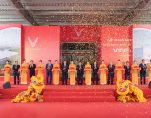
HÀ TĨNH, VIETNAM – Media OutReach Newswire – 29 June 2025 – VinFast has officially inaugurated its electric vehicle (EV) manufacturing plant in Hà Tĩnh, located in the Vũng Áng Economic Zone, less than seven months after construction began. Spanning 360,000 square meters and with a designed capacity of 200,000 vehicles per year, this marks VinFast’s fifth manufacturing facility worldwide, highlighting the Vietnamese brand’s remarkable execution speed […]

Abu Dhabi Fund for Development has advanced regional energy integration by extending AED 752 million to the Gulf Cooperation Council Interconnection Authority, supporting the expansion of the UAE’s national grid interconnection with the wider GCC electricity network. This strategic financing, signed at ADFD headquarters in Abu Dhabi, aims to enhance cross-border power exchange and reinforce regional energy reliability. The deal facilitates construction of a 96 km, 400 kV double-circuit overhead transmission […]

Sheikh Hamdan bin Mohammed bin Rashid Al Maktoum has greenlit an ambitious slate of strategic initiatives aimed at bolstering Dubai’s stature as a global epicentre for education, business, and eco‑development. The moves—from visa reforms and international academic partnerships to air‑quality drives and governance frameworks—signal a broad shift aligned with the emirate’s Education Strategy 2033 and Economic Agenda D33. At the heart of the agenda is Dubai’s higher‑education transformation. With 37 […]

Robinhood has launched micro futures contracts for Bitcoin, Solana and XRP in the United States, enabling retail investors to take directional positions or hedge portfolios with significantly lower capital than standard futures contracts. The offering is accessible to Robinhood’s roughly 26 million funded accounts and is anticipated to democratise access to crypto derivatives.

Micro futures are scaled-down versions of their full-size counterparts, requiring considerably less margin and making them appealing to smaller-scale traders. Industry observers note that each micro XRP contract represents 2,500 XRP with a tick value of about US $1.25, a stark contrast to the 50,000‑unit standard contracts with US $25 ticks. Similarly, micro Solana contracts use a 25‑token multiplier with 0.5 SOL tick increments, each worth US $1.25.

This expansion rounds out Robinhood’s crypto futures suite, which began with Bitcoin and Ether micro futures in January. The addition of XRP and Solana follows what the platform described as strong customer interest and increased regulatory clarity around these tokens. In April, CME Group unveiled institutional-grade XRP futures, underscoring growing market demand.

Robinhood’s strategic acquisitions are reinforcing its crypto ambitions. In June, it completed the US $200 million acquisition of Bitstamp, securing over 50 global licences and bolstering its infrastructure. In May, it acquired Canadian crypto firm WonderFi for US $179 million, integrating platforms such as Bitbuy and Coinsquare into its ecosystem. Data from Robinhood shows crypto notional trading volumes surged to US $11.7 billion in May—a 36 per cent rise month‑on‑month and 65 per cent higher year‑on‑year.

Market participants have welcomed the move toward more accessible derivatives. Robinhood’s “trading ladder” feature allows users to enter and exit positions with precision. The platform also ensures near 24‑hour cash‑settled trading windows, operating between 6 p.m. and 5 p.m. ET.

The decision by Robinhood aligns with a wider industry trend—other platforms, including Coinbase and Charles Schwab, are increasingly offering crypto‑derivatives to satisfy retail and institutional demand. Analysts have described the launch of micro futures as a “gateway” for newer investors who previously found full‑size contracts beyond their reach.

Permissive regulatory signals are reinforcing this shift. XRP’s legal battle with the US Securities and Exchange Commission is advancing toward a resolution typically viewed as favourable for token classification, which has helped restore market confidence and paved the way for enhanced derivative offerings. Solana, meanwhile, has seen robust activity in decentralised finance and NFTs, further stimulating interest in derivative products.

Robinhood’s move also places it in stronger competition with institutional players like CME Group, whose Solana futures trading volume recently hit 1.75 million contracts. By offering micro futures, Robinhood is targeting the lower‑tier end of the market while building out its position in crypto derivatives.

Retail engagement appears crucial to market liquidity. By enabling smaller investors to gain exposure with modest capital—and reduced margin risk—Robinhood may broaden participation and deepen markets for XRP and Solana. However, some industry figures caution that rising complexity may attract regulatory attention, underscoring the importance of robust risk management and investor education.

Robinhood’s micro futures launch reflects its continued strategy of expanding crypto tools after rolling out spot trading in 2018 and its later push into crypto derivatives. With assets under management growing and institutional integrations via Bitstamp and WonderFi at scale, the platform is positioning itself as a full‑service crypto brokerage.

Two of Dubai’s Top 20 Real Estate Professionals Come from the Same Brokerage Dubai, UAE – June 2025: With thousands of agents competing in one of the world’s fastest-paced property markets, Dubai real estate has become as much about standing out as it is about selling. In this competitive climate, brokerages are pressured to offer more than just a desk—they must offer vision, support, and leadership. That’s […]

BYDFi, the Seychelles‑based crypto exchange, confirmed its role as an official partner at Seoul Meta Week 2025: METACON, held on 26–27 June at COEX’s third‑floor auditorium, joining industry giants such as Samsung, Google, Intel, Spotify, Kakao and GitHub.

Booth 11 at the event quickly emerged as a high‑traffic hub, drawing crowds eager to engage with BYDFi’s team and claim exclusive merchandise designed for attendees. Michael, co‑founder and CEO of BYDFi, praised Seoul Meta Week as “a venue to share our latest innovations and connect with forward‑thinking builders and traders from across the region”.

In tandem with its showcase, BYDFi announced its membership in South Korea’s CODE VASP Alliance. The move incorporates full integration of Travel Rule compliance technology, aligning with the nation’s Act on Reporting and Using Specific Financial Transaction Information. The exchange says this step strengthens transparency in cross‑platform asset transfers and positions BYDFi as a more secure and regulation‑aligned platform.

According to the company, this initiative forms part of a strategy to build a more unified global compliance framework, elevating industry standards and boosting user confidence.

In April, BYDFi launched MoonX at Paris Blockchain Week: a Web3 on‑chain trading platform integrated with Solana and BNB Chain. MoonX features real‑time market data, Smart Money tracking and copy‑trading for memecoin enthusiasts, signalling BYDFi’s evolution into a combined CEX‑DEX “dual‑engine” operator. Its presence at SMW 2025 emphasises this integration of centralised exchange speed with decentralised ecosystem transparency.

Founded in 2020, BYDFi serves over one million users in more than 190 countries. In 2025, Forbes named it among the best crypto exchanges and apps for beginners. Its platform spans spot and perpetual contracts, automated bots, copy trading and on‑chain tools, offering multi‑channel support for both novice and experienced traders.

Industry analysts note that compliance remains a central challenge for crypto exchanges seeking entry into regulated Asian markets. BYDFi’s involvement with CODE VASP and METACON suggests a strategic push to meld technological innovation with regional regulatory adherence. The Travel Rule technology integration is poised to set a precedent for exchanges aiming to enter South Korea’s tightly supervised financial landscape.

BYDFi’s CEX‑DEX model reflects a larger industry trend towards hybrid exchange services, catering to users demanding both liquidity and decentralised autonomy. MoonX’s Solana and BNB Chain alignment positions BYDFi in direct competition with other hybrid and on‑chain innovators such as dYdX and PancakeSwap.

Critics, however, caution that regulatory alignment alone doesn’t guarantee market penetration. Local adoption may depend on factors like fiat on‑ramps, customer support in Korean, and local partnerships. BYDFi’s prominent presence at SMW 2025 is a step towards building such ties, but the conversion of awareness into sustained user engagement will be the critical measure of success.

Across the exhibition halls at COEX, conversations centred on Web3’s real‑world applications—from decentralised identity to token‑based ecosystems. BYDFi’s booth became a focal point for these discussions, reinforcing its positioning not just as a trading venue, but as a Web3 infrastructure provider.

Advertisements

A north‑Toronto casino has been hit with a $350,000 penalty after permitting an unscheduled after‑party on its gaming floor without proper risk assessment or controls. Ontario’s Alcohol and Gaming Commission determined that the event violated multiple standards, exposing patrons to safety hazards and operational lapses. On 27 September 2024, an electronic dance music event held in the adjacent theatre overflowed into the Great Canadian Casino Resort Toronto. […]

BANGKOK, THAILAND – Media OutReach Newswire – 28 June 2025 – Green SM, Southeast Asia’s first all-electric ride-hailing platform, developed by Vietnam’s Green and Smart Mobility Joint Stock Company (GSM), has been awarded Green Leadership at the prestigious Asia Responsible Enterprise Awards (AREA) 2025 held in Bangkok. The recognition celebrates Green SM’s pioneering role in shaping a sustainable transportation ecosystem in Vietnam and expanding its green mobility […]

GUIYANG, CHINA – Media OutReach Newswire – 27 June 2025 – Eco Forum Global Guyang 2025 will be held in Guiyang, Guizhou from July 5th to 6th. Guizhou, located in the southwest of China, is using an ecological pen to paint a gorgeous green picture along her mountains and rivers. From an ‘Experimental Zone’ to a ‘Pilot Zone’, Guizhou has embarked on a new path of green […]

A decision by Abu Dhabi National Oil Company to slash July shipments of its flagship Murban crude has led to significant trading losses for equity partners hedging their positions, with estimates reaching $12 per barrel. The move stunned major stakeholders, including BP Plc and TotalEnergies SE, forcing abrupt reshuffling in the derivatives market and weighing on profitability metrics. The volume cut, amounting to approximately 3–4 million barrels […]

The Central Bank of the UAE expanded its gold reserves by 19.3 per cent in the first quarter of 2025, adding AED 4.444 billion to bring the total to AED 27.425 billion as of 31 March, up from AED 22.981 billion at the close of 2024. The bank’s latest statistical bulletin also reveals marked increases across demand, savings and time deposits, alongside robust payment-system activity. Heightened global market unpredictability and a strategic emphasis on diversifying […]

YouTube will raise the minimum age to livestream independently to 16 from July 22, placing new responsibility on younger creators and aiming to strengthen protections for minors on the platform. Users aged 13 to 15 can still appear live, but only with a visibly present adult supervisor; otherwise, their live chat may be disabled, streams removed or, in repeated cases, channel streaming privileges revoked. This overhaul arrives amid […]

Alain Robert, the daredevil climber known as the French Spiderman, has ascended the 116‑metre Meliá Barcelona Sky Hotel without any ropes or harnesses to launch TIGERSHARK—claimed as the world’s first cryptocurrency backed by real‑world extreme sports feats. Clad in Tigershark-branded gear and accompanied by his son, former French Navy marine Julien Robert, he live-streamed the stunt via X to mark what organisers call a “Mission 1: Spiderman & Son” initiative.

Organisers describe TIGERSHARK as part of an emerging “Action Economy” in which each token is tied to real adrenaline-fuelled missions spanning big‑wave surfing, wingsuit flying, motocross and parkour. Holding the token grants access to private events, exclusive behind‑the‑scenes content and athlete “drops” – an attempt to fuse thrill‑seeking with blockchain community building.

Lilly Douse, spokesperson for Tigershark, emphasised the departure from traditional token launches: “not airdrops, not smoke and mirrors, but actual real‑world extreme feats, true adrenaline”. She added that the venture is betting on “guts and grits” as the currency’s value proposition.

Robert’s legacy as an urban climber spans more than 150 structures, including the Burj Khalifa, Eiffel Tower and Petronas Towers, all scaled without safety gear. At his current age in the early 60s, he remains committed to pushing boundaries—and this stunt launches a broader strategy merging sport, entertainment and crypto technology.

Discussions are already underway with elite athletes in other high‑risk disciplines—such as base jumping, parkour, wingsuiting and motocross—to participate in future missions. Tigershark’s roadmap includes sponsorships, branded merchandise, global events and athlete plugins, positioning itself as more than a token, but a fully-fledged action-sports brand powered by cryptocurrency.

The circus‑style unveiling has caught the attention of both crypto enthusiasts and adventure-sport communities. While token offerings tied to lifestyle and entertainment have a precedent, Tigershark’s novel angle lies in monetising raw human risk and authenticity. Crypto commentators on social media have amplified the narrative, describing the stunt as “the realest launch Web3 has seen” and “the wildest crypto launch ever”.

However, critics have raised concerns. The stunt’s stunt‑token concept may attract speculative interest, but some analysts warn linking token value to unpredictable physical events could introduce heightened volatility. Moreover, regulatory scrutiny looms over crypto ventures that employ unconventional marketing tactics, especially those involving public stunts with safety or legality risks.

Tigershark’s strategic focus on live‑streamed extreme feats and token‑holder exclusives mirrors broader trends in Web3: blending content, experience and community. Yet the project must deliver consistency and transparency. Observers will scrutinise whether future missions occur as scheduled, whether token economics remain sound, and whether token-holders genuinely receive promised perks.

By embedding risk and spectacle into its founding act, TIGERSHARK sets itself apart from conventional token launches. Early investor sentiment appears buoyed by novelty and potential for real‑world engagement. But delivering a sustainable “Action Economy” will require navigating regulatory complexities and proving that this fusion of blockchain and extreme sport can transform fleeting adrenaline into long‑term value.

Dubai has been chosen to host SIBOS in 2029, affirming its standing as a global nexus in financial services. The selection reflects growing confidence in its role as a strategic bridge in international banking, marking the beginning of SWIFT’s new hosting rotation featuring emerging financial hubs.

SWIFT—holder of SIBOS, an annual forum for payments, securities, cash management and trade—has scheduled the conference in Frankfurt, Miami, Singapore, and Paris, with Dubai confirmed for 2029. This shift inaugurates a four-year rotation that now includes key regions such as the Middle East, Africa, Latin America and Asia, signalling intent to broaden engagement beyond traditional centres.

This move underscores Dubai’s appeal, anchored in the growth of DIFC, which now hosts nearly 7,000 firms, including the region’s fintech core. SWIFT’s Rosemary Stone emphasised that expanding SIBOS to diverse locations will lend fresh perspectives vital amid accelerating technological shifts and growing fragmentation risks. SWIFT saw record traffic last year, and the conference consistently draws over 10,000 delegates.

UAE Banks Federation and supporting bodies—including DIFC, DWTC, DET and CBUAE—have been credited for bringing SIBOS back to the UAE after its inaugural MENA appearance in 2013. UBF chairman Abdulaziz Al‑Ghurair highlighted that hosting SIBOS 2029 recognises the UAE’s leadership in digital payments innovation and its dedication to payment security and efficiency under CBUAE guidance.

UBF director‑general Jamal Saleh noted that the federation’s National SWIFT User Group, launched in 2021, along with the region’s first SWIFT training centre, have built a strong skill base in payments protocols. He said the bid award demonstrates “global recognition of the UAE’s achievements in payments using advanced technologies under CBUAE’s guidance”.

DIFC’s rapid development since 2004 has turned Dubai into SWIFT’s “Gateway to Africa”, strategically connecting Europe, Asia and Africa. This position enhances Dubai’s role within SWIFT’s network of over 11,500 institutions across more than 200 countries.

Planners are expected to leverage SIBOS’s platform to demonstrate regional innovations, including national payment system strategies, fintech growth, and cyber‑security frameworks. The event offers a showcase for the UAE’s ambitions to expand financial inclusion, digital infrastructure, and regulatory maturity.

The SIBOS win also supports the federal strategy unveiled by the Central Bank in 2019 to enhance customer experience through secure, innovative payment mechanisms. Observers suggest the conference will spotlight initiatives such as real‑time payment, cross‑border settlement solutions, and cloud‑based financial services.

By setting 2029 in Dubai, SWIFT signals that emerging financial ecosystems are not only capable but essential hosts. The planned rotation to include regions beyond the traditional triad marks a pivot in SWIFT’s approach, prioritising breadth of perspective as the global banking system navigates fragmentation.

UBF and its partners have committed to delivering a polished event, guided by rising standards in event production and stakeholder integration. With backing from SWIFT, CBUAE and government tourism authorities, organisers expect delegates to gain both technical insights and policy‑driven dialogue on future‑proofing global finance.

Continued Gross Profit Margin and Net Operating Cash Flow improvements albeit difficult market conditions HONG KONG SAR – Media OutReach Newswire – 26 June 2025 – HONMA Golf Limited (“HONMA”; together with its subsidiaries, the “Group”; HKEx stock code: 6858), one of the world’s most prestigious golf brands, announces its consolidated annual results for the year ended 31 March 2025 (the “Period”). Financial Highlights Due to economic […]

HONG KONG SAR – Media OutReach Newswire – 24 June 2025 – SiegFund, a fintech–driven proprietary trading platform, has officially completed its brand upgrade and will now operate as SiegPath, serving proprietary traders worldwide and ushering in a new chapter in global expansion. To further strengthen its rebranding, SiegPath has simultaneously launched its brand-new official website, built with a user-centric approach and equipped with a range of […]

Abu Dhabi sovereign investor ADQ is negotiating the acquisition of a 35 percent stake in Limagrain’s vegetable seeds unit, forging a strategic partnership focused on developing hard‑climate‑resilient crops. The envisioned alliance includes joint research and development initiatives in the UAE, designed to accelerate innovation in seeds tailored to extreme conditions. The proposed investment centres on Limagrain Vegetable Seeds, the vegetable‑seed division of France‑based cooperative Limagrain, a global market […]

Mashreq Bank has inaugurated a representative office in Türkiye, marking a significant stride toward enhancing financial collaboration between the Gulf and Turkish markets. This strategic move is central to Mashreq’s initiative to channel risk capacity and capital flows directly to Turkish banks and corporates. Dubai’s Mashreq is already a familiar correspondent to Turkish financial institutions, actively participating in syndicated loans, trade finance, payments, treasury services and capital […]

Crypto exchange Kraken has secured a Markets in Crypto‑Assets licence from the Central Bank of Ireland, granting it regulated crypto services access across all 30 member states of the European Economic Area. This licence builds on its existing authorisations: an electronic money institution licence obtained in 2023 and a Markets in Financial Instruments Directive authorisation achieved in February 2025.

The MiCA framework, effective since late 2024, aims to harmonise digital asset regulation across the EU. Kraken’s approval via Ireland enables it to “passport” services continental‑wide—streamlining compliance with unified standards on consumer protection, transparency and oversight.

Co‑CEO Arjun Sethi described the licence as a “powerful signal” of Kraken’s dedication to “responsible innovation” and noted the company’s multi‑year work to meet the Central Bank of Ireland’s rigorous regulatory bar.

Since launching its BTC/EUR pair in 2013, Kraken has built extensive euro‑denominated liquidity and registered as a Virtual Asset Service Provider across key European jurisdictions: Ireland, Belgium, France, Italy, the Netherlands, Poland and Spain. The platform now reports euro trades account for approximately 17.5 per cent of its spot‑crypto volume.

Kraken joins a cohort of major exchanges – Coinbase, OKX, Crypto.com, Bybit and Bitstamp – that have pursued MiCA licences, emphasising the growing strategic importance of regulatory clarity. Meanwhile, stablecoin issuer Tether has declined to register its USDT product under MiCA, leading some exchanges to delist the asset.

The EU authorisation coincides with Kraken’s evolution in traditional finance. After securing the MiFID licence via a Cyprus‑based entity, it launched regulated crypto derivatives in February and acquired futures platform NinjaTrader earlier in 2025. Its 2023 EMI licence complements partnerships with Mastercard and embed‑as‑a‑service offerings like Kraken Embed through Dutch neobank bunq.

Kraken’s dual strategy spans jurisdictions: while embracing EU regulatory frameworks, the firm also relocated its global headquarters to Wyoming, citing the state’s crypto‑friendly stance. In the US, it recently avoided a legal challenge when the Securities and Exchange Commission dropped a 2023 lawsuit alleging operations as an unregistered exchange.

The MiCA authorisation equips Kraken to roll out regulated spot trading, derivatives and payments across Europe. That expansion responds to heightened demand among retail, institutional and professional users seeking compliance assurance. Kraken’s approach sets a template for crypto platforms navigating legal plurality ─ positioning Ireland not simply as a licensor but as a blueprint for public‑private collaboration in digital finance.

European policymakers have lauded MiCA’s entry, describing it as the most comprehensive global regulatory regime for digital assets. Kraken’s success demonstrates the potential of these structures to stabilise and mature the sector—but also signals a competitive divide between jurisdictions embracing innovation and those lagging.

Dubai has welcomed 8.68 million international visitors between 1 January and 31 May 2025, reflecting a 7 per cent increase compared with the 8.12 million who arrived during the same period in 2024, according to the Tourism Performance Report from the Dubai Department of Economy and Tourism. In May alone, the city hosted 1.53 million international tourists.

Western Europe emerged as the largest source market, supplying approximately 1.917 million visitors—or 22 per cent of the total. Trailing behind were Russia, the Commonwealth of Independent States and Eastern Europe with around 1.396 million tourists. South Asia contributed 1.242 million visitors, while the Gulf Cooperation Council countries accounted for 1.275 million. The Middle East and North Africa numbers reached 989,000, with Southeast and Northeast Asia, the Americas, Africa and Australia following with 9 per cent, 7 per cent, 4 per cent and 2 per cent shares respectively.

Hotel inventory expanded slightly, reaching 825 establishments with 153,356 rooms by the end of May, up from 822 hotels offering 150,202 rooms a year earlier. Occupancy averaged 83 per cent across the five-month span, climbing two percentage points from 81 per cent in 2024. Total occupied room nights reached 19.09 million, a 4 per cent increase over the previous year’s 18.34 million.

Average visitor stays remained steady at 3.8 nights—even as room rates climbed. The average daily rate rose to AED 620, while revenue per available room increased to AED 513, marking a 7 per cent improvement.

These figures follow a landmark 2024 for Dubai, which attracted a record 18.72 million international overnight visitors—an increase of 9 per cent compared to 17.15 million in 2023. At the close of 2024, hotel capacity stood at 832 properties with 154,016 rooms, confirming the city’s commitment to expanding hospitality infrastructure.

Analysts attribute this growth to strengthened global connectivity, robust destination marketing campaigns and a curated events calendar. In Q1 2025, Dubai recorded a 3 per cent year‑on‑year rise in visitor numbers from 5.31 million in the first quarter of last year. Regional data from the same period finds Western Europe contributing 22 per cent, CIS and Eastern Europe 17 per cent, and GCC countries 15 per cent.

Commenting at the Arabian Travel Market expo, Issam Kazim, CEO of Dubai Corporation for Tourism and Commerce Marketing, underlined the role of tourism as a gateway for inward investment, talent and trade. He highlighted new partnerships with Amadeus, Premier Inn Middle East and Hyatt, plus training collaborations between the Dubai College of Tourism and Marriott, aimed at enhancing Emirati workforce participation.

Industry observers note that average daily rates in the hospitality sector climbed to AED 647 in Q1, underpinned by stronger ADR and occupancy figures. Sustainable tourism initiatives also gained traction; over 150 hotels have since earned the Dubai Sustainable Tourism Stamp—a 118 per cent year‑on‑year increase.

Dubai’s appeal spans an array of demographics. While Western Europe remains the single largest source market, growth from South Asia, the GCC, CIS countries, and Southeast Asia reflects diversified outreach efforts. Leisure, business travel and high-profile events are all contributing factors.

Capacity expansion has run in parallel with evolving demand. Investments continue not just in hotel rooms but in broadening the tourism ecosystem—spanning cultural attractions, entertainment venues and transport links. Airport infrastructure upgrades and added flight routes further bolster access for key markets.

Despite the sustained momentum, the industry faces challenges including seasonal weather variations, geopolitical volatility and budget competition from other destinations. However, Dubai’s consistently high ADR and RevPAR metrics suggest healthy pricing power across its hospitality sector.

The emirate’s strategy emphasises quality over quantity, focusing on richer, high-yield tourism segments including luxury experiences, MICE, health tourism and eco‑conscious travel. This is aligned with the broader economic vision outlined under the Dubai Economic Agenda, aiming to double the size of the economy by 2033.

Continued collaboration between government bodies, private-sector operators and international partners is central to sustaining this trajectory. As global travel rebounds from pandemic-era disruption, Dubai is leveraging its infrastructure depth, event portfolio and marketing muscle to strengthen its position in the upper echelons of global tourist destinations.

Economic projections for 2025 remain positive. With visitor numbers tracking ahead of last year’s pace and average daily rates increasing, tourism is projected to deliver significant contributions to GDP and related sectors such as transport, retail, entertainment, F&B and real estate.


By Saifur Rahman A number of UAE developers are entering the lucrative US$110.83 trillion real estate market in the United States, after their success in the UAE, which saw real estate transactions exceeded Dh893 billion last year. Americans are also one of the top ten nationalities to invest in the UAE’s real estate market where rental yield ranges between 7 to 9 percent. “Emirati investments in the […]

Denmark’s Ministry for Digital Affairs has begun replacing Microsoft Office 365 with LibreOffice and is exploring wider adoption of Linux, citing a strategic imperative to reduce dependency on foreign software providers. Caroline Stage Olsen, Minister for Digital Affairs, stated that nearly half the ministry’s staff will complete the switch this summer, with full implementation scheduled by autumn. While Windows remains in use, Office products are being phased […]

HONG KONG SAR – Media OutReach Newswire – 25 June 2025 – DL Holdings Group Limited (1709.HK) issued a voluntary announcement to the Hong Kong Stock Exchange on June 24, 2025, stating that it has signed a non-legally binding term sheet with ViaBTC Holdings Limited (hereinafter referred to as “ViaBTC”). The two parties plan to establish a joint venture to initiate in-depth collaboration and jointly explore the […]

VISHNU RAJA
RYO YAMADA
HITORI GOTOH
IKUYO KITA