News related to
Strategy

Dubai’s Roads and Transport Authority has entered into a Memorandum of Understanding with Elon Musk’s The Boring Company to explore the development of the ‘Dubai Loop’ transport project. The agreement was formalized during the World Governments Summit in Dubai, in the presence of His Highness Sheikh Hamdan bin Mohammed bin Rashid Al Maktoum, Crown Prince of Dubai.

The proposed Dubai Loop is a 17-kilometer underground transport system featuring 11 stations, designed to transport over 20,000 passengers per hour. The system aims to connect major hubs throughout Dubai, significantly reducing travel times between key points in the emirate to just minutes. Utilizing electric vehicles traveling at speeds of up to 160 kilometers per hour, the loop will facilitate direct, non-stop journeys to destination stations.

This initiative aligns with Dubai’s vision for smart and sustainable transport solutions, leveraging advanced tunneling technologies to enhance urban mobility. The Boring Company’s loop system has been operational in Las Vegas since 2021, where it has transported over two million passengers. The Vegas Loop is currently under active development, with plans for 104 stations and 110 kilometers of tunnel, eventually transporting over 90,000 passengers per hour throughout the system.

The collaboration between RTA and The Boring Company will focus on exploring the use of sustainable, innovative technologies to safely and efficiently transport passengers via the loop system. The MoU includes research on tunneling technology, mobility trends, and safety standards, with a focus on pioneering solutions for Dubai’s evolving transportation needs.

Elon Musk, speaking at the World Governments Summit via video link, emphasized the advantages of tunnel systems over alternatives like flying cars, citing the practicality, safety, and efficiency of tunnels, which are protected from weather and noise, offering a smoother experience for passengers.

The Dubai Loop project is part of a larger plan to develop a citywide loop transportation system, aiming to alleviate traffic congestion by providing a high-speed underground alternative to traditional roadways. The initiative also supports Dubai’s ambitious sustainability goals, aligning with the Dubai Clean Energy Strategy 2050.


GameStop Corp., the video game retailer known for its volatile stock history, is reportedly considering investments in Bitcoin and other cryptocurrencies. This strategic move aims to diversify the company’s assets and align with emerging financial trends.

The company’s stock experienced a significant uptick, rising approximately 8% in after-hours trading following the news. This surge reflects investor optimism about GameStop’s potential entry into the cryptocurrency market.

Speculation intensified after GameStop CEO Ryan Cohen shared a photo on social media featuring himself alongside Michael Saylor, the co-founder of Strategy , a firm renowned for its substantial Bitcoin holdings. This post fueled discussions about GameStop’s possible shift towards cryptocurrency investments.

In December 2023, GameStop’s board authorized a new investment policy, permitting the allocation of funds into various asset classes, including equities and alternative assets. This policy change has led to deliberations about investing in cryptocurrencies as a means to leverage the company’s cash reserves.

Analysts have noted that GameStop’s potential move into cryptocurrency could mirror Strategy’s approach, where significant investments in Bitcoin have been used as a hedge against traditional market fluctuations. Such a strategy could provide GameStop with a diversified asset base, potentially enhancing its financial stability amid the evolving retail landscape.

However, this potential shift is not without risks. The cryptocurrency market is known for its volatility, and substantial investments could expose GameStop to financial uncertainties. Moreover, the company has previously ventured into the crypto space with initiatives like launching crypto wallets in 2022, which were later discontinued due to regulatory concerns.

Figment, a leading independent staking infrastructure provider, has announced its membership in the Blockchain Association, the premier trade association for the cryptocurrency industry in the United States. This strategic move underscores Figment’s commitment to collaborating with policymakers and regulators to establish clear guidelines for the staking ecosystem, particularly as institutional interest in protocol staking continues to grow.

Kristin Smith, CEO of the Blockchain Association, welcomed the partnership, stating, “We are excited to welcome Figment as a member of the Blockchain Association. As the U.S. moves into a new era for digital assets, establishing regulatory clarity around staking will be critical. We look forward to the Figment team lending their expertise to these policy conversations in DC.”

Through this collaboration, Figment aims to focus on key educational and advocacy initiatives, including:

– Integrating protocol staking into exchange-traded products .

– Developing comprehensive regulatory frameworks for staking activities.

– Educating stakeholders on the distinctions between protocol staking and yield products.

– Aligning policies across different jurisdictions to ensure consistency.

This membership enhances Figment’s ability to serve its over 700 institutional clients, including asset managers, exchanges, wallets, foundations, custodians, and large token holders. By joining the Blockchain Association, Figment strengthens its position as a trusted voice in shaping the future of digital asset infrastructure and contributes to the development of responsible industry standards.

Jennie Levin, Chief Regulatory & Strategy Officer at Figment, emphasized the importance of this collaboration, stating, “Protocol staking is the backbone of blockchain security, ensuring network integrity and decentralization. Figment is thrilled to join the Blockchain Association, to align with industry leaders to further this message and advocate for a thriving, secure, and decentralized future.”

The Bank of Montreal , one of Canada’s leading financial institutions, has significantly increased its Bitcoin exchange-traded fund holdings to $150 million, according to recent Securities and Exchange Commission filings. This marks a substantial rise from its previous holdings of $13 million.

The SEC filings reveal that BMO’s investments are diversified across several prominent Bitcoin ETFs, including those managed by Ark Invest, Fidelity, BlackRock, and Grayscale. This strategic move aligns BMO with other major financial institutions that are expanding their presence in the cryptocurrency sector.

In addition to its increased Bitcoin ETF holdings, BMO has made notable adjustments to its investment portfolio. The bank added approximately 2.67 million shares of MicroStrategy Incorporated , a company known for its substantial Bitcoin holdings, representing an increase of about 4,817% over its previous position. Conversely, BMO reduced its positions in companies like NVIDIA Corporation and Amazon.com, Inc. , decreasing its holdings by 19% and 13%, respectively.

This development comes amid a broader trend of traditional financial institutions increasing their exposure to Bitcoin and related assets. For instance, PNC Bank, a top 10 U.S. bank by assets, recently reported a five-fold increase in its Bitcoin ETF holdings, rising from $10 million to $67 million over the past year. Goldman Sachs leads in this arena with $710 million invested in Bitcoin ETFs.

The growing interest in Bitcoin ETFs among major banks reflects a shift towards integrating cryptocurrency assets into traditional investment portfolios. Analysts suggest that this trend is driven by increasing client demand for digital asset exposure and the recognition of Bitcoin’s potential as a hedge against inflation.

BMO’s substantial increase in Bitcoin ETF holdings underscores the bank’s strategic initiative to align with evolving market dynamics and client interests. As the cryptocurrency landscape continues to mature, it is anticipated that more financial institutions will follow suit, further bridging the gap between traditional finance and digital assets.

Preference for Spontaneous Travel, Grabbing Cheap Flights and Travelling on a Whim HONG KONG SAR – Media OutReach Newswire – 13 February 2025 – Blue Cross (Asia-Pacific) Insurance Limited (“Blue Cross”) today announced the results of a survey1 of young people’s travel habits and preferences, as well as their level of protection awareness. The survey found that young people love to travel, with nearly 70% planning to […]

Apple is poised to unveil the fourth-generation iPhone SE, introducing significant design and feature enhancements that align it more closely with the flagship iPhone lineup. The forthcoming model is anticipated to feature an all-display design, eliminating the traditional Home button in favor of Face ID, marking a departure from its predecessors. The device is expected to sport a 6.1-inch OLED display with a notch, mirroring the aesthetics […]

Rajiv Jain, the billionaire founder and chairman of Florida-based investment firm GQG Partners, is actively expanding his investment footprint in the United Arab Emirates and Saudi Arabia. Following significant deals with prominent UAE entities such as International Holding Company , Aldar Properties, and ADNOC Gas, Jain is exploring further opportunities in these burgeoning markets. GQG Partners, managing assets worth approximately $160.4 billion, has recently executed a substantial […]

Advertisements

Pacific Investment Management Co. , a leading global investment firm managing approximately $2 trillion in assets, has inaugurated a new office in Dubai. This move signifies the company’s strategic effort to strengthen its presence in the Middle East, a region witnessing increased interest from major asset managers. The Dubai Financial Services Authority granted PIMCO a license on Wednesday, enabling the firm to operate within the Dubai International […]

OpenAI has announced the forthcoming release of GPT-5, which will incorporate the advanced o3 reasoning model. This integration aims to enhance the artificial intelligence’s capability to handle complex tasks by devoting additional deliberation time when addressing questions that require step-by-step logical reasoning. Notably, GPT-5 will be accessible to all ChatGPT users at no cost, providing unlimited chat access under standard intelligence settings. CEO Sam Altman emphasized the […]

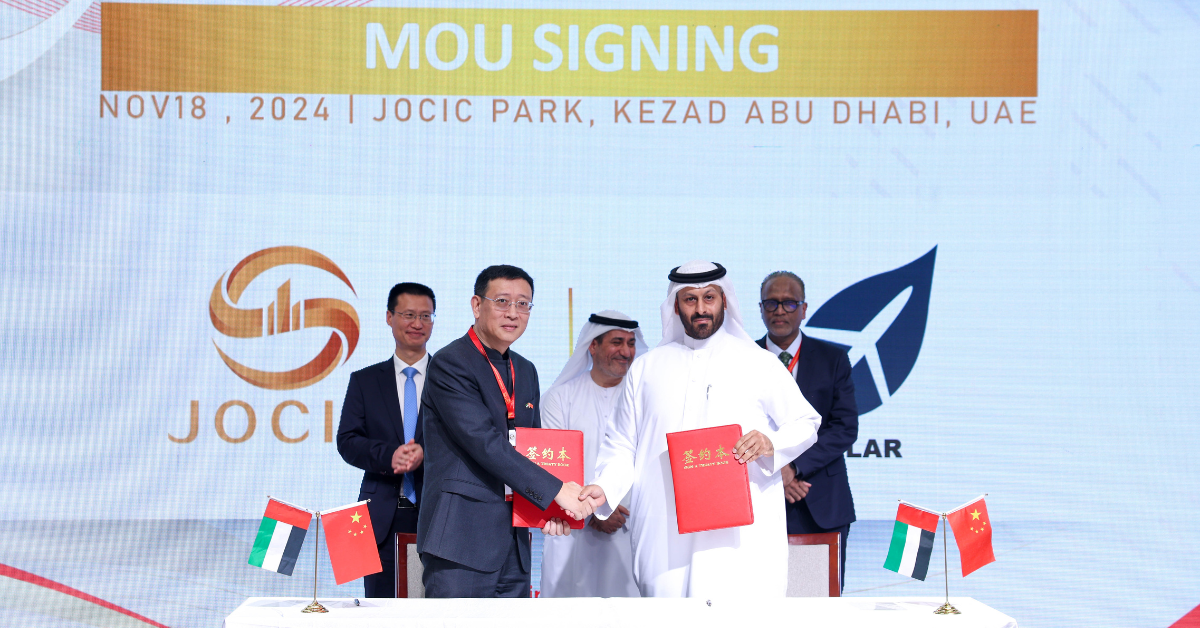
Hong Kong-based Volar Air Mobility has announced plans to manufacture electric aircraft in Abu Dhabi, aligning with the United Arab Emirates’ commitment to sustainable transportation. The company aims to produce the RX4E, a four-seater electric aircraft designed for various applications, including eco-tourism, pilot training, medical evacuations, border control, and surveillance. The RX4E has achieved a significant milestone by becoming the world’s first electric aircraft certified under Part 23 regulations for commercial use. citeturn0search3

Volar Air Mobility has been actively collaborating with UAE authorities to advance green aviation initiatives. In September 2024, the company signed a Memorandum of Understanding with the UAE’s General Civil Aviation Authority to establish a Green Aviation technological development hub in the country. Additionally, Volar partnered with Etihad Aviation Training to explore the development of a sustainability cluster focused on research and development in green aviation within the UAE. citeturn0search0

The UAE has been investing in sustainable transportation modes, including electric vehicles, buses, and the Dubai Metro system, significantly reducing the number of cars on the road. citeturn0search2 The UAE’s Net Zero 2050 Strategy aims to stimulate economic and societal advancement by leading the transition to net zero emissions. citeturn0search16

Volar’s decision to establish production facilities in Abu Dhabi aligns with the UAE’s strategic vision for sustainable development. The RX4E’s applications in eco-tourism and pilot training are expected to contribute to the nation’s environmental goals. The aircraft’s capabilities in medical evacuations, border control, and surveillance also offer potential enhancements to public services.

South Korea’s Financial Services Commission has unveiled a structured plan to permit corporate entities to engage in cryptocurrency transactions through real-name accounts. This initiative, set to commence in the first half of 2025, aims to integrate corporate participation in the digital asset market while ensuring regulatory oversight.

The FSC’s strategy involves a three-phase rollout. Initially, non-profit organizations, law enforcement agencies, and cryptocurrency exchanges will be granted access to real-name accounts. This move is designed to facilitate activities such as the conversion of platform fee income into fiat currency for exchanges and the handling of confiscated assets by law enforcement. However, exchanges will be subject to government guidelines to prevent market volatility.

In the subsequent phase, slated for the second half of 2025, professional investment entities—including listed companies and registered investment institutions—will be authorized to participate in crypto asset trading. These entities must adhere to stringent anti-money laundering protocols and undergo evaluations by banks and crypto exchanges to ensure compliance.

The final phase envisions extending crypto investment capabilities to general enterprises. This stage remains under long-term consideration and is contingent upon the successful implementation of preceding phases, as well as the establishment of comprehensive regulations encompassing stablecoins, exchange operations, and cross-border crypto transaction monitoring.

FSC Vice Chairman Kim So-young emphasized the importance of a cautious and measured approach, stating that the policy’s implementation must be gradual and carefully monitored to prevent market disruptions. He highlighted the necessity of clear AML guidelines to maintain market integrity throughout the rollout process.

This policy shift addresses longstanding challenges within South Korea’s crypto industry, particularly for small and mid-sized exchanges that have struggled with liquidity constraints. By enabling corporate accounts, these exchanges are expected to enhance their operational capabilities and competitiveness within the market.

The United Arab Emirates has secured a position among the top ten countries globally for the number of artificial intelligence companies per million inhabitants, as highlighted in the Global AI Competitiveness Index. This achievement underscores the nation’s rapid advancement in the AI sector.

The Global AI Competitiveness Index, a collaborative effort between the International Finance Forum and Deep Knowledge Group, analyzed over 55,000 AI companies worldwide to assess their density, financing, and development. The UAE’s prominent ranking reflects its strategic focus on fostering AI innovation and enterprise.

In 2017, the UAE appointed the world’s first Minister of State for Artificial Intelligence, signaling its commitment to AI development. Subsequently, the National Strategy for Artificial Intelligence 2031 was launched, aiming to position the UAE as a global leader in AI by 2031. This strategy aligns with the broader UAE Centennial 2071 vision, focusing on economic, educational, and governmental transformation through AI.

The National Strategy for Artificial Intelligence 2031 outlines several key objectives, including establishing a network of researchers, industry experts, and policymakers; supporting the development of domestic AI startups and products; encouraging foreign direct investment and partnerships with global AI firms; and providing guidance and financial support for local businesses to expand globally.

The UAE’s strategic investments in AI are evident through initiatives such as the establishment of the Technology Innovation Institute, which has developed advanced open-source large language models like Falcon. Additionally, the UAE has launched the $100 billion MGX fund, targeting AI investments globally. These efforts are complemented by partnerships with major U.S. technology companies, including Nvidia, AMD, Microsoft, OpenAI, and IBM, enhancing the UAE’s access to cutting-edge AI technologies.

The World Governments Summit 2025 concluded its three-day event in Dubai on Thursday, uniting over 30 heads of state and government, more than 80 international and regional organizations, and 140 government delegations. Under the theme “Shaping Future Governments,” the summit addressed pressing global challenges and explored innovative solutions for effective governance.

French President Emmanuel Macron, speaking at the AI Action Summit in Paris earlier this week, emphasized the need for streamlined regulatory processes and significant investment in artificial intelligence to compete with global powers. He advocated for increased European cooperation and a unified strategy for AI development, highlighting France’s commitment to investing €109 billion in the sector.

In a notable session, industry leaders underscored the critical importance of digital access for societal advancement. Margherita Della Valle, CEO of Vodafone, highlighted the widening gap between those with internet access and those without, noting that approximately 2.6 billion people remain offline, with 300 million residing in remote areas lacking connectivity infrastructure. Hatem Dowidar, CEO of the e& group, discussed his company’s evolution towards offering services in fintech, cybersecurity, and cloud computing, reflecting a broader industry shift towards comprehensive digital solutions.

The summit also featured discussions on the ethical deployment of AI and the necessity for robust networks to support its implementation. Mickey Mikitani, CEO of Japan’s Rakuten, called for a radical transformation of the telecommunications sector and the removal of entry barriers to foster innovation. Panelists emphasized the importance of dialogue between governments and industry leaders to develop regulations that address current and future challenges in the AI landscape.

HANOI, VIETNAM – Media OutReach Newswire – 12 February 2025 – F88 Investment Joint Stock Company (F88) has just announced its highest-ever consolidated after-tax profit, along with several key financial indicators that highlight the company’s rapid and sustainable recovery, following a challenging year. F88 posts highest-ever consolidated after-tax profit in 2024. Photo courtesy of the firm. F88, which owns 99.99 per cent of F88 Business Joint Stock […]

Elevision, a leading digital-out-of-home media company in the UAE, has announced a strategic partnership with Dubai Design District , a member of TECOM Group PJSC. This collaboration aims to revolutionise urban digital media within Dubai’s creative hub. The agreement entails the installation of advanced digital screens throughout d3’s premises, enhancing the district’s digital infrastructure. This initiative is designed to provide brands with innovative platforms to engage with […]

By K Raveendran Prime Minister Narendra Modi’s call for greater emphasis on the Global South in the evolving world order shaped by artificial intelligence is a strategic proposition. With AI becoming the most critical technological force of the 21st century, it is imperative that developing nations, particularly those in the Global South, have a role […]


TAIPEI, TAIWAN – Media OutReach Newswire – 12 February 2025 – CyCraft Technology, a leading AI-powered cybersecurity company, proudly announces its collaboration with Malaysia’s IOI Group to deploy its autonomous threat management platform, XCockpit, for the Cyber Health Check Service (Compromise Assessment, CA). As a visionary conglomerate, IOI Group recognizes the need for innovative approaches to cybersecurity in the rapidly evolving AI era. This partnership marks a […]

Expected to open in late 2026, ASAI Cebu Oslob will introduce ASAI Hotels’ signature blend of modern design, local experiences, and vibrant communal spaces to one of the Philippines’ most scenic coastal destinations. BANGKOK, THAILAND – Media OutReach Newswire – 11 February 2025 – Dusit International, one of Thailand’s leading hotel and property development companies, and Grand Land Inc., a subsidiary of the Gaisano Grand Group of […]

India is poised to enhance its naval capabilities through a significant acquisition of 26 Rafale Marine jets from France. The French government has submitted its final price proposal to New Delhi, marking a pivotal step in the procurement process. This development coincides with National Security Advisor Ajit Doval’s scheduled visit to Paris, where the deal is expected to feature prominently in strategic discussions.

The Rafale Marine jets are intended for deployment on the INS Vikrant, India’s indigenous aircraft carrier, as well as at various naval bases. The inclusion of these advanced fighters is anticipated to significantly bolster the Indian Navy’s maritime strike capabilities. Defence sources indicate that the French side has offered a substantial price reduction following rigorous negotiations, underscoring the deepening defence collaboration between the two nations.

A French delegation recently visited New Delhi to finalise the terms of the agreement. The deal’s progression is expected to be a focal point during the India-France Strategic Dialogue, where NSA Doval will engage with his French counterparts. This dialogue aims to further solidify bilateral ties and address mutual security concerns.

India has approved specific modifications in the letter of request for the Rafale Marine jets, including the integration of the indigenous Uttam radar system. While this integration is projected to take approximately eight years and entails additional costs, it represents a significant step towards self-reliance in defence technology. Furthermore, India has requested the incorporation of homegrown weaponry, such as the Astra beyond-visual-range missiles and Rudram anti-radiation missiles, into the aircraft’s arsenal.

The pricing structure of the deal is informed by previous agreements, notably the procurement of 36 Rafale fighter jets for the Indian Air Force. Considerations include factors like inflation rates and the inclusion of specific requirements from the Indian Air Force, such as the provision of approximately 40 drop tanks and a limited number of workstations for the aircraft.

In addition to the Rafale Marine jets, India and France are finalising a deal for three additional Scorpene-class submarines. These submarines are slated to be constructed with French collaboration, further enhancing India’s underwater warfare capabilities. Both deals, collectively valued at nearly Rs 1 lakh crore, are anticipated to be concluded by the end of the current fiscal year, reflecting the robust and growing defence partnership between the two nations.

The acquisition of the Rafale Marine jets and Scorpene submarines aligns with India’s broader strategy to modernise its military assets and strengthen its defence posture in the Indo-Pacific region. As geopolitical dynamics evolve, such strategic partnerships and procurements are crucial for maintaining regional stability and safeguarding national interests.

The Rafale Marine, a naval variant of the Dassault Rafale, is renowned for its versatility and advanced combat capabilities. Equipped with state-of-the-art avionics and weapon systems, it is capable of carrying out a wide range of missions, including air superiority, ground attack, and reconnaissance. Its integration into the Indian Navy is expected to significantly enhance operational readiness and combat effectiveness.

The Scorpene-class submarines, developed by France’s Naval Group, are diesel-electric attack submarines known for their stealth and advanced sonar capabilities. The addition of three more Scorpene submarines will augment the Indian Navy’s underwater warfare strength, providing a strategic advantage in maritime operations.

Abu Dhabi-based Ittihad International Investment LLC has secured a $450 million sustainability-linked revolving credit facility with a consortium of local banks. The facility was arranged by Emirates NBD, Commercial Bank of Dubai, and First Abu Dhabi Bank, serving as mandated lead arrangers and bookrunners, as well as sustainability joint coordinators. Additionally, Abu Dhabi Commercial Bank, Abu Dhabi Islamic Bank, and Emirates Islamic acted as joint arrangers. The […]

The United Arab Emirates is intensifying its commitment to sustainable transportation by planning to install 500 electric vehicle charging stations nationwide by the end of 2025. This initiative aims to support the growing adoption of EVs and reduce carbon emissions, aligning with the country’s broader environmental objectives. Sharif Al Olama, Under-Secretary for Energy and Petroleum Affairs at the Ministry of Energy and Infrastructure, announced that over 100 […]

Abu Dhabi-based PureHealth Holding PJSC has ceased discussions to acquire hospital operator NMC Healthcare, according to individuals familiar with the matter. The decision marks a significant shift in the UAE’s healthcare sector, where consolidation efforts have been prominent. PureHealth, controlled by Abu Dhabi’s sovereign wealth fund ADQ, had been evaluating a potential bid for NMC Healthcare, which operates approximately 85 medical facilities across the UAE. These facilities […]

The Gulf Cooperation Council is on track to see its debt capital market exceed $1 trillion in outstanding issuances by the end of 2025, driven by government initiatives aimed at market development, economic diversification, and the need to fund fiscal deficits and upcoming debt maturities. Fitch Ratings reports that the DCM in the GCC reached $940 billion by the close of the first quarter of 2024, marking a 7% year-on-year increase.

Saudi Arabia and the United Arab Emirates lead the region’s DCM, holding 43% and 30% of the market share, respectively. Approximately 40% of the GCC’s outstanding debt comprises sukuk, with the remainder in conventional bonds. Fitch Ratings, which assesses over 70% of the GCC’s US dollar-denominated sukuk, notes that 81% of these are investment-grade, with no defaults reported.

The anticipated growth in debt issuances is attributed to several factors, including projected declines in oil prices to $65–$70 per barrel in 2025 and 2026, which may prompt increased sovereign borrowing to cover budgetary shortfalls. Additionally, government-led initiatives to enhance debt capital markets and diversify funding sources are expected to play a significant role. Bashar Al Natoor, Global Head of Islamic Finance at Fitch Ratings, emphasizes that “most GCC countries have come a long way in developing their DCMs, with the bloc now accounting for almost a third of total emerging-market dollar issuance, excluding China.”

Despite these advancements, the GCC’s debt capital markets remain less mature compared to more developed regions and exhibit varying stages of development across member states. Saudi Arabia and the UAE possess the most advanced markets, while Qatar and Oman have seen contractions due to debt repayments. Kuwait’s absence of a debt law limits its funding options, and Bahrain continues to rely heavily on DCM access and support from other GCC nations amid persistent deficits.

In the banking sector, GCC banks are projected to issue over $30 billion in US dollar-denominated debt in 2025, a decrease from the record $42 billion issued in 2024. This decline is partly due to the maturation of approximately $23 billion in existing debt, with Qatari banks accounting for about a third of these maturities, and UAE and Saudi banks each representing around a quarter. Fitch Ratings anticipates that most additional Tier 1 instruments with first call dates in 2025 and 2026 will be called, given favorable financing conditions.

The US Federal Reserve is expected to reduce interest rates by 100 basis points in 2025, potentially leading to more favorable financing conditions for GCC banks. Strong credit growth, particularly in Saudi Arabia and the UAE, is also anticipated to support further issuances. In 2024, GCC banks’ US dollar debt issuance reached an unprecedented level, driven by high credit growth in Saudi Arabia, efforts to diversify funding bases, and substantial debt maturities.

Canada’s ambassador to France, Stéphane Dion, has denounced U.S. President Donald Trump’s recent statements regarding potential territorial expansions, asserting that such threats contravene international law. Dion emphasized that “in order to respect international law, you don’t threaten your neighbours by invasion.” President Trump has indicated he would not dismiss the use of military force to acquire Greenland, an autonomous territory of Denmark. Additionally, he has proposed the […]

VISHNU RAJA
RYO YAMADA
HITORI GOTOH
IKUYO KITA