News related to
Bank

Overview – Asia Pacific’s Wealth Boom Accelerates HONG KONG SAR – Media OutReach Newswire – 14 July 2025 – The sixth edition of the Julius Baer Global Wealth and Lifestyle Report confirms the ongoing shift from material consumption towards experiences. Jen-Ai Chua, Research Analyst, Asia, Julius Baer, commented: “Asia Pacific remains one of the fastest-growing regions globally. Real GDP grew 4.5 per cent year on year in […]

UAE’s new Comprehensive Economic Partnership Agreement with Azerbaijan has catapulted bilateral non‑oil trade to unprecedented levels, now accounting for half of Azerbaijan’s commerce with Gulf Cooperation Council countries. This landmark pact promises to mould economic trajectories for both nations by 2031.

Dr Thani bin Ahmed Al Zeyoudi, UAE Minister of Foreign Trade, revealed that non‑oil trade surged by 36.2 percent in 2024, reaching US $2.24 billion—equivalent to 50 percent of Azerbaijan’s trade with the GCC. This accomplishment is underpinned by a robust 4.1 percent expansion in Azerbaijan’s overall GDP and a 6.3 percent rise in its non‑oil sector.

Signed in Abu Dhabi with the presence of UAE President Sheikh Mohamed bin Zayed Al Nahyan and Azerbaijani President Ilham Aliyev, CEPA is expected to inject US $680 million into UAE GDP and US $300 million into Azerbaijan by 2031. It further cements the UAE’s status as Azerbaijan’s top Arab investor, with cumulative UAE investments now exceeding US $1 billion.

The CEPA supports strategic priorities in manufacturing, automotive, agriculture, logistics, and financial services, with planned expansion of UAE investments in energy and renewables via state-owned giants ADNOC and Masdar. Masdar’s portfolio in Azerbaijan is set to exceed 1.2 GW by 2027 following a 4 GW renewables agreement including solar and hydrogen projects.

This accord also aligns with broader UAE ambitions under its CEPA programme, aimed at achieving US $1.1 trillion in non‑oil trade by 2031. Already, the initiative delivered a record US $816 billion in 2024, marking a 14.6 percent year-on-year increase, and positions the UAE as having 27 CEPA agreements with markets comprising over one‑quarter of global population.

Beyond trade figures, CEPA signifies a strategic push to diversify UAE exports and deepen supply‑chain resilience. It enables Azerbaijani goods access to Gulf and global markets, while encouraging UAE capital deployment in Eastern Europe via Azerbaijan’s Gateway logistics advantage. Sectors like food security, real estate, and logistics are flagged for development across both economies.

Financial cooperation is gaining momentum too. Talks between Azerbaijan’s Central Bank and Abu Dhabi Securities Exchange may lay groundwork for capital-market linkages. Additionally, Azerbaijani remittances to UAE saw a 52.1 percent rise in Q1 2025, reaching US $18.8 million.

Humanitarian and environmental collaboration with CEPA includes UAE support for demining through Azerbaijan’s Mine Action Agency and joint efforts during COP summits.

CEPA is poised to enrich private‑sector ties, particularly for SMEs, while also strengthening tourism links—highlighted by over 185 monthly flights connecting the UAE and Azerbaijan. Earlier cooperation has boosted non‑oil trade 43 percent in 2024 to about US $2.4 billion.

In the energy domain, strategic joint ventures have been flourishing. ADNOC holds a 30 percent stake in Azerbaijan’s Absheron project, and SOCAR reciprocated with oil‑field stakes in UAE territory. Renewable efforts include a 445 MW solar plant in Bilasuvar and a 315 MW installation in Neftchala under Saudi-UAE investment.

Goldman Sachs has begun deploying “Devin,” an autonomous coding agent developed by London-based startup Cognition, as part of its technology workforce, Chief Information Officer Marco Argenti confirmed to CNBC. The bank plans to roll out hundreds, potentially thousands, of Devin instances working alongside its approximately 12,000 human software engineers. Argenti described Devin as a “new employee” that will augment rather than replace human programmers, forming what he […]

Greenlogue/AP Morocco is embarking on an ambitious project to construct a 500 megawatt data centre powered entirely by renewable energy in Dakhla, Western Sahara, according to digital transition minister Amal El Fallah Seghrouchni. The facility aims to bolster the protection and localisation of sensitive data infrastructure, reinforcing the kingdom’s drive to establish itself as a key digital hub for Africa. The announcement positions the Dakhla centre as a state-owned flagship in […]

Abu Dhabi—The Central Bank of the UAE has revoked the licence of Al Khazna Insurance Company P. S. C under Article 33 of Federal Decree Law No. 48 of 2023 governing insurance activities, after the firm failed to meet mandatory licensing requirements during a suspension period.

The central bank’s investigations uncovered persistent non-compliance with both the Insurance Law and additional CBUAE regulations throughout the suspension, leading to decisive regulatory action. The move underscores the regulator’s commitment to maintaining the integrity and transparency of the UAE’s insurance sector and broader financial system.

Al Khazna, based in Abu Dhabi, saw its licence suspended earlier in line with provisions introduced under the 2023 law. As part of this suspension, insurers are required to resolve any compliance gaps before licence reinstatement. However, the CBUAE found that Al Khazna failed to correct these deficiencies during that period.

Regulatory scrutiny appears to have intensified since the Insurance Law came into effect, as authorities aim to bolster trust in financial markets. The central bank, acting through its supervisory mandate, has intensified examinations across insurance entities to ensure adherence to legal and regulatory standards.

Industry analysts note that the revocation itself does not automatically trigger an exit cascade, but it sends a stern warning. “Companies that fail to meet minimum capital, solvency or operational standards risk losing their licences outright,” said an insurance consultant based in Dubai. The loss of licence bars Al Khazna from conducting any further insurance operations in the UAE unless formally reinstated under strict new terms.

Under the Insurance Law, the CBUAE is mandated to revoke licences if, during suspension, firms fail to comply with corrective actions, including capital adequacy, governance, risk management and statutory reporting. The central bank’s review team reportedly flagged multiple gaps, though details of specific breaches have not been made public.

The CBUAE’s zero-tolerance approach signals broader regulatory tightening across financial services. Since March, the central bank has levied fines totaling over AED 2.6 million against certain insurance firms and banking institutions for breach of tax compliance, antimoney‑laundering and other framework violations.

Following Al Khazna’s licence revocation, policyholders may face claims uncertainty. The CBUAE has provided guidelines to insurers under licence suspension, recommending them to continue servicing in-force policies and settle outstanding claims under regulatory oversight. It is expected that the regulator will enforce a similar approach for Al Khazna to safeguard consumer interests. Discussions are reportedly underway with other operators to absorb liability where needed, according to industry insiders.

Market reaction has been muted so far. Shares of listed insurers remained steady, while privately held peers are reviewing their own compliance procedures. “This clearly demonstrates that regulatory grace periods must be matched with swift corrective action and transparency,” said the insurance consultant in Dubai.

Al Khazna joined a wave of sector-wide transformation last year when the Insurance Law was introduced. Designed to implement international best practices, the legislation set new capital thresholds, risk frameworks and governance structures for all insurers its jurisdiction. Experts say the law’s strict enforcement marks a seminal shift towards a more robust and risk-aware sector.

A spokesperson for the CBUAE emphasised that regulatory enforcement will continue. “The decision affirms our mandate to uphold the stability and integrity of the UAE’s financial system,” the spokesman said at a press briefing in Abu Dhabi. “All insurance firms must adhere fully to the legal and regulatory standards or face similar consequences.”

Al Khazna’s licence revocation now places it among a small but growing list of financial firms that have failed to align swiftly with enhanced regulatory norms. It remains unclear whether the firm will pursue a licence reinstatement by dissolving all compliance breaches or whether it will exit the market. Sources within the firm declined to provide comment on next steps.

Following Al Khazna’s licence revocation, the central bank may step up its inspection frequency across the sector. Regulators are expected to issue fresh guidance to insurers on enhancing risk management, capital planning and governance practices. Analysts believe this incident will encourage all players to accelerate internal audits and compliance enhancements.

The CBUAE has also emphasised its openness to collaboration. It continues to engage with industry stakeholders via working groups and technical committees to align regulatory expectations with market realities while protecting policyholders.

The Bank of England is evaluating the role of stablecoins in wholesale payments and tokenised asset infrastructure via its UK Digital Securities Sandbox, at a pivotal juncture for financial market innovation. Sasha Mills, Executive Director of Financial Market Infrastructure, outlined this approach during her keynote at City Week in London on 2 July. The central bank is focusing on blending stability, regulatory clarity, and interoperability as it reshapes post-trade and settlement systems.

Mills emphasised that the digitalisation of wholesale financial markets—driven by tokenisation, distributed ledger technology, smart contracts and programmable ledgers—has the potential to enhance market depth, reduce friction, and mobilise capital more efficiently. Yet she stressed that any emerging system must preserve the bedrock of financial stability: confidence in finality of settlement and risk parity across new and legacy platforms.

The Digital Securities Sandbox has emerged as a cornerstone of the Bank’s strategy. Since its inception, the sandbox has attracted both incumbents and new market entrants. A notable early application has been the UK Government’s Digital Gilt pilot—nicknamed DIGIT—where debt issuance occurs on a distributed ledger. Mills noted it has catalysed broader interest in using tokenisation to simplify asset mobility, enable intraday repo operations and improve collateral utilisation.

Crucially, the Bank is exploring the integration of stablecoins within this sandbox framework. While central bank money remains the preferred settlement asset, Mills described the Bank’s position as “open‑minded” to stablecoins’ potential utility in wholesale markets. The Bank plans to provide further clarity on stablecoin roles and standards later this year.

In its consultation approach to systemic stablecoins—launched with a discussion document in November 2023—the central bank is considering reforms such as permitting a percentage of reserves to be held in high-quality liquid assets, rather than unremunerated central bank balances. It is also contemplating transitional holding limits: for individuals, between £10,000 and £20,000; for businesses, up to £10 million. These measures aim to curb stability risks from sudden large outflows.

Beyond stablecoins, tokenised deposits are highlighted as a promising vehicle to merge regulatory safeguards of traditional deposits with the efficiency of real-time, on‑chain settlement. Mills confirmed the Bank is working to integrate tokenised deposits across DSS initiatives and its broader National Payments Vision.

Complementing these developments, the Bank continues to elevate its core infrastructure. Its Real‑Time Gross Settlement system is undergoing major upgrades under the RT2 programme. Upcoming enhancements include broader access, extended operating hours, and a synchronisation interface. This interface is designed to facilitate conditional settlement—in which transfers within the RTGS can be synchronised with transactions on external DLT systems.

The Bank has joined the BIS Innovation Hub’s DLT Innovation Challenge to test whether wholesale central bank money can be transacted and settled on external programmable ledgers. Mills described this as an experiment into how wholesale central bank monies, stablecoins, and tokenised deposits can co-exist safely.

The BoE maintains that a mixed infrastructure ecosystem—where traditional and emerging systems operate side by side—is the foreseeable outcome. Ensuring interoperability across public and private, permissioned and permissionless ledgers is essential to prevent liquidity fragmentation and support seamless transfer of capital. Public blockchains may offer connectivity solutions, provided they meet security and regulatory standards.

Mills cautioned that while technological adoption is important, regulators must integrate hard-earned lessons on confidence and stability. “Money requires confidence to support economic activity and growth in good times and bad,” she said, warning that failures in settlement finality could erode trust and trigger cascading market events.

With its “secondary innovation objective”, the Bank is actively reviewing existing regulations that pose barriers to digital finance, engaging continuously with industry participants. The DSS, tokenised deposits, upgraded RTGS, stablecoin framework, and experimental alignment with DLT signal a coordinated strategy to modernise UK wholesale finance.

China Development Bank has launched a groundbreaking dual‑currency bond on Nasdaq Dubai, bearing an A1 rating from Moody’s, with a pair of three‑year notes: a $500 million floating‑rate tranche at SOFR +30 basis points and a €500 million fixed‑rate tranche bearing a 2.25 percent coupon. Investor demand flooded in, especially from Europe, the Middle East and Asia, marking a significant milestone in cross‑border financing. The euro tranche, with its enticing […]

Advertisements

Sharjah’s Real Estate Registration Department has unveiled an upgraded version of its official website, signalling a significant milestone in its digital transformation agenda. The streamlined platform aims to improve delivery of services and create an intuitive, integrated online hub for a diverse user base across the emirate. Designed with a contemporary, interactive interface, the site aligns with Sharjah Government’s directive to offer smart, high‑efficiency services. Investors, developers, […]

Greenlogue/AP Abu Dhabi’s renewable energy developer Masdar and Spanish energy giant Iberdrola have announced a joint investment totalling €5.2 billion in the UK’s 1.4 GW East Anglia Three offshore windfarm. The project, located around 69 km off the Suffolk coast, will be equally co-owned—50:50—by both firms and supported by a €4.1 billion financing package arranged by 24 international banks. East Anglia Three forms part of a decade‑long partnership underpinned by a broader […]

Stonepeak, a US-based infrastructure investor, has agreed to acquire a 50 per cent co-controlling stake in IFCO Group from a subsidiary of the Abu Dhabi Investment Authority. The transaction positions Stonepeak alongside European mid-market investor Triton, which will continue its existing 50 per cent ownership. Financial terms were not disclosed, and the deal remains subject to customary regulatory approvals, with completion targeted in the fourth quarter of 2025.

Founded in 1992, IFCO operates one of the world’s largest reusable packaging container systems, managing over 400 million units and facilitating approximately 2.5 billion shipments of fresh food annually across more than 50 countries. This extensive network, supported by around 140 service centres, serves more than 18,000 growers and over 300 retailers, delivering substantial cost efficiencies, sustainability gains, and operational scalability compared to single-use packaging.

ADIA initially invested in IFCO’s carve-out from Australian logistics group Brambles in 2019, following a $2.5 billion sale to Triton. Over the intervening years, IFCO has undergone a comprehensive strategic and operational transformation, including enhanced digitalisation and an expanded global footprint, setting the stage for this latest ownership transition.

IFCO’s chief executive officer, Michael Pooley, praised the combined expertise of Stonepeak and Triton, emphasising that the new partnership will support growth and reinforce IFCO’s “market leading position globally”. Nikolaus Woloszczuk, Senior Managing Director at Stonepeak, described IFCO as a “critical component of the logistics infrastructure delivering fresh produce” and underlined the firm’s commitment to accelerating the company’s expansion—particularly in North America—as part of Stonepeak’s broader infrastructure investment strategy.

Triton’s co‑head of business services, Stephan Förschle, affirmed the firm’s ongoing commitment to IFCO, signalling confidence in the combined vision with Stonepeak to deliver value through digitalisation and sustainability initiatives. Representing ADIA, executive director Hamad Shahwan Aldhaheri noted that since the 2019 investment, IFCO had built “solid foundations for the future, based on strong operational performance and enhanced digital capabilities”.

Advisory teams have been engaged from both sides of the transaction. Citi and Morgan Stanley served as financial advisers to ADIA and Triton, with Bank of America also representing ADIA, while Kirkland & Ellis and Latham & Watkins provided legal counsel. Stonepeak was advised by Citi financially and Kirkland & Ellis legally.

Analysts indicate that the deal could value IFCO at approximately €5.5 billion including debt, implying a consideration near €2 billion for the 50 per cent stake, according to Bloomberg. This valuation reflects IFCO’s robust market position and future growth prospects in sustainable logistics.

The combination of Triton’s deep sector knowledge and Stonepeak’s infrastructure expertise—including its focus on transport, logistics, and digitalisation—positions IFCO to capitalise on rising demand for circular economy solutions in food supply chains. With container reuse gaining regulatory momentum and retailer focus on waste reduction intensifying, IFCO’s closed-loop model is becoming increasingly central to sustainable logistics strategies.

Market observers expect this deal to reinforce growing investor interest in circular supply chain infrastructure, especially as environmental and governance factors shape capital allocation. The high valuation underscored by global advisory firms suggests confidence in IFCO’s ability to deliver both financial returns and environmental impact through its RPC-based system.

The completion of this transaction in late 2025 will mark a significant milestone for all stakeholders. ADIA exits after six years of investment and strategic support. Triton remains, signalling continuity in governance and operation. Stonepeak enters as a long-term partner, with capital and network to help scale IFCO’s platform further—particularly in North America.

European Parliament approved the removal of the United Arab Emirates from its “high-risk third countries” list for money laundering and terrorist financing, a decision aligned with its earlier removal by the Financial Action Task Force in February 2024 and marking a pivotal regulatory victory. This shift reduces the compliance burden on trade and financial flows, enhancing Abu Dhabi’s ambitions to deepen ties with Brussels and attract global investors.

Parliament’s vote endorsed the European Commission’s update to the list, which also saw the UAE’s delisting alongside jurisdictions like Gibraltar, Barbados and Panama, while new entries such as Monaco and Kenya were added. The move followed intense technical dialogue between Emirati authorities and EU institutions, satisfying the bloc’s concerns with enhanced cooperation on financial intelligence sharing and asset recovery.

Mohamed bin Hadi Al Hussaini, the Minister of State for Financial Affairs, described the decision as a “strategic milestone” that underscores global recognition of the UAE’s robust framework. He emphasised that this represents a shift toward positioning the UAE as a transparent, resilient and globally trusted financial centre – a foundation for attracting sustained investment.

These reforms follow a sweeping crackdown on non-compliance, with over AED 339 million in fines levied by the Central Bank on exchange houses, banks and insurers. The fines were part of a wider national strategy enacted under Federal Decree‑Law 20/2018 and its amendments, stretching regulatory oversight to real estate, precious metals, auditing and digital asset sectors.

Hamid Saif Al Zaabi, Secretary‑General of the National Anti‑Money Laundering and Combating the Financing of Terrorism Committee, told WAM that the EU’s removal affirms successful system‑wide integration across public and private sectors. He described the outcome as the result of a sustained national strategy dating back to 2014, supported by Cabinet-approved action plans and ongoing capacity‑building initiatives.

Despite commendations for its progress, Transparency International cautioned that delisting should not be interpreted as full clearance. The organisation noted persistent challenges in real estate safeguards and oversight of politically exposed persons, calling for ongoing vigilance and structured dialogue.

Financial experts note that removal from the EU’s list could yield significant economic dividends. The International Monetary Fund estimates capital inflows may surge by as much as 7.6 per cent of GDP, with foreign direct investment potentially rising by around 3 per cent. Gulf region analysts view delisting as unlocking smoother trade with Europe across sectors such as renewable energy, fintech and digital infrastructure.

Diplomatic messaging framed the delisting as a mutual strategic victory. UAE Minister Ahmed bin Ali Al Sayegh called it “independent recognition” of Abu Dhabi’s dedication to high international standards. EU Ambassador to the UAE Lucie Berger described it as deepening trust and advancing a shared commitment to economic safeguard and global security. Simultaneously, EU trade officials suggested that the move removes political and regulatory barriers ahead of ongoing free trade agreement negotiations with the UAE.

While the FATF had cleared the UAE in early 2024, the EU’s delayed action mirrored its own rigorous oversight cycle. In March 2023, the EU flagged the UAE for strategic deficiencies before launching a renewed process that incorporated enhanced inter-agency cooperation and legal reform.

Next on the UAE’s reform agenda is ensuring resilience in emerging risk domains such as cryptocurrency laundering and cross-border terror financing. Analysts emphasise that maintaining international trust will require sustained enforcement, legislative updates scheduled for later this year and deeper public–private collaboration.

Air Arabia has recommenced double daily non‑stop flights between Sharjah and Damascus from 10 July 2025, marking a pivotal renewal of air connectivity between the UAE and Syria. The low‑cost carrier’s decision, following a suspension since 2012, responds to rising demand and broader regional diplomatic easing.

The carrier’s reinstated schedule includes two early departures from Sharjah at 04:15 and 10:45, landing in Damascus at 06:30 and 13:00, respectively. Return services depart Damascus at 07:30 and 14:00, arriving in Sharjah at approximately 11:40 and 18:10 local time. Utilising Airbus A320s and A321s, Air Arabia’s fleet will provide in‑flight entertainment via ‘SkyTime’, on‑board dining through ‘SkyCafe’, and loyalty benefits under its ‘Air Rewards’ programme.

During a launch ceremony at Sharjah International Airport, attendees included Adel Al Ali, Group CEO of Air Arabia, and Ali Salim Al Midfa, Chairman of Sharjah Airport Authority, indicating the route’s strategic significance. A reception at Damascus International Airport featured UAE Ambassador Hasan Ahmed Mohammed Sulaiman Alshehhi and Syria’s Chargé d’Affaires Ziad Yahya Zaher Edin.

CEO Al Ali emphasised the route’s importance in serving the substantial Syrian diaspora in the UAE, estimated at over 350,000 individuals, and facilitating enhanced travel for business, tourism, and family visits. He remarked, “This route holds particular significance in serving the Syrian diaspora in the region and meeting the growing travel demand between the UAE and Syria.” The airline anticipates this service will bolster trade ties, with bilateral trade having reached US $680 million in 2024—a 23 percent increase over 2023.

Air Arabia’s restoring of direct flights aligns with a wider trend of regional airlines re‑engaging Syria. Emirates is scheduled to recommence services to Damascus from 16 July, expanding to daily flights by October. Flydubai resumed operations on 26 June. Additionally, national carrier Syrian Air has restarted several regional services since January, while Qatar Airways reinstated a Doha‑Damascus route in early January. Turkish budget airline Anadolu Jet launched flights from Istanbul and Ankara in April.

Damascus International Airport itself underwent closure during an opposition offensive in December 2024, later reopening with limited commercial flights. Full international traffic resumed in January 2025, with renovation support from Turkey in February.

The renewal of these services carries deeper geopolitical significance, reflecting a subtle shift in diplomatic engagement with Syria. In April, the UAE’s General Civil Aviation Authority formally lifted suspensions on flights to Syria, and UAE‑Syrian ministerial talks have since addressed aviation, banking, and consular matters.

Travel agents and industry analysts have interpreted the move as a calculated expansion of Air Arabia’s network, offering cost‑conscious alternatives to Gulf‑Europe‑Syria itineraries, especially for the UK and Europe‑based Syrian diaspora. The airline’s fare structure and twice‑daily service are expected to attract both long‑standing diaspora links and emerging trade flows.

Independent aviation analysts note that Air Arabia’s streamlined operations, lean cost base, and digital platform—covering bookings via website, app, call centre, and travel agencies—are key competitive advantages. The company now serves more than 90 global destinations, including recent additions such as Sochi, Prague, and expansion within Russia and Europe.

Despite the optimism, security concerns remain. Damascus Airport was only partially reopened in January, and while the civil aviation authority has announced upgrades, full operational stability depends on infrastructure restoration and geopolitical calm. Some observers caution that air travel to Syria may still face intermittent regulatory or safety challenges, advising prospective travellers to monitor advisories and airlines’ updates closely.

Nevertheless, the resumption of the Sharjah–Damascus route represents a turning point for mobility in the region. By restoring a decade‑long link, Air Arabia reinforces its position as a catalyst for regional integration and economic exchange, while filling a transport gap for displaced communities and traders across the Gulf.


Nigeria has secured a $747 million syndicated loan, led by Deutsche Bank, to fund the initial 47.47‑kilometre phase of its flagship coastal highway spanning from Victoria Island to Eleko Village in Lagos. The Ministry of Finance confirmed the financing on Wednesday, marking a record for road infrastructure funding in the country. Lenders in the syndicate include First Abu Dhabi Bank, African Export‑Import Bank, Abu Dhabi Exports Office, ECOWAS […]

GATES Inc. is deploying blockchain technology to enable foreign investors to buy stakes in a portfolio of income-generating properties worth US $75 million in central Tokyo through the Oasys network. The initiative is part of a broader strategy to modernise how overseas buyers participate in Japan’s real estate market.

The pilot scheme will issue digital tokens representing fractional ownership in a basket of premium commercial and residential assets, held via an overseas special-purpose vehicle to ensure regulatory compliance. GATES CEO Yushi Sekino described the move as “building next‑generation investment infrastructure that allows global investors easy access to Japanese assets.”

GATES has signalled an ambitious scaling plan to encompass US $200 billion worth of real estate tokens—a fraction but strategic segment of Japan’s entire US $20.5 trillion market. Such a leap reflects growing institutional interest in tokenisation of real‑world assets worldwide, with projections valuing the tokenised bond and equity space at US $18 trillion by 2033.

Blockchain advocates argue this model eliminates traditional intermediaries—brokers, legal firms, language translators—while lowering costs and administrative burdens. GATES will enable the platform to carry out token issuance, secondary trades and compliance checks on-chain. This allows small-scale global investors to transact in real time, without navigating Japanese legal complexities directly.

Oasys, a layer‑1 blockchain originally built with gaming in mind, has repositioned itself toward tokenising real‑world assets, including property and intellectual property rights. Ryo Matsubara, Oasys Representative Director, emphasised that “Japanese content, whether game IP or other cultural assets, commands high global value,” thus reinforcing their pivot to real‑world asset tokenisation.

The first phase focuses on Tokyo, but GATES plans roll‑out to other major international markets including the United States, Europe and Southeast Asia. Future stages may target tokenised rights to Japanese media and entertainment franchises, unlocking new investment channels for cultural IP.

Global benchmarks suggest tokenised real estate is gaining speed: Dubai anticipates a US $16 billion market by 2033, while international banks and tech firms increasingly pilot similar schemes. CoinDesk highlighted that GATES is the first major Japanese real estate company to attempt a tokenisation project of this magnitude.

Yet challenges remain. Japanese regulatory frameworks governing securities—including digital asset classification—are still evolving. Local legal consultation remains essential, especially in structuring overseas vehicles to comply with the Financial Instruments and Exchange Act. Additionally, investor appetite outside Asia and Europe will hinge on clarity in custody, asset valuation methods, and secondary‑market liquidity.

Independent analysts note that tokenisation promises more than simplified access; it may improve transparency, tracking and governance by embedding ownership and contract details onto an immutable ledger. Such benefits could, over time, boost asset yields and reduce fraud risk.

However, critics caution that regulatory and technological bottlenecks, combined with customary conservatism in Japanese real‑estate investment, could slow adoption. So many see the success of this pilot in Tokyo as crucial evidence for scaling up to the US $200 billion target.

With GATES pursuing a Nasdaq listing and reporting revenue of roughly US $145 million in 2024, the company has both resources and strategic backing to drive forward. If Tokyo’s pilot succeeds, the combination of blockchain infrastructure and overseas special‑purpose vehicle structures could point the way for similar strategies across Asia and beyond.

While tokenisation of Japanese real estate may appear niche, the project could presage a broader redefinition of how global capital flows into property markets—promising greater access, efficiency and digital-native investment models.

GUIZHOU, CHINA – Media OutReach Newswire – 10 July 2025 – Capitalizing on its exceptional ecological resources, Zhanjie Town in Qingzhen City, Guizhou Province is actively promoting the optimization of its industrial structure and the integrated development of culture and tourism. The town is forging a new path to high-quality rural revitalization—transforming ecological beauty into prosperity for its residents. In recent years, Zhanjie Town has adhered to […]

Russian Deputy Foreign Minister Sergei Ryabkov stated on Thursday that BRICS is not an “anti‑American” bloc and will reject any “language of threats and manipulation.” This assertion followed U. S. President Donald Trump’s announcement that countries adopting what he termed “anti‑American policies” aligned with BRICS would face an extra 10 per cent tariff. Ryabkov emphasised BRICS’ focus on dialogue and constructive engagement, not confrontation. He underscored that the group […]

MENA region investment banking fees declined 2 per cent year‑on‑year in the first half of 2025, falling to US$773.7 million, the third‑highest H1 tally since 2000, according to London Stock Exchange Group’s Deals Intelligence data. The dip occurred amid an environment of oil‑price volatility, geopolitical fragmentation and escalating global trade tensions. Debt capital markets underwriting emerged as the growth engine, with related fees rising 20 per cent to US$278.9 million. However, […]

Stringent new visa rules now govern travel from Nigeria to the United Arab Emirates, marking a sharp increase in restrictions. Transit visas have been fully suspended, while tourist visas for solo applicants aged 18 to 45 are no longer allowed. Those aged 45 and above must now demonstrate a six-month bank balance of at least USD 10,000 to qualify. A directive communicated to travel agents in Dubai on Tuesday […]

Security analysts have uncovered a new campaign delivering the Anatsa Android banking trojan to users in the U. S. and Canada via a seemingly legitimate app on Google Play. This marks the third major wave of North American targeting by the threat actor, raising fresh concerns around mobile banking security. The malicious app, masked as a “Document Viewer – File Reader,” gained traction in the U. S. top‑three […]

By Dr. Gyan Pathak Though on the eve of the workers’ all India general strike on July 9, 2025, Union Ministry of Labour, Government of India, tried to downplay the strike action by claiming that213 unions had informed of their staying away from the strike, India actually witnessed on Wednesday the largest ever general strike […]
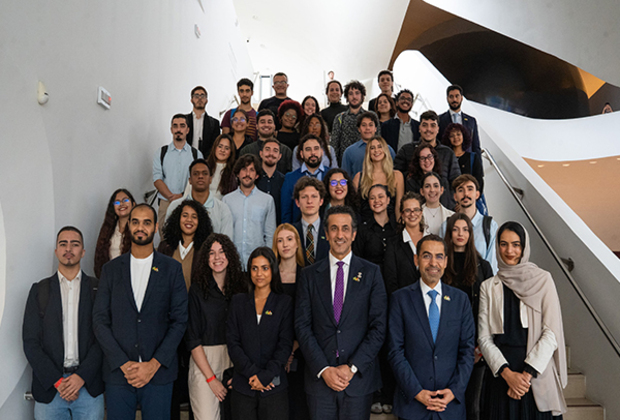

The United Arab Emirates joined the BRICS Finance Ministers and Central Bank Governors Meeting in Rio de Janeiro on 6 July 2025 under Brazil’s rotating presidency, with a focus on the global economic outlook and climate finance. Led by H. E. Mohamed bin Hadi Al Hussaini, Minister of State for Financial Affairs, the UAE delegation included key figures from the Ministry of Finance and the Central Bank of the UAE.

Al Hussaini opened his remarks by stressing the UAE’s commitment to deepening dialogue on the future of the global financial system and strengthening multilateral cooperation frameworks to face development challenges. He asserted that platforms such as BRICS provide “important opportunity to enhance global economic governance, expand access to innovative financing, and support long‑term financial stability”.

The summit’s agenda was structured into three comprehensive sessions: finance ministries, central banks, and a joint forum examining the international economic landscape, climate finance, and policy coordination. Delegates also discussed a proposal by Brazil to pilot a BRICS Multilateral Guarantee fund via the New Development Bank, aiming to mobilise private investment for infrastructure and climate-related initiatives.

In a move signalling its growing climate finance role, the UAE, alongside China, expressed intention to invest in Brazil’s Tropical Forests Forever Facility — a fund supported by BRICS to safeguard tropical forests. Leaders issued a joint statement underscoring the responsibility of developed nations to contribute to climate mitigation efforts.

Further strengthening the bloc’s role in global economic governance, BRICS finance ministers advanced a unified proposal for IMF reform. The initiative calls for a restructured quota system that reflects current global economic realities, incorporating output and purchasing power to boost representation for emerging economies. The proposal is slated for presentation at the 2025 IMF Review in December.

Discussions included plans for a cross-border payments system to enhance financial integration within BRICS, potentially reducing reliance on Western-controlled mechanisms and promoting monetary coordination among member states.

Brazilian President Luiz Inácio Lula da Silva framed BRICS as a beacon of multilateral diplomacy, likening it to the Non‑Aligned Movement, and warned against Western protectionist trends, including carbon border taxes. He emphasised that the bloc represents 40% of global output and over half the world’s population, and advocated reform of institutions like the IMF and UN Security Council.

The UAE, which joined BRICS in January 2024 and entered the NDB in October 2021, is now actively shaping the bloc’s agenda on governance, finance, and sustainability. Its support for key initiatives highlights a strategic effort to elevate its international role in emergent economies and climate action.

Emirates Airline has formalised a strategic alliance with Crypto. com aimed at integrating Crypto. com Pay into its digital payment systems, underscoring a strong commitment to security and regulatory compliance. The partnership, set to activate next year, was marked by a Memorandum of Understanding signed by Adnan Kazim, Emirates’ Deputy President and Chief Commercial Officer, alongside Mohammed Al Hakim, President of Crypto. com’s UAE operations. The signing took place under the witness of Sheikh Ahmed bin Saeed Al Maktoum, Chairman and Chief Executive of Emirates Airline & Group, and Michael Doersam, Emirates’ Chief Financial & Group Services Officer.

Emirates’ leadership highlighted the rationale behind the move: embracing the growing demand among tech-savvy travellers and aligning with Dubai’s broader ambition to lead in financial innovation. Adnan Kazim emphasised the airline’s dedication to “meeting evolving customer preferences” and offering travelers more flexibility in payments. The integration also positions Emirates to engage with a younger demographic increasingly comfortable with digital currencies.

Crypto. com echoed this forward-looking sentiment. Eric Anziani, President and COO, described the agreement as a catalyst for wider cryptocurrency adoption in consumer finance. He welcomed Emirates as “an exceptional partner,” stressing that the integration will push momentum across the digital asset sector in the Gulf region.

The MoU outlines not only the technical integration of Crypto. com Pay but also joint marketing initiatives to increase awareness and encourage uptake. Emirates and Crypto. com intend to launch promotional campaigns aimed at customers, educating them on the convenience and security of paying with digital assets.

This collaboration reflects a broader trend within the UAE, where regulators have implemented a notable framework to encourage blockchain innovation while maintaining robust investor protection and financial system integrity. Dubai, in particular, has seen a surge in cryptocurrency utility across multiple sectors, including property, retail, and telecommunications. The MoU aligns with this ecosystem, reinforcing Dubai’s vision to be a global hub for crypto innovation.

Financial experts observing the region note that infrastructure investments, regulatory clarity, and consumer interest have driven a significant crypto inflow—valued at approximately US$34 billion between July 2023 and June 2024—suggesting strong institutional confidence. Adoption of digital payments by major consumer-facing corporations such as Emirates is seen as a transformative step in normalising cryptocurrencies as mainstream payment options.

Emirates’ approach to this partnership has been cautious yet calculated. Emphasis on security, compliance, and regulatory alignment indicates a measured strategy that places integrity at the forefront. The airline assures customers that the integration will meet “the highest security and compliance standards,” a crucial reassurance in light of global scrutiny surrounding crypto-related risks.

This is not Emirates’ first foray into strategic payment alliances. Earlier this year, the airline partnered with American Express Middle East to enhance offerings for small and medium‑sized enterprises across the Middle East and North Africa regions. The Crypto. com collaboration signals a parallel move into the emerging digital asset sphere, indicating Emirates’ growing appetite for financial innovation beyond traditional banking channels.

Industry analysts observe that including crypto payments could broaden Emirates’ appeal among adventurous travellers and those engaged in the digital economy. For Crypto. com, the partnership adds to a burgeoning presence in the GCC, enabling the company to showcase real-use cases with a prestigious flag-carrier.

The path ahead involves critical integration steps, including system upgrades, staff training, customer education, and regulatory coordination. Both parties have set a goal for full deployment by next year, providing a practical timeline for technology deployment and market engagement strategies.

XI’s BICKS NO-SHOW: STRATEGIC SHIFT OR SILENT WARNING? CHINESE SYMBOLISM ON CONFIDENCE IN FULL PLAY M A Hossain In the realm of global politics, symbolism matters almost as much as substance. President Xi Jinping of China has decided not to attend this year’s BRICS summit which will be held in Rio de Janeiro. This is the first time President Xi will not be at the summit since […]

U. S. President Donald Trump has announced a sweeping 50 % tariff on copper imports, jolting commodity markets and triggering sharp moves across financial sectors. Copper futures in the United States surged to record highs, while international benchmarks in London and Shanghai retreated under mounting uncertainty surrounding shipment logistics and timing. At a Cabinet meeting, Trump confirmed the unprecedented levy, citing national security and a desire to bolster […]

VISHNU RAJA
RYO YAMADA
HITORI GOTOH
IKUYO KITA