News related to
Bank

Citizens Bank has launched coverage of SharpLink Gaming, assigning it a “market outperform” rating and a price target of $50, implying upside in excess of 200 percent from current levels.

The bank’s analysis hinges on SharpLink’s positioning as a publicly traded entity that actively manages an Ether treasury, combining yield-bearing deployment strategies with equity-market mechanisms to enhance value. Citizens projects that ETH’s long-term price trajectory, together with SharpLink’s operational model, could underpin substantial growth.

Citizens expects SharpLink’s net asset value to rise as the company compounds returns from staking, liquid restaking, and other on-chain yield strategies. The bank cites management’s capacity to issue equity above NAV or repurchase shares when trading below NAV as a leverage point for shareholder value.

SharpLink is led by Ethereum co-founder Joseph Lubin, who serves as Chairman, and Joseph Chalom, formerly of BlackRock, as Co-CEO. The bank underscores this combination of crypto ecosystem pedigree and traditional capital markets acumen as a competitive advantage.

In its report, Citizens forecasts ETH could exceed $7,000 by 2026, potentially pushing beyond $20,000 by 2030, and argues that SharpLink offers one of the few pure-play equity vehicles tied to Ether exposure. The bank describes SharpLink’s operating model as a “flywheel” in which yield-generated returns accelerate NAV per share, further facilitating growth capital.

Citizens’ valuation assigns a premium multiple to SharpLink’s NAV, justified by management execution and the structural optionality inherent in an actively managed ETH treasury. The report points to the possibility that investor recognition of this optionality could drive valuation multiple expansion.

SharpLink has also taken steps consistent with the thesis. It has initiated a share buyback programme, repurchasing approximately 939,000 shares at an average price of $15.98, and the board has authorised up to $1.5 billion in share repurchases for capital allocation flexibility. In tandem, SharpLink disclosed it holds around $3.6 billion in ETH, nearly all staked to produce yield.

Meanwhile, B. Riley has initiated coverage of SharpLink with a “Buy” rating and a $32 target, casting some contrast in outlook. B. Riley emphasises that the company’s discount to modified NAV is attractive — currently trading at 0.8× mNAV — and expects upward re-rating to 1.5× mNAV within 12 months, contingent on ETH accumulation and damping equity issuance dilution.
By Girish Linganna The prisoner-hostage exchange between Israel and Hamas has been completed successfully, and many are calling it a major victory for peace. Twenty Israeli hostages returned home in exchange for about 2,000 Palestinian prisoners, aid started flowing back into Gaza, and guns fell silent after months of devastating conflict. But anyone familiar with […]

The article A House Built On Sand: The Fault Lines In Trump’s 20 Point Gaza Peace Plan appeared first on Latest India news, analysis and reports on Newspack by India Press Agency).

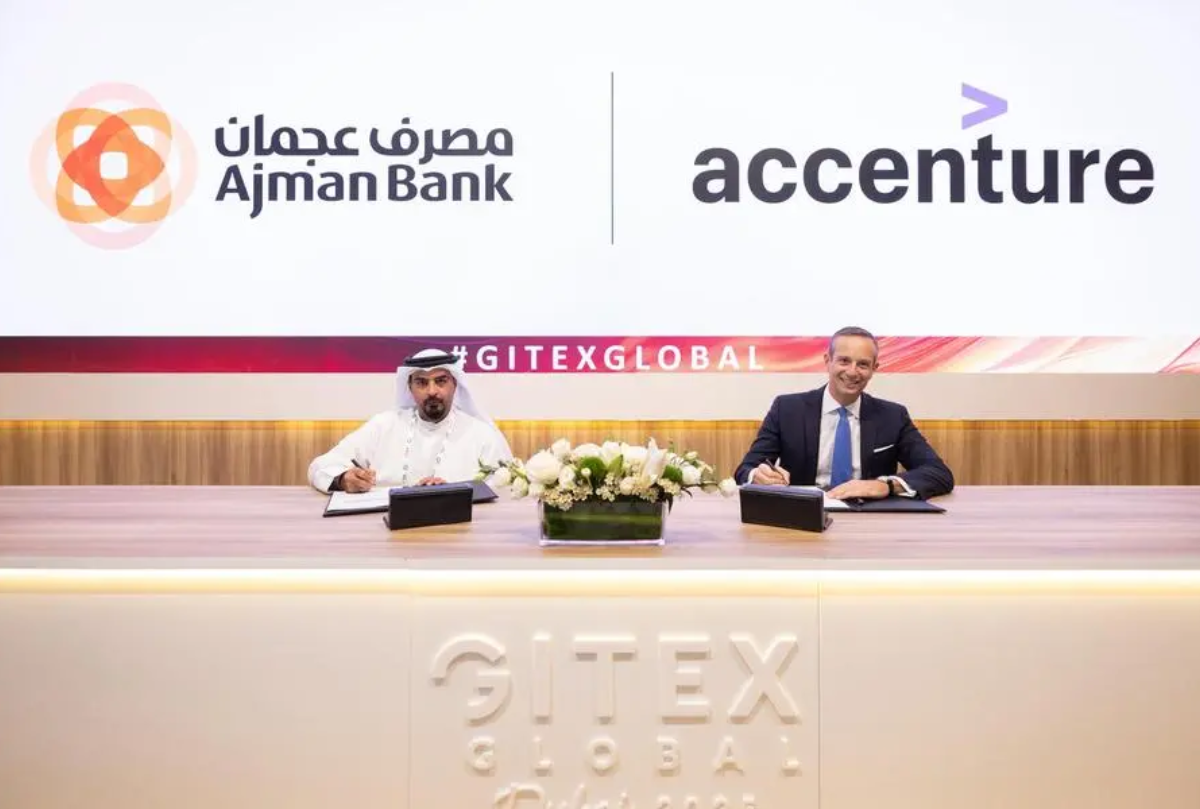
The Ajman Department of Finance unveiled a suite of smart payment services at GITEX Global 2025, signalling its bid to position the emirate at the forefront of digital government finance solutions. The offerings include integration of the UAE’s national payment card “Jaywan”, a buy-now-pay-later option via its AjmanPay portal, and a unified financial management platform dubbed “Estidama system”.

Marwan Ahmed Al Ali, Director General of the Department of Finance in Ajman, said the new services aim to provide “flexible payment options” tailored to “all segments of society” and boost the emirate’s digital transformation agenda. The launch was attended by senior government and private-sector officials during the event.

The Jaywan card—launched by the Central Bank of the UAE to reduce reliance on global card networks—has now been linked with AjmanPay, allowing users to make payments via ATMs, e-commerce platforms and point-of-sale terminals. The Department also launched a zero-interest instalment option to facilitate fee payments and transactions in instalments or deferred payments.

The Estidama system is presented as a next-generation cloud-based platform comprising four interconnected modules that manage budgeting, initiative planning, financial execution and reporting. It promises to unify financial operations across the Ajman government, enhancing transparency and control over public spending.

Officials emphasised that these steps align with broader national efforts to digitise financial infrastructure. By integrating Jaywan into Ajman’s government payments, the emirate is tapping into the UAE’s goal of financial sovereignty and reducing dependence on foreign card networks.

Partnership with First Abu Dhabi Bank underpins the linking of Jaywan with AjmanPay, showcasing public–private collaboration in driving fintech infrastructure. The Department described the move as a qualitative addition to its digital ecosystem, reflecting its commitment to “innovation in government payment systems”.

During GITEX, Ajman’s government platform is also showcasing AI, data analytics, and other advanced technologies in financial resource management. The participation underscores the emirate’s aim to benchmark itself in the regional competition over smart city and digital government credentials.

South Korea’s Financial Intelligence Unit has authorised a change in GOPAX’s executive leadership, clearing the way for Binance’s acquisition of 67 per cent of the local exchange and formally restoring its presence in the country. The decision comes after over two years of regulatory review and internal scrutiny.

The executive registration approval by the FIU establishes Binance as the controlling shareholder of GOPAX, resolving a key hurdle that had delayed the deal since its initiation in early 2023. By acquiescing to the change, South Korean authorities have allowed Binance’s re-entry into one of Asia’s most active cryptocurrency ecosystems.

When Binance first acquired the majority stake in GOPAX in February 2023, it sought to stabilise the exchange following a liquidity crisis tied to frozen customer deposits connected to the GoFi yield product. That crisis was traced to exposure to Genesis Global Capital, whose own collapse triggered withdrawals being halted. Binance undertook a capital injection to support GOPAX’s recovery while awaiting formal regulatory sign-off on executive changes.

The FIU’s prior hesitancy centred on concerns that Binance’s international compliance record could clash with South Korea’s anti-money laundering oversight. Legal pressure from U. S. authorities, including enforcement actions and substantial fines, had raised red flags among domestic regulators. But the FIU’s acceptance now signals that uncertainties over Binance’s compliance credentials have been sufficiently addressed.

Under South Korean law, exchanges must report changes in executive or representative roles to the FIU, which effectively acts as a gatekeeper in approving foreign capital in the local crypto sector. No separate screening mechanism exists for major shareholders, making the executive registration process a de facto test of suitability. Delays in this case were reportedly driven by repeated demands for supplemental documentation by regulators.

GOPAX is one of only five exchanges in South Korea authorised to conduct cash-crypto transactions under strict regulatory norms. With Binance now in control, GOPAX could compete more aggressively against dominant local players such as Upbit and Bithumb. Yet entrenched banking relationships and compliance frameworks will still pose barriers to market share gains.

The approval reflects a shift in Korea’s regulatory posture toward greater openness—especially for exchanges that have resolved international legal disputes. Binance’s own settlements regarding AML and market conduct issues appear to have alleviated domestic regulatory apprehension. The acceptance also underscores the FIU’s judgment that Binance’s structural changes and compliance assurances now align with South Korea’s regulatory expectations.

U. S. President Donald Trump declared that Indian Prime Minister Narendra Modi has pledged to halt India’s purchases of Russian crude oil, a shift that would significantly upend global energy flows if implemented. Trump told reporters that Modi made the commitment during their conversation, stating that phasing out Russian imports would not happen overnight but would take place “within a short period of time.” The Indian embassy […]

MAF Sukuk Ltd is launching a US$500 million, 10-year sukuk under Regulation S, with initial price thoughts set around US Treasuries plus 125 basis points. The securities will be backed by Majid Al Futtaim Properties as the obligor, while parent Majid Al Futtaim Holding offers a guarantee.

The offering adopts a wakala/murabaha structure and is expected to carry credit ratings of “BBB/BBB”, aligned with those of the guarantor. HSBC is acting as lead structuring bank, with the purpose of the funding geared towards expansion and refinancing of property development activities.

Majid Al Futtaim Holding, in its most recent credit review, retains its BBB rating and stable outlook, reflecting its scale of operations and diversified asset base. Fitch affirmed the rating in November 2024, citing growth across revenue and EBITDA. Majid Al Futtaim’s internal guidance confirms that capital allocation remains within the thresholds consistent with its BBB leverage metrics.

Investors familiar with corporate sukuk in the Gulf region view the 125 basis point spread as moderately tight for a 10-year tenor, particularly for a non-sovereign issuer in the real estate sector. The parent guarantee is crucial to bolster credit comfort, given that the issuer is a property development arm.

In recent years, Majid Al Futtaim has deployed Islamic capital markets for its financing needs. Its 2023 green bond issuance of US$500 million was aimed at refinancing an AED 800 million bond commitment, underlining a strategy to blend sustainability credentials with its capital structure. The group similarly has historically issued hybrid capital securities and sukuk in its debt portfolio.

The latest sukuk will be listed via MAF Sukuk Ltd, which already carries a BBB long-term rating. The listing via a special purpose issuer isolates the structure from direct group operations, while the parent guarantee transfers credit risk back to the overarching entity.

Major risks for the deal rest on cyclical pressures in real estate markets, tenant defaults, and development cost inflation. Majid Al Futtaim Properties has disclosed in its base prospectus the possibility of cost overruns, land title constraints, and tenant concentration as material risks. The group also faces competitive dynamics in its markets where some rivals are state-backed.

Mohamed Futtah, a regional fixed-income strategist, commented that “a 10-year sukuk at T+125bp for a BBB group guarantee is ambitious, but could succeed under strong demand, especially from Gulf and Asia Islamic investors seeking yield in a rate environment that is otherwise compressed.”

South Africa’s township economy, long relegated to the informal fringes of growth, is now drawing deliberate attention from government, corporates and fintech innovators alike as a pivotal engine for broad-based development. The sector is increasingly viewed not as a peripheral “slack” market but as a strategic frontier offering scale, resilience and social inclusion. Analysts estimate that the township economy could be worth between R900 billion and over R1 trillion, […]

Advertisements

Matein Khalid I have made no secret about my conviction that Brazil’s Nu Bank (NU) and China’s Alibaba (BABA) are my two fave emerging market’s fintechs of destiny since 2024. Alibaba has risen almost 100% since I accumulated its shares in the mid 80’s in its New York ADR once it was evident that the Politburo had pivoted to Big Bang fiscal/monetary stimulus to goose the dormant […]

Matein Khalid Real estate occasionally provides prescient investors the ability to make serious capital gains with minimal or even zero risk. Take the Empire of the Rising Sun and the sinking yen, also known as Japan. The ruling LDP has shed its Komeito coalition partner and is all set to embrace Sanae Takaichi as Lady Shogun or Dai Nippon’s first elected woman Prime Minister. This means higher […]

KUALA LUMPUR, MALAYSIA – Media OutReach Newswire – 15 October 2025 – Organised by the Ministry of Natural Resources and Environmental Sustainability (NRES) and co-organised by the Malaysian Green Technology and Climate Change Corporation (MGTC), the International Greentech & Eco Products Exhibition and Conference Malaysia (IGEM) 2025 opened its doors today at the Kuala Lumpur Convention Centre, marking the start of three days dedicated to innovation, collaboration, […]

The 2025 Global Fraud Index ranks Africa as the world’s most exposed region to digital fraud, marking a significant shift in the global fraud landscape. Sumsub’s study, covering 112 countries across four structural pillars, places Nigeria, Tanzania, Uganda, Kenya and Senegal among the least protected nations. Sumsub built its index on four weighted dimensions: fraud activity, resource accessibility, government intervention, and economic health. The combined framework aims […]

By K Raveendran Oil prices fell to their lowest level in five months on Tuesday, continuing a slide that has gathered pace over the past several weeks. The benchmark Brent and West Texas Intermediate crude futures have both dipped significantly, erasing much of the year’s earlier gains. In stark contrast, gold has soared to an […]

The article Gold Feeds On Oil’s Misfortune; One Hits The Roof, The Other Down In The Dumps appeared first on Latest India news, analysis and reports on Newspack by India Press Agency).

OwlTing, a Taiwan-based fintech focussed on stablecoin infrastructure, is set to begin trading its Class A common shares on the Nasdaq via direct listing on 16 October under the ticker “OWLS”. The move marks what the company calls a milestone in its evolution from hospitality and e-commerce into a compliance–led blockchain payments firm.

In its public filings, OwlTing reported revenue of US 7.6 million in 2024 and a payment volume across its platforms of approximately US 218 million. Though still unprofitable, the listing underscores growing confidence in the fragmented stablecoin infrastructure space.

The listing comes at a moment when several high-profile developments are shaping the stablecoin and payments ecosystem. Stripe’s Bridge unit is reportedly preparing to apply for a federal banking charter, aiming to navigate evolving U. S. stablecoin regulation. Meanwhile, major financial and technology firms are said to be in advanced talks to acquire BVNK, a London-based stablecoin platform.

OwlTing’s pivot from hospitality and blockchain traceability to payments and stablecoin services has been underway for some years. Its OwlPay platform enables businesses to accept stablecoins or fiat and settle globally. The company has obtained money transmitter licences in multiple U. S. states and holds themselves out as a “compliance-first” operator in a space that often struggles with regulatory uncertainty.

By listing via direct listing rather than a traditional IPO, OwlTing seeks to avoid dilution of existing shares and allow market-based price discovery. The company will ring the Nasdaq opening bell on 16 October to commemorate the debut. Analysts view the listing as Asia’s first fintech with a pure direct listing on Nasdaq, positioning OwlTing as a regional trailblazer in blockchain payments.

In parallel, Stripe’s ambitions in stablecoin continue to intensify. Its Bridge arm, acquired earlier this year, is now seeking a national trust charter to get ahead of U. S. regulation on digital assets and stablecoins. The charter would permit holding deposits and issuing stablecoins more directly under U. S. oversight.

Sharjah’s government has successfully raised Rmb 2 billion by issuing a three-year panda bond in China’s onshore renminbi market. The issuance marks the emirate’s return to the panda bond space after its inaugural foray seven years ago. The pricing range for the bond was initially indicated in the 2.5 % to 3.2 % area. The transaction was arranged through a syndicate led by Bank of China, with […]

GITEX Global 2025 in Dubai has become a battleground for dominance in nation-scale artificial intelligence, as governments and tech giants compete to control the infrastructure that will underpin the next wave of the digital economy. The event has already featured multiple high-stakes unveilings of sovereign AI platforms, hyperscale data centres, and public-service automation systems illustrating how computing power is being weaponised as strategic capital. The opening day […]

The International Monetary Fund has lifted its projection for the United Arab Emirates’ economic expansion to 4.8 per cent in 2025 and sees 5.0 per cent growth in 2026, citing accelerating non-hydrocarbon activity and a rebound in oil output.

Stronger-than-expected performance in tourism, construction, trade and financial services is underpinning the upward revision. The IMF attributes resilience to the country’s diversified strategy and structural reforms such as enhanced trade agreements and sustained investment in infrastructure.

Analysts say the revision contrasts sharply with broader regional downgrades. The IMF now expects growth across the Middle East and North Africa to expand by only 2.6 per cent in 2025, constrained by policy uncertainty, volatile energy markets and geopolitical tensions.

Within the UAE, central bank data reinforce the narrative of dual expansion. The non-hydrocarbon sector is forecast to grow by around 4.5 per cent annually in both 2025 and 2026, while the hydrocarbon segment is expected to rebound more sharply—by 5.8 per cent in 2025 and 6.5 per cent in 2026—on increased output as OPEC+ quotas are relaxed.

When IMF staff visited the UAE in January 2025, they noted that domestic demand remained robust amid modest oil production, forecasting real GDP growth at about 4 per cent for the year. They projected that fiscal and external surpluses would remain comfortable, helped by elevated non-oil revenues and cautious fiscal management.

Still, risks linger. The UAE’s banking sector, while well capitalised, faces exposure to real estate, and high house prices pose concerns for asset quality. In mid-2025, exposure to property in banks’ portfolios stood at around 18 to 19 per cent of risk-weighted assets. A sudden shift in investor sentiment or capital flows could test the stability of credit markets.

On the external front, the current account surplus is projected at about 7.5 per cent of GDP, supported by stronger non-oil exports and moderating import growth. Liquidity buffers remain healthy, with international reserves covering more than eight months of imports.

Kigali has become the launchpad for the Rwanda chapter of the Africa Trade Gateway, a comprehensive digital trade ecosystem developed by the African Export-Import Bank in partnership with the African Continental Free Trade Area Secretariat. The rollout aims to accelerate uptake of the platform across the nation and integrate Rwandan firms more closely into Africa’s digital trade networks. The ATG combines five integrated modules—including PAPSS, MANSA, ATEX, […]

Tether has agreed to pay $299.5 million to the Celsius Network bankruptcy estate, resolving long-standing disputes over Bitcoin collateral transfers tied to Celsius’s collapse in 2022. The deal was announced by the Blockchain Recovery Investment Consortium, a joint venture between GXD Labs and VanEck, acting as litigation administrator and asset recovery manager for Celsius’s creditors.

The settlement brings closure to adversary claims filed in August 2024 in the U. S. Bankruptcy Court for the Southern District of New York. Celsius had contended that Tether improperly liquidated Bitcoin collateral backing loans denominated in USDT, executing sales when Bitcoin’s market value closely matched Celsius’s debt — thereby undermining the lender’s position. Under the agreement, those claims will be dismissed, though the broader wind-down of Celsius remains ongoing.

BRIC was appointed by Celsius’s debtors and the unsecured creditors committee in January 2024 to steer recovery efforts of illiquid assets and litigation claims. According to BRIC’s announcement, the payment reflects a negotiated resolution consistent with maximizing returns for creditors. David Proman of GXD Labs remarked on the “timeliness” of the settlement and the objective of concluding contentious matters against Tether.

While $299.5 million is a substantial sum, it accounts for a relatively small fraction of the total claims Celsius had pursued—estimated at approximately $4 billion. Tether’s side had resisted full liability, positioning its role as merely transactional rather than one bearing responsibility for downstream collateral use, a stance it has maintained in past legal challenges. Some observers interpret the settlement as signalling heightened legal risks for stablecoin issuers in future insolvency contexts, where courts may scrutinize the proximity of collateral actions to debtor collapse.

The settlement does not necessarily foreclose other claims linked to the Celsius wind-down. BRIC remains responsible for managing a portfolio of residual litigation and illiquid digital assets, with the aim of continuing creditor recovery. The deal, in effect, removes one major legal obstacle in a broader restructuring process that has spanned years.

Market reaction has been muted. Crypto stakeholders and legal analysts are now closely watching whether regulators or courts will treat this settlement as a template—potentially influencing how stablecoin issuers are held to account in distressed scenarios. Some argue that issuers will face increased pressure to adopt stronger governance and compliance frameworks to mitigate similar exposures. Others caution against overinterpreting the settlement as an admission of liability.

What first inspired you to pursue your current industry or professional path? Was there a defining moment or influence that shaped your direction? My journey into financial technology began during my early days at Banque Misr, Egypt’s second-largest bank, where I witnessed firsthand the inefficiencies of traditional paperbased banking systems. The defining moment came when I was tasked with spearheading the digital transformation initiative, converting traditional transactions […]

The Bank of North Dakota and payments firm Fiserv have unveiled plans for a dollar-backed digital token dubbed “Roughrider,” to be deployed among banks and credit unions in 2026 as a new instrument for interbank settlement. The token, restricted initially to participating financial institutions, aims to accelerate and modernise bank-to-bank transactions within the state.

Under the agreement, Roughrider will be built on Fiserv’s digital asset infrastructure, leveraging the platform’s framework to interoperate with other stablecoins. The Bank of North Dakota becomes the first U. S. state bank to issue a stablecoin on Fiserv’s platform. The initiative targets enhanced liquidity, streamlined payments, and potential expansion into merchant adoption.

Governor Kelly Armstrong cast the move as bold institutional innovation, positioning the state as a testing ground for blockchain-enabled finance. “We’re entering a new era,” he said, emphasising that North Dakota financial institutions must embrace evolving money-movement tools. Fiserv’s COO Takis Georgakopoulos described Roughrider as merging the stability of traditional banking with the agility of distributed ledger technology.

State officials say the Industrial Commission, which oversees the bank, must approve the pilot plan. Once greenlit, the rollout will begin with a small cohort of local institutions. BND President and CEO Don Morgan noted that any costs from development will rest on the bank’s balance sheet rather than state taxpayer funding. The legal team of Troutman Pepper Locke has advised the bank in structuring the deal.

The federal legislative environment played a crucial role: in July, Congress passed the GENIUS Act, providing stablecoin issuers with a national regulatory framework requiring full backing by high-quality assets, transparency rules, and audit requirements. North Dakota’s scheme is built to align with those standards.

While Wyoming’s Frontier Stable Token launched in August and is available for public use, North Dakota’s strategy is more conservative. Roughrider will begin as a wholesale instrument; public or consumer-facing use is not part of the first phase. Some stakeholders view it as a deliberate step to mitigate operational and financial risks before broader deployment.

Analysts say North Dakota offers a lower-complexity environment for experimentation. With BND being the only state-owned bank in the U. S., the state provides a more controlled setting to work through technical, legal, and compliance challenges. If successful, the model could be scaled beyond North Dakota’s borders or adopted by others.

Banks and credit unions participating in the pilot stand to benefit from faster settlement, reduced settlement costs, and simpler liquidity management. But industry voices warn of potential downsides: deposit flight is a concern if stablecoins siphon off customer balances, and state regulators may need more capacity to oversee digital assets.

Fiserv, which serves roughly 10,000 financial institutions and 6 million merchants globally, sees this as an opportunity to embed stablecoin rails within its ecosystem. It launched its own white-label stablecoin platform earlier this year, with FIUSD as its internal token, and views Roughrider as a use case within that infrastructure.

BERLIN, GERMANY – Newsaktuell – 14 October 2025 – Global leaders reaffirmed their commitment to health as a political priority and a cornerstone of peace and resilience on day 2 of the World Health Summit, the leading platform for global health. Against the backdrop of geopolitical crises, global leaders called for shared responsibility in shaping a healthier, more resilient world on the World Health Summit stage. World […]

Mohammed Bin Rashid Housing Establishment is spotlighting a suite of digital housing solutions at GITEX Global 2025, announcing strategic tie-ups aimed at advancing smart infrastructure and inclusive living. The initiative underscores Dubai’s push to fuse technology with urban development amid intensifying global competition in digital transformation.

MBRHE is presenting new digital services engineered to optimise housing operations, energy efficiency and resident experience. At GITEX, the entity finalised a partnership with Emirates Islamic Bank to develop financing and digital payment tools tailored for homeowners, and earlier inked an agreement with AI Smart to retrofit housing units with assistive technologies for People of Determination. The latter includes deploying smart systems in five identified residences to enhance mobility and independence. These deals complement an existing MoU with Emirates Gas to supply next-generation LPG composite cylinders across MBRHE communities, complete with annual maintenance services.

As part of Dubai’s government ecosystem at GITEX, MBRHE is listed among Gold Partners in the Digital Dubai pavilion, joining over 50 public and private entities promoting the emirate’s City-as-a-Service model. This placement gives MBRHE visibility amid hundreds of technology players from more than 180 countries. The pavilion is intended to demonstrate cross-sector digital synergies across health, energy, mobility and governance spheres.

MBRHE officials emphasise a multipronged strategy. The partnership with Emirates Islamic is geared toward embedding embedded financial tools into housing services. The AI Smart alliance is positioned as a step toward inclusive smart homes. Meanwhile, the collaboration with Emirates Gas addresses energy reliability and safety in residential zones under MBRHE’s purview. In announcing the AI Smart engagement, MBRHE described it as aligning with UAE leadership’s agenda to empower all segments of society, especially People of Determination.

The move follows MBRHE’s earlier commitment with GFS Developments to launch the Smart Housing Forum 2025, a platform to convene global experts on sustainable housing innovation. That partnership, formalised in late September, frames GITEX as a conduit for showcasing outcomes and inviting further collaboration.

Industry analysts say MBRHE’s integration of housing, finance, energy and assistive technology is representative of a wider trend in the Gulf: public agencies are no longer viewing infrastructure in isolation but as an integrated service ecosystem. State-linked housing bodies are increasingly collaborating with fintech, cleantech, proptech and social inclusion tech firms to convert static assets into responsive, data-enabled platforms.

Critics caution that the true test lies in execution, particularly in integrating legacy systems, ensuring cybersecurity across interconnected modules, and managing equitable access across lower-income beneficiary groups. For instance, retrofitting older housing stock with IoT or assistive systems often requires structural upgrades, which carry cost and logistical burdens.

At GITEX, MBRHE is expected to demonstrate live pilot models of smart home systems, energy monitoring dashboards, and resident apps that tie into real estate finance. These demos will act as proof points to entice further private sector engagement and scaling. MBRHE’s role as both regulator and operator gives it leverage but also raises accountability for outcomes.

Emirates NBD is in advanced negotiations to acquire up to a 25 percent stake in Mumbai-based RBL Bank through a preferential allotment of equity and warrants, two people familiar with the matter told Reuters. The proposal would mark a major move by the Dubai-based lender into India’s private banking sector.

The Dubai bank is evaluating the terms of the deal, including pricing and structure, though both parties have yet to confirm the arrangement publicly. One of the sources indicated that the deal may be announced once approvals are in place.

On the Indian equities front, news of the talks propelled RBL’s shares higher: the stock climbed over 3 percent on 14 October, reaching its highest level since January 2024, and became one of the top gainers among private banks. Investor optimism stemmed from expectations that a reputable foreign investor might bolster transparency, governance and capital strength at RBL Bank.

Under Indian banking regulations, strategic foreign investors are generally restricted to a 15 percent stake, although exceptions have been made in high-profile cases. The Reserve Bank of India earlier permitted Sumitomo Mitsui Banking Corporation to hold 20 percent in Yes Bank, setting a precedent for flexibility in exceptional circumstances. Simultaneously, India is exploring adjustments to foreign ownership rules to enhance capital inflows into its banking sector.

Emirates NBD already holds regulatory approval in principle to convert its branches in India into a wholly owned subsidiary, positioning itself to operate on par with domestic Indian banks. That architecture would facilitate compliance with local regulations and provide greater autonomy to its Indian operations.

RBL Bank maintains a dispersed shareholding structure, with retail investors, mutual funds and small institutional holders driving most of its capital. It has no traditional promoter group. In June 2024, the bank had announced plans to raise ₹65 billion through a mix of institutional share issuance and debt instruments to support growth plans.

Previous media reports spanning earlier in 2025 suggested Emirates NBD’s interest in acquiring a minority stake in RBL, via a preferential allotment route, as part of its Asian expansion push. Those earlier discussions laid the groundwork for the current advanced negotiations.

The deal—if consummated—would align with Emirates NBD’s broader strategy of deepening its footprint in India, a market it already serves through branches in Mumbai, Chennai and Gurugram, and via its approved subsidiary structure. The bank has posted robust growth: in the first quarter of 2025, it exceeded profit expectations, buoyed by strong loan expansion and net interest income.

Still, multiple hurdles remain. Key among them are regulatory approvals from the RBI and possibly the finance ministry, clearances from capital markets regulators, and acceptance by RBL Bank’s board. Moreover, the valuation will be closely scrutinised, since acquiring a wedge of 25 percent may require pricing the equity at a premium to prevailing market values.

On the regulator’s side, officials have been deliberating over changes to banking ownership norms to attract foreign capital, particularly in systems where capital demand is rising rapidly. Some observers view case-by-case relaxation of limits as a likely path forward.

Institutional analysts have viewed Emirates NBD’s possible entry as a positive for RBL. One equity research note from ICICI Direct argued that the presence of a well-capitalised global investor could strengthen governance practices and investor confidence.

Investcorp Capital, listed on the Abu Dhabi Securities Exchange, has pledged to commit $750 million to the Investcorp Golden Horizon platform, a strategic growth-stage vehicle that supports pre-IPO companies across the Gulf Cooperation Council and China. Golden Horizon was launched by Investcorp in conjunction with China Investment Corporation and is anchored by CIC as the lead institutional investor. The platform is structured to channel capital into high-growth […]

VISHNU RAJA
RYO YAMADA
HITORI GOTOH
IKUYO KITA