News related to
Bank

Growing concerns over the expansion of dollar-linked digital tokens have prompted the International Monetary Fund to issue a caution over the strain stablecoins could place on emerging markets, with the institution arguing that widespread use of these instruments risks weakening domestic monetary frameworks. The warning centres on the potential for currency substitution and accelerated outflows should stablecoins gain traction in jurisdictions where confidence in local units is fragile. This caution mirrors the broader message conveyed in IMF warns of stablecoin strain on emerging economies, underscoring the possibility of digital tokens amplifying financial vulnerabilities.

The Fund’s latest assessment highlights the challenge posed by USD-pegged tokens such as USDT and USDC, which together dominate the global stablecoin market. Analysts tracking flows note that these instruments have evolved into widely used vehicles for cross-border transfers, digital asset trading and store-of-value purposes in countries with volatile currencies. The IMF argues that their adoption can reduce the capacity of central banks to manage liquidity conditions, especially in economies where monetary authorities already contend with limited tools to stabilise inflation and anchor expectations. The institution has urged regulators to assume a proactive posture, particularly in markets where capital controls or shallow financial systems heighten the risk of abrupt movements.

The concerns reflect a shift from earlier phases of the digital asset cycle, when stablecoins attracted regulatory scrutiny largely due to their reserve backing and operational transparency. With greater clarity emerging around reserve audits and redemption mechanisms, policymakers are now looking beyond technical design and towards systemic implications. Economic experts cautioned that dollar-denominated tokens might evolve into parallel settlement channels, enabling households and corporates to bypass domestic banking systems during periods of stress. For countries with restricted foreign exchange markets, that pattern could complicate monetary management and accelerate the erosion of trust in local units.

Despite these warnings, several analysts point out that the scale of stablecoin adoption across developing economies remains uneven. Data from blockchain analytics firms suggests that while usage has grown in parts of Latin America, Africa, Eastern Europe and South Asia, activity is still far from the threshold that would trigger systemic currency substitution. Experts add that stablecoins often function as short-term hedging tools rather than long-term savings instruments, meaning their impact on monetary sovereignty is not yet of the magnitude implied by more pessimistic scenarios. Many economists argue that structural weaknesses in local economies, such as persistent inflation or fiscal imbalances, are more significant drivers of currency instability than the availability of digital dollar substitutes.

Regulators in several markets have already begun drafting frameworks to govern stablecoin issuance and use. Authorities in regions including the Gulf, the European Union, Singapore and parts of East Asia have introduced licensing requirements and reserve rules to ensure issuers maintain high-quality backing assets. These frameworks emphasise transparency and redemption at par, which policymakers view as essential to preventing destabilising runs. Some central banks are also exploring bilateral agreements to manage cross-border flows facilitated by stablecoins, particularly where local banks have limited capacity to monitor or report such transactions.

Several financial commentators suggest that concerns over capital flight through stablecoins stem from gaps in existing capital control regimes rather than from the forms of technology used to move funds. They argue that digital tokens merely enhance the speed and efficiency of transfers that might otherwise occur through informal channels. Nonetheless, the IMF stresses that the visibility and liquidity offered by stablecoins could encourage larger volumes to exit strained economies during periods of uncertainty. The institution asserts that emerging markets could face amplified volatility if households and corporates shift towards digital dollars at scale.

The rise of stablecoins has also coincided with broader experimentation in monetary innovation, with more than one hundred central banks evaluating options for digital currencies. Some economists view central bank digital currencies as a potential counterbalance to dollar-pegged private tokens, offering residents a regulated alternative for digital payments while preserving oversight. Others note that CBDCs alone will not offset the appeal of USD-linked tokens in countries where macroeconomic fundamentals drive demand for safer units. Policymakers face the challenge of building credibility, strengthening reserves and reinforcing inflation-targeting regimes while managing digital asset adoption.

While a number of market strategists acknowledge the IMF’s concerns, they contend that fears of widespread dominance of dollar-linked tokens may be overstated at the current stage of development. Adoption depends heavily on access to smartphones, internet connectivity, financial literacy and the availability of compliant service providers. These conditions vary widely across emerging economies, limiting the capacity of stablecoins to displace formal banking for now. Yet industry participants agree that the trajectory of digital finance warrants close oversight as stablecoin issuers expand their footprint and integration with payment networks.

Shares of the national carrier InterGlobe Aviation — operator of IndiGo — have tumbled over the last week after the airline cancelled thousands of flights following implementation of stricter pilot-duty regulations. Regulatory pressure and mounting costs have weighed on sentiment, yet several brokerages are urging investors to stay the course, citing the airline’s cost advantages and long-term dominance in the domestic market.

The aviation watchdog Directorate General of Civil Aviation has ordered IndiGo to slash its winter schedule ― first by 5 per cent, then escalating to a 10 per cent reduction ― in response to widespread cancellations and what regulators described as the carrier’s inability to manage the higher demands of new Flight Duty Time Limitations norms.

Operationally, the carrier flagged fatigue-rule compliance, crew scheduling bottlenecks and minor technical issues as reasons for the cancellations. It said a full root-cause analysis is underway.

Despite forecasting that IndiGo might cancel as many as 11,000 flights overall — incurring revenue losses of roughly ₹12–14 billion and reducing net profits by ₹3–5 billion — global banking major HSBC has retained a “Buy” rating for InterGlobe, while trimming its price target for FY26–27. Analysts say the airline’s unit cost per seat-kilometre might rise only around 1 per cent even after additional pilot hires.

Supporters of the airline point out that IndiGo remains the only Indian carrier ramping up capacity by roughly 50 aircraft each year — a growth rate unmatched by competitors such as Air India, SpiceJet or Akasa Air. This expansion underlines its dominant market share and suggests that regulatory interest in capping capacity is unlikely, even amid the crisis.

Not all are convinced. Credit-rating agency Moody’s flagged the flight disruptions as “credit negative,” pointing to potential long-term damage from compensation claims, refunds, potential DGCA penalties and erosion of customer trust. The agency also downgraded IndiGo’s human-capital score — citing slower hiring and inability to scale crew strength for its expanding fleet.

Market technicians have sounded alarms, noting that the share price has broken key support levels and fallen below major moving averages, a trend that could continue if recoveries don’t materialise.

Within the company, top leadership has attempted to calm nerves. IndiGo’s CEO has acknowledged the disruptions, termed the episode a “network reboot” and said flights are being progressively restored. The airline also disclosed that refunds for stranded passengers have been processed, luggage backlog cleared for most, and on-time performance is edging back towards normal.

Amid this turbulence, investors and regulators alike will watch closely whether IndiGo can restore operational stability in the coming weeks, and whether its long-term advantages in scale and cost can withstand the upheaval sparked by regulation and mis-management.

A token linked to the brand of popular creator-entrepreneur Jimmy Donaldson — known globally as MrBeast — saw price gains of nearly 900 per cent in 24 hours, reflecting growing investor speculation around the newly filed fintech trademark by his corporate group. The rally has thrust the unofficial memecoin spotlit by social-media buzz, despite clear warnings that the currency remains unauthorised and unconnected to any official launch.

The underlying spark appeared after his firm, Beast Holdings, submitted a trademark application in October 2025 for a brand called MrBeast Financial. The filing outlines services ranging from mobile banking, crypto payment processing, exchange and decentralized-trading tools to loans, credit cards and financial-education offerings.

Soon after media and investor attention picked up, the BEAST token’s trading volume soared — a pattern analysts attribute to a mix of hype, confusion with other meme coins referencing MrBeast, and overbought technical indicators that often precede sharp reversals.

Insiders at Beast Industries, including CEO Jeffrey Housenbold, have confirmed that financial-services expansion is part of a broader diversification strategy. At the summit event where the plan was publicly discussed, Housenbold said the company aims to package banking, fintech and creator economy functions under one umbrella — potentially offering fans access to financial services via a recognised brand.

Beast Industries’ market valuation has reportedly reached around US $5 billion. That, combined with MrBeast’s social-media reach, fuels investor optimism that “MrBeast Financial” — if realised — might attract millions of users instantly. This visibility helps explain why speculative investors clung to BEAST token amid the buzz.

Yet experts caution over regulatory and structural hurdles before any fintech project materialises. A US trademark filing does not equate to regulatory clearance; launching banking or crypto-exchange services would require compliance with complex licensing regimes, including money-transmitter permits, anti-money-laundering protocols and possibly oversight by financial authorities.

This is not the first time the MrBeast brand has floated multiple trademarks without launching full-fledged products. Past filings — ranging from burgers to gaming to snacks — have produced mixed results, with some evolving into real ventures and others quietly fading. That casts ambiguity over whether “MrBeast Financial” will ever become a functioning platform.

Despite that, investor appetite for BEAST appears to remain driven by two forces: the fear of missing out characteristic of crypto cycles, and hope that a fintech rollout tied to a globally recognised creator could upend traditional financial models. Until regulators weigh in or Beast Industries announces concrete partnerships, however, BEAST remains a speculative asset — its value tied more to branding buzz than fundamentals.

Matein Khalid When the rats scramble to escape a sinking ship as hungry sharks circle the blood red water, the end is near. 100 insider Johnnies sold $6.5 billion in OpenAI shares in a recent employee tender. Why bailout now at $500 billion if OpenAI is a slam dunk for a trillion dollar IPO next year? Simp​le. The 100 newly minted decamillionaires know that OpenAI can no […]

Global asset manager BlackRock has indicated it is willing to partner with sovereign wealth funds from the Gulf Cooperation Council to channel more capital into Asian markets. The company’s Chief Investment Strategist for Middle East and Asia-Pacific, Ben Powell, described the firm as “very open minded” about co-investment opportunities with SWFs in the region. This marks a notable strategic shift by the world’s largest asset manager, which […]

Bank lending across the UAE, Saudi Arabia and wider Middle East is projected to gather momentum next year as resilient economic conditions and steady financing demand strengthen the outlook for regional lenders. The assessment reflects the prevailing view among major rating analysts that banks have entered the coming year with solid balance sheets, expanding pipelines in corporate and retail credit, and a supportive macroeconomic environment. Fitch Ratings […]

Japan is intensifying its economic engagement with Gulf partners as policymakers and corporate leaders seek to counter global uncertainty and reduce exposure to shifting geopolitical priorities under evolving US policy. The recalibration marks a notable acceleration in Tokyo’s outreach to the Middle East’s major sovereign investors, energy exporters, and technology funds, reflecting a sense within government and industry that the country must widen access to capital and secure strategic partnerships as global supply chains face persistent strain.

A growing number of senior officials and executives have argued that Japan’s longstanding reliance on the US as an anchor for both economic and security stability now requires broader support. Their stance reflects concerns generated by the more transactional orientation of the US under the America First framework, which has amplified debates in Tokyo on the need for diversified alliances. That reassessment has coincided with unprecedented liquidity flows across the Gulf, where sovereign wealth funds are expanding global portfolios in sectors ranging from clean energy and advanced manufacturing to semiconductors, logistics and emerging technologies.

Prime Minister Fumio Kishida’s government has moved to strengthen ties with the region’s largest investment authorities, including Abu Dhabi’s Mubadala Investment Company and Saudi Arabia’s Public Investment Fund. Japanese ministries have encouraged joint projects that align with national priorities such as chip resilience, hydrogen supply chains, carbon management, and infrastructure modernisation. Officials familiar with the discussions say the focus extends beyond energy security to long-term industrial cooperation, with Tokyo exploring ways to integrate Middle Eastern capital into Japan’s domestic renewal.

Several major companies have already positioned themselves to capture the shift. Trading houses such as Mitsui & Co. and Mitsubishi Corp. have expanded partnerships in clean fuels and petrochemicals, while Japan’s leading automakers are examining opportunities linked to Gulf diversification strategies, particularly in battery supply, autonomous mobility, and advanced materials. Banks including MUFG and SMBC are increasing their presence in the region to support outbound investment, project finance, and corporate advisory mandates requested by Gulf entities looking to deploy capital in Asia.

Analysts observe that the evolving dynamic is not one-sided. Middle Eastern investors have signalled interest in stable, technologically advanced economies as part of their long-term diversification plans. Japan’s strong intellectual property base, advanced industrial ecosystem, and predictable regulatory environment have become increasingly attractive to funds seeking alternatives to higher-risk markets. Executives have also pointed to the convergence of strategic priorities, including shared urgency around food security, energy transition, and digital infrastructure development.

The country’s semiconductor revival has emerged as a key area of alignment. As Japan attempts to rebuild its chip manufacturing footprint with government-backed projects involving firms such as Rapidus and partnerships with global foundries, Gulf investors have explored opportunities to participate in upstream and downstream components of the supply chain. Officials tracking the conversations describe growing interest from Middle Eastern funds in Japan’s materials science know-how and next-generation fabrication technologies, which they view as long-term assets capable of supporting their broader industrial programmes.

Energy cooperation remains central to the relationship. Japan continues to depend heavily on the Gulf for crude oil and liquefied natural gas, but the nature of that relationship is shifting toward co-investment in renewable energy, hydrogen production, and carbon capture projects. Tokyo’s efforts to secure stable supplies of blue and green hydrogen align closely with the decarbonisation roadmaps of Saudi Arabia and the United Arab Emirates, which are positioning themselves as future exporters of low-carbon fuels. Japanese companies have signed multiple memoranda with Gulf partners to test supply chains that could support both nations’ energy transition targets.

Technology collaboration is also gathering momentum. Gulf sovereign funds have expanded their allocations to late-stage venture investments and tech infrastructure, creating new openings for Japanese firms in fields such as robotics, clean-tech, mobility software, and advanced manufacturing systems. Executives from several technology conglomerates have confirmed that discussions are under way to establish joint R&D facilities, venture co-investment platforms, and industrial clusters that could operate across Asia and the Middle East.

Diplomatic signalling has reinforced the economic shift. Visits by senior Japanese officials to Riyadh, Abu Dhabi, Doha and Manama have highlighted Tokyo’s intent to deepen ties not only through energy partnerships but also through digital transformation initiatives, defence industrial cooperation, and food-supply agreements. These engagements complement Japan’s broader Indo-Pacific strategy, which emphasises stability, open trade routes, and resilience in critical sectors.

Advertisements

Shares of Twenty One Capital, the newly public Bitcoin-native company, plunged sharply as trading began on the New York Stock Exchange under ticker “XXI”. The decline, amounting to roughly 24-26%, underscores investor unease even as the firm debuts with substantial holdings — over 43,500 bitcoins, valued at nearly US$4 billion, making it one of the largest corporate Bitcoin treasuries globally.

The decline came just as the firm completed a merger with special-purpose acquisition company Cantor Equity Partners, a process that had secured shareholder approval earlier this month. The combined entity began trading today, marking the formal public debut of Twenty One Capital.

The backers behind Twenty One include stablecoin issuer Tether, trading platform Bitfinex, and investment-holding conglomerate SoftBank Group — with the SPAC sponsored by global financial firm Cantor Fitzgerald.

Leadership under co-founder and CEO Jack Mallers has portrayed Twenty One as more than a treasury — the firm aims to build Bitcoin-centric financial services, capital markets advisory, lending and education operations. The business model seeks to marry a large Bitcoin reserve with recurring-revenue operations, offering investors both exposure to crypto and conventional business growth potential.

Despite the ambitious roadmap and deep institutional backing, investor sentiment appears cautious. The dip in share price comes amid a broader downturn in cryptocurrency valuations; bitcoin itself has fallen more than 28% since hitting a peak in October. That decline has put pressure on companies with large digital-asset treasuries.

Market watchers note that the stumble highlights the risks inherent in combining a speculative asset like bitcoin with public equity. Treasury-centric crypto firms have gained attention in recent months for treating bitcoin as a corporate reserve asset — yet, as volatility returns, their valuations are bearing the brunt. Some analysts argue the drop may force such firms to rethink reliance solely on crypto-treasury value, especially if markets remain turbulent.

For now, Twenty One’s challenge is to reassure shareholders that the business side will grow fast enough to absorb volatility in bitcoin prices. Its future will depend on execution: whether it can build a sustainable loan, advisory or media business around Bitcoin — and whether that strategy can hold up even if crypto markets remain unpredictable.

Swiss-registered fintech firm TrustLinq has rolled out a crypto-to-fiat payment platform designed to let holders of digital currencies send real-world payments in over 70 local currencies — without requiring a bank account. Users can fund transfers from holdings of cryptocurrencies such as USDT, USDC and EURC; the platform then converts and routes the funds through traditional banking rails, so recipients receive standard fiat via bank transfer.

The push addresses a long-standing barrier in the adoption of cryptocurrencies: while there are more than 580 million crypto users globally, under 0.005 percent of businesses currently accept digital currencies directly. As a result, many holders have struggled to use their crypto for everyday needs — rent, supplier bills, international transfers, or payroll. TrustLinq aims to bridge that divide.

Unlike traditional crypto payment gateways that require merchants to accept crypto directly, TrustLinq enables users to pay any individual or business worldwide, using crypto funds while sending fiat to the recipient’s bank account. Recipients do not need a digital wallet or to handle crypto; they receive funds just like a regular bank transfer.

For businesses — especially those operating across borders — the implications are significant. Vendors, employees, contractors, or suppliers can be paid in their local currency without the hassle of crypto-to-fiat conversion or the need for them to manage digital assets. In effect, TrustLinq offers companies a way to manage vendor payments, international payroll, and operational expenses via crypto without forcing counterparties into crypto adoption.

From a regulatory standpoint, TrustLinq operates under Swiss oversight, providing bank-grade compliance and secure automation. That regulatory clarity may matter more than ever as regulatory landscapes shift across regions for crypto payments.

Observers in the payments industry see TrustLinq’s entry as part of a larger pattern: financial firms and fintech companies are increasingly building infrastructure to integrate digital assets with traditional finance. Crypto payment solutions are evolving beyond speculative trading or niche peer-to-peer transfers; they are morphing into tools that can plug directly into legacy banking systems and everyday commerce.

Still, hurdles remain. While TrustLinq enables individuals to pay in fiat using crypto, global compliance regimes differ widely. Some jurisdictions continue to impose restrictions on crypto-to-fiat transfers, stablecoin use, or crypto payments — a fragmentation that can hinder adoption. Furthermore, currency volatility may still pose a concern for users who bring in crypto at one exchange rate and transfer to fiats pegged to different currencies. Analysts caution that until broader regulatory clarity and merchant acceptance emerges, such payment platforms may remain niches rather than mainstream alternatives.

TrustLinq has announced that it plans to launch its own debit cards in the first quarter of 2026, which could further expand usability for holders wanting to pay with crypto-backed fiat in everyday contexts — physical stores, online purchases, subscription services.

Abu Dhabi’s transformation into a leading centre for digital asset regulation is gathering global recognition, with legal and financial experts pointing to its advanced regulatory framework and investor-friendly environment as key drivers for growing crypto-sector confidence.

At the sidelines of Abu Dhabi Finance Week, compliance specialist Magdalena Boškić of Swiss firm Kellerhals Carrard declared that the UAE has firmly established itself as a global hub for digital-asset businesses, drawing major international players thanks to robust legislation and transparent licensing regimes. She highlighted the role of regulatory bodies such as the Financial Services Regulatory Authority at Abu Dhabi Global Market, the Virtual Assets Regulatory Authority in Dubai, the Dubai Financial Services Authority, and the Central Bank of the UAE, describing their collective efforts as among the most advanced globally.

Under the UAE’s multi-jurisdictional model, companies involved in trading, custody, asset-management or tokenisation can select the regulatory framework that matches their business model, offering flexibility without sacrificing oversight. The regime is built on principles like technology neutrality, activity-based licensing and strict compliance with investor-protection standards — features that offer legal clarity and attract institutional as well as retail participation. Boškić noted that this environment has led several prominent Swiss digital-asset banks such as Sygnum and AMINA to expand their presence in the Emirates.

A 2025 ranking by the Global Finance & Technology Network, in collaboration with consultancy Arthur D. Little, placed the UAE alongside jurisdictions such as Switzerland and Singapore among the most advanced globally for crypto regulation. The report credited the UAE for its comprehensive approach to tokenised assets, stablecoins, virtual-asset service providers and other fintech innovations — moving the country from ambition into execution.

Institutional adoption has risen sharply. Data on inflows between mid-2023 and mid-2024 show digital-asset investments of more than US$30 billion — roughly 10 percent of the Middle East and North Africa region’s total — with institutional-sized transfers jumping about 55 percent year-on-year. Simultaneously, retail participation has surged; the number of daily active crypto traders in the UAE has reportedly crossed 500,000, underscoring broad public engagement with digital-asset markets.

Fiscal incentives have added to the appeal. The absence of personal income tax or capital-gains tax, combined with exemptions on value-added tax for trading and conversion of virtual assets, offers one of the most favourable tax regimes globally. These conditions, combined with regulatory clarity, help explain the influx of both specialized crypto firms and traditional financial institutions adapting to digital-asset offerings.

The expansion also includes the tokenisation of real-world assets — such as real estate, aviation and even sovereign bonds — indicating that the UAE’s digital-asset market is evolving beyond speculative cryptocurrency trading into structured financial instruments. This opens pathways for sophisticated investors and enterprises seeking to integrate blockchain-based financing or asset-tokenisation into mainstream operations.

Still, rapid growth is not without risks. Observers caution that heightened crypto activity brings exposure to money laundering, unregulated peer-to-peer trading, cybersecurity threats and uneven investor protection. Regulators must balance fostering innovation with safeguarding financial integrity.

A milestone for regulatory trust came this week when Binance secured a global licence under the ADGM framework granted by the FSRA. The approval of the world’s largest crypto exchange underlines the UAE’s drive to cement its status as a credible, regulated base for digital-asset operations.

Arabian Post Staff -Dubai A USD 500 million floating-rate bond issued by Bank of China Dubai Branch has been listed on Nasdaq Dubai under its USD 40 billion Medium Term Note Programme, maturing on 24 November 2028. The three-year conventional bond achieved the narrowest issuance spread for a US-dollar bond of comparable tenor among Chinese banks, signaling robust investor confidence in the issuer’s credit standing. The listing […]

AceVector Ltd, the parent company of the e-commerce marketplace Snapdeal, has submitted an updated draft red herring prospectus to the Securities and Exchange Board of India, signalling that the company is advancing toward an initial public offering. The filing proposes a fresh issue of shares worth ₹300 crore, accompanied by an offer-for-sale of up to 6.38 crore equity shares held by existing investors.

The IPO proceeds are earmarked for scaling the business. AceVector plans to deploy funds towards marketing and promotion of the Snapdeal marketplace, bolstering the technological infrastructure underpinning its operations, and pursuing inorganic growth opportunities including potential acquisitions. A portion of the financing will also support general corporate purposes.

AceVector is not just Snapdeal: the company also owns the e-commerce enablement SaaS provider Unicommerce and the consumer-brands arm Stellaro Brands. Unicommerce, which had listed in 2024, reportedly saw significant investor interest, and adding Stellaro Brands gives AceVector a diversified presence across marketplace, software services, and private-label retail.

Despite being backed by long-standing investors such as SoftBank, Nexus Venture Partners and Foxconn, the company’s co-founders Kunal Bahl and Rohit Bansal — together owning roughly 34.63 per cent — are not offering any shares in the OFS, signalling confidence in the firm’s long-term prospects.

AceVector’s financials for the first half of fiscal year 2026 paint a picture of recovery. The company reported an operating revenue of ₹244 crore, up from ₹181 crore in the corresponding prior period — a growth of 34–35 per cent. The performance appears to have bolstered its public listing readiness.

Industry observers note that the renewed IPO attempt reflects changing market conditions and renewed investor appetite for technology-led and value-oriented e-commerce platforms. AceVector’s diversified structure — marketplace operations via Snapdeal, SaaS services through Unicommerce, and owned-brands via Stellaro — gives it a broad base that may appeal to a wide set of investors, especially in a market increasingly inclined toward asset-light, ecosystem-driven business models.

This filing follows a prior confidential DRHP submission in July 2025 and regulatory clearance from SEBI in November. That earlier ambition to raise a larger amount had been scaled down, possibly reflecting more conservative valuations and a recalibrated approach to public listing.

Arabian Post Staff -Dubai Dubai’s residential real estate market is being largely sustained by liquidity-driven purchases, with more than half of sales in the latter half of 2025 settled in cash, according to a report by a leading market tracker. Analysis from Elite Merit Real Estate indicates that approximately 54 per cent of all residential transactions during H2 2025 were cash-based, a pattern that market observers say […]

Arabian Post Staff -Dubai Asia Pacific borrowers have significantly increased euro-denominated bond issuance this year, signalling a notable shift away from reliance on the US dollar as a financing standard. According to data compiled this year, euro-denominated issuance accounted for a record 23 per cent of all hard-currency bonds from Asia Pacific borrowers — up six percentage points compared with 2024. The total volume of euro-note sales […]

The Small Business Administration has ordered every participant in its 8 Business Development Program — all 4,300 firms — to submit detailed financial and business documentation covering the last three fiscal years. The demand, communicated in letters issued December 5, requires firms to deliver bank statements, general ledgers, payroll registers, subcontracting agreements and employment records by January 5, 2026, or risk losing their eligibility in the 8 […]

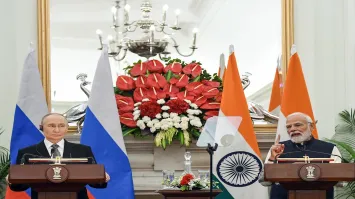
By Nitya Chakraborty The India-Russia joint statement issued on December 5 after two days of talks between President Vladimir Putin and the Indian Prime Minister Narendra Modi is more a vindication of India’s renewed exercise of its geopolitical status defying the pressure from the USA and the other western powers rather than a document on […]

The article Modi-Putin Summit Reinforces India’s Geopolitical Identity Amidst Headwinds appeared first on Latest India news, analysis and reports on Newspack by India Press Agency).

Gulf Cooperation Council sovereigns and corporates issued a record-breaking $226 billion in debt by November 11, 2025 — the highest single-year total this decade — boosted by surging investor demand and tight spreads across the region.

Issuance of bonds and sukuk vastly outpaced equity capital-market activity, which saw the weakest IPO fundraising since 2020.

Regional governments and major companies returned to debt markets, capitalising on favourable financing conditions. Notable sovereign issuance came from all six GCC states — Saudi Arabia, United Arab Emirates, Kuwait, Qatar, Bahrain and Oman. Corporations also joined, including heavyweight names such as Saudi Aramco and Abu Dhabi National Oil Company.

The rebound in debt issuance reflects a shift in financing strategies. Many issuers had stayed out of markets earlier this year, waiting for better conditions. As spreads tightened sharply, they re-entered. As HSBC’s head of MENA debt capital markets, Nour Safa, put it: the tightening spreads “convinced them to return to the market.”

By the third quarter of 2025, total outstanding debt on GCC debt capital markets reached $1.1 trillion — a 12.7 per cent increase year-on-year. Sukuk issuances led the growth, rising nearly 22 per cent and now accounting for more than 40 per cent of overall debt issuance volume.

The strength emanates largely from the two biggest markets: Saudi Arabia and the UAE. As per recent analysis, these two nations comprise 46 per cent and 30 per cent respectively of total outstanding GCC debt.

Meanwhile, IPO funding has stalled. Across the GCC, 2025 saw a dramatic slump in equity issuance: a total of only 40 IPOs raised about $5.8 billion, down markedly from 2024’s 52 listings which raised $12.9 billion — the lowest fundraising level since 2020.

In the first half of 2025, IPO activity had shown modest resilience: 27 listings raised $4.10 billion, up from $3.57 billion a year earlier. But the second half slowdown reversed much of that progress.

Analysts say the divergence between bond and equity markets has several drivers. Doubts over global macroeconomic stability and trade-policy uncertainty have suppressed investor appetite for riskier equity. At the same time, Gulf issuers found debt markets more attractive: high-quality issuers, deep dollar-denominated bond markets, and relatively higher yields compared with many emerging-market alternatives.

Banks across the region added to the surge: by mid-2025 they had issued over $60 billion of debt — surpassing 2024 levels — much of it Tier-2 or hybrid debt aimed at bolstering capital under evolving regulations and funding growth tied to national development plans.

Greenlogue/AP Backed by British International Investment, Egypt’s first utility-scale hybrid solar and battery development has taken a decisive step forward as the country works to accelerate its transition towards a more resilient renewable power system. The 1.1-gigawatt Obelisk project, led by Norway’s Scatec, is positioned to become one of the largest integrated solar and battery energy storage schemes in Africa, strengthening prospects for grid stability and long-term […]

Forecasts from major US banks suggest the bull market will remain intact in 2026, with some projecting the S&P 500 above 7,500 by year end. The latest Financial Times survey, covering nine major investment banks, reinforces this confidence with an average forecast of roughly 10% upside from current levels. I understand why that optimism exists. The US economy continues to outperform expectations, corporate earnings have held up, […]

A newly documented exploitation method using scalable vector graphics has intensified scrutiny of browser-level security after a security researcher demonstrated how attackers can transform traditional clickjacking into a highly responsive, interactive deception technique. The approach, described as “SVG clickjacking,” shows how malicious actors can build dynamic and precise overlays that track user behaviour far more effectively than the static frames typically seen in older attacks. The method […]

Previously unseen photographs from Jeffrey Epstein’s private island residence have been made public by lawmakers in Washington, offering a closer look at the property at the centre of one of the most scrutinised criminal networks in the United States. The images were disclosed by Democratic members of a congressional committee examining Epstein’s activities and the conduct of officials who interacted with him over several decades. The release […]

A 25-basis-point reduction in the policy repo rate has set the stage for a notable shift in housing sentiment as the year draws to a close, giving the real estate sector a stronger footing after months of price escalation across major urban centres. Market participants described the cut as a timely boost for homebuyers facing rising borrowing costs and double-digit appreciation in property values through 2025, with many developers expecting the decision to influence purchase behaviour almost immediately.

The RBI move lifts realty outlook theme echoed through the sector as developers, housing finance executives and market analysts assessed the implications of lower lending rates on affordability and sales velocity. The cut follows earlier easing phases this year, forming a broader cycle aimed at supporting domestic demand while keeping inflation within the central bank’s comfort range. Housing markets have been particularly sensitive to borrowing costs, and the value proposition for aspiring homebuyers had tightened as average prices climbed around 10% across the seven largest cities, according to widely tracked industry assessments.

The central expectation among market analysts is that the rate cut could ease pressure on households evaluating home purchases in the affordable and mid-income categories. These segments have shown persistent demand through the year, supported by rising urban employment and continuing interest from younger households. Yet higher prices and limited correction in construction costs have constrained affordability. A lower repo rate opens the possibility of more competitive home loan pricing once lenders adjust their marginal cost of funds-based lending rates and benchmark-linked rates.

Banks are now under scrutiny for the pace at which they transmit the reduction to borrowers. Transmission has varied across lenders in earlier cycles, with some responding quickly and others adjusting rates more cautiously, depending on liquidity conditions and deposit costs. Senior executives in the mortgage market indicated that lending rate revisions are under active consideration and that competitive pressure would likely encourage faster alignment. A prompt pass-through is expected to be a decisive factor in determining whether the anticipated surge in sales materialises through the first quarter of 2026.

Developers are preparing for an uptick in enquiries, particularly from buyers who had deferred decisions amid upward price trends. Several large developers noted that ready-to-move inventory in key metros has been absorbed at an accelerated pace this year, leaving new launches in the mid-income category positioned to capture renewed interest. Many builders believe that households that had been undecided due to higher equated monthly instalments would reassess their position once banks adjust retail lending rates, potentially adding momentum to year-end bookings.

Luxury housing, which has played an outsized role in supporting revenue growth in the sector this year, is expected to maintain its strong performance into 2026. This segment has been less affected by interest rate movements, relying instead on wealth-driven demand and portfolio diversification among high-net-worth buyers. Developers pointed to sustained traction in high-value projects across major metros, supported by resilient stock market gains and stronger capital inflows into premium residential assets.

The affordability challenge, however, remains significant for many households despite the policy easing. Construction input costs have risen steadily over the year, and land prices in established urban clusters show no sign of correction. These factors have been passed on to consumers, compressing the share of buyers in the lower and mid-income categories who are able to meet both down-payment requirements and monthly repayment thresholds. The rate cut eases the burden but does not eliminate structural pressures, prompting some market economists to emphasise the need for calibrated price discipline and wider supply in budget-friendly categories.

Housing finance companies have also highlighted the potential for refinancing activity as borrowers explore opportunities to switch to lower-rate products. Such movement typically intensifies during periods of policy easing and can influence lender strategies as they work to retain existing customers. The scale of refinancing will depend on how individual lenders approach rate revisions and how aggressively they compete for home loan market share.

A proposed acquisition involving Solmate and RockawayX is set to form a digital-asset business valued at about $2 billion, marking one of the most significant consolidation moves in the crypto infrastructure segment this year. The companies have signed a term sheet that lays the foundation for a unified institutional platform, bringing together treasury management, custody, infrastructure services, and investment capabilities under a single framework aimed at accelerating growth in regulated markets.

The structure under discussion places Marco Santori at the helm of Solmate as chief executive, overseeing the combined treasury and infrastructure strategy. Santori, whose career has spanned legal, compliance and policy roles across the crypto sector, is expected to steer the organisation through advancing regulatory requirements and the maturation of institutional demand for blockchain-based services. Viktor Fischer will continue as chief executive of the RockawayX subsidiary, maintaining operational continuity for the unit’s investment and venture activities, while supporting its integration into the broader strategy being shaped for the merged entity.

The term sheet signals a drive toward strengthening institutional-grade products, an area that has been expanding as asset managers, banks and corporates look for secure and compliant exposure to digital assets. Market analysts note that consolidation among service providers has intensified during the year, with firms seeking scale to meet tighter rules around custody, disclosures and consumer protection. The combined platform is positioned to benefit from these pressures, particularly as policymakers in Europe and the Gulf continue to advance clearer frameworks for crypto trading and asset tokenisation.

Both companies have been active in digital-asset infrastructure, with Solmate operating from the UAE while expanding its footprint across treasury services, custody architecture and enterprise solutions, and RockawayX building a presence in venture investment and decentralised finance infrastructure. Industry observers point out that merging these capabilities could create a diversified revenue base that spans recurring service fees and strategic investment returns. The proposal aligns with a wider shift toward vertically integrated models, enabling providers to streamline operations and reduce dependence on external platforms.

The acquisition plan comes at a time when institutional appetite for blockchain-based solutions has grown. Asset tokenisation has gained traction across global financial centres, with several regulators encouraging pilots in settlement, fund distribution and real-world asset token structures. Market estimates from financial institutions tracking tokenisation flows suggest that the segment could expand into multi-trillion-dollar territory over the next decade, creating opportunities for firms positioned to serve corporate treasuries and fund managers seeking secure digital infrastructure.

Santori has highlighted in prior industry engagements that regulatory clarity is central to institutional adoption. His role in shaping the combined strategy is seen as critical as Solmate works to align its offerings with evolving rules across the EU, the UK and the Gulf. Fischer, meanwhile, has maintained a focus on early-stage blockchain innovation and decentralised services, an area where RockawayX has built strong networks with founders and developers. The proposed structure allows both executives to operate within their respective strengths while contributing to a unified long-term roadmap.

The companies are expected to enter a detailed due-diligence phase, during which they will assess operational integration, regulatory conditions and market positioning. While the term sheet outlines key leadership and structural arrangements, the final agreement will depend on further negotiations and any regulatory permissions required in relevant jurisdictions. People familiar with transactions of this scale emphasise that the coming stages typically involve extensive compliance reviews, cybersecurity audits and technology-stack assessments, especially for firms engaged in digital-asset custody and treasury operations.

Market participants say the combined entity’s valuation of around $2 billion reflects the premium placed on platforms capable of serving institutional demand for secure storage, liquidity management, infrastructure and tokenisation support. Comparable transactions this year have highlighted a rising interest among investors in firms that can bridge traditional financial practices with advanced blockchain tools. Analysts also point out that bringing treasury and venture operations together may create synergies, allowing insights from early-stage ecosystems to inform enterprise-level product design.

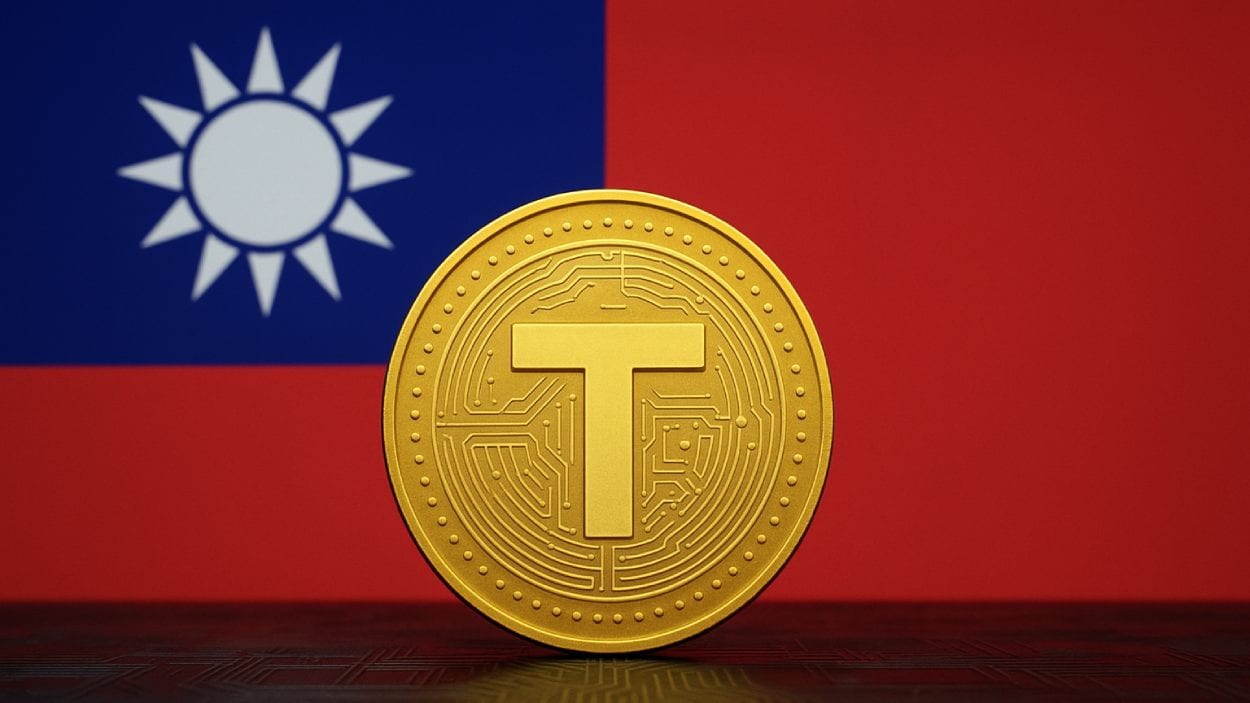
Taiwan’s financial authorities have confirmed that the territory is preparing to introduce its first regulated stablecoin by the second half of 2026, marking a significant step in its oversight of digital assets. The move establishes a formal framework for issuers and signals a wider effort to balance financial innovation with stricter consumer safeguards.

The Financial Supervisory Commission said the project aims to create a compliant asset-backed token that can operate within a supervised environment. Officials outlined that the proposed model would require issuers to undergo licensing, maintain verifiable reserves and implement robust disclosure rules. The initiative forms part of a broader regulatory roadmap that includes enhanced governance standards for exchanges and custodians, supplemented by anti-money laundering protocols already legislated in earlier phases of Taiwan’s digital asset oversight.

Taiwan has seen increased retail interest in digital tokens over the past two years, accompanied by concerns about informal trading platforms and fragmented reserve practices. Authorities have been developing clearer definitions around virtual asset providers, following earlier commitments to draft bespoke legislation for the sector. The stablecoin proposal marks the first time regulators have publicly set a target date for a national, fully supervised token that can circulate in mainstream financial channels.

Officials involved in the planning process described the stablecoin framework as an attempt to reduce systemic vulnerabilities that arise from lightly governed instruments. They indicated that the 2026 timeline allows sufficient room for market consultation with local banks, fintech operators and blockchain firms. The authorities emphasised the need for transparency around backing assets, independent audits and liquidity arrangements to prevent redemption shocks during periods of market stress.

Taipei’s policy trajectory mirrors a wider shift across Asia, where governments have begun formalising rules for digital currencies amid concerns about financial stability and technological competitiveness. Japan’s stablecoin regulations came into force earlier, requiring issuers to be banks, trust companies or registered intermediaries. Singapore’s approach has focused on wallet security, reserve segregation and consumer risk warnings. Taiwan’s proposed regime appears to blend elements of both models, adapting them to domestic institutions and supervisory capacities.

Market analysts say the announcement demonstrates how regulators are transitioning from broad guidance to more detailed rule-making. They note that several local financial institutions have shown interest in blockchain-based settlement systems but have lacked the legal certainty required to develop pilot projects. A regulated stablecoin could allow banks to explore tokenised deposits, speed up cross-border payments and reduce settlement backlogs, provided the technology meets stringent compliance standards.

Developers and industry groups argue that clarity around governance will be crucial to gaining public trust. They expect Taiwan’s framework to include ring-fencing of reserves, real-time reporting tools and strong oversight of custodial arrangements. Several blockchain service providers in Taiwan have already contributed to consultation papers, advocating for interoperability with international systems and stronger penalties for misappropriation of client funds.

Policy advisers involved in the consultation say authorities are mindful of global regulatory pressure, as jurisdictions coordinate rules for financial stability and cross-market supervision. They note that Taiwan has studied overseas cases where unbacked or poorly audited stablecoins faced severe liquidity issues, prompting large-scale withdrawals and disruptive price swings. Officials believe a regulated model will help Taiwan avoid similar vulnerabilities and foster safer digital innovation.

Some opposition lawmakers have urged the commission to publish more technical details, particularly regarding the choice of reserve assets, settlement architecture and the criteria required to issue the token. They want clearer rules on redemptions, consumer rights and supervisory intervention during market volatility. Financial regulators responded that these elements remain under review and will be formalised following extended consultation with the private sector.

Industry observers expect the stablecoin to be structured as a fully collateralised token backed by high-quality liquid assets such as government bonds or cash equivalents. This design is intended to minimise counterparty risk and ensure immediate redemption at par value. Regulators are also exploring how to embed cybersecurity requirements and resilience testing into the licensing regime, responding to heightened concerns about digital infrastructure vulnerabilities.

VISHNU RAJA
RYO YAMADA
HITORI GOTOH
IKUYO KITA
Just in:
AI stock rout erodes sovereign and pension holdings // Japan’s Nikkei advances as buyers return after sell-off // LNG tanker exits through Hormuz reach wartime peak // Sber announces results of GigaArt AI-art festival: Nearly half a million images // European refrigeration hacks expose Gulf retail security risks // Lee Kum Kee Sauce-Sponsored 2026/27 Hong Kong Windsurfing Circuit – iQFOiL Championships Conclude Successfully // Vasavan alleges one-man show by CM Satheesan // Trump’s Defeat In Midterm May Lead To Both Challenges And Opportunities For Indian Economy // Nexawork AI Launches Custom Software for SMEs From RM19,900.00 // Recognition under the U.S. Green Building Council’s rating system confirms the 22-residence tower is on track for full certification on completion // NIA Highlights Three Exemplary Breakthroughs from National Innovation Awards, Driving Thailand Toward a Global ‘Innovation Nation’ // Deemed status for high-performing aided colleges // UAE non-oil trade climbs to AED 2.945 trillion // Rubio rejects prospect of imminent Iran peace breakthrough // Bank of England flags sharper AI share correction risks // Google patches actively exploited Chrome XML security flaw // Setback for Usha in Olympic body // PhotonPay Strengthens North American Regulatory Footprint with Canada’s RPAA Registration // From Seoul to Wuzhen: Korean Celebrities and Creators Spark a Water Town Slow-Living Trend // Lula commits to budget discipline after election victory //