News related to
Bank

By Nantoo Banerjee The European Union seems to have arrogated itself with extrajudicial power to prevent outside nations from purchasing Russian oil. It has no locus standi to impose its will on countries which are not members of EU. Thus, the latest expansion of the EU sanctions targeting Russian energy exports can legally cover only […]

KUALA LUMPUR, MALAYSIA – Media OutReach Newswire – 28 July 2025 – Forex traders are bracing for what could be one of the most pivotal trading weeks of the year. The calendar is packed with high-impact releases that could send shockwaves through the markets, potentially even temporarily halting trading altogether as global economies digest a barrage of critical data. From central bank decisions to blockbuster economic reports, […]

Malaysia’s central bank has revised its economic growth forecast for 2025, citing increased volatility stemming from ongoing global trade tensions, notably those related to US tariffs. The Bank Negara Malaysia reduced its expected GDP growth to a range of 4% to 5%, down from an earlier projection of 5% to 5.5%. The adjustment comes as a response to the shifting dynamics of global trade, which have been exacerbated by the imposition of tariffs by the United States under the administration of President Donald Trump.

While Malaysia has been largely insulated from direct tariff measures, the broader implications of the US-China trade war and related tariffs have left a significant mark on its export-driven economy. Malaysia’s position as a key player in global supply chains has made it vulnerable to shifts in the global trade environment. The US tariffs, particularly on Chinese goods, have reverberated through Southeast Asia’s manufacturing sector, affecting Malaysia’s export performance and business sentiment.

BNM’s decision to cut the forecast reflects the broader concerns surrounding economic stability in the region. The central bank noted that the uncertainty surrounding US trade policy, particularly regarding its tariffs on various Chinese products, is likely to persist throughout 2025. Furthermore, the report highlighted the continued risks posed by rising protectionism and trade barriers globally, which have disrupted supply chains and added to market volatility.

In addition to the impact of tariffs, Malaysia’s central bank has also pointed to domestic factors influencing growth. These include higher inflationary pressures, mainly due to increased global commodity prices, which have had a knock-on effect on consumer spending. Malaysia’s key exports, such as palm oil, rubber, and electronic components, have all seen price fluctuations driven by external factors such as US tariffs and China’s economic slowdown.

The reduction in growth expectations comes at a time when Malaysia is also grappling with challenges in maintaining fiscal discipline. The government has pledged to reduce its budget deficit but has struggled to meet its revenue targets, further complicating the nation’s economic outlook. Malaysia’s reliance on exports, especially to major economies like the United States and China, has made it particularly sensitive to trade tensions. These developments have placed additional strain on the country’s fiscal policy, forcing the government to reconsider its growth strategies.

The central bank’s move is likely to have significant implications for Malaysia’s monetary policy. With inflation on the rise and external risks mounting, BNM may opt to adopt a more cautious stance in terms of interest rate adjustments. While the central bank has refrained from any immediate changes, economists expect that it will closely monitor both domestic and international developments, particularly as trade tensions show no sign of easing.

The challenges facing Malaysia’s economy are also compounded by global economic slowdowns, which have affected demand for Malaysian goods and services. As countries like the United States and China grapple with their own internal economic issues, Malaysia’s export markets have softened, leading to a reduced demand for its products. In particular, Malaysia’s electronics and semiconductor industries, which account for a significant portion of its exports, have faced headwinds as the US-China trade war has diverted global supply chains elsewhere.

Despite these challenges, the government remains optimistic about Malaysia’s long-term prospects. The country has made significant strides in diversifying its economy over the past few years, with a growing emphasis on technology, innovation, and sustainable development. Malaysia’s efforts to strengthen its digital infrastructure and promote industries such as e-commerce and renewable energy are seen as key to sustaining growth, even amid global trade disruptions.

By Dr. Gyan Pathak It is ridiculous. Union Government of India is still hiding behind a questionable extrapolation on employment based on Reserve Bank of India’s KLEMS (Capital, Labour, Energy, Materials, and services) database, and informed the Lok Sabha on July 24 that India added 17 crore jobs between 2017-18 and 2023-24. The Centre led […]

JAKARTA, INDONESIA – Media OutReach Newswire – 26 July 2025 – VinFast, the Vietnamese Nasdaq-listed pure-electric vehicle manufacturer, today announced the signing and implementation of strategic cooperation agreements with leading Indonesian service workshop partners. This strategic move significantly expands VinFast’s after-sales network, demonstrating its commitment to providing maximum convenience for customers transitioning to electric vehicles. Mr. Kariyanto Hardjosoemarto – CEO of VinFast Indonesia (fourth from the left) […]

Visa has officially opened its first data centre in Johannesburg, South Africa, marking a significant milestone in its expansion across the African continent. The new facility aims to support the growing demand for secure digital payments, a sector that has experienced rapid growth in the region. The move comes as Visa seeks to strengthen its presence in Africa, where it has long identified untapped potential. According to […]

JAKARTA, INDONESIA – Media OutReach Newswire – 26 July 2025 – VinFast, the Vietnamese Nasdaq-listed EV manufacturer, has officially signed agreements with 20 new dealership partners during the Gaikindo Indonesia International Auto Show (GIIAS) 2025. These agreements will bring VinFast closer to its goal of operating 100 dealership showrooms this year. This marks a strategic advancement for VinFast in its journey to conquer the Indonesian market, and […]

Advertisements

Arada Developments has turned to the debt markets for financing, following its decision to issue a sukuk bond aimed at capitalising on the construction boom within the Gulf Cooperation Council region. With its credit ratings from Moody’s and Fitch at B1 and B+, respectively, the company has mandated a consortium of major banks to facilitate the issuance of a five-year fixed-rate sukuk. The sukuk will be issued […]

BANGKOK, THAILAND – Media OutReach Newswire – 25 July 2025 – In a rapidly evolving world marked by unprecedented technological advancements, shifting consumer behaviors, and unpredictable global economic changes, relying on outdated thinking is no longer viable. Adaptability and creativity have become essential attributes for every country seeking to thrive in the modern era. Dr. Krithpaka Boonfueng, Executive Director of the National Innovation Agency (NIA) Today, ‘innovation’ […]

The value of investments held by banks operating in the UAE reached AED 774.3 billion by April 2025, marking a significant 16.2% increase compared to the same period the previous year. The rise in investment activity also represents a 1.4% growth from March 2025, highlighting the ongoing strength of the banking sector in the region.

As per the banking data provided by the Central Bank of the UAE, the increase in investments was driven largely by a surge in debt securities. These securities alone grew to AED 352.4 billion by the close of April, contributing substantially to the overall rise in the investment portfolio. Furthermore, banks also held AED 345.8 billion in securities designated to be held until maturity.

Banks operating within the UAE also continued to diversify their portfolios. Investments in stocks amounted to AED 19.3 billion, while allocations in other investment instruments reached AED 56.8 billion. This diversification is indicative of banks’ efforts to balance risk while taking advantage of growth opportunities in the wider financial landscape.

KUALA LUMPUR, MALAYSIA – Media OutReach Newswire – 25 July 2025 – In a dynamic and somewhat dangerous world of currency trading, it is critical to understand every element that impacts your potential profitability. While market spreads and brokers’ commissions form an integral component of trading costs, Forex swap points also play a major role in everyday operations, and yet they are often overlooked and misunderstood by […]

A landmark federal framework for stablecoins became law on 18 July 2025, when President Donald Trump signed the Guiding and Establishing National Innovation for U. S. Stablecoins Act. The legislation mandates that stablecoins — digital currencies pegged one‑to‑one to the U. S. dollar or short‑term Treasury bills — must be fully backed by liquid reserves, publicly disclose holdings monthly, and comply with anti‑money laundering and consumer protection rules.

The Act clears a path for both banks and approved non‑bank entities to issue payment stablecoins under a dual licensing system, encompassing federal and state oversight. It also creates a formal category for such assets, offering legal clarity that had eluded stablecoin issuers until now.

Despite bipartisan support in Congress — with Senate approval on 17 June and House passage on 17 July — the new law has drawn criticism. Some lawmakers and experts argue it falls short on stricter anti‑money laundering measures and allows big tech firms to issue stablecoins with fewer regulatory hurdles than traditional banks.

Trump lauded the Act during the White House signing ceremony, calling it “a hell of an act” and asserting it will solidify American crypto leadership and support the dollar’s global primacy. He noted the GENIUS Act “creates a clear and simple regulatory framework” capable of unleashing innovation and enhancing payment systems.

Stakeholders across finance and fintech are re-evaluating their strategies. Traditional banks are preparing pilot programmes and exploring partnerships to issue or facilitate stablecoins, while crypto firms like Circle and Coinbase, which have backed U. S. stablecoin issuance earlier, have seen share prices rise following the law’s enactment.

In parallel, the law aims to channel demand into U. S. Treasuries, reinforcing the dollar’s global role. Treasury Secretary Scott Bessent highlighted that requiring asset backing in government debt would deepen Treasury markets. Financial institutions are bracing for increased reserve purchases and adjustments in asset allocation strategies.

The Act introduces rigorous governance: stablecoin issuers must implement reserve audits, adhere to marketing restrictions—such as avoiding government endorsement claims—and prioritise redeeming customer claims ahead of other creditors in insolvency scenarios. It also extends anti‑money laundering obligations under the Bank Secrecy Act, granting treasury authorities power to freeze illicit funds.

Though heralded as a milestone, implementation remains complex. Regulators are expected to issue detailed rules within a year, and the Act’s “effective date” is projected for late 2026, contingent on final regulatory actions or an 18‑month grace period.

Global central banks and fintech players are watching closely. Some expect U. S. leadership in regulated digital currencies could spur innovation overseas, while others warn that insufficient guardrails may encourage regulatory arbitrage. Foreign issuers may enter the U. S. market if they meet rigorous Treasury approval, including comparable home‑jurisdiction oversight and U. S.-based reserve management.

Market response has been immediate: global crypto valuations have surged past $4 trillion, led by strong gains in bitcoin and ether amidst expectations of broader stablecoin integration. Industry experts suggest stablecoins may soon become mainstream payment tools, with major retailers and tech giants like Google, Uber and Apple exploring adoption.

However, voices of caution persist. Critics say the framework could permit big tech to bypass stricter banking regulations, heightening systemic risks, and that consumer safeguards remain inadequate. Transparency International warned the law might provide loopholes exploitable by criminals or hostile regimes.

As rule‑making proceeds and industry adapts, the GENIUS Act marks a fundamental shift in U. S. crypto policy — ushering stablecoins from regulatory limbo into a legalised, structured, but contested future.

KUALA LUMPUR, MALAYSIA – Media OutReach Newswire – 24 July 2025 – Bitcoin (BTC) has been rising almost uninterruptedly over the past three months, setting new all-time highs (ATH) essentially every week since mid-May. According to Coinbase, BTCUSD surpassed the crucial $112,000 mark on 10 July and went on to touch the $123,200 level on 14 July. Since then, the market seems to have entered a period […]

Abu Dhabi has claimed the top spot among the world’s most tax-friendly cities, followed closely by Dubai, highlighting the UAE’s ascendancy as a magnet for affluent individuals seeking fiscally efficient jurisdictions with legal and political stability. According to Multipolitan’s Wealth Report 2025: The Taxed Generation, the UAE capital outperformed 163 other jurisdictions globally in the newly introduced Tax Friendly Cities Index. Dubai, a longtime competitor in the […]

DP World Trade Finance has crossed the $1 billion threshold in working capital provided to businesses in emerging markets, marking a significant milestone just four years after launching its integrated logistics-finance platform. The achievement reflects growing momentum behind digital trade finance solutions aimed at bridging the $2.5 trillion global trade finance gap, which continues to weigh heavily on small and medium-sized enterprises in developing economies. The platform, […]

HONG KONG SAR – Media OutReach Newswire – 24 July 2025 – Recently, DL Holdings Group (1709.HK) has entered into strategic cooperation agreements with ViaBTC, Asseto, and Rich Dragon Consultants, while actively advancing the tokenization of HK$500 million in assets for the DL Tower. These initiatives have sparked significant market attention, with the stock price surging over 70% in a single day. On July 23, DL Holdings […]

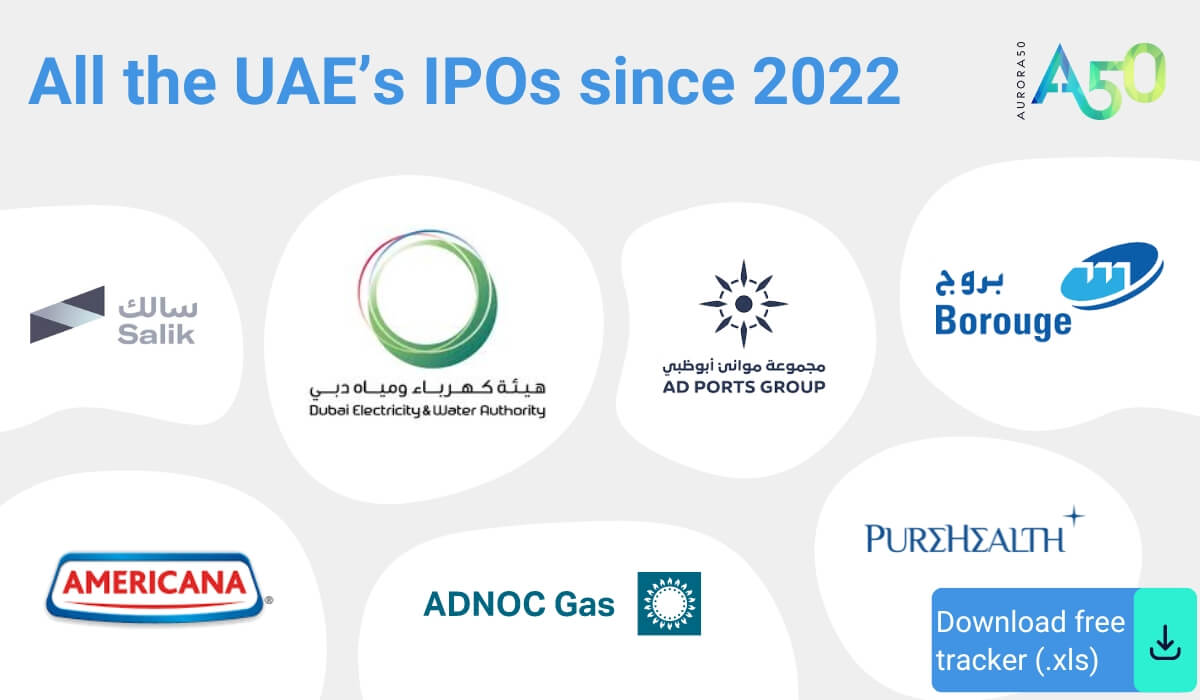
UAE equity capital markets are poised for an uptick in activity, with Citi forecasting three to five initial public offerings by 31 December—assuming timely regulatory clearance and robust pre‑marketing, said Rudy Saadi, Citi’s managing director and head of MENA Equity Capital Markets. This comes amid renewed investor enthusiasm as the nation positions itself as a regional IPO hub.

Saadi noted that although privatisations have slowed, market sentiment remains firmly positive for the remainder of 2025 and into early 2026. The expected pipeline includes a mix of family‑owned concerns and state‑affiliated enterprises alongside follow‑on offerings from listed firms.

Delivering context, UAE exchanges have tapped international and domestic liquidity in recent quarters. Spinneys and Alef Education raised $375 million and $515 million, respectively, in the second quarter, channelling nearly $890 million overall through new IPOs. Dubai and Abu Dhabi exchanges continue to push private‑sector listings, underscoring wider capital‑markets evolution.

Citi’s optimism is reinforced by Bloomberg’s observation of renewed momentum in regional share sales heading into H2 2025. The uptick appears linked to improved regulatory frameworks, deeper secondary‑market liquidity and evolving investor appetite across institutional, family‑office and retail segments.

Market analysts point to several emerging trends. Firstly, regulatory authorities in both Dubai and Abu Dhabi are progressively enhancing governance and foreign‑ownership rules to attract global participants. UAE entities now find listing conditions more competitive compared with established markets in Europe or the US.

Secondly, a shift is apparent from state privatisations to private‑sector flotations. Family‑owned businesses and tech‑focused enterprises are now stepping into the spotlight—supported by increasing liquidity and appetite from international institutional investors.

Thirdly, follow‑on share sales are gaining traction, offering listed firms a refundable route for fresh capital without navigating a full IPO process. Analysts expect more such offerings in sectors including financial services, healthcare and logistics, reflecting healthier balance sheets and growth trajectories among UAE firms.

Beyond sheer numbers, quality is a key consideration. Saadi indicates that approval pace and pre‑marketing success are decisive factors. In prior cases, such as Spinneys and Alef Education, strong institutional subscription signalled robust investor interest—suggesting forthcoming listings may mirror this level of demand.

Banking and asset‑management houses in the region—among them Citi, EFG Hermes and Emirates NBD Capital—are reportedly managing a cohort of potential issuers. EFG Hermes projected a busy second half of 2025 across Saudi Arabia and the UAE, with several consumer‑focused businesses preparing to list.

This momentum positions the UAE to lead IPO activity across the Middle East. In 2024, Gulf IPO volumes reached multi‑billion‑dollar levels; UAE exchanges, buoyed by sizeable debuts like Talabat’s Dh1.6bn listing in November 2024, claimed top status in IPO fundraising for three consecutive years.

Looking ahead, investor appetite appears steady, albeit cognisant of broader economic headwinds, including global interest‑rate trajectories and geopolitical uncertainties. Saadi stressed the significance of sentiment over macroeconomic factors when gauging regional appetite, citing Middle Eastern equity capital market resilience.

Key players set to define the coming wave include family‑owned conglomerates deliberating partial listings, firms in consumer and tech verticals exploring exit paths, and existing public companies seeking growth capital via follow‑on offerings. Leading financial houses continue to harmonise local issuers with global investor pools.

Islamic-aligned transactions in the UAE soared to US $1.53 billion between 2023 and 2024, securing its position as the second-most active market after Indonesia in the global Sharia-compliant investment landscape. These figures, shaped by 50 deals covering mergers and acquisitions, private equity, and venture capital, are drawn from the 11th State of the Global Islamic Economy report by DinarStandard. Indonesia led this period with 40 deals amounting to US $1.60 billion, […]

Strategically located next to The Gabba, the 110-room property affirms Swiss-Belhotel International’s growing footprint in Australia BRISBANE, AUSTRALIA – Media OutReach Newswire – 22 July 2025 – Swiss-Belhotel Brisbane has successfully reached its six-month milestone, affirming its position as a key player in the city’s upscale hotel segment. Since opening in December 2024, the property has demonstrated robust performance and consistent guest satisfaction, reflecting Brisbane’s strong market […]

We’re at an all-time high for the S&P 500 right at the beginning of earnings season. If we can get through this earnings season with not too many major failures, this upward current momentum that we have in the market, is likely to continue. It’s tempting to call this a pause for breath—but make no mistake, what follows could determine whether bulls stay in control. With 59 S&P 500 […]

Dubai’s real estate market achieved a landmark surge during the first half of 2025, with transactions climbing 26 per cent to 125,538 and total value reaching AED 431 billion—an increase of 25 per cent year‑on‑year. The performance underscores the emirate’s growing appeal to both local and international investors.

Investor activity gathered notable momentum, with approximately 94,700 individuals completing transactions worth AED 326 billion—39 per cent more than a year earlier. Of this group, 59,075 were first‑time investors, injecting AED 157 billion and marking both a growth in investor numbers and value. UAE residents constituted 45 per cent of this cohort, signalling effective measures to convert renters into homeowners.

Women also bolstered the market’s resilience, executing nearly 35,000 transactions worth AED 73.2 billion. Meanwhile, foreign investors led contributions at AED 228 billion, with Arab and GCC nationals contributing AED 28.4 billion and AED 22.6 billion respectively.

Residential and luxury segments showed marked performance. Al Barsha South Fourth recorded the highest transaction volume, followed by Al Yalayis 1 and Wadi Al Safa 5. In terms of value, Dubai Marina topped the list with AED 25.1 billion, followed by Business Bay, Burj Khalifa zone, and Palm Jumeirah.

ValuStrat’s H1 property index reported that unbuilt villas now command values 66 per cent above their 2014 peaks and 175 per cent above post‑pandemic levels. Apartment prices rose 1.1 per cent month‑on‑month, translating to annual growth of 20 per cent, notably in The Greens, Dubai Silicon Oasis, Dubailand Residence Complex, Palm Jumeirah, and Town Square—all exhibiting capital gains of over 22 per cent.

Parallel to sales growth, rental price inflation decelerated mid‑year: by May, annual residential rent increase eased to 8.5 per cent from 14.3 per cent in January. Cavendish Maxwell attributed this moderation to the delivery of approximately 9,300 new units in Q1 and the introduction of the “New Smart Rental Index,” which is influencing both landlord expectations and market dynamics.

Mortgage activity reflected evolving buyer preferences. Data from DXB Interact indicates a 38 per cent rise in loan volume, although total mortgage value dipped by 8 per cent—signalling a shift towards cash purchases or smaller financing commitments. Off‑plan sales stood strong at 64,907 transactions, with a total value of AED 209.1 billion. Resale transactions numbered 34,150, valued at AED 119.7 billion.

Amid this buoyancy, caution flags exist. Fitch Ratings warns of potential double‑digit price corrections—up to 15 per cent—in late 2025 and 2026, due to an expected supply surge of around 210,000 units. The agency nevertheless noted that banks and developers have reduced exposure and are poised to manage potential adjustments.

Planning authorities have responded proactively. Dubai intends to add 73,000 homes in 2025, targeting a total of 300,000 new units by 2028—efforts aimed at aligning supply with investor momentum and population growth. Meanwhile, ongoing state‑led consolidation of developers, regulatory improvements under the Economic Agenda D33, and the Dubai Real Estate Strategy 2033 continue to underpin structural confidence.

As forecasted by ValuStrat, property price growth may moderate but remain positive—potentially adding another 10 per cent by the end of 2025 as market dynamics evolve. The challenge now lies in balancing supply expansion, evolving mortgage behaviour, and price stability to sustain long‑term viability for investors and residents alike.

Foreign institutional investor activity has slowed, but India’s equity market is gaining a new level of sophistication thanks to the rapid emergence of long‑short strategies among domestic analysts. With regulatory approval of the Specialised Investment Fund route and increasing recognition of sell‑side research, analysts in India are setting new standards, outperforming peers in major global markets.

At the centre of this shift are flagship long‑short funds, enabled by an April amendment that allowed mutual funds to engage in both long and short equity positions via the SIF framework. Industry leaders such as ICICI Prudential, SBI, Quant and ITI Mutual Funds are among the first to roll out these products. This structural innovation, viewed by asset managers as a game‑changer, allows strategic hedging and enhanced alpha generation in volatile conditions.

Jatinder Pal Singh, CEO of ITI Mutual Fund, identifies the move as a watershed moment: “We see a lot of potential in this category similar to what we have seen in alternative investment funds…”. Quantitative and hedge fund entrants—AlphaGrep, Abakkus and Carnelian—are also applying for SIF licences, signalling a rising tide of systematic strategies.

The surge in long-short offerings emerges against a backdrop of changing investor sentiment and derivative market structures. While proprietary traders and retail continue to dominate derivatives trading—accounting for 52.3% and 33.6% respectively—domestic institutional participation remains minimal at just 0.2%. The launch of these funds is expected to usher in broader institutional adoption, reducing reliance on speculative flows.

Simultaneously, foreign players are reassessing their exposure. Citigroup downgraded Indian equities to “neutral” citing stretched valuations and slower earnings growth. Bank of America has flagged valuation concerns as part of seven headwinds to near‑term market performance, though it remains bullish on India’s long‑run structural strengths. Morgan Stanley echoes this optimism, describing the market as undervalued and promising for patient investors.

At the nexus of these developments, sell‑side analysts play a pivotal role. Their long‑short models provide more nuanced insights, enabling differentiated strategies compared to conventional long‑only approaches. This evolution mirrors practices in advanced markets, where close analyst coverage is integral to informed decision‑making.

International observers are taking note. Carson Block, known for his critical research into Chinese markets, is considering launching a long‑short or long‑only fund in India, citing opportunities in corporate transparency and leveraging tax-friendly jurisdictions like GIFT City. His interest signals growing confidence in the depth and potential of India’s equity ecosystem.

The broader equities landscape reflects these shifts. Foreign institutional investors are ramping up bearish positions in derivatives, signalling caution amid valuation concerns and global uncertainties. Concurrently, new equity supply is expanding, with a surge in IPOs and share sales reflecting a 14% rise in benchmark indices over the preceding six months. Analysts warn that without strong institutional demand, this wave may trigger volatility.

Experts argue the timing could not be better for long‑short funds. As valuations plateau and geopolitical uncertainty remains — including Middle East tensions affecting crude prices — the ability to manage risk through hedging becomes decisive. Fund managers are betting that structured strategies will better manage these headwinds.

At the same time, India’s growing affluent class—from double‑digit income growth to rising equity allocation—adds tailwinds. Wealth managers like 360 One are expanding advisory services amid rising assets under management, reflecting the country’s broader push toward financial sophistication. The development of long‑short funds aligns with these trends, offering differentiated solutions to high‑net‑worth investors seeking yield in uncertain markets.

Yet challenges remain. Institutional engagement in derivatives must scale meaningfully to support product viability. Regulators and market infrastructure will need to adapt, ensuring transparency and risk‑management frameworks keep pace. Moreover, investor education is critical; long‑short strategies are complex and require a clear understanding of leverage, margin risk and counterparty exposures.

Nonetheless, the direction is clear: Indian equity markets are transitioning from conventional long‑only investing to embrace multi‑directional strategies, leveraging deep local research and structural innovation. With the SIF framework opening doors for long‑short funds, analysts are stepping into roles once reserved for global peers. As Citi tones down enthusiasm and global investors tread cautiously, India’s analysts are sharpening tools that could redefine the domestic landscape—and perhaps export this model abroad.


A significant majority of sovereign wealth funds from the Middle East are poised to increase their investments in Chinese assets over the coming five years, according to the latest findings from Invesco’s Global Sovereign Asset Management Study. This shift places China at the forefront of strategic allocation decisions, reflecting growing confidence in its innovation-led sectors.

The study, conducted between January and March and covering funds and central banks managing a combined US$27 trillion, reveals that around 60% of Middle Eastern sovereign wealth funds are planning to boost exposure to China. This places the region only behind Asia‑Pacific and Africa, where 88% and 80% of funds respectively intend to raise allocations. North American counterparts also show strong interest, with approximately 73% signalling intent to increase investment in China.

Funds across regions cited strong returns—identified by 71% of respondents—as a key motivator, alongside diversification goals cited by 63% and improved market access for foreigners mentioned by 45%. Chinese innovation sectors, including digital technology, software, advanced manufacturing, automation, and clean energy, are particularly attractive, with 89% indicating interest in digital tech and software, and 70% each for manufacturing and green energy.

Participants in the study included 141 senior investment professionals—chief investment officers, asset-class heads and portfolio strategists—drawn from 83 sovereign wealth funds and 58 central banks globally. The high participation rate lends weight to the findings: China is now ranked as a high or moderate priority for 59% of funds, a notable jump from the previous year.

Despite geopolitical tensions between Washington and Beijing, sovereign funds appear more focused on structural opportunities. North American allocations towards China are framed as strategic, long-term bets in innovation rather than reactive moves to policy friction. As one Invesco executive described, investors appear driven by fear of missing out on China’s strides in semiconductors, AI, EVs and renewable energy—“a strategic urgency they once directed toward Silicon Valley”.

A regional lens reveals the Middle Eastern shift as part of a larger recalibration. Sovereign funds in the Gulf and from oil-rich neighbours are increasingly turning to China not just for commodity trades but for diversified returns and access to high-growth sectors. One Middle Eastern fund commented that the credit spectrum in fixed income markets currently offers more attractive risk-adjusted returns than public equities, underlining a broader repositioning.

Globally, sovereign investors are embracing active management, allocating more to fixed income and private credit as markets normalise post ultra-low interest rate era. Thirty‑nine per cent of funds plan to increase fixed income exposure, underscoring a pivot towards liquidity management and resilience. Private credit usage has expanded sharply, from 30% to 44% in direct or co-investments, reflecting growing appetite for yield and portfolio diversification.

Central banks are also reshaping strategy, with 64% planning to grow reserve holdings and 53% aiming to diversify further within two years. Gold remains a popular hedge: almost half intend to expand allocations over the next three years. The dominance of the US dollar persists, with 78% expecting no credible alternative supply within the next two decades.

A modest entrant in the digital asset space, sovereign wealth funds are gradually increasing exposure to digital currencies. Direct allocations rose to 11% from 7% in 2022, most pronounced in the Middle East, Asia‑Pacific and North America. Stablecoins, viewed as more accessible than traditional crypto, are gaining attention among emerging market funds.

China remains a focal point for global sovereign investors seeking exposure to growth-critical sectors and structural diversification. The convergence of strong returns, market access improvements, and sectoral opportunities is driving Middle Eastern and other funds to recalibrate their portfolios. China has transitioned from an optional allocation into a central pillar of future-focused asset strategies, marking a calculated investment pivot amid an evolving global landscape.

HANOI, VIETNAM – Media OutReach Newswire – 18 July 2025 – F88, a pioneer in Việt Nam’s alternative finance sector, has once again affirmed its leadership position by being awarded the Gold Level Certification for Client Protection by M-CRIL. An F88 shop. F88 has embedded customer care into every step of its operations. — Photo courtesy of the firm This marks the third time F88 has received […]

VISHNU RAJA
RYO YAMADA
HITORI GOTOH
IKUYO KITA