News related to
Bank

Eric Trump, son of former U.S. President Donald Trump, has issued a stark warning to the global banking industry: without embracing cryptocurrency, particularly Bitcoin, banks could face extinction within the next decade. In a bold statement, he emphasised that financial institutions must adapt to the evolving landscape of digital finance or risk being rendered obsolete by the rise of decentralised financial systems. Trump’s remarks come at a […]

Matein Khalid Sterling’s wild swings in Planet Forex literally shaped my path in life after high school. Magret Thatcher’s monetarist revolution and North Sea oil bonanza had taken cable to 2.40 while the Pakistan military’s judicial murder of Prime Minister Bhutto on April 4th​, 1979 meant that we were expelled from the Commonwealth. So I was easily able to persuade my parents that Matt should not follow […]

Gold reached an all-time high of $3,432.77 per ounce in April 2025. The climb has been steady, underpinned by sustained demand and fundamental global shifts. The next milestone, $5,000, is firmly in sight, I believe. Capital is realigning. Central banks, institutions, and private investors are adjusting their positioning in response to clear macro realities: weakening currencies, structural inflation, declining real yields, and geopolitical instability. In this environment, […]

The South African rand edged lower on Tuesday, trading at 18.57 to the US dollar, as investors awaited clarity on the government’s revised fiscal strategy following the withdrawal of a proposed value-added tax increase. The currency’s 0.43% decline reflects market unease amid ongoing political disputes and fiscal recalibrations. Finance Minister Enoch Godongwana is expected to present a third iteration of the national budget after shelving plans to […]

Matein Khalid My idea of nirvana Xanadu and Lotus Land is an eme​rging markets strategy bull session in the Waldorf cigar lounge with two bros who can dissect the best money making ideas in EM FX, EM sov debt and EM equities in the dozen odd countries where we see macro fairytales and masala shorts in sectors/countries on the precipice of emergi​ng nightmares from Brazil to Hong […]

Reimagining collaborative approaches to silver economy with government, businesses and social enterprises HONG KONG SAR – Media OutReach Newswire – 29 April 2025 – As Hong Kong and other cities in the Greater Bay Area face challenges brought by an ageing population, DBS Foundation (“DBSF”) believes that a senior-friendly community can be a powerful driver for innovation and economic growth. DBSF today hosts its first-ever “GBA Impact […]

China International Capital Corp. is intensifying efforts to expand its presence beyond mainland China by establishing a new branch in Dubai and deepening its foothold in Southeast Asia, as global demand for cross-border financial services continues to grow. The Beijing-based investment bank, recognised as one of the country’s most influential financial institutions, is preparing to open a new branch in the Gulf city to cater to sovereign […]

Advertisements

Iran is offering its sanctioned economy as an investment opportunity to the United States, presenting an unconventional proposition amid ongoing negotiations over its nuclear programme. With diplomatic discussions showing momentum, Iranian officials are openly pitching economic engagement with Washington as a path toward a more durable and beneficial agreement, marking a shift not seen in decades. Talks have gained ground as both sides weigh the possibility of […]

Loan Assets Reach a Record High of HK$3.13 billion Customer Deposits Have Significant Growth of 74% Net Interest Income Surged 70% to over HK$130 million In 2024, PAObank achieved outstanding performance across key operational indicators, with net interest income increasing significantly by 70% year-on-year to over HK$130 million. Dedicated to empowering SMEs, PAObank remains committed to supporting their upgrade and transformation. In 2024, total loans and advances […]

HSBC Holdings Plc has disclosed an anticipated pre-tax loss of up to $1.6 billion following the dilution of its stake in China’s Bank of Communications . This development arises from BoCom’s private share placement, part of a broader initiative by Chinese state-owned banks to bolster their capital reserves.

The dilution reduces HSBC’s holding in BoCom from 19.03% to approximately 16%, a consequence of the Chinese government’s strategy to strengthen its banking sector. The $71.5 billion recapitalization effort aims to enhance the capacity of major state-owned banks, including BoCom, to support the national economy.

Despite the substantial charge, HSBC has indicated that the loss will not significantly impact its capital ratios or dividend distributions. The bank emphasized that the investment in BoCom is long-term, and the charge is a non-cash accounting adjustment due to the dilution.

This is not the first time HSBC has faced financial repercussions related to its BoCom investment. In the previous year, the bank reported a $3 billion impairment on its stake, citing challenges in China’s financial sector, particularly the ongoing property market crisis.

The latest charge coincides with HSBC’s announcement of a 25% decline in first-quarter pre-tax profits, amounting to $9.5 billion. This downturn is attributed to one-time losses from business disposals in Canada and Argentina. Nevertheless, the results surpassed analyst expectations, which had projected profits of $7.8 billion.

In response to the profit decline, HSBC has initiated a $3 billion share buyback and declared a first-quarter dividend of $0.10 per share. The bank’s CEO, Georges Elhedery, who assumed the role in September, is spearheading a cost-cutting initiative targeting $1.5 billion in annual savings by 2026. This strategy includes restructuring business segments and divesting operations in Germany, South Africa, France, and Malta.

HSBC has also raised its bad loan provisions by $202 million to $876 million in the first quarter, reflecting economic uncertainty and the impact of higher tariffs. Of this amount, $100 million is allocated for exposure to Hong Kong’s commercial property sector. The bank anticipates lending demand to remain subdued throughout the year and projects a potential $500 million increase in loan loss provisions if global economic conditions deteriorate further.

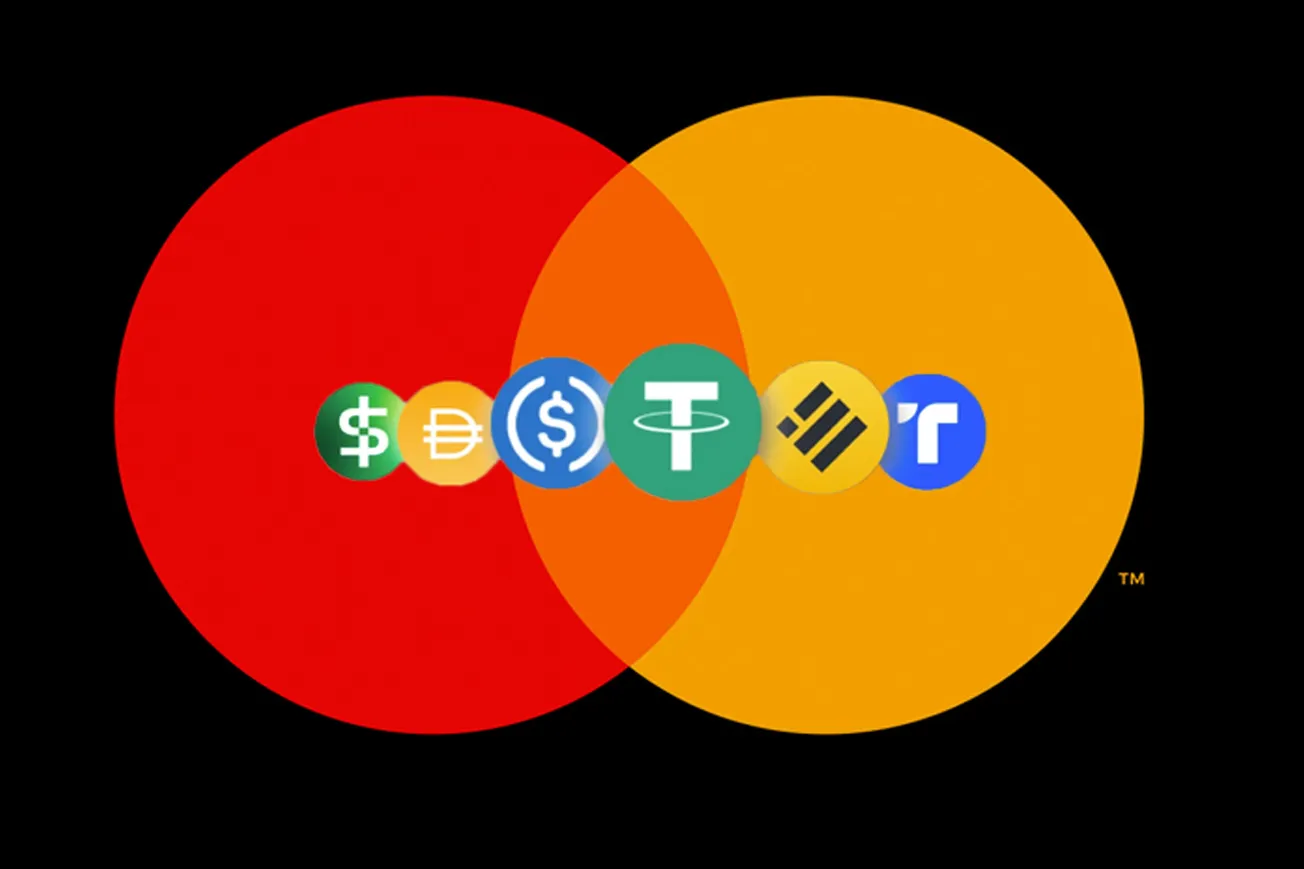
Mastercard has moved to expand its digital asset footprint by unveiling a stablecoin-powered global payment system that aims to bridge traditional finance with blockchain technology. The initiative incorporates wallet integration, card issuance, merchant settlement, and on-chain remittances, signalling a major endorsement for stablecoins within mainstream financial services.

The payments giant will partner with OKX to launch the OKX Card, offering users the ability to spend crypto assets seamlessly through Mastercard’s established infrastructure. The collaboration is positioned to provide cardholders with the option to convert their digital holdings into fiat currency at the point of sale, utilising USDC stablecoins to facilitate transactions in real time.

Mastercard’s broader collaboration also includes Circle, Nuvei, and Paxos, three key players in the stablecoin and blockchain space. The strategy centres on enabling direct merchant settlement using stablecoins, starting with USDC. The move is expected to accelerate merchant acceptance of digital currencies by eliminating the need for fiat conversions and complex intermediary processes.

Raj Dhamodharan, Mastercard’s head of crypto and blockchain, stated that the company is building a “future-proof” payments ecosystem that integrates digital assets responsibly and securely. He emphasised that Mastercard’s framework would ensure compliance with existing regulations and uphold strong consumer protection measures while offering the benefits of blockchain efficiencies.

By embedding stablecoins into payment rails, Mastercard is seeking to address long-standing challenges that have limited wider adoption of digital currencies, including volatility, liquidity management, and interoperability between financial systems. Stablecoins, which are typically pegged to fiat currencies like the US dollar, offer price stability that traditional cryptocurrencies like Bitcoin do not, making them more suitable for everyday transactions.

The OKX Card is expected to launch initially in select markets, with expansion plans to follow based on regulatory approvals and market demand. OKX’s president Hong Fang described the partnership as a “game-changer” that will “empower millions to experience the future of payments today.” The card will allow users to link their crypto wallets directly and spend their digital assets without the need to manually convert them into fiat beforehand.

Mastercard’s collaboration with Circle is particularly noteworthy as Circle’s USDC stablecoin is widely regarded for its regulatory compliance and transparency. Circle CEO Jeremy Allaire welcomed the partnership, highlighting that direct merchant settlement in USDC would reduce transaction costs, enhance speed, and provide greater transparency across payment processes.

Nuvei and Paxos will contribute to strengthening the backend settlement capabilities. Nuvei, a global payment technology firm, brings extensive experience in integrating alternative payment methods for merchants, while Paxos, a regulated blockchain infrastructure platform, provides trusted stablecoin issuance and custody solutions.

This new framework comes at a time when global financial institutions are increasingly exploring digital currencies. The Bank for International Settlements reported an upsurge in central bank digital currency projects globally, with a growing focus on how stablecoins and blockchain could complement traditional payment systems rather than disrupt them.

Mastercard has been experimenting with blockchain and digital assets for several years, conducting pilot programmes with various crypto companies and financial institutions. The company’s partnership with the Reserve Bank of Australia and the Digital Finance Cooperative Research Centre on a central bank digital currency pilot was another key step illustrating its commitment to innovating responsibly within the space.

Mastercard’s stablecoin settlement model follows a successful pilot in Australia, where live transactions using USDC and Mastercard’s network proved the technical viability and regulatory feasibility of using stablecoins for real-world transactions. The pilot included collaboration with Cuscal and Mintable, showcasing the ability to settle card transactions directly on blockchain networks.

Through these developments, Mastercard appears to be positioning itself as a leader among traditional financial service providers seeking to integrate blockchain into their core offerings. This approach not only supports digital asset adoption but also builds bridges between traditional payment providers and emerging decentralised finance ecosystems.

Industry analysts note that Mastercard’s entry into stablecoin-powered payments could force other major payment processors to accelerate their blockchain strategies. Visa, which has been running its own stablecoin settlement pilots, will likely view Mastercard’s moves as a call to action to deepen its blockchain integration efforts to remain competitive.

There are challenges ahead, particularly regarding regulatory clarity. Stablecoins have come under increasing scrutiny from regulators concerned about financial stability, money laundering, and consumer protection risks. Mastercard has indicated that its stablecoin programme will operate within regulated frameworks, ensuring that only stablecoins backed by transparent and compliant reserves are included.

The initiative also highlights growing merchant interest in accepting digital currencies without bearing volatility risks. Direct stablecoin settlement allows merchants to receive payment in a stable asset without relying on third-party crypto-to-fiat conversion services, streamlining operations and reducing costs.

As stablecoins continue to evolve beyond speculative assets into functional financial tools, Mastercard’s system reflects an understanding that digital currencies must serve real-world use cases to achieve mainstream adoption. The company’s ability to integrate stablecoin technology with traditional card networks could significantly alter how digital assets are used in daily commerce.

Mastercard’s latest announcement also underlines a broader industry shift toward interoperability. By supporting transactions across multiple blockchain networks and integrating with different stablecoin issuers, Mastercard aims to create a unified ecosystem where users, merchants, and financial institutions can interact seamlessly across both traditional and digital finance landscapes.

Revolut has reported a significant pre-tax profit of $1.4 billion for 2024, marking a 149% surge compared to the previous year. This surge is largely attributed to the company’s strategic expansion, diversified revenue streams, and growing customer base. The fintech firm has also taken a key step in its plans to further solidify its presence in the financial sector with the acquisition of a UK banking licence. […]

Arabian Post Staff -Dubai Unveiling its latest flagship devices at a grand event in Singapore, POCO made a strong statement with the launch of the POCO F7 Ultra and POCO F7 Pro, positioning itself more firmly within the premium smartphone segment. The UAE market, where young, tech-savvy consumers are increasingly demanding top-tier performance without exorbitant pricing, is poised to become a key battleground for these new devices. […]

A new chapter is unfolding in the heart of the UAE’s real estate landscape as Arabian Hills Estate emerges to replace a once highly anticipated but ultimately undelivered development initially sold by Wahat Al Zaweya Holding PJSC. Positioned near Al Ain, on land just across the Abu Dhabi border, this expansive community of villa and mansion plots is being marketed as a symbol of luxury and renewal, […]

Saudi Arabia has achieved a major leap forward in its Vision 2030 ambitions, with a significant number of its key initiatives either completed or advancing on schedule, according to the Vision 2030 Annual Report 2024. As of the end of last year, 85 per cent of the 1,502 active projects under the reform plan are either finalised or progressing as planned, demonstrating an accelerated pace towards economic […]

Syria’s fragile post-war recovery effort gained significant momentum after Saudi Arabia and Qatar pledged to clear the country’s outstanding World Bank debt, a critical step towards unlocking new international funding. The commitment, disclosed following the World Bank and International Monetary Fund spring meetings held last week in Washington, addresses approximately $15 million owed by Damascus, removing a key financial impediment for the new government led by President Ahmed Al-Sharaa.

High-level negotiations between Gulf officials and World Bank representatives culminated in the decision to settle Syria’s arrears, a move regarded by diplomats as essential for enabling the war-torn nation to access multilateral financial assistance. The overdue debt, though relatively modest in scale, had barred Syria from eligibility for fresh disbursements under the World Bank’s policies requiring client countries to be in good standing.

Officials familiar with the discussions indicated that Saudi Arabia and Qatar’s intervention was not merely financial but symbolised broader regional efforts to stabilise Syria’s economy and reintegrate it into international institutions. According to sources briefed on the meetings, both governments framed the payment as part of a larger initiative to support Syria’s economic reconstruction and political transition under Al-Sharaa, who assumed office earlier this year following a contested but internationally recognised electoral process.

President Al-Sharaa, whose government has pledged sweeping economic reforms, welcomed the support, calling it “a step towards restoring Syria’s rightful place in the global community.” Speaking through an official statement issued by the presidential office in Damascus, he emphasised that rebuilding national infrastructure, restoring basic services, and attracting private sector investment were now top priorities. His administration faces the immense challenge of reconstructing a country where more than a decade of conflict left nearly half the population displaced and critical industries in ruins.

Syria’s re-engagement with global financial institutions represents a delicate balancing act for regional and international actors. While Saudi Arabia and Qatar’s financial support signals renewed diplomatic engagement, it also reflects strategic calculations. Officials in Riyadh and Doha are believed to view a stabilised Syria as vital to broader Middle Eastern security and to limiting the influence of rival powers that gained ground during the conflict.

A Gulf-based diplomat with knowledge of the negotiations said that clearing Syria’s World Bank debt was seen as a “foundational gesture” aimed at laying the groundwork for deeper economic cooperation. “There is recognition that Syria’s stability benefits the entire region,” the diplomat explained. “But this assistance is not a blank cheque — it’s tied to expectations around governance, transparency, and economic reform.”

The World Bank, for its part, has been cautiously preparing for Syria’s potential re-entry into development programs. Bank officials underscored that while the clearing of arrears was a necessary procedural step, any future engagement would be closely conditioned on the government’s adherence to principles of accountability and inclusion. A spokesperson for the institution stated that assessment missions would be conducted to evaluate Syria’s institutional capacity and identify priority sectors for assistance, pending board approval.

Economic experts observing the development noted that while $15 million is a small figure compared to the scale of Syria’s reconstruction needs — estimated by some analysts to exceed $400 billion — the symbolic value of the Gulf states’ intervention is considerable. By assuming Syria’s financial obligations, Saudi Arabia and Qatar have effectively opened the door to broader international financial support, including potential aid from bilateral donors and regional development banks.

Syria’s financial rehabilitation comes amid evolving geopolitical dynamics in the Middle East, where Gulf nations have shown a willingness to recalibrate relationships and pursue pragmatic approaches to regional conflicts. Qatar, which once supported opposition groups during the Syrian civil war, has shifted its stance to focus on post-conflict recovery, while Saudi Arabia has sought to spearhead diplomatic normalisation efforts, including Syria’s readmission into the Arab League.

The economic picture within Syria remains dire. Inflation has soared, the Syrian pound continues to depreciate, and essential services such as electricity, healthcare, and education are struggling to function. The United Nations has warned of a worsening humanitarian situation unless economic conditions improve, estimating that over 14 million Syrians require some form of assistance.

President Al-Sharaa’s administration, meanwhile, has signalled a commitment to overhaul outdated regulatory frameworks, encourage foreign investment, and revive critical sectors such as agriculture, manufacturing, and tourism. In a televised address earlier this month, he pledged that Syria would embark on “an era of renewal,” focusing on job creation, infrastructure development, and restoring public trust in state institutions.

International observers caution that much will depend on the government’s ability to implement reforms credibly and transparently. Skepticism persists among some Western governments and humanitarian organisations over the prospects for genuine political and economic liberalisation. Nonetheless, the Gulf states’ financial backing and the World Bank’s procedural readiness mark a notable shift, offering Syria its first tangible pathway to re-entering the global financial system after years of isolation.

Technology stocks surged on April 24, 2025, lifting broader U.S. markets as optimism grew over easing tariff tensions between the United States and China. Investors responded positively to reports suggesting that trade officials from both countries were nearing a compromise to de-escalate tariffs imposed over the past two years. The Nasdaq Composite climbed 2.5% to close at 16,012.34, marking its highest level in over five months. The […]

Bitcoin has soared beyond the $100,000 mark for the first time, reaching an intraday high of around $103,400, in a development that has intensified global debate over the future of cryptocurrencies. The breakthrough, which market analysts describe as a psychological milestone, has reignited bullish sentiment across digital asset markets, drawing renewed attention from institutional investors, hedge funds, and policymakers worldwide.

The world’s largest cryptocurrency by market value has been on an upward trajectory for much of 2025, driven by a mix of factors including growing institutional adoption, favourable regulatory signals, and broader macroeconomic uncertainty. Bitcoin’s surge beyond six figures was underpinned by mounting optimism over the expanding utility of blockchain technologies and the increasing use of cryptocurrencies as hedges against fiat currency devaluation.

According to market analysts tracking digital assets, Bitcoin’s advance to above $100,000 has been fuelled by substantial inflows from institutional investors, including pension funds, insurance companies, and sovereign wealth funds, who view Bitcoin as a store of value comparable to gold. Major asset managers have accelerated their crypto allocations after regulatory bodies in key markets such as the United States, Europe, and parts of Asia finalised clearer frameworks that legitimised cryptocurrency investments in traditional portfolios.

The approval of several Bitcoin spot exchange-traded funds earlier this year has played a crucial role in boosting demand. These instruments have allowed a broader set of investors to gain exposure to Bitcoin without the technical complexities of managing private keys and wallets, a development regarded as pivotal in attracting mainstream capital. The cumulative effect has been a substantial increase in Bitcoin holdings among institutional portfolios, pushing the price upward.

Macroeconomic factors have also contributed significantly to Bitcoin’s ascent. Persistent inflationary pressures in major economies, coupled with declining confidence in central bank policies, have pushed investors to seek alternative assets. Bitcoin, with its capped supply of 21 million coins, has increasingly been perceived as an attractive hedge against currency debasement, especially as traditional safe havens like government bonds offer diminished real returns.

The rally has also been amplified by technological advancements and broader acceptance of cryptocurrencies in everyday financial systems. Major payment networks have expanded their support for crypto transactions, and global banks have rolled out crypto custody services, further embedding Bitcoin into mainstream finance. Moreover, blockchain-based innovations such as decentralised finance platforms and tokenised real-world assets have reinforced the legitimacy of the crypto ecosystem, enhancing investor confidence.

Yet, the parabolic rise of Bitcoin has reignited concerns over the sustainability of such rapid gains. Financial experts warn that while Bitcoin’s fundamentals have strengthened compared to earlier bull cycles, the risk of volatility remains elevated. Bitcoin’s history is littered with examples of sharp corrections following euphoric rallies, and many observers urge caution amid the current exuberance.

Critics argue that despite broader acceptance, Bitcoin still faces unresolved issues including scalability challenges, regulatory uncertainty in emerging markets, and environmental criticisms linked to energy consumption from mining activities. Although significant strides have been made towards sustainable mining practices through greater adoption of renewable energy, environmental concerns continue to shadow Bitcoin’s long-term viability narrative.

Regulatory dynamics remain a crucial determinant of Bitcoin’s future trajectory. Authorities in several jurisdictions, while more accommodating than in previous years, continue to explore stricter frameworks to mitigate risks associated with money laundering, tax evasion, and financial stability. How these regulations evolve will likely influence Bitcoin’s path forward, with potential for both supportive policies and restrictive measures that could dampen enthusiasm.

Geopolitical tensions are another variable that could shape Bitcoin’s outlook. Cryptocurrencies have increasingly been utilised in cross-border transactions and capital flight during periods of political instability, which both enhances their perceived utility and invites tighter scrutiny from national governments wary of losing control over financial flows. Analysts note that Bitcoin’s decentralised nature is both its greatest strength and its most persistent regulatory challenge.

On the technological front, developments surrounding Bitcoin’s scalability solutions, particularly the implementation of Layer 2 protocols like the Lightning Network, offer promising pathways to address transaction speed and cost issues. Broader adoption of these solutions could enhance Bitcoin’s practicality as a medium of exchange, further reinforcing its market position.

Market participants are closely monitoring signals from major economies regarding interest rate policies, as shifts in monetary stances could impact Bitcoin’s appeal relative to traditional investment instruments. Any abrupt tightening by central banks could exert downward pressure on speculative assets, including cryptocurrencies, although Bitcoin’s maturing investment narrative may provide some cushion against such moves.

Bitcoin’s milestone has also reignited discourse about the future of digital currencies in the global economy. Central bank digital currencies are progressing towards launch phases in several countries, potentially reshaping the monetary landscape. Although CBDCs differ fundamentally from decentralised cryptocurrencies, their coexistence will test regulatory boundaries and public preferences regarding privacy, control, and financial sovereignty.

Looking ahead, market strategists caution against assuming a linear trajectory for Bitcoin’s price. While structural factors support a more mature and resilient Bitcoin market compared to previous cycles, external shocks, shifts in investor sentiment, and evolving regulatory landscapes can introduce significant volatility. Nevertheless, Bitcoin crossing the $100,000 threshold stands as a symbolic validation of the digital asset class’s growing influence in the global financial system.

Trading volumes across major exchanges have surged alongside Bitcoin’s price rise, highlighting heightened investor interest and suggesting momentum could continue in the short term. However, analysts emphasise the importance of risk management, noting that Bitcoin’s history has repeatedly demonstrated the potential for large price swings even within broader bullish trends.


Matein Khalid The last time the U.S. Dollar Index plummeted 9% in the first four months of a year was way back in 1973, when Richard Nixon sat in the White House on the eve of Watergate, the October War in the Sinai/Gulan, the Arab oil boycott and a savage 40% bear market in U.S. equities. Last week provided a respite from the tsunami of greenback selling […]

Nigeria’s government must exercise greater fiscal discipline and prioritise spending to navigate economic headwinds, the International Monetary Fund has advised. The call comes amid concerns over rising public debt and questions surrounding the efficiency of government expenditure. At the 2025 IMF/World Bank Spring Meetings in Washington, D.C., Davide Furceri, Division Chief in the IMF’s Fiscal Affairs Department, acknowledged Nigeria’s recent economic reforms, including the removal of fuel […]

ARK Invest, a leading investment management firm, has updated its bullish price forecast for Bitcoin, now projecting that the cryptocurrency could reach up to $2.4 million by 2030 in a highly optimistic scenario. This marks a significant revision of their previous estimate, reflecting growing confidence in Bitcoin’s long-term potential amid shifting global financial landscapes and evolving market dynamics.

Bitcoin’s price has been hovering around $94,000, a notable position that has sparked renewed investor interest and optimism regarding the cryptocurrency’s future. Despite this, there are signs of a strong sentiment shift among holders, as evidenced by a decline in Bitcoin exchange balances. The reduction in available Bitcoin on exchanges is generally seen as a positive indicator for the asset’s value, suggesting that more investors are choosing to hold their assets in anticipation of future growth.

The recalibration of ARK Invest’s Bitcoin target follows a broader trend of institutional interest in digital assets, with firms increasingly viewing cryptocurrencies not just as speculative assets, but as a legitimate store of value. ARK’s forecast is built on the assumption that the financial system will continue to evolve in a way that supports decentralised finance, with Bitcoin playing a central role in this transformation.

The investment firm’s analysis underscores a vision where Bitcoin is not only a hedge against inflation but also a pivotal component of a digital financial infrastructure that could reshape global markets. The projection is part of ARK Invest’s broader investment thesis that views cryptocurrencies, particularly Bitcoin, as an increasingly integral part of the global economy.

A key factor influencing ARK’s bullish view is the growing trend of institutional adoption, where large-scale investors such as corporations and hedge funds have begun to allocate significant portions of their portfolios to Bitcoin. The institutional narrative around Bitcoin is evolving, with many seeing it as a store of value comparable to gold, particularly in times of economic uncertainty. The investment firm has also pointed out that Bitcoin’s deflationary characteristics, driven by its capped supply, enhance its appeal in an environment where traditional fiat currencies are under pressure from inflationary forces.

Bitcoin’s increasing scarcity is also a central argument in ARK’s optimistic projection. With a fixed supply of 21 million coins, Bitcoin’s scarcity model stands in stark contrast to fiat currencies, which can be printed at will by central banks. As the available supply of Bitcoin continues to decrease due to the halving events, in which the reward for mining new blocks is cut in half, demand for the cryptocurrency is expected to outstrip supply, driving its price upwards. This model has historically led to bull runs, with each halving event triggering price increases in the years that follow.

Bitcoin’s growing network effect is strengthening its role in the global financial system. The increasing number of users, merchants accepting Bitcoin as payment, and the rise of Bitcoin-based financial products, such as futures and exchange-traded funds , all signal that Bitcoin is gaining more mainstream acceptance. As more people and institutions embrace Bitcoin, the more entrenched it becomes in the global economic fabric, creating a reinforcing cycle of adoption and value appreciation.

The reduction in Bitcoin exchange balances indicates a shift in investor behaviour. Investors are increasingly inclined to hold onto their Bitcoin rather than trade it, which is traditionally seen as a bullish indicator. When Bitcoin is held in wallets, it is less likely to be sold in response to short-term price fluctuations, signalling long-term conviction. The lower volume of Bitcoin on exchanges further suggests that the current market is largely driven by strong holders, indicating less volatility and more stability in the asset’s price.

Despite these promising trends, Bitcoin remains a volatile and risky asset, with unpredictable market swings and regulatory uncertainties continuing to pose challenges. Governments around the world have yet to fully regulate the cryptocurrency market, and while some countries have embraced Bitcoin as a legal tender, others have imposed strict restrictions on its use. The future trajectory of Bitcoin will largely depend on how regulators approach digital currencies, particularly regarding concerns over their potential for money laundering, tax evasion, and financial instability.

The SPDR Gold Shares ETF , the world’s largest gold-backed exchange-traded fund, experienced a significant outflow of $1.3 billion on April 22, 2025—the largest single-day withdrawal since 2011. This substantial movement reflects a notable shift in investor sentiment, as market participants reallocate assets in response to evolving economic indicators and geopolitical developments. Sees Largest Weekly Outflow Since 2022 on Trump Win – Bloomberg)

The outflow coincided with a decline in gold prices, which fell nearly 2% to $3,318.71 per ounce. This drop followed U.S. President Donald Trump’s decision to retract his threat to dismiss Federal Reserve Chair Jerome Powell and his expression of optimism regarding a potential trade agreement with China. These developments reduced the perceived need for safe-haven assets like gold, prompting investors to reassess their portfolios.

Simultaneously, the U.S. dollar and stock markets rebounded, further diminishing gold’s appeal. Analysts, including OANDA’s Kelvin Wong, cited these factors as triggers for the selloff, though he noted that potential upside movement in gold remains. Despite this short-term dip, gold had previously surged to a record high of $3,500 per ounce, and JP Morgan anticipates it could exceed $4,000 next year.

The broader context includes a significant surge in gold prices earlier in April, driven by investor concerns over the weakening U.S. dollar and President Trump’s economic policies. Gold reached a new peak of over $3,500 per ounce before settling at $3,426, marking a nearly 30% increase since Trump’s return to office. Analysts at JPMorgan predict gold could hit $4,000 by mid-2026, fueled by purchases from central banks and retail investors.

However, the easing of trade tensions and positive developments in U.S.-China relations have led to a reassessment of risk, with investors moving away from traditional safe havens. European gold funds, for instance, experienced significant inflows earlier in April, with approximately €1 billion poured into gold exchange-traded commodities during the week ending April 18, 2025. This marked the highest level of inflows since mid-January, reflecting rising investor demand for safe-haven assets amid escalating market volatility sparked by U.S. trade tariffs.

Despite these inflows, the subsequent outflows from GLD indicate a shift in investor strategy. The Bank of America’s April 2025 Fund Manager Survey revealed that institutional investors are adjusting their portfolios in response to global economic fears driven by U.S. tariff policies and escalating concerns of a recession. The survey indicated that investor expectations for economic growth have dropped to 30-year lows, with 82% predicting a weaker global economy this year. In response, money managers are moving away from high-risk sectors like technology and U.S. equities, instead turning to safer investments.

Gold has emerged as the top asset, with 42% of fund managers favoring it—up from 23% in March—due to its reputation as a safe haven in volatile markets and hedge against inflation. This surge in interest is mirrored by the SPDR Gold Shares ETF surpassing $100 billion in assets under management and gold prices hitting record highs above $3,300 an ounce.

Dubai-based luxury real estate developer Omniyat Holdings has mandated a consortium of international and regional banks to arrange its inaugural US dollar-denominated green sukuk, marking its entry into the sustainable finance market. The issuance, structured as a three-year fixed-rate senior unsecured sukuk under Regulation S, is poised to attract global investors seeking Sharia-compliant green investment opportunities.

The appointed joint global coordinators for the transaction are ADCB, Citi, ENBD Capital, JP Morgan, Mashreq, and Standard Chartered. Supporting them as joint lead managers and bookrunners are Ajman Bank, Commercial Bank of Dubai, Dubai Islamic Bank, First Abu Dhabi Bank, Kamco Invest, RAKBANK, and Warba Bank. Investor calls are scheduled to commence on Thursday, setting the stage for the sukuk’s launch, subject to market conditions.

Omniyat, renowned for its high-profile developments such as The Opus in Dubai’s Business Bay—designed by the late Zaha Hadid—aims to leverage the proceeds from the green sukuk to finance or refinance projects that align with environmental sustainability criteria. This move aligns with the broader trend in the Gulf Cooperation Council region, where issuers are increasingly tapping into the green finance market to support environmentally friendly initiatives.

The UAE has emerged as a leader in green sukuk issuances, with activity in the sector doubling to $8.6 billion in the first half of 2024. This surge is attributed to a series of high-profile issuances by major financial institutions and corporations, reflecting the country’s commitment to sustainable development and its 2050 Net Zero Goals.

Omniyat’s entry into the green sukuk market follows similar moves by other prominent UAE entities. For instance, Abu Dhabi Islamic Bank successfully raised $500 million through a green sukuk offering, marking the world’s first US dollar-denominated green sukuk issued by a financial institution. The issuance was met with exceptional demand, attracting interest from over 100 global and regional investors, and was listed on the London Stock Exchange’s International Securities Market and Sustainable Bond Market.

Similarly, Majid Al Futtaim, a UAE-based developer and operator of shopping malls, has previously issued a $600 million green sukuk to finance a portfolio of green projects. The issuance, which was listed on Nasdaq Dubai, underscores the growing appetite for sustainable investment products in the region.

KuCoin has officially launched its cryptocurrency exchange in Thailand after receiving full approval from the country’s Securities and Exchange Commission , positioning itself as the ninth licensed digital asset platform in the nation. Operating under the rebranded entity KuCoin Thailand, formerly known as ERX Company Limited, the exchange aims to deliver a locally tailored trading experience while leveraging KuCoin’s global infrastructure.

The platform offers support for Thai baht transactions, cryptocurrency trading, and services in the Thai language. Existing ERX users have been seamlessly migrated to the new system, accessible via the KuCoin Thailand website and mobile applications on both Android and iOS platforms.

Thailand’s crypto exchange landscape is becoming increasingly competitive, with KuCoin joining established players such as Bitkub Online, Gulf Binance, Upbit Exchange, and WAAN Exchange. Bitkub currently dominates the market with a daily trading volume of approximately $70 million, according to data from CoinGecko. In contrast, KuCoin’s global platform reports a daily volume of $3.8 billion, indicating its substantial presence in the international market.

Despite its global stature, KuCoin faces significant challenges in penetrating the Thai market. The country’s regulatory environment is stringent, particularly concerning the use of digital assets for payments, which the Bank of Thailand banned in 2022. While trading is permitted, authorities have intensified scrutiny on peer-to-peer crypto services operated from abroad to combat scams and money laundering.

VISHNU RAJA
RYO YAMADA
HITORI GOTOH
IKUYO KITA